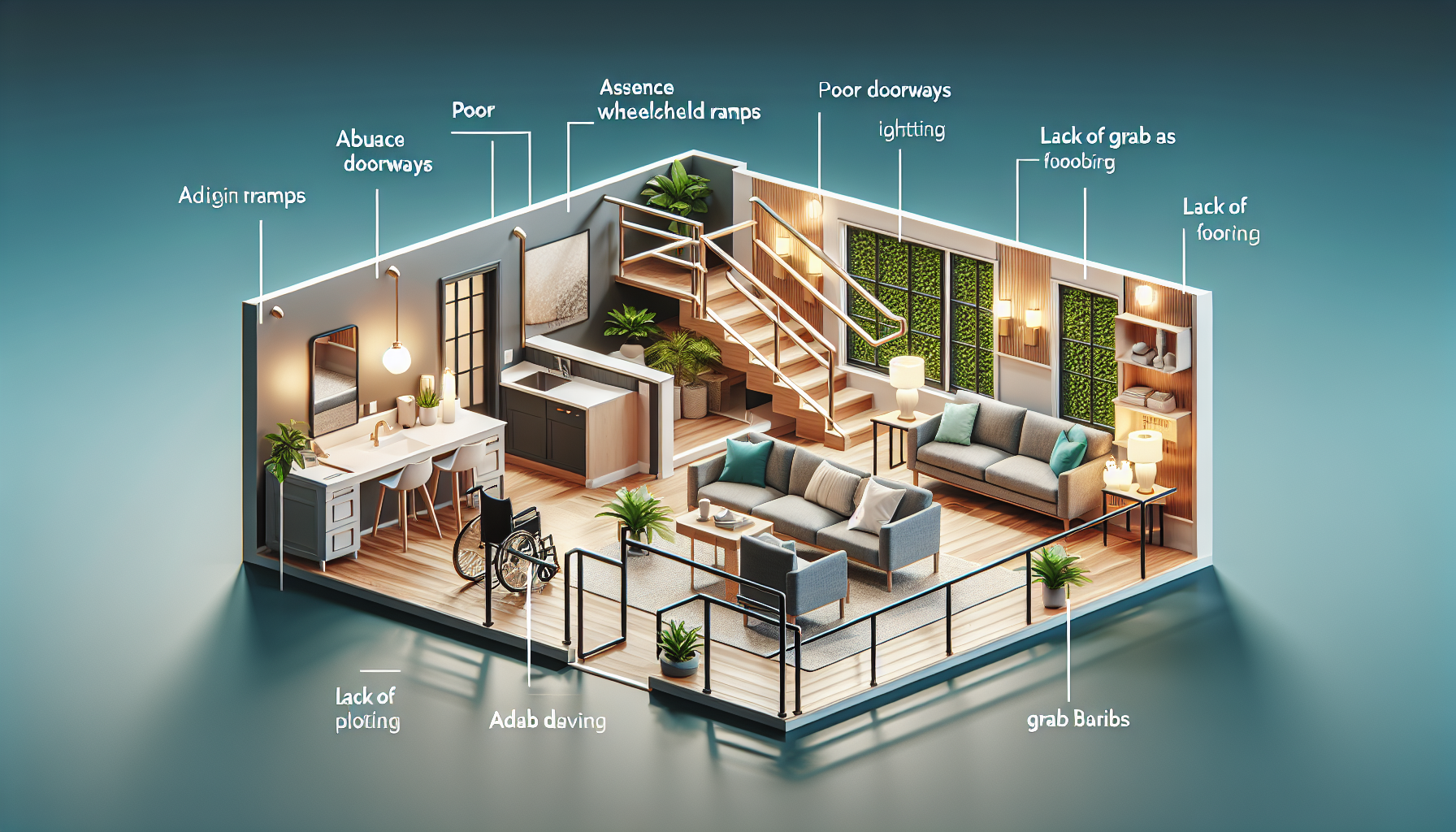
Stair lifts solve a common mobility problem, but the phrase “ADA compliant stair lift” is often misunderstood. In practice, the Americans with Disabilities Act sets accessibility standards for public accommodations, commercial buildings, transportation, and certain housing programs, yet it does not simply certify a stair lift as compliant in the way people assume. After years reviewing accessibility plans with contractors, architects, and lift dealers, I have found that the real question is not whether a stair lift alone is ADA compliant, but whether its installation supports or conflicts with the accessibility obligations of the site. That distinction matters for building owners, facility managers, homeowners, and families comparing options under the broader category of ADA compliance and guidelines.
To understand what makes a stair lift ADA compliant, you first need a few definitions. A stair lift is a motorized chair or standing platform that travels along a rail mounted to a staircase. ADA compliance refers to meeting enforceable accessibility requirements under the 2010 ADA Standards for Accessible Design and related regulations. Those standards focus heavily on accessible routes, clear widths, maneuvering spaces, door hardware, ramps, elevators, platform lifts in limited cases, signage, and controls. In many public settings, a conventional seated stair lift is not considered an acceptable substitute for an accessible route. That is why this topic sits at the center of accessibility and mobility planning: choosing the wrong device can leave a serious access barrier unresolved, even after a significant investment.
This hub article explains the rules, exceptions, design criteria, and decision points that determine when a stair lift may be appropriate, when a vertical platform lift or elevator is the better answer, and how to evaluate safety, usability, and documentation. It also connects the wider ADA compliance and guidelines landscape for accessibility and mobility solutions, so readers can move from broad understanding to project-level decisions with fewer mistakes.
ADA compliance starts with the accessible route requirement
The most important principle is straightforward: in most public and commercial environments, people with disabilities must be able to travel along an accessible route. Under ADA standards, an accessible route generally means a continuous, unobstructed path connecting all accessible elements and spaces. Stairs alone never qualify. A seated stair lift usually does not qualify either, because it requires transfer from a wheelchair or mobility device into a chair, and that excludes many users.
In practical reviews, I start by asking three questions. Is the building a public accommodation or commercial facility? Is the stair connecting spaces that must be on an accessible route? Is there already an elevator, ramp, or compliant platform lift serving that change in level? If the answer points to a required accessible route, a stair lift is rarely the primary compliance tool. The ADA generally expects ramps, elevators, or limited-use lifts specifically permitted by the standards. That is why hospitals, schools, offices, restaurants, and retail spaces almost never solve accessibility obligations with a chair stair lift.
There are limited exceptions. Existing buildings with structural constraints sometimes use platform lifts where allowed, especially for short rises, stage access, wheelchair spaces in assembly areas, or historic preservation cases. Even then, the applicable standards matter. Designers look to ADA requirements, local building code, fire code, and often ASME A18.1, the safety standard governing platform lifts and stairway chairlifts. Compliance is therefore a systems question, not a product label.
When a stair lift may fit, and when it usually does not
For private homes, the analysis is different. The ADA does not regulate owner-occupied single-family homes in the same way it regulates public accommodations. In residential settings, people often use “ADA compliant” loosely to mean safer, more accessible, and aligned with recognized accessibility principles. A home stair lift can be a highly effective mobility solution, especially for older adults with reduced stamina, arthritis, or balance limitations. It can delay a costly move, reduce fall risk, and preserve access to bedrooms, laundry areas, or basements.
In public-facing buildings, however, a chair stair lift usually falls short because it does not serve independent wheelchair access. A user who cannot stand and transfer safely cannot use it. Emergency evacuation is another concern; many stair lifts are not intended as evacuation devices. If the staircase is a required means of egress, the parked chair and rail placement also must be reviewed carefully to avoid reducing required width below code minimums.
The distinction is easiest to see in real projects. A church adding access to a small raised chancel may be allowed to use a platform lift if conditions match the standards and local code. A boutique hotel with guest rooms on an upper floor generally cannot install a seated stair lift and claim it has provided an accessible route. A homeowner retrofitting a two-story house may reasonably choose a stair lift because the goal is personal usability, not compliance with public facility route requirements. Context controls the answer.
Core technical criteria that affect compliance and usability
When a lift is permitted, the next issue is whether the specific installation meets technical requirements. This is where many projects fail. The lift must fit the staircase without compromising safe passage, have controls within reachable ranges, provide reliable operation, and include safety features required by code and good practice. Installers typically verify stair width, landing size, headroom, track overruns, power supply, seat or platform dimensions, call/send controls, obstruction sensors, and folding clearances.
For platform lifts, clear platform size is critical because it must accommodate a wheelchair and user. Door or gate interlocks, emergency stop, battery lowering, and constant-pressure controls are standard safety items. For stairway chairlifts, seat height, swivel and lock function, footrest sensors, seat belt use, and charging locations matter. In every case, manufacturer specifications and ASME A18.1 provisions guide the design, while local authorities having jurisdiction determine what is approved in the field.
| Feature | Chair Stair Lift | Platform Lift | Compliance Relevance |
|---|---|---|---|
| User access method | Requires transfer to seat | Wheelchair remains occupied | Direct wheelchair access is usually necessary on required accessible routes |
| Typical setting | Private homes | Selected public and existing buildings | Use case depends on building type and permitted exceptions |
| Stair width impact | Rail and parked chair can reduce passage width | Separate shaft or stair-adjacent installation possible | Egress and clearance review is essential |
| Primary standard | ASME A18.1 plus local code | ASME A18.1 plus ADA and local code | Product safety alone does not equal route compliance |
Another technical factor is operability. Controls should be simple, labeled, and reachable by users with limited dexterity. I advise clients to test toggle switches, rocker controls, and remotes before purchase because arthritis, tremor, or neuropathy can make some interfaces frustrating. A lift that technically meets installation rules but is difficult to operate independently is a poor accessibility outcome.
Codes, standards, and authorities that shape the final answer
Several overlapping frameworks decide whether a stair lift is acceptable. The ADA sets civil rights obligations and accessibility standards for covered entities. The International Building Code, often adopted locally, regulates means of egress, occupancy, fire protection, and where lifts may be used. ASME A18.1 covers the safety of platform lifts and stairway chairlifts, including mechanical operation, controls, speed limits, and protective devices. State accessibility codes can be stricter than federal minimums, and historic commissions may influence alterations in landmark structures.
Because of that overlap, no reputable dealer should promise blanket compliance after a brief site visit. A better process includes building classification review, architectural measurement, permit determination, manufacturer submittals, and consultation with the local building department or accessibility specialist when needed. On larger projects, I routinely recommend documenting the decision trail: why a lift type was selected, what standard authorizes it, and how clearances, controls, and maintenance will be handled. That documentation is invaluable if questions arise later from inspectors, attorneys, or users.
Maintenance is also part of the compliance picture. A lift that is frequently out of service may effectively deny access. Public-use equipment needs service intervals, battery checks, testing logs, and clear responsibility for repairs. Many facility managers overlook this and treat the lift like a one-time capital purchase. It is better understood as ongoing accessibility infrastructure.
How to choose the right mobility solution for each property
The best way to decide is to match the device to the access obligation and the user profile. If the site needs a fully compliant accessible route between floors in a public setting, start with an elevator analysis, then examine ramps or permitted platform lifts where feasible. If the user is in a private residence and can transfer safely, a chair stair lift may be the fastest and most cost-effective option. Curved stairs, outdoor exposure, heavy-duty weight capacity, perch seats, and hinged rails all affect product selection, but they do not change the underlying compliance logic.
Budget matters, yet so does long-term suitability. A straight residential stair lift may cost far less than an elevator, but if the user’s condition is progressive and wheelchair use is likely, a vertical platform lift or home elevator may avoid a second retrofit. I have seen families save money initially with a chair lift, only to replace it within eighteen months after a stroke or advancing neurologic disease changed transfer ability. Good planning considers present use and probable future needs.
For anyone using this page as a hub for ADA compliance and guidelines, the main rule is simple: do not evaluate a stair lift in isolation. Evaluate the building type, the accessible route requirement, the permitted exceptions, the user’s transfer ability, the governing codes, and the maintenance plan together. That approach prevents expensive missteps and produces accessibility solutions that work in daily life, not just on a sales sheet.
Common mistakes, documentation, and buying questions
The most common mistake is assuming any mobility device improves legal accessibility. Improvement is not the same as compliance. A second mistake is relying only on a dealer’s verbal assurance without checking permits, code limits, or whether a wheelchair user can actually use the system independently. Third, many buyers fail to measure landing space and folded clearance, only discovering after installation that the chair blocks circulation or creates a conflict with a door swing.
Ask direct questions before purchase. Which standards apply to this property? Is the proposed lift a stairway chairlift or a platform lift? Does the staircase remain code-compliant for egress after installation? What is the rated capacity, battery backup duration, and service response time? Are replacement parts stocked locally? Will the installer provide drawings, permit support, and final testing records? Serious companies answer these questions clearly and in writing.
Documentation should include product specifications, installation drawings, permit records, inspection approvals if required, warranty terms, maintenance instructions, and emergency procedures. In commercial settings, staff should know how to call the lift, secure gates, respond to faults, and report outages promptly. Accessibility fails when knowledge is trapped with one installer or one maintenance supervisor.
What makes a stair lift ADA compliant, then, is not a marketing claim or a badge on the rail. It is the relationship between the lift, the building, the user, and the governing standards. In most public settings, a seated stair lift does not satisfy the requirement for an accessible route, while a platform lift may be acceptable only in specific permitted circumstances and only when installed to the correct technical and safety standards. In private homes, the question shifts from legal route compliance to practical accessibility, safety, and future mobility needs.
The key takeaway is to separate product safety from site compliance. A stair lift can be built to recognized safety standards and still be the wrong answer for ADA obligations. Start with the route requirement, verify the applicable codes, involve qualified professionals, and choose the device that matches both the environment and the user. If you are planning a project under the Accessibility & Mobility Solutions umbrella, use this page as your starting point, then map every next decision back to access, independence, and code reality before you buy.
Frequently Asked Questions
Is there really such a thing as an “ADA compliant stair lift”?
Not in the way most people mean it. The ADA does not typically issue a simple yes-or-no label that makes a stair lift itself “ADA compliant.” Instead, the Americans with Disabilities Act establishes accessibility requirements for certain environments, including public accommodations, commercial facilities, transportation systems, and some housing-related programs. In those settings, the compliance question is usually about whether the building, route, program, or service is accessible as a whole, not whether one piece of equipment automatically satisfies the law by itself.
That distinction matters. A stair lift may be helpful, safe, and properly installed, yet still not be the solution needed to meet accessibility obligations in a public or commercial setting. For example, many ADA standards focus on accessible routes, clear widths, maneuvering space, entrances, bathrooms, controls, and wheelchair access. Because a typical stair lift carries a seated user on a rail attached to a staircase, it often does not create the kind of independent, wheelchair-accessible route the ADA generally expects in many public-facing spaces. So when people ask whether a stair lift is ADA compliant, the more accurate question is usually whether it is appropriate for the building type, use case, and legal accessibility requirements involved.
Why doesn’t installing a stair lift automatically satisfy ADA requirements in a public or commercial building?
Because the ADA is usually concerned with equal access to the space itself, not just with offering some alternate means of movement. In many public and commercial applications, accessibility standards are designed around features that allow people with disabilities, including wheelchair users, to travel through a building with as much independence and safety as possible. That often means ramps, elevators, platform lifts in specific permitted situations, compliant doorways, accessible restrooms, and continuous accessible routes. A standard stair lift, which generally requires a user to transfer from a wheelchair to a seat, does not usually provide that same level of access.
Another issue is building configuration and user population. Public spaces must accommodate a wide range of people, not just one known resident or family member. A stair lift may work well for a person who can safely transfer, sit upright, and use the controls, but it may not serve someone who uses a power wheelchair, someone who cannot transfer independently, or someone who needs more space and support. In addition, stairs are often part of a required means of egress or circulation route, so rail placement, folded dimensions, and landing clearances can create code and safety questions beyond ADA concerns. That is why owners, architects, and contractors should evaluate the entire accessibility strategy instead of assuming a stair lift checks the compliance box.
What types of lifts or accessibility solutions are more likely to be relevant under ADA standards than a traditional stair lift?
In many cases, elevators, ramps, and vertical or inclined platform lifts are the solutions that come up more often in ADA-related discussions. The reason is simple: these options are generally better suited to preserving wheelchair access. A platform lift, unlike a typical chair stair lift, is designed to carry the user while they remain in a wheelchair or other mobility device. Even then, the answer is not automatic, because platform lifts are not permitted everywhere for every application. Their use depends on the building type, the conditions on site, and the portions of accessibility standards and local codes that apply.
Ramps are often preferred where space, rise, and layout make them feasible because they can provide a continuous, independent route without requiring a transfer. Elevators are often the strongest long-term accessibility solution for multi-level public and commercial spaces, especially where traffic volume, dignity of access, and broad usability are important. Platform lifts can sometimes be acceptable in specific circumstances, such as limited-rise situations or existing buildings with constraints, but those decisions should be made based on the governing standards, local building code, and professional design review. The key takeaway is that the right solution depends less on marketing language and more on whether the equipment supports the kind of access the law actually requires.
Are stair lifts allowed in homes even if the ADA does not “approve” them the way people expect?
Yes, absolutely. In private homes, a stair lift is often an excellent mobility solution, and this is where much of the confusion begins. People hear the term ADA so often in accessibility conversations that they assume every mobility product must somehow be certified under the ADA to be legitimate. But most private residences are not governed by the ADA in the same way public accommodations and commercial buildings are. For a homeowner, the real questions are usually practical rather than ADA-specific: Is the lift safe? Does it fit the staircase? Can the user transfer comfortably? Will it leave enough room on the stairs? Is it installed by a qualified professional? Does it meet applicable product safety standards and local permit requirements?
In other words, a stair lift does not need to be “ADA compliant” to be the right answer in a residence. For many households, it is one of the most cost-effective and least disruptive ways to restore access to a second floor or basement. Straight lifts, curved lifts, outdoor lifts, and standing models may all have a place depending on the user’s needs and the staircase layout. The important point is to separate residential mobility planning from public-access compliance analysis. A stair lift can be a smart, life-changing residential solution even though the phrase “ADA compliant stair lift” is technically misleading.
How can building owners or homeowners know whether a stair lift is the right choice for their situation?
Start by identifying the type of property and the legal context. If the project involves a business, medical office, church, school, retail site, multifamily common area, government space, or any facility open to the public, do not rely on product advertising alone. Have an accessibility review done by a qualified architect, accessibility consultant, code professional, or contractor familiar with ADA requirements and local building regulations. The first question should be whether the space needs an accessible route for wheelchair users and, if so, what methods are permitted and appropriate. That review should also account for life safety, stair width, egress, landings, controls, and how the accessible path connects to the rest of the building.
For homeowners, the process is more personal and function-driven. A reputable stair lift dealer should evaluate the user’s mobility level, transfer ability, seating needs, body dimensions, and staircase geometry. They should also discuss folded rail clearance, power supply, call/send controls, seat height, swivel function, safety sensors, and maintenance support. If the user cannot safely transfer from a wheelchair, a platform lift or home elevator may be the better choice. If the user can transfer and the goal is simply to remain in the home safely, a stair lift may be ideal. In both residential and commercial contexts, the best outcomes come from asking the right question: not “Is this stair lift ADA compliant?” but “Does this solution lawfully, safely, and practically meet the access needs of the people who will use it?”