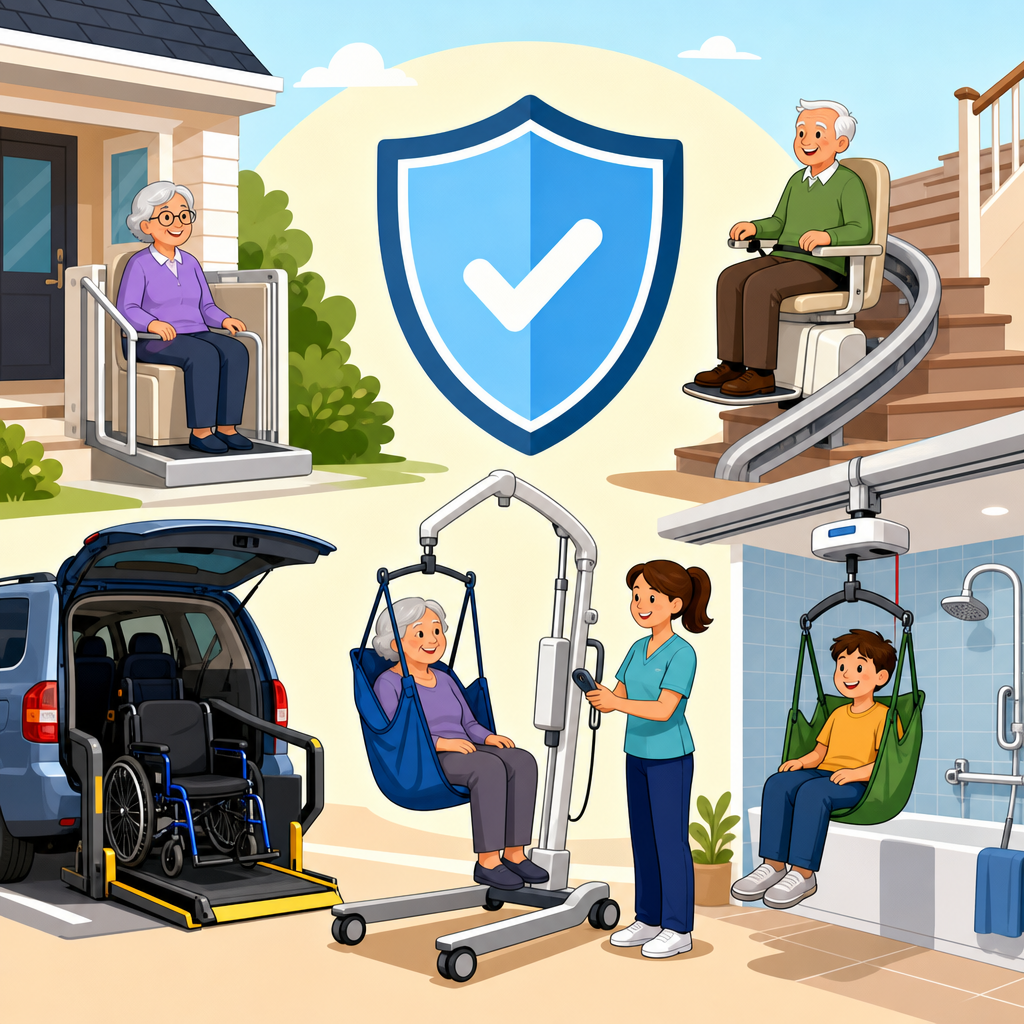
Insurance coverage for chair lifts is one of the most common questions families ask when a loved one begins struggling with stairs, yet the answer depends on the type of lift, the insurance plan, the medical reason, and how the equipment is classified. In practical terms, most people asking, “Does insurance cover chair lifts?” want to know whether a stair lift, platform lift, or patient transfer lift will be paid for in full, in part, or not at all. Those distinctions matter because insurers do not treat every lift the same way. A motorized recliner that helps someone stand, a stair lift mounted to a rail, a vertical platform lift for wheelchair access, and a Hoyer-style patient lift can all improve mobility, but they fall into different reimbursement categories.
I have worked with families comparing invoices, Medicare rules, Medicaid waiver benefits, and dealer quotes, and the biggest mistake I see is assuming that any device with the word lift is automatically covered as medical equipment. Insurance usually covers equipment based on medical necessity and benefit category, not convenience or home value. That means a patient lift used to transfer someone safely from bed to wheelchair may have a stronger coverage pathway than a stair lift installed on a home staircase. Home accessibility modifications also sit in a gray area between healthcare need and property improvement, which is why denials are common even when the need is obvious.
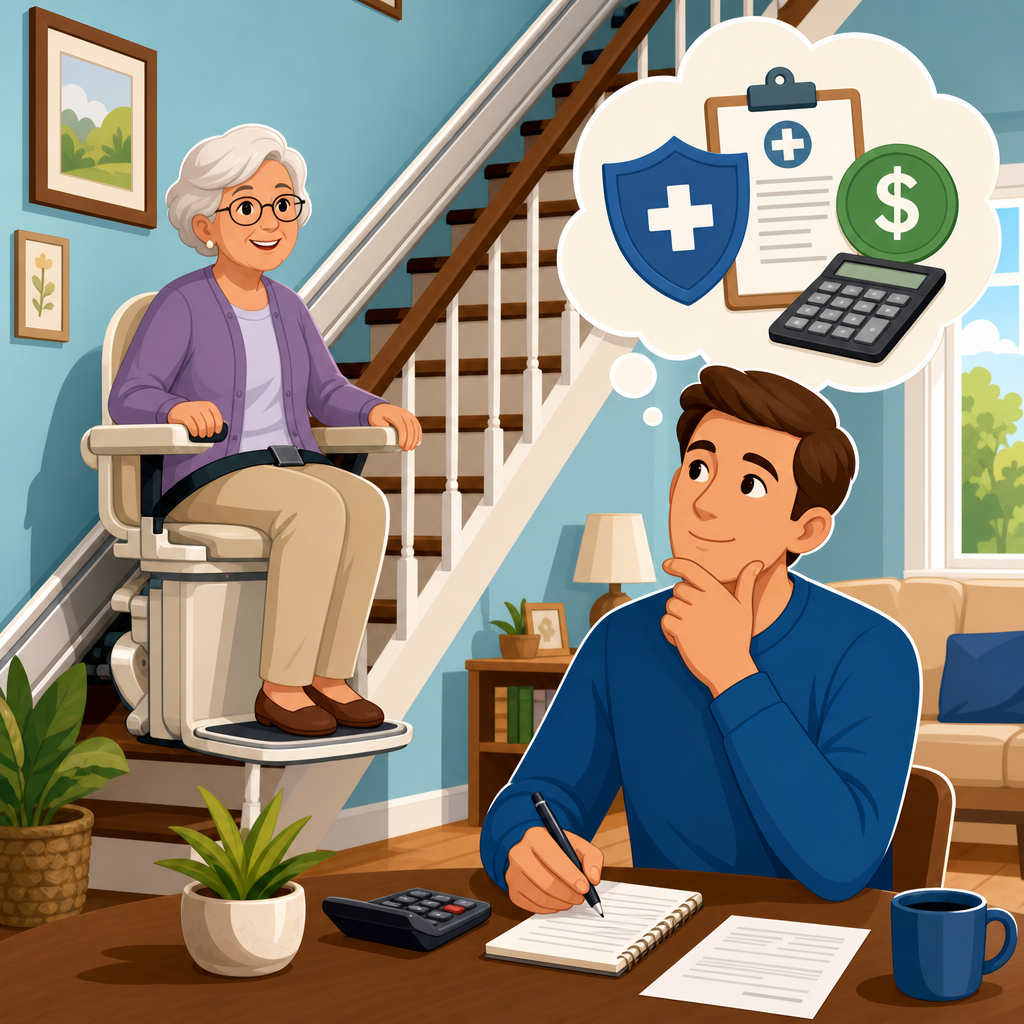
This topic matters because chair lifts and related mobility lifts are expensive. A straight stair lift often costs roughly $2,500 to $5,500 installed, while curved stair lifts commonly range from $10,000 to $20,000 or more because the rail is custom fabricated. Vertical platform lifts may cost even more depending on travel height, enclosure, electrical work, and permits. Patient lifts and sit-to-stand lifts can be less expensive than major home modifications, but they still represent a meaningful out-of-pocket burden. Understanding what types of lifts are covered by insurance helps families plan financing, pursue the right documentation, and avoid wasting time on benefits that simply do not apply.
At a high level, traditional health insurance, Medicare, Medicaid, veterans programs, workers’ compensation, and long-term care insurance each evaluate lifts differently. Medicare generally focuses on durable medical equipment used for a medical purpose inside the home, and that standard excludes many stair lifts. Medicaid can be broader in some states because home and community-based services waivers may pay for environmental accessibility modifications. Private insurers vary by policy language and medical necessity criteria. The key is to identify the exact lift type first, then match it to the benefit source most likely to cover it.
Which types of lifts are most often covered by insurance?
The lifts most commonly covered by insurance are patient transfer lifts, not stair lifts. If a person cannot safely move from bed to chair, chair to toilet, or wheelchair to bathing surface without extensive assistance, a manual hydraulic patient lift or powered patient lift may qualify as durable medical equipment. These devices are designed for direct patient handling and are often supported by a physician’s order documenting transfer limitations, caregiver safety concerns, and the need to prevent falls or skin injury. In Medicare terminology, these products fit more naturally within recognized medical equipment categories than home stair transport systems do.
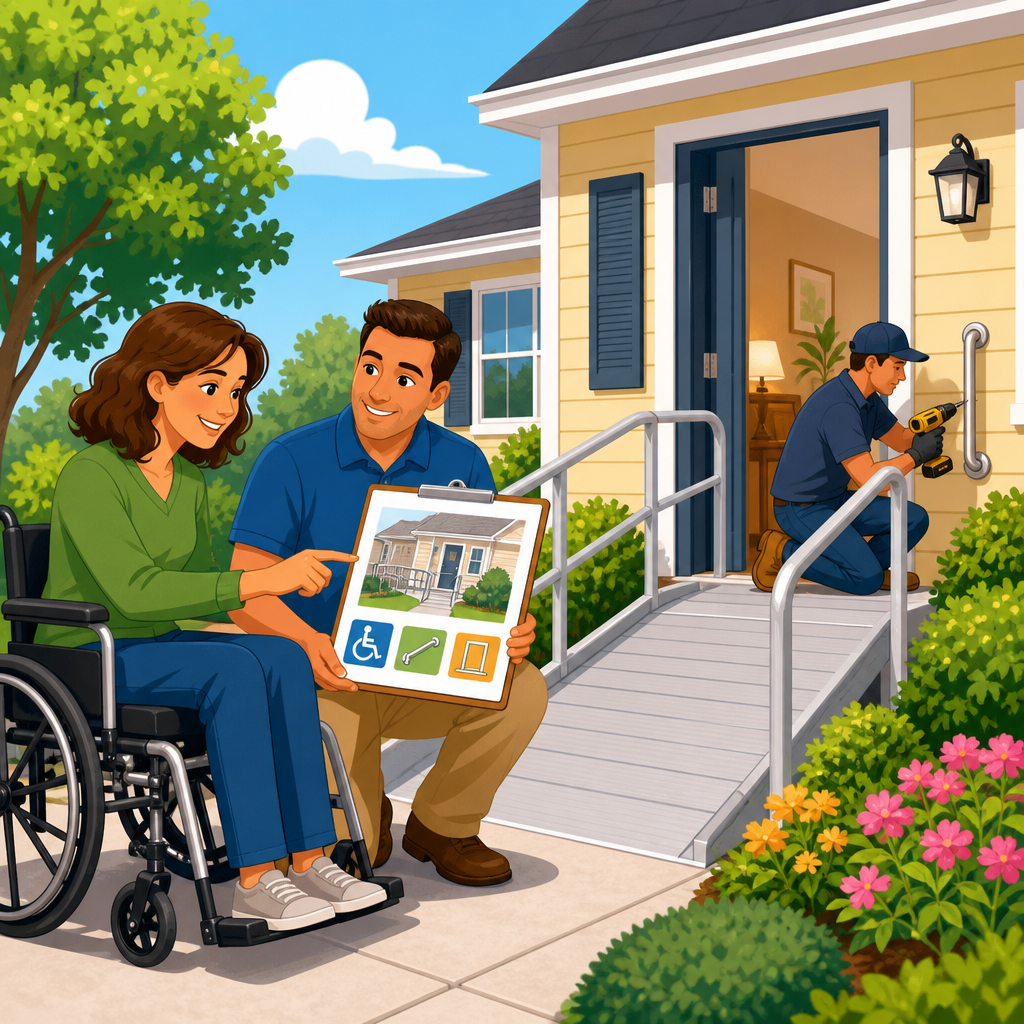
Sit-to-stand lifts may also be covered when a patient has some weight-bearing ability but cannot stand safely without mechanical assistance. Coverage depends on functional status, the home setting, and whether a simpler alternative would meet the need. By contrast, stair lifts, chair lifts mounted along stairs, and many porch or garage access lifts are usually treated as home modifications. Insurers often argue that these systems alter the structure of the home rather than provide portable medical equipment. Even when they clearly improve safety, that classification can make reimbursement difficult under standard medical policies.
Vehicle lifts for scooters or power wheelchairs are another category that is usually not covered by standard health insurance because they are considered transportation-related rather than medically necessary treatment equipment. Seat lift mechanisms built into lift chairs occupy a middle ground. Medicare may cover the seat lift mechanism itself under limited circumstances, but not the entire chair. This distinction surprises many buyers. The upholstered recliner is considered furniture, while the mechanical lifting component may qualify if the patient has severe arthritis of the hip or knee or a severe neuromuscular disease and meets strict standing criteria.
| Lift type | Common use | Typical insurance outlook |
|---|---|---|
| Patient transfer lift | Bed to wheelchair or toilet transfers | Often coverable with medical necessity documentation |
| Sit-to-stand lift | Assisted standing and short transfers | Sometimes coverable when criteria are met |
| Seat lift mechanism | Helps user rise from seated position | Mechanism may be covered; full chair usually is not |
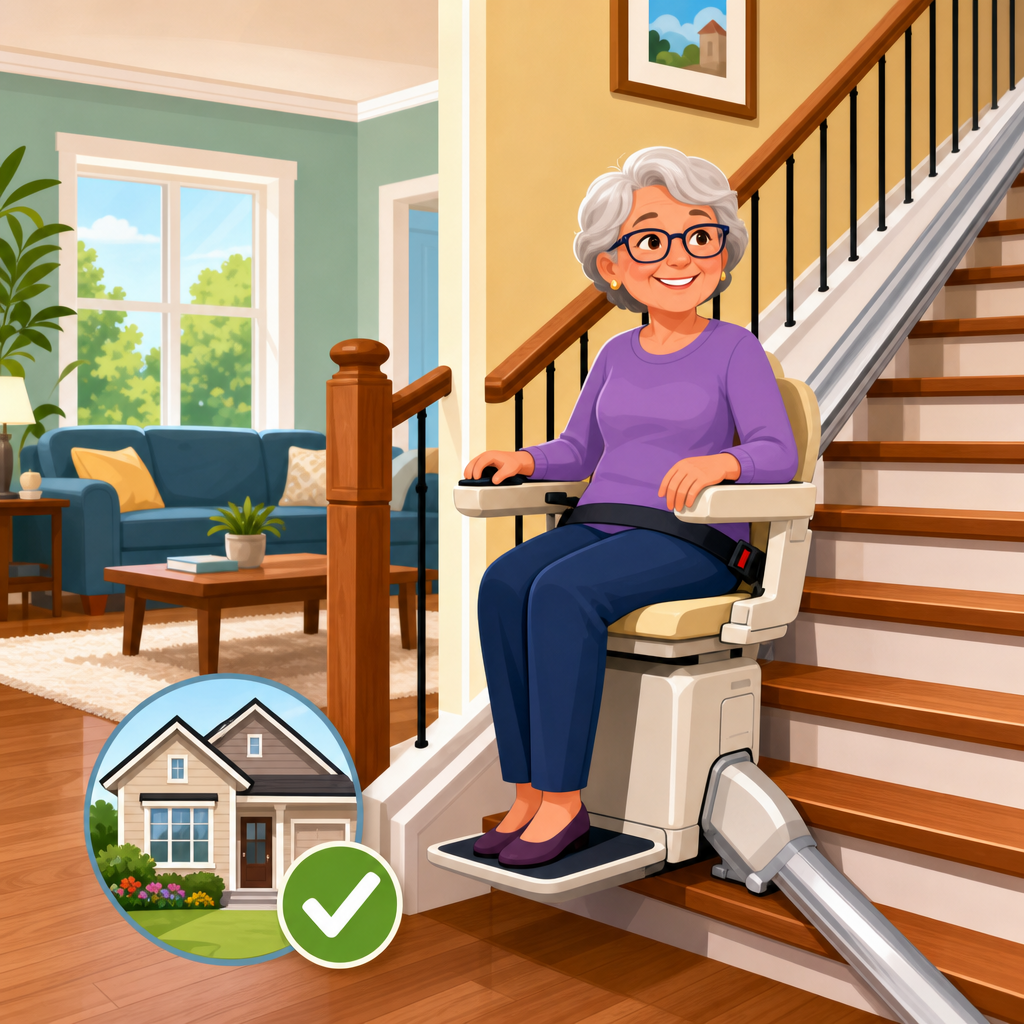
| Straight or curved stair lift | Riding up and down stairs at home | Usually not covered by Medicare; private coverage varies |
| Vertical platform lift | Wheelchair access over short vertical rise | Often treated as home modification, not standard DME |
Does Medicare cover chair lifts or stair lifts?
Medicare coverage is the first place many people look, and the short answer is that Original Medicare usually does not cover stair lifts. Medicare Part B covers durable medical equipment when the equipment is medically necessary, prescribed for home use, and supplied by an enrolled provider. Stair lifts generally fail the coverage test because Medicare does not classify them as durable medical equipment in the same way it classifies walkers, hospital beds, or patient lifts. They are typically viewed as a convenience item or a home modification, even when they are essential for a specific household.
However, Medicare may cover certain other lift-related equipment. A patient lift can be covered when a beneficiary is otherwise bed-confined without the lift or when transfer between bed and chair, wheelchair, or commode is medically necessary and would require more than one person without mechanical assistance. A seat lift mechanism may also be covered under narrowly defined conditions. The ordering clinician must document why the patient can walk once standing, why other treatments failed, and why the device is required to rise from a standard armchair or similar seat in the home.
Medicare Advantage plans sometimes provide supplemental benefits beyond Original Medicare, and that is where stair lift discussions occasionally become more hopeful. Some plans offer broader home support benefits, allowances, or partnerships with in-home safety vendors. Still, these benefits are not standard and should never be assumed. I advise families to request the Evidence of Coverage, ask whether the item is covered as durable medical equipment, a supplemental home modification, or a special supplemental benefit for the chronically ill, and get any preauthorization guidance in writing before signing a sales contract.
When does Medicaid pay for lifts?
Medicaid is often the most flexible public payer for home accessibility, but coverage depends heavily on the state. Standard Medicaid medical benefits may cover patient lifts much like other medically necessary equipment. The larger opportunity for stair lifts and platform lifts usually comes through waiver programs designed to keep people in their homes instead of institutions. Home and community-based services waivers, managed long-term services and supports programs, and state-specific environmental accessibility benefits may help pay for stair lifts, porch lifts, ramps, widened doorways, or bathroom modifications.
The reason Medicaid can be more helpful is simple: some programs recognize that a one-time home modification may cost less than nursing facility placement or repeated emergency care from falls. In real cases I have reviewed, waiver case managers approved accessibility work after an occupational therapist documented inability to reach the bedroom or bathing area safely. Still, approval is not automatic. States usually require assessments, contractor bids, proof that the modification is the most cost-effective option, and sometimes landlord permission for rental housing. Waiver waiting lists can also delay projects for months or longer.
If you are asking whether insurance covers chair lifts and the user has low income, significant disability, or long-term care needs, Medicaid should be investigated early. Contact the state Medicaid agency, the local aging and disability resource center, or the managed care plan handling long-term services. Ask specifically about environmental accessibility adaptations, home modifications, assistive technology, and personal care transfer equipment. Those exact categories produce better answers than a general question about chair lifts.
How do private insurance, long-term care insurance, and workers’ compensation handle lift coverage?
Private health insurance policies vary widely. Employer plans and individual marketplace plans generally follow durable medical equipment rules similar to Medicare, which means patient lifts have a reasonable chance of coverage while stair lifts often do not. The decisive documents are the certificate of coverage, medical policy bulletin, and prior authorization criteria. Insurers may deny stair lifts as non-covered home modifications, environmental changes, or convenience items. Some policies exclude all items that permanently attach to a residence. Others leave room for appeal if a physician and therapist establish that no lower-cost covered alternative can address the risk.
Long-term care insurance can sometimes be a better fit because these policies are built around functional impairment rather than acute treatment. Some plans reimburse care-related home modifications when they help the insured remain at home safely. Benefits differ enormously by contract vintage and rider language, so it is important to review elimination periods, daily benefit structures, and whether home modification costs reduce the available lifetime pool. Veterans may also have access to grants or prosthetics-related support through the Department of Veterans Affairs, particularly when disability is service connected or when the veteran qualifies for housing adaptation programs.
Workers’ compensation is another special case. If a workplace injury created the mobility limitation, stair lifts or home access equipment may be covered as part of the claim when medically necessary to support daily function after the injury. Auto insurance medical benefits can also matter after a vehicle accident, depending on state law and settlement terms. In these situations, coverage hinges less on standard health plan categories and more on causation, rehabilitation goals, and legal documentation.
What documentation improves the chance of approval?
The strongest lift coverage requests are specific, clinical, and tied to function. A physician prescription alone is rarely enough. Insurers respond better when the record explains exactly what the person cannot do, why a lesser device will not work, and how the requested lift reduces measurable risk. Useful documentation includes diagnoses, transfer assessments, fall history, caregiver limitations, home layout, weight and size needs, and occupational or physical therapy evaluations. For stair lifts and platform lifts, photographs of the staircase or entry, notes about bedroom and bathroom access, and an explanation of why relocation to the first floor is not feasible can all strengthen the case.
Vendor paperwork matters too. Ask for a detailed quote listing equipment model, installation scope, warranty, and whether the product is new or refurbished. If the payer requires competitive bidding or multiple estimates, obtain them early. For patient lifts, use suppliers familiar with HCPCS coding and documentation requirements. Families often lose time because they buy retail before checking network status or prescription rules. Before purchase, confirm prior authorization, coding, appeal rights, and whether reimbursement is assigned to the supplier or paid after submission.
What should families do if insurance will not cover a chair lift?
A denial is common, but it does not end the process. First, read the denial reason carefully and determine whether it is a missing-document problem, a coding issue, or a true policy exclusion. If the lift is excluded as a home modification, an appeal may still succeed with stronger medical necessity evidence, though expectations should remain realistic. If the policy clearly excludes stair lifts, shift quickly to alternative funding rather than waiting through multiple low-probability appeals.
Practical alternatives include manufacturer financing, dealer rental programs for straight stair lifts, state assistive technology loan programs, Area Agency on Aging resources, nonprofit grants, veterans benefits, and home equity financing for larger accessibility projects. Some families reduce costs by installing a straight lift on one staircase while moving sleeping space downstairs temporarily. Others choose a patient lift, transfer aids, or targeted remodeling because those options solve the highest-risk mobility problem at lower cost. The best solution is the one that safely matches the person’s diagnosis, home design, and budget.
Insurance does cover some lifts, but not all lifts, and that distinction is the answer most families need. Patient transfer lifts and some seat lift mechanisms are the most likely to qualify under medical equipment benefits. Stair lifts, platform lifts, and other fixed home access systems are far less likely to be covered by Medicare and many private plans, though Medicaid waivers, veterans programs, workers’ compensation, and long-term care policies can sometimes fill the gap. The deciding factors are the exact lift type, the user’s functional limitations, the plan’s benefit language, and the quality of the documentation submitted.
If you are evaluating whether insurance covers chair lifts, start by identifying the device precisely, then call the insurer with the model category, diagnosis, and intended use. Request written coverage criteria, involve the prescribing clinician early, and compare alternative funding sources before buying. A careful benefits review can save thousands of dollars and help you choose the safest mobility solution for the home.
Frequently Asked Questions
What types of lifts are most commonly covered by insurance?
Insurance coverage usually depends on how the lift is classified and whether it is considered medically necessary. In many cases, patient transfer lifts, such as manual hydraulic lifts or powered Hoyer-style lifts used to move someone from a bed to a wheelchair, are more likely to qualify for coverage because they are often treated as durable medical equipment. These devices are prescribed to help with essential daily care and to reduce injury risk for both the patient and caregiver. When a doctor documents that a person cannot safely transfer without mechanical assistance, insurers are generally more willing to review the request under medical equipment benefits.
Stair lifts and vertical platform lifts are a different story. Even though they can be life-changing for someone who struggles with stairs, many insurance companies classify them as home modifications or convenience items rather than covered medical equipment. That distinction matters because most health insurance policies, including many standard plans, have much stricter rules for home accessibility upgrades than for equipment used directly in treatment or caregiving. As a result, a transfer lift may have a clearer path to coverage than a stair lift installed on a staircase, even if both serve an important mobility function.
Does insurance usually cover stair lifts for use in the home?
In most situations, standard health insurance does not routinely cover stair lifts installed in a private home. The main reason is that stair lifts are often viewed as structural or environmental modifications rather than medically necessary equipment under the policy’s durable medical equipment benefit. Even when a person has severe mobility limitations, an insurer may still deny the claim if the lift is attached to the home and designed to improve access within the living environment rather than to provide direct treatment or bodily support.
That said, “usually not covered” does not mean “never covered.” Some plans offer limited exceptions, especially if there is strong medical documentation, no safe alternative exists, and the policy has benefits related to mobility assistance or home health support. In addition, certain Medicare Advantage plans, Medicaid waiver programs, veterans’ benefits, workers’ compensation claims, or long-term care policies may help pay for part of the cost in specific circumstances. Families should always ask for the insurer’s written coverage criteria, verify whether prior authorization is required, and find out whether the lift would be processed as medical equipment, a home modification, or an excluded item. That classification often determines the outcome.
Are patient transfer lifts covered differently than stair lifts or platform lifts?
Yes, patient transfer lifts are often evaluated under a different standard than stair lifts or platform lifts. A patient transfer lift is typically used for medically necessary movement from one essential position to another, such as bed to chair, chair to toilet, or wheelchair to bath seat. Because these lifts are directly tied to caregiving, injury prevention, and basic activities of daily living, insurers may be more likely to consider them eligible under durable medical equipment rules. Coverage is especially common when the patient is unable to transfer independently, would otherwise be confined to bed, or requires mechanical assistance to prevent harm to themselves or a caregiver.
By contrast, stair lifts and platform lifts are frequently treated as accessibility improvements to the home. Even though they support mobility, insurers may argue that they do not meet the same definition of medical equipment because they are attached to the home and alter the living space. Platform lifts, including wheelchair lifts used to move between levels or over entry steps, can fall into a gray area depending on the insurer and the policy language. Some programs may provide partial support if the device is necessary for access and safety, but approval is much less predictable than it is for a transfer lift. The key takeaway is that coverage depends not just on the word “lift,” but on the lift’s purpose, setting, and policy classification.
What does an insurance company usually require before approving coverage for a lift?
Most insurers require more than a simple request. They typically want detailed medical documentation showing why the lift is necessary, what condition the person has, and why less costly or less complex alternatives are not sufficient. This often includes a prescription from a physician, chart notes describing the patient’s mobility limitations, records showing difficulty with transfers or stairs, and sometimes an evaluation from a physical therapist or occupational therapist. If the request involves a transfer lift, the insurer may also ask whether the patient can bear weight, whether a caregiver is available, and whether the device is needed to perform daily tasks safely at home.
Prior authorization is another major factor. Many claims are denied not because the equipment could never qualify, but because the family purchased or installed it before receiving approval. Insurers may also require that the supplier be in network, that the equipment meet specific coding standards, and that the claim be submitted under the correct benefit category. For a stair lift or platform lift, families may need even more evidence because these devices are often scrutinized as home modifications. Asking the insurer for written criteria before buying anything can prevent costly surprises and make it easier to prepare a stronger claim or appeal.
If insurance does not cover a lift, what other payment options should families consider?
If a claim is denied, families still have several practical paths to explore. First, it is worth reviewing the denial letter carefully and filing an appeal if the equipment was prescribed for a clear medical reason. Sometimes claims are rejected because of missing records, incorrect coding, lack of prior authorization, or classification issues that can be challenged with stronger documentation. A doctor’s letter of medical necessity, therapy evaluations, and caregiver safety concerns can all help support an appeal, especially for patient transfer lifts.
Beyond appeals, families should look into alternate funding sources. Medicaid waiver programs in some states may help with certain home accessibility needs or in-home care equipment. Veterans may qualify for benefits through the Department of Veterans Affairs if the mobility limitation is service connected or if the veteran meets program guidelines. Long-term care insurance, flexible spending accounts, health savings accounts, charitable grants, aging services agencies, and disability organizations may also provide partial assistance. Some lift providers offer financing, refurbished equipment, or rental options for transfer lifts, which can reduce the immediate cost. When insurance coverage is limited or unavailable, combining several smaller funding sources is often the most realistic strategy.