Buying a secondhand stair lift can look like an easy way to cut costs, but there are many situations where it is the wrong decision. In this guide, I will explain when not to buy a secondhand stair lift, what “used” and “refurbished” really mean, and how to judge safety, fit, warranty coverage, and long-term value. This matters because stair lifts are mobility devices, not ordinary furniture. A poor purchase can create breakdowns, delays, expensive reinstallation work, and serious user risk. If you are researching used and refurbished chair lifts, this hub article will help you understand the category, avoid common mistakes, and identify the cases where a new unit, a rental, or a professionally rebuilt model is the smarter choice.
Understand the difference between used, refurbished, and reconditioned stair lifts
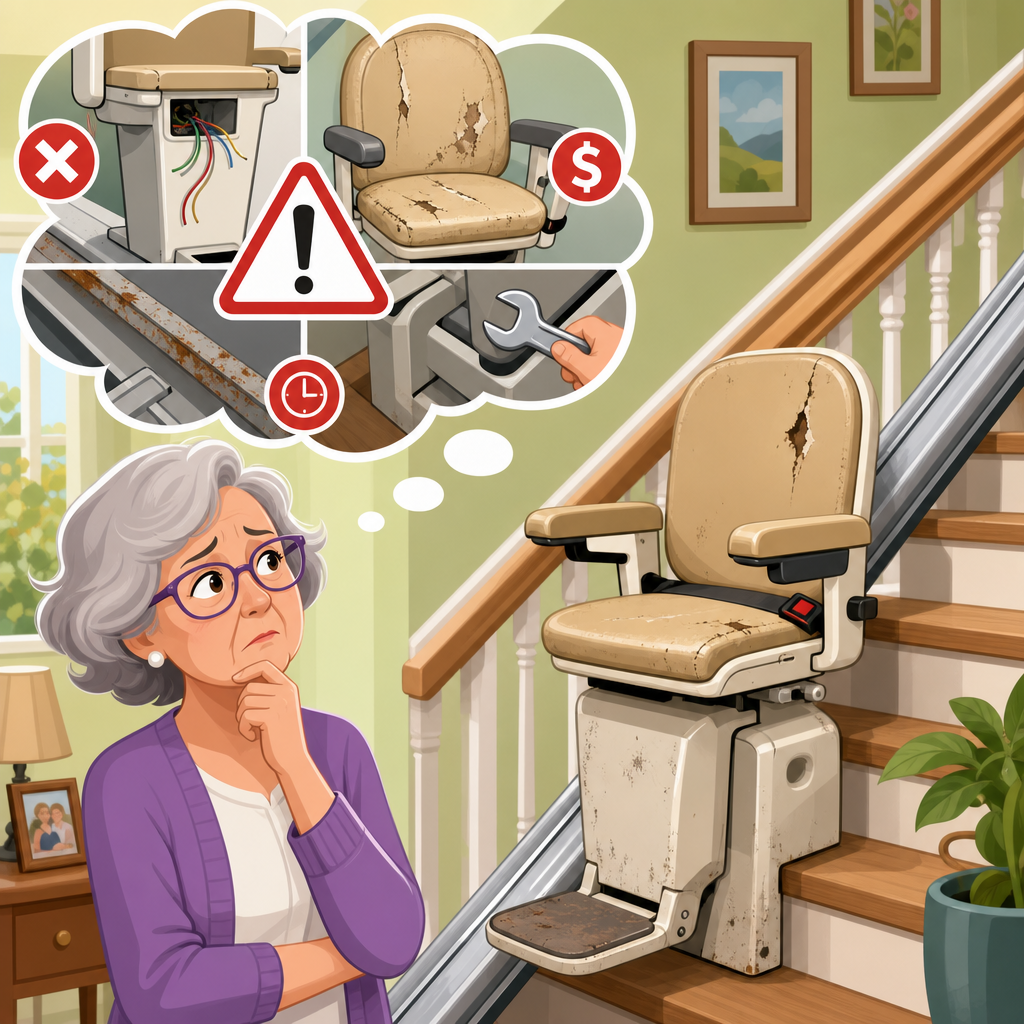
The first reason buyers make mistakes is that sellers use the same words for very different products. A used stair lift may simply mean a lift removed from one home and listed again with minimal work. A refurbished stair lift should mean the dealer has inspected the motor, gearbox, batteries, carriage rollers, seat switch, footrest sensors, charging points, call stations, and track joints, then replaced worn parts and tested the system under load. Some companies use “reconditioned” in the same way as refurbished, while others use it loosely. I have seen listings labeled refurbished where the only work performed was cosmetic cleaning and a new battery. That is not enough for a device carrying a person on a staircase.
A proper refurbishment process follows a documented checklist. Reputable dealers commonly replace batteries automatically, verify diagnostic codes, test overspeed governors where fitted, inspect seat swivels and locking mechanisms, and confirm the rail charging strips make clean contact. They also match the carriage generation to the correct rail type and firmware where applicable. If the seller cannot explain exactly what was rebuilt, what was tested, and what parts were replaced, do not assume the lower price is a bargain. In many cases, unclear refurbishment standards are the first sign that you should not buy a secondhand stair lift from that source.
Do not buy secondhand if the stair lift is not a precise match for your staircase
Stair lifts are highly dependent on staircase geometry. Straight stair lifts are simpler because the rail is usually a standardized extrusion cut to length. Curved stair lifts are different. Their rails are custom built to the exact bends, landings, parking points, hinge requirements, and obstructions in one specific home. That means a used curved stair lift from another property is almost never a direct fit. Even when the seat and carriage can be reused, the rail usually cannot. Buyers often focus on the attractive price of a removed curved unit and miss the fact that a newly fabricated rail can represent most of the real project cost.
Even with straight stair lifts, fit is not just about rail length. You need adequate folded width, sufficient clearance for other stair users, headroom at the top landing, safe transfer space, and a power supply in the right location. Building practice often references minimum clearances, but usability matters more than theory. In homes I have assessed, a lift that technically fit still blocked a doorway swing, created a trip risk at the bottom nose of the stair, or required an awkward transfer at the top. If the dealer does not perform a site survey with measurements, photos, and user assessment, that alone is a strong reason not to buy secondhand.
Do not buy secondhand when safety history, service records, or parts support are unclear
A stair lift should have a traceable history. You want the model number, serial number, installation date if known, service log, fault history, and confirmation that replacement parts remain available. If any of that is missing, proceed cautiously. Older stair lifts can become difficult to support because manufacturers discontinue boards, charger modules, remote controls, or safety edges. I have seen otherwise solid lifts sidelined by a failed PCB that was no longer manufactured. In that situation, the cheap purchase price quickly becomes irrelevant because the unit cannot be economically repaired.
Ask direct questions. Has the lift been removed from service because of repeated faults? Was it taken out due to user change, home sale, or an unresolved reliability issue? Were batteries left discharged in storage, which can shorten life? Has the rail been damaged during removal? Has the unit passed a post-removal inspection? Reliable dealers can answer these questions and provide documentation. Private sellers usually cannot. Lack of service history does not automatically mean a stair lift is unsafe, but it does mean you are taking on uncertainty. For a critical mobility device, uncertainty should push you toward a better-documented option.
Cost savings can disappear quickly when installation, adaptation, and repairs are added
The headline price on a secondhand stair lift rarely reflects the full cost. Buyers often compare a private-sale used lift against a dealer-supplied new one and assume they are judging the same thing. They are not. Installation labor, removal logistics, rail cutting or replacement, electrical work, battery replacement, safety testing, call controls, seat adaptations, powered options, and warranty all affect total ownership cost. A secondhand unit that looks 40 percent cheaper can end up costing almost the same as a new basic straight stair lift after these extras are included.
The numbers below illustrate typical cost drivers. Actual prices vary by region, brand, staircase complexity, and dealer support level, but the pattern is consistent.
| Cost factor | Secondhand straight lift | Refurbished dealer-supplied lift | New stair lift |
|---|---|---|---|
| Purchase price | Lowest upfront price | Moderate | Highest upfront price |
| Site survey and fitting | Often extra or unavailable | Usually included or quoted clearly | Usually included or quoted clearly |
| Battery and wear-part replacement | Common additional cost | Often included | Included |
| Warranty length | Limited or none | Short to medium | Longest |
| Future parts availability | Most uncertain | Better if current model | Best |
| Total risk of surprise expense | Highest | Moderate | Lowest |
For many households, that cost profile changes the decision. If you need dependable daily access, paying more for a supported model is often cheaper over three to five years than chasing faults on a bargain unit.
Do not buy secondhand for a high-need user without a professional assessment
The right stair lift depends as much on the user as on the staircase. Weight capacity, seat height, arm shape, footrest size, swivel direction, powered folding options, and transfer technique all matter. A user with limited trunk control may need a different seat profile than someone with arthritic knees. A person who can stand briefly can use one type of transfer; a person with significant balance impairment may need powered swivel and powered footrest to reduce bending and twisting. In these cases, buying secondhand without assessment is a mistake.
This is especially true where there is a progressive condition such as Parkinson’s disease, multiple sclerosis, motor neuron disease, or advanced heart failure. A lift that works today may be unsuitable in six months if seat position, joystick style, or safe transfer at the landing becomes harder. Occupational therapists, mobility assessors, and experienced stair lift surveyors can identify these issues early. In my experience, the most expensive stair lift is the one that fits the staircase but not the person. When user needs are complex or changing, secondhand is often too restrictive unless supplied by a dealer who can adapt and support it properly.
Do not buy secondhand if the seller cannot provide installation, warranty, and aftercare
A stair lift is only as good as the support behind it. Even reliable brands need annual servicing, battery changes, rail cleaning, and occasional callout diagnostics. If a dealer sells a secondhand unit but does not install it, test it, and service it afterward, you are assuming a large share of the risk. That is even more problematic with private-market purchases from online classifieds or local marketplaces. Many installers will not touch equipment they did not supply, particularly if the age, condition, or rail compatibility is uncertain.
Warranty terms reveal a lot. A strong secondhand offering usually includes parts and labor coverage, a defined response process for breakdowns, and clarity on what is excluded, such as consumable batteries or accidental damage. Weak offers use vague language like “seen working when removed” or “sold as is.” That kind of wording may be acceptable for household goods, but not for a lift someone depends on every day. If there is no reliable aftercare network in your area, do not buy secondhand. Buy local support first, hardware second.
When a rental, new lift, or certified refurbished unit is the better option
There are many cases where an alternative makes more sense than a loosely sourced used stair lift. If the need is short term after surgery, injury, or rehabilitation, a rental can be ideal. It reduces upfront cost, usually includes installation and service, and avoids owning equipment that may no longer be needed in a few months. If the staircase is curved, a new lift is often the practical answer because the custom rail drives the project. If you want lower cost but still need dependable support, a certified refurbished straight stair lift from an established dealer is often the best middle ground.
Look for dealers offering current or recent models from recognized manufacturers such as Handicare, Bruno, Stannah, Acorn, Harmar, or Access BDD, depending on your market. The best refurbished programs standardize the rebuild process, replace common wear items, verify safety circuits, and maintain local parts stock. They also explain what the unit cannot do. For example, a rebuilt basic model may not offer powered hinge, heavier weight capacity, or outdoor specification. That honesty is useful. The goal is not to avoid secondhand stair lifts entirely. The goal is to avoid buying them in the wrong circumstances.
Questions to ask before you buy any used or refurbished chair lift
If you are still considering a used or refurbished chair lift, ask focused questions and expect direct answers. What is the exact make, model, and age? Is it a current product with parts support? Was the rail reused or newly supplied? What components were replaced during refurbishment? What load testing was completed after installation? What is the warranty on parts and labor? Who provides emergency callout service? Can the seat, armrests, and footrest be configured for the user’s transfer needs? Is there a return policy if the lift proves unsuitable after fitting?
Also ask whether the installer assessed the staircase for obstructions, narrow points, and top-landing safety. A credible provider will discuss power supply, charge points, folded width, hinge rails where doorways are affected, and any limitations honestly. If answers are vague, defensive, or inconsistent, stop there. A careful buying process is not overkill. It is standard due diligence for a device that protects independence at home. Use this article as your hub for evaluating used and refurbished chair lifts, then compare it with model-specific reviews, rental guides, curved-versus-straight buying advice, and maintenance articles before making a final decision.
The main takeaway is simple: do not buy a secondhand stair lift just because it is cheaper. Avoid it when the staircase fit is uncertain, the user’s needs are complex, the service history is incomplete, the model lacks parts support, or the seller cannot provide installation and aftercare. In those situations, the lower upfront price is outweighed by higher safety risk, weaker reliability, and greater long-term cost. A well-executed refurbished purchase from a reputable dealer can still be a good option, especially for a straightforward straight staircase, but only when the product is properly matched, rebuilt, documented, and supported.
Used and refurbished chair lifts can serve some buyers well, yet they are not interchangeable with new lifts, and they are rarely suitable as blind bargain purchases. Treat this category as a technical mobility purchase, not a casual secondhand find. Start with the user, then the staircase, then the support network, and only then compare prices. If you are weighing your options now, book a home survey, request written refurbishment details, and compare warranty terms before you commit. That one step will help you avoid the wrong secondhand stair lift and choose a solution that is safe, practical, and durable.
Frequently Asked Questions
When is buying a secondhand stair lift usually a bad idea?
Buying a secondhand stair lift is usually a bad idea when the lift cannot be properly matched to the user, the staircase, and the level of support needed after installation. A stair lift is a mobility aid and a safety product, so the decision should never be based on price alone. It is often the wrong choice if the user has changing mobility needs, if the staircase has tight turns or unusual dimensions, or if there is no reliable engineer available to inspect, install, and maintain the unit. In those situations, a “cheap” used lift can quickly become expensive through alterations, call-out charges, replacement parts, and downtime.
It is also a poor option when there is no clear service history, no meaningful warranty, or no confidence that spare parts will remain available. Some older models may still function, but that does not mean they are suitable for daily use in a real home environment. If the chair, rail, batteries, swivel system, footrest sensors, or safety edges are worn, the risks go beyond inconvenience. Delays, failed lifts, and unsafe transfers can all affect the user’s independence and wellbeing. In short, if safety, fit, support, or long-term reliability are uncertain, that is exactly when not to buy a secondhand stair lift.
What is the difference between a used stair lift and a refurbished stair lift?
A used stair lift is typically sold in the condition it was removed from a previous property, with little more than a basic check, cleaning, or confirmation that it powers on. A refurbished stair lift, by contrast, should have gone through a structured reconditioning process. That usually means the unit has been inspected, tested, repaired where necessary, fitted with replacement wear parts, cleaned to a professional standard, and prepared for safe reinstallation. However, the word “refurbished” is not always used consistently, so buyers should never assume two sellers mean the same thing.
The important point is not the label, but the process behind it. Ask exactly what was refurbished. Were the batteries replaced? Were rollers, hinges, armrests, sensors, seat belts, and charging contacts tested? Was the motor checked under load? Was the rail reused, cut down, or newly manufactured? Was the lift recertified or signed off by a qualified installer? A properly refurbished unit may be a sensible option in some cases, but a loosely described “refurbished” lift with no documentation can be little better than a used one with fresh upholstery. If the seller cannot clearly explain what work was completed, when it was done, and what guarantee comes with it, that is a strong signal not to buy.
Why can staircase fit make a secondhand stair lift the wrong purchase?
Fit is one of the biggest reasons not to buy secondhand, especially for curved staircases. Straight stair lifts are more standardized and may sometimes be reused successfully if the staircase dimensions are compatible. Curved stair lifts are different. Their rails are usually custom-made for a specific staircase, including bends, landings, parking positions, and clearance points. A rail that worked perfectly in one home will almost never transfer directly into another without major redesign or complete replacement. That means a secondhand curved lift may not deliver the savings people expect.
Even with straight stair lifts, measurements alone do not tell the full story. The width of the stairs, wall obstructions, door swings, radiators, overhangs, hinged rail needs, seat height, transfer space at the top and bottom, and the user’s body size and mobility all matter. A lift that physically fits the staircase may still be wrong if the user cannot safely get on and off, cannot operate the controls comfortably, or cannot fold the unit when not in use. Poor fit can lead to awkward transfers, blocked stair access, repeated service visits, or costly removal and reinstallation. If a secondhand stair lift has not been assessed specifically for both the property and the intended user, it should be treated with caution.
How important are warranty, servicing, and spare parts when considering a secondhand stair lift?
They are extremely important, and often overlooked. A secondhand stair lift without solid aftercare can become a false economy very quickly. The initial purchase price may look attractive, but stair lifts contain batteries, electrical systems, safety circuits, drive components, and moving parts that all need periodic servicing. If there is no warranty, no local engineer network, and no dependable source of spare parts, even a minor fault can leave the user without safe stair access for days or weeks. For someone relying on the lift every day, that is not a small inconvenience; it can disrupt basic life at home.
A worthwhile warranty should be specific and practical, not vague marketing language. Check how long it lasts, what parts and labor are included, whether emergency call-outs are covered, and whether there are exclusions for used components. Also ask whether the manufacturer still supports the model. Some older stair lifts become difficult to maintain because control boards, remotes, chargers, carriage parts, or rail components are no longer produced. If the only way to fix a failure is to search for discontinued parts, the buyer carries the risk. In many cases, the smarter decision is not to buy secondhand unless it comes from a reputable supplier who can install it correctly, maintain it locally, and stand behind it with a real service plan.
Are there situations where a new stair lift is better value than a secondhand one?
Yes, absolutely. A new stair lift is often better value when the user needs daily reliability, expects to use the lift for several years, has a curved staircase, or has health needs that may change over time. In those cases, long-term value matters more than the lowest upfront price. A new lift may include a full warranty, current safety features, better parts availability, and a more precise installation tailored to the home. That can reduce breakdown risk and avoid the hidden costs that often come with used equipment, such as replacement batteries, repair labor, modified rails, or repeat visits to solve fit issues.
New can also be the better value choice if peace of mind is important. Families often underestimate the stress caused by an unreliable stair lift, especially when the user cannot manage stairs safely without it. If one failure leads to restricted access to bedrooms or bathrooms, the “saving” from buying secondhand can disappear very quickly. A new lift may cost more at the start, but if it provides dependable operation, clear support, better resale or buy-back options, and fewer disruptions, it can be the more economical choice overall. When safety, confidence, and predictable ownership costs matter, a new stair lift is often the better investment.