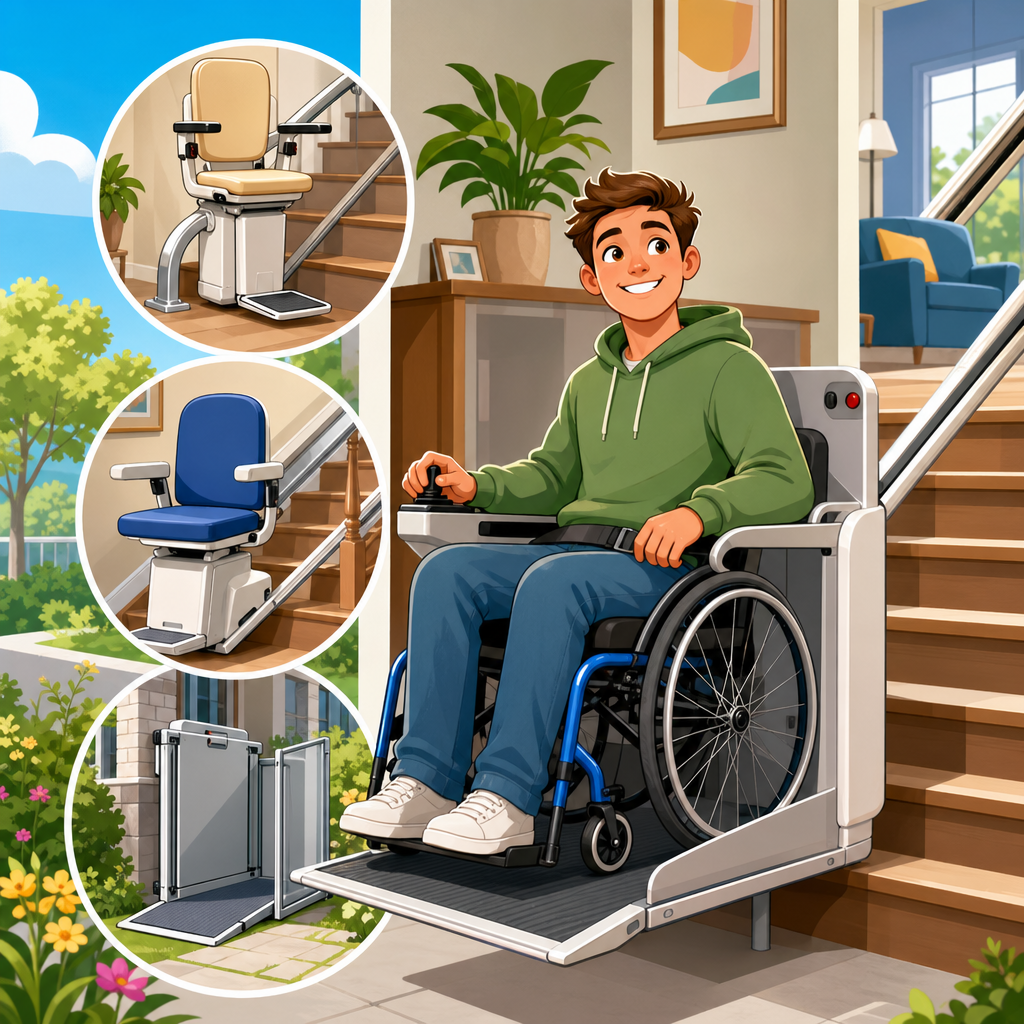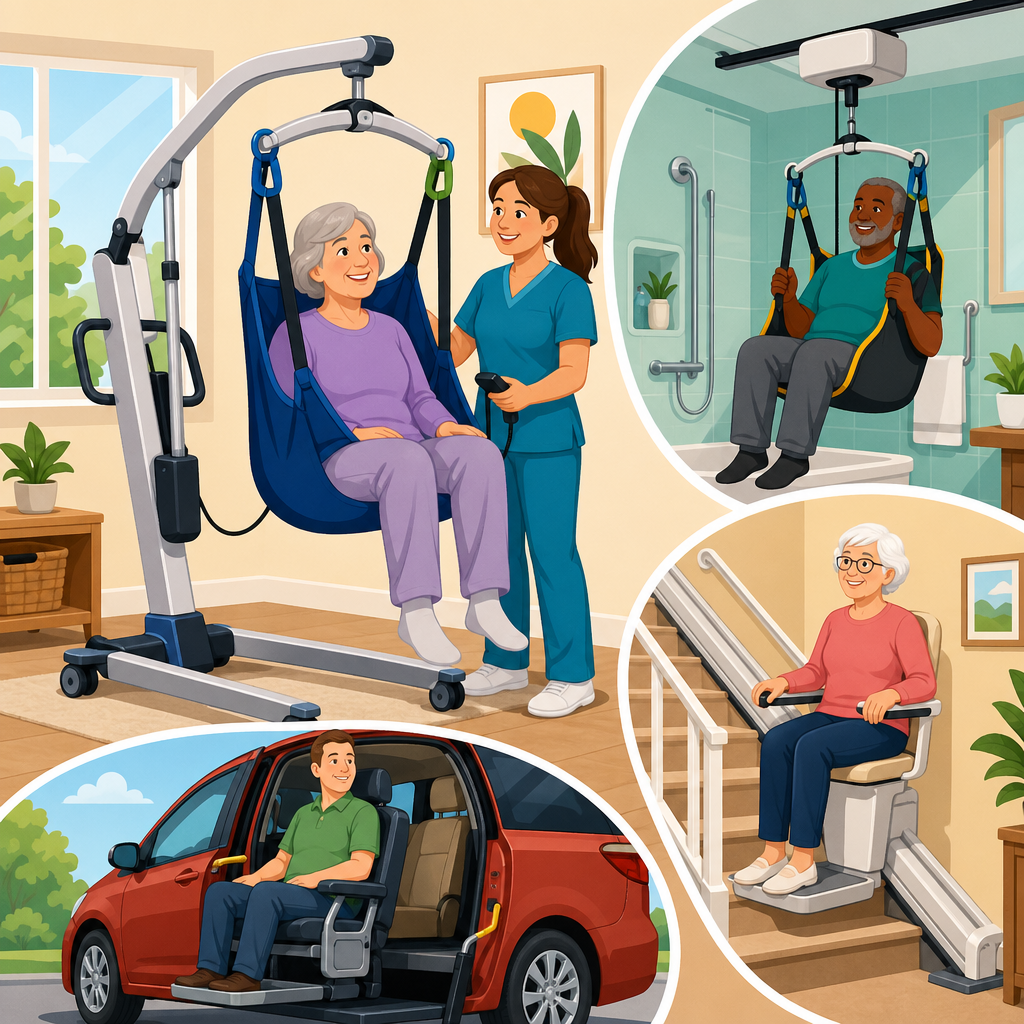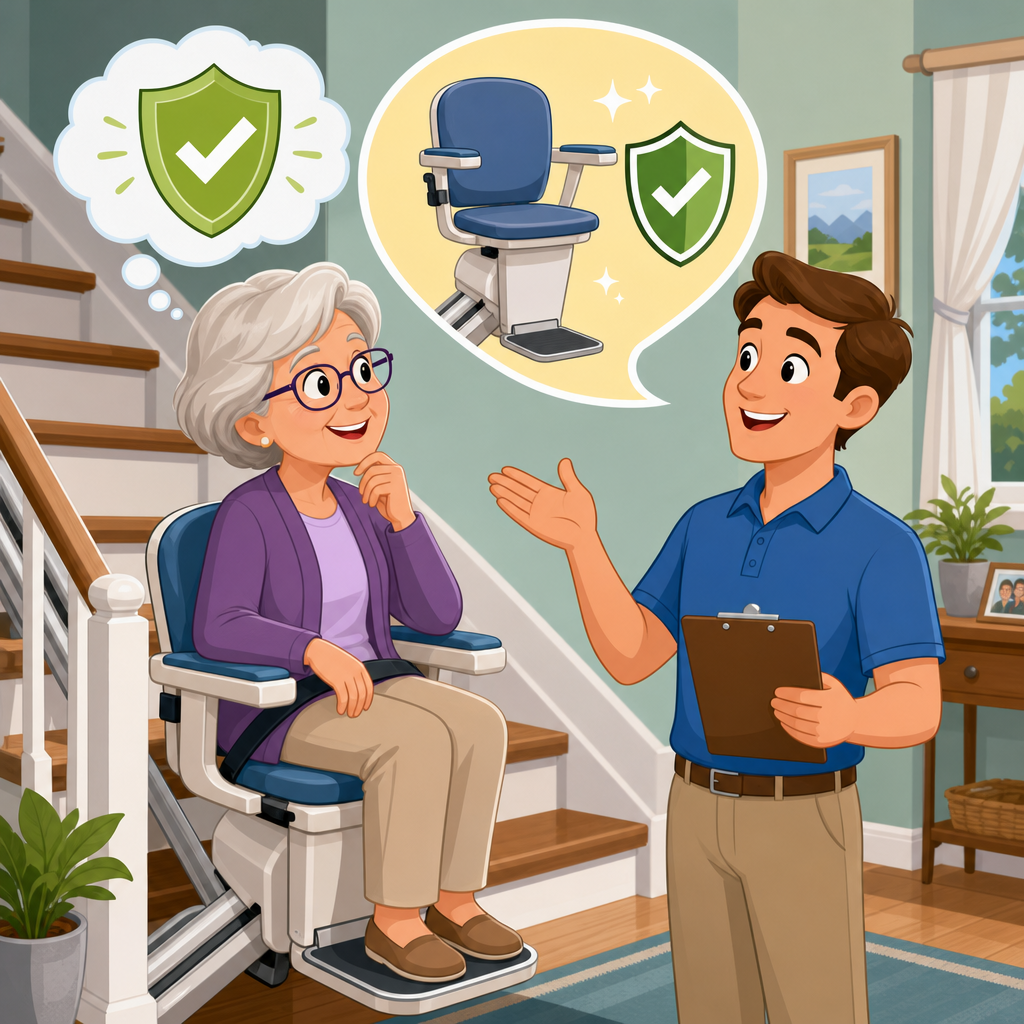
Buying a pre-owned mobility product can lower costs dramatically, but many shoppers still ask the same practical question: are warranties available on used chair lifts? The short answer is yes, warranties are often available on used and refurbished chair lifts, but the coverage is usually narrower, shorter, and more conditional than the protection offered with a new stair lift. Understanding those limits matters because a warranty is not just a sales perk; it is a risk-management tool that affects repair costs, downtime, safety, and long-term value.
In this guide, I will explain how warranties on used chair lifts actually work, what “used,” “refurbished,” and “reconditioned” mean in the market, and how to evaluate a seller before you commit. I have worked with buyers comparing secondhand Bruno, Harmar, Acorn, and Stannah units, and the same pattern appears repeatedly: the best outcomes come from people who ask detailed questions about parts coverage, labor, rail compatibility, battery condition, and installer support before purchase. This article serves as a hub for the broader topic of used and refurbished chair lifts, so it also highlights the key buying, inspection, pricing, and ownership issues that connect to every decision in this category.
A chair lift, often called a stair lift, is a motorized seat that travels on a rail mounted to the staircase. It helps users with limited mobility move between floors safely. A warranty is the seller’s written promise to repair or replace specified components for a set period if they fail under normal use. On used equipment, that promise can range from a 30-day parts guarantee to a one-year limited warranty that covers major drive components but excludes wear items, batteries, remotes, upholstery, and service calls. Because the used market includes private sellers, local dealers, medical equipment resellers, and factory-authorized refurbishment programs, warranty quality varies widely.
What warranty coverage is typically available on used chair lifts?
Most used chair lifts are sold with one of four warranty structures: no warranty at all, a short dealer warranty, a limited refurbished warranty, or a transferred manufacturer-backed warranty on specific components. In practice, the strongest protection usually comes from authorized dealers that inspect the unit, replace high-failure parts, test safety circuits, and install the lift with a new rail or rail sections matched to the staircase. Private-party sales rarely include meaningful warranty coverage, and if they do, enforcement is difficult.
When buyers ask what is “normal,” I tell them to expect 30 to 90 days on used units sold as-is after basic testing, and 6 to 12 months on professionally refurbished chair lifts sold by established mobility dealers. Coverage often includes the motor, gearbox, control board, and key safety sensors. Batteries may be covered for a shorter period because they are consumable lead-acid components subject to age, charging habits, and storage conditions. Labor is frequently separate. A seller may advertise a “one-year warranty,” but the fine print may apply only to parts shipped from the dealer, leaving the owner responsible for diagnostic visits, trip charges, and installation labor.
The largest point of confusion is the difference between a used unit and a refurbished unit. A used chair lift may simply be removed from a prior home and resold with minimal cleaning. A refurbished chair lift has generally been inspected, repaired, tested, and updated where necessary. Reputable refurbishing includes checking the carriage assembly, rack or drive system, swivel seat lock, footrest safety edges, call/send controls, charging contacts, and battery performance under load. That process directly affects the warranty because a seller who invests in refurbishment can stand behind the product with fewer unknowns.
Used, refurbished, and reconditioned: what the labels really mean
These terms are often used interchangeably in ads, but they should not be treated as equivalent. “Used” only confirms previous ownership. “Refurbished” implies a documented restoration process. “Reconditioned” usually means the unit was returned to acceptable operating condition, though the exact standard depends on the seller. There is no universal legal definition in this niche, so the buyer has to verify what work was actually performed.
In the field, I look for evidence of a structured checklist. Was the rail straightness verified? Were carriage rollers examined for wear? Were batteries load-tested and dated? Was the seat belt inspected? Were overspeed and obstruction sensors tested? Did the installer confirm charging at both park positions? If a dealer cannot answer those questions clearly, the label on the listing means very little. The better mobility companies keep service records and can tell you which parts were replaced, whether the unit came from a straight staircase or custom curved installation, and whether software or control revisions apply.
Curved chair lifts deserve special attention. Unlike many straight stair lifts, curved systems use rails fabricated for a specific staircase geometry, including landings, turns, and parking points. That means a used curved lift is often far less reusable unless the rail can be newly manufactured and the carriage is compatible with the current model line. As a result, warranties on used curved units are often centered on the carriage and electronics, not the original rail. For many buyers, a used straight stair lift offers a more practical mix of savings and support than a used curved model.
How manufacturers and dealers handle warranty support
Manufacturer policy and dealer policy are not the same thing. Some brands support second owners only through authorized dealers. Others limit warranty transferability or provide no direct coverage once a unit has been removed from its original installation. That is why the seller’s identity matters almost as much as the lift brand.
Bruno, Harmar, Acorn, Savaria, and Stannah each operate through different dealer and service structures depending on region. In many cases, the local dealer is the party that honors the used-lift warranty, performs service, and sources replacement parts. Ask whether the dealer stocks batteries, armrest controls, footrest switches, and PCB assemblies for the model you are considering. A written warranty has more value when the servicing company already supports that product line and can respond quickly if the lift stops working.
| Seller type | Typical warranty | Common strengths | Main risks |
|---|---|---|---|
| Private seller | None or informal promise | Lowest purchase price | No installation support, no enforceable service commitment |
| Local mobility dealer | 30 days to 1 year limited | Inspection, installation, local service calls | Coverage exclusions on labor or batteries |
| Authorized refurbisher | 6 to 12 months limited | Documented reconditioning, better parts access | Higher price than informal resale |
| Online reseller without service network | Parts-only short warranty | Wide inventory, convenient shopping | Difficult repairs, shipping delays, installer coordination |
One consistent lesson from real installations is that local support reduces total ownership cost. A cheaper lift with weak service backing can become more expensive than a better-refurbished unit if a charger fault, battery failure, or seat swivel switch issue leaves the user stranded. Ask who performs service after the sale, what the response window is, and whether the warranty includes in-home troubleshooting. Those details matter more than a headline discount.
What a used chair lift warranty usually covers and excludes
A strong used chair lift warranty should specify covered components, excluded items, claim procedures, and service area limits. The most commonly covered parts are the motor, transmission or gearbox, control board, charging system, and certain safety circuits. Some dealers also cover call/send stations, seat swivel mechanisms, and folding footrest hardware if those parts were replaced during refurbishment.
Common exclusions include batteries, cosmetic trim, upholstery tears, remote controls, normal wear, misuse, water damage, stairway modifications, and any damage caused by power surges or improper storage before installation. Labor exclusions are particularly important. If the warranty covers the part but not the technician’s visit, your out-of-pocket cost may still be substantial. In some areas, a mobility service call can run from $150 to $300 before parts, and after-hours visits may cost more.
Another frequent exclusion is rail reusability. Straight rails can sometimes be cut to fit or extended with compatible sections, but not every model allows flexible reuse. If the installation requires a new rail, the used carriage may be under warranty while the rail and installation hardware have separate terms. Buyers should also ask whether removal from the prior home affected the warranty in any way. Damage during transport or reinstallation is a real issue, especially when units are moved by non-specialists.
How to evaluate a used chair lift before you buy
Start with the model number, serial number, age, and service history. Without those basics, it is impossible to verify parts availability or realistic warranty value. Then confirm stair type: straight, curved, outdoor, or standing/perch model. Outdoor lifts require weather-resistant components, UV-stable covers, and corrosion checks, so used outdoor units deserve extra scrutiny. Ask for photographs of the rail, carriage, charging points, seat, footrest, and data plate. If possible, request a video of the lift traveling the full length of the staircase, stopping cleanly, swiveling at the top, and parking on charge.
Next, ask for the refurbishment checklist in writing. A serious dealer should be able to identify replaced batteries, tested safety edges, lubrication points, firmware or control revisions if applicable, and final installation testing. I also recommend asking whether the unit meets current local code expectations and manufacturer installation requirements. In the United States, stair lifts are commonly evaluated in the context of ASME A18.1 platform and chair lift safety requirements, even though dealer practice and local enforcement vary. You want an installer who understands the applicable standard and follows manufacturer mounting guidance exactly.
Finally, review the home assessment. Stair width, landing clearance, seat height, weight capacity, power location, and user transfer ability all affect whether a used lift is appropriate. A warranty does not solve a poor fit. If the user struggles with seat rotation, folding components, or getting on and off at the landing, the lowest-priced used option may be the wrong purchase. In mobility equipment, suitability and serviceability always come before bargain pricing.
When a used chair lift is a smart purchase and when it is not
A used or refurbished chair lift can be a smart purchase when the staircase is straight, the brand has strong local dealer support, the seller provides installation and written warranty terms, and the buyer expects temporary or medium-term use. This is common after surgery recovery, during hospice care, or when a family needs immediate access at lower cost. In those cases, a refurbished straight stair lift can deliver reliable service at meaningful savings compared with new equipment.
It is usually a weaker choice when the staircase is curved, the user depends on the lift multiple times every day with no backup sleeping space on the main floor, or service access is limited. It can also be a poor fit if the model is discontinued and replacement boards or seat assemblies are already difficult to source. I have seen buyers save money upfront on obsolete units only to face long downtime because a small electronic component was unavailable. For someone with severe mobility limitations, downtime is not a minor inconvenience; it can affect health, caregiving burden, and home safety.
The bottom line is straightforward: warranties are available on used chair lifts, but the quality of that warranty depends on refurbishment standards, installer competence, and local service support. Focus on written coverage, parts availability, and fit for the user rather than the advertised bargain alone. If you are comparing used and refurbished chair lifts, use this page as your starting point, then review model-specific guides, installation checklists, and pricing comparisons before you buy. A careful purchase can save money and still deliver safe, dependable mobility at home.
Frequently Asked Questions
Are warranties usually available on used chair lifts?
Yes, warranties are often available on used chair lifts, especially when the unit has been professionally refurbished and sold by an established mobility dealer. That said, the warranty on a pre-owned stair lift is typically much more limited than what you would receive with a brand-new model. In many cases, used chair lift warranties are shorter in duration, may cover only specific components, and often depend on the lift being installed by an authorized technician. Some sellers offer 30-day, 90-day, or 1-year limited warranties, while others may include coverage only on major mechanical parts and exclude labor, service calls, batteries, or cosmetic issues. The key point is that a warranty on a used lift is possible, but it should never be assumed. Buyers should ask for the exact written terms before purchase so they understand what protection is included and where the limitations begin.
What does a used chair lift warranty usually cover?
A used chair lift warranty commonly covers defects in major parts or failures related to core operation, but the exact scope varies significantly by seller and by how the lift was refurbished. Coverage may include the motor, gearbox, rail components, control board, seat swivel mechanism, or other essential mechanical and electrical systems needed for safe operation. However, many used chair lift warranties are “limited warranties,” which means they often exclude wear-and-tear items, cosmetic damage, batteries, remote controls, upholstery, and issues caused by misuse, poor maintenance, or improper installation. In some cases, the warranty covers parts only, leaving the customer responsible for labor and in-home service charges. In other cases, both parts and labor may be included for a short period after installation. Because these details have a direct effect on long-term cost, buyers should ask whether the warranty covers parts, labor, service visits, and replacement components, not just whether a warranty exists.
How is a warranty on a used chair lift different from a new chair lift warranty?
The biggest differences are usually length, breadth of coverage, and conditions. A new chair lift warranty is generally more comprehensive and may include manufacturer-backed protection for multiple years on key components, along with shorter-term labor coverage and, in some cases, extended coverage on the drivetrain or motor. A used chair lift warranty, by contrast, is often provided by the dealer rather than the original manufacturer, and it may apply only for a limited period after installation. New lift warranties also tend to be more straightforward because the product has no prior usage history. With a used model, the warranty may be narrower because the equipment has already experienced wear, may have had replacement parts installed, and may no longer qualify for full factory protection. This does not automatically make a used lift a bad choice, but it does mean buyers should evaluate the warranty as part of the overall value. A lower purchase price can still make excellent financial sense if the used lift has been properly reconditioned and comes with clear, credible service support.
What should I ask a dealer before relying on a used chair lift warranty?
Before relying on any warranty, buyers should ask very specific questions and get the answers in writing. Start by asking who is backing the warranty: the manufacturer, the dealer, or a third-party service company. Then ask how long the coverage lasts, exactly which parts are included, whether labor and in-home service calls are covered, and what exclusions apply. It is also smart to ask whether the warranty becomes void if the lift is moved, reinstalled, altered, or serviced by a non-authorized technician. Buyers should also confirm whether batteries, remotes, charging systems, and track modifications are included, since these are common areas where misunderstandings happen. Another important question is whether the chair lift was refurbished, tested, and certified before resale, and whether replacement parts are still readily available for that model. A trustworthy dealer should be comfortable explaining all of this clearly. If a seller is vague, reluctant to provide documentation, or overly focused on price without discussing service support, that is usually a sign to proceed cautiously.
Is buying a used chair lift with a limited warranty still worth it?
For many households, yes. A used chair lift with a limited warranty can be a practical and cost-effective solution, particularly when budget is a major factor and the lift is being purchased from a reputable mobility provider. The lower upfront cost of a pre-owned unit can make accessibility more affordable, and even a shorter warranty can provide meaningful peace of mind during the most important early period after installation. The value depends on the condition of the lift, the quality of the refurbishment process, the experience of the installer, and the strength of the warranty terms. A limited warranty should not be viewed as complete protection, but rather as one part of a broader risk-management decision. Buyers should weigh the purchase price against possible repair costs, parts availability, service responsiveness, and the lift’s expected remaining lifespan. When the seller is credible, the unit has been professionally inspected, and the warranty terms are clearly defined, a used chair lift can be an excellent investment despite having less coverage than a new one.