Area Agency on Aging home modification assistance can be the difference between staying safely at home and facing a preventable move to institutional care. Home modification assistance refers to funding, coordination, assessments, and referrals that help older adults adapt a home for mobility, safety, and daily function. An Area Agency on Aging, often called an AAA, is a local or regional organization created under the Older Americans Act to connect older adults, caregivers, and people with disabilities to services in their communities. When families ask where to start with grants and assistance programs for ramps, grab bars, accessible bathrooms, stair lifts, or fall-prevention repairs, the AAA is usually one of the best first calls.
This matters because most older adults want to age in place, but many homes were not designed for limited mobility, low vision, arthritis, or recovery after illness. I have worked with families who assumed only major wealth or Medicaid eligibility could unlock help, then learned that a local AAA could point them to small grant pools, nonprofit repair programs, evidence-based fall prevention services, and vetted contractors. The challenge is that assistance is highly local. Two neighboring counties can offer very different programs, waiting lists, income rules, and referral pathways. A clear understanding of how AAAs fit into the larger network of grants and assistance programs helps families save time, avoid scams, and target the most realistic options first.
Home modifications can range from simple adaptive changes to major structural work. Minor modifications include lever door handles, improved lighting, handheld showerheads, railings, raised toilet seats, and threshold ramps. Major modifications include roll-in showers, widened doorways, exterior ramps, stair lifts, platform lifts, and first-floor bathroom conversions. Not every program covers every project. Some pay only for health and safety fixes. Others focus on accessibility tied to a documented disability, hospital discharge, or fall risk. Understanding those distinctions is essential if you want the right help from the start.
As a hub article for grants and assistance programs, this guide explains what an AAA can do, what it usually cannot do, how local eligibility works, what documents to gather, which companion funding sources often pair with AAA referrals, and how to compare your options. If you are searching for Area Agency on Aging home modification assistance, the key takeaway is simple: the AAA may not always write the check, but it often knows who can.
What an Area Agency on Aging Actually Helps With
Many people expect the AAA to function as a direct grant office. In practice, its role is broader and often more valuable. Most AAAs provide information and assistance, benefits counseling, caregiver support, case management, care transitions support, and referrals to local providers. For home modifications, that may include a home safety assessment, a referral to a fall-prevention program, connection to a county repair grant, or guidance on whether Medicaid waivers, Veterans Affairs programs, USDA repair loans and grants, or nonprofit accessibility funds might fit your situation.
AAAs are structured differently by state and region, but they generally operate within the aging network funded in part through the Older Americans Act. That federal law supports services intended to help older adults remain independent in their homes and communities. Because of that mission, AAA staff often understand the local ecosystem better than national hotlines or generic web searches. In my experience, the best outcomes happen when callers do not simply ask, “Do you have money for a ramp?” Instead, they explain the person’s age, diagnosis or functional limitation, income range, housing status, and the exact barrier inside or outside the home.
Some AAAs directly administer small assistance pools for accessibility or emergency home repairs. Others contract with nonprofit partners that install grab bars, build low-cost ramps, or perform safety upgrades. Some counties use community development funds, local senior levies, or charitable dollars to support modifications for eligible residents, with the AAA acting as the intake point. This is why one of the smartest questions to ask is not only whether funding exists, but who administers it and what priority criteria apply.
What Types of Home Modifications May Be Covered
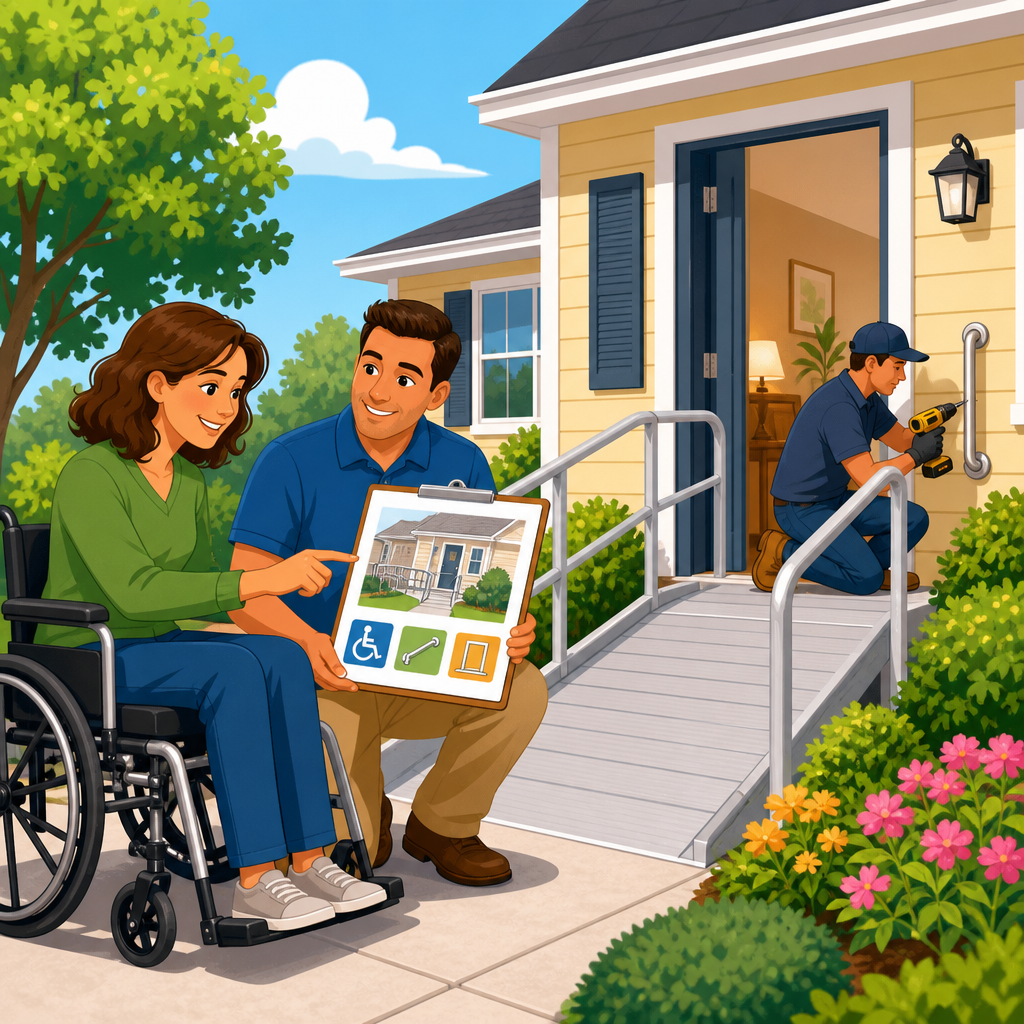
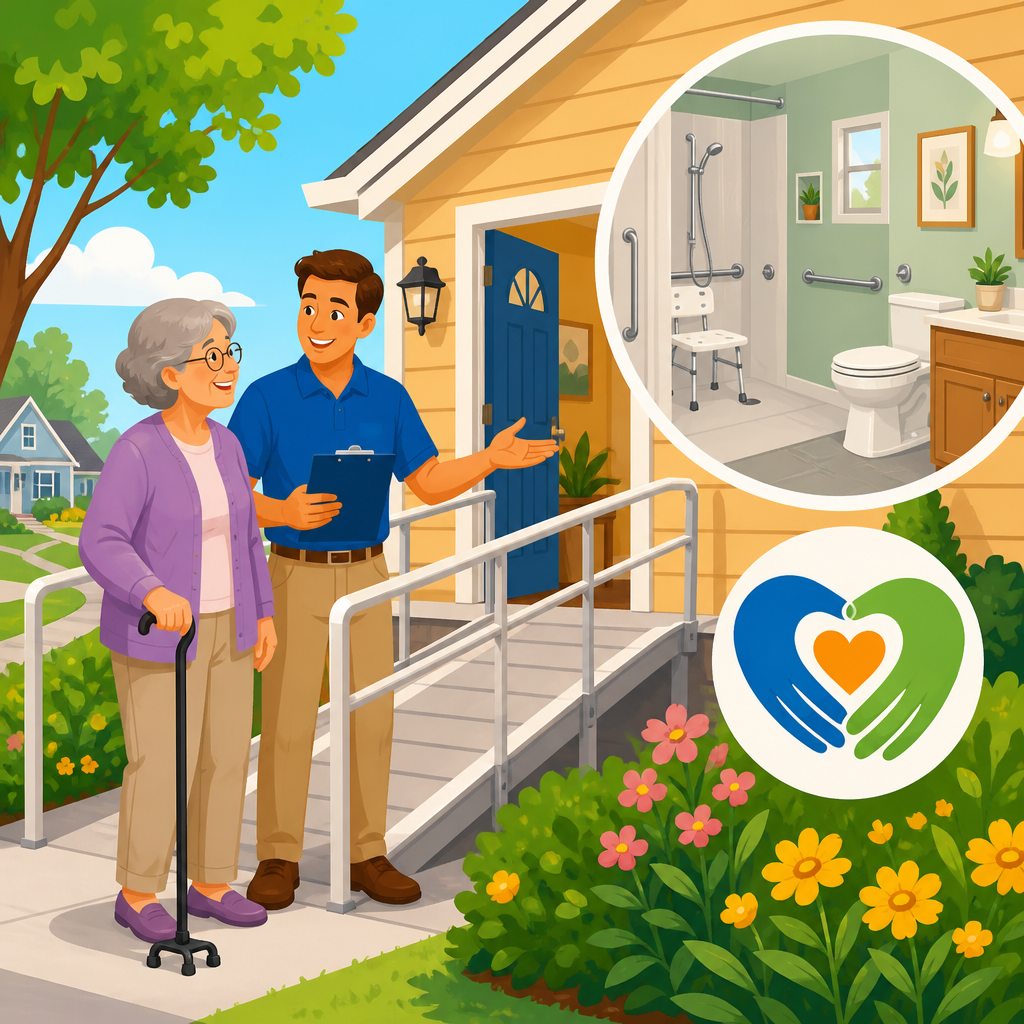
Area Agency on Aging home modification assistance usually focuses on needs that reduce fall risk, support transfers, improve bathroom safety, or remove barriers to entering and leaving the home. Common funded items include grab bars, handrails on both sides of stairs, better lighting, non-slip flooring, minor plumbing or electrical corrections tied to safety, wheelchair ramps, and bathroom adaptations such as shower seats and comfort-height toilets. Programs sometimes approve widened doorways, threshold adjustments, and accessible sink changes when they are necessary for wheelchair use or walker clearance.
Coverage limits are common. Cosmetic remodeling, luxury materials, general home renovation, roof replacement unrelated to accessibility, and projects that increase property value without a clear functional benefit are rarely covered. Stair lifts and walk-in tubs are examples of high-cost items that some families assume will be easy to fund; in reality, they are often excluded or approved only under narrowly defined circumstances. A walk-in tub, for example, can create a high step-in barrier and may not be considered the safest solution for every person. Many assessors prefer a low-threshold or roll-in shower paired with grab bars and a handheld shower wand.
Tenure matters too. Homeowners usually have more options than renters because structural changes require owner approval. Renters may still qualify for portable equipment, minor adaptations, or advocacy with a landlord under fair housing rules, but the path is different. Manufactured homes, condominiums, and homes in homeowners associations may face added restrictions. The earlier you identify those constraints, the easier it is to match the request to the right program.
How Eligibility Works at the Local Level
Eligibility for grants and assistance programs is rarely based on age alone. Most local programs weigh several factors: age, disability status, income, assets in some cases, functional limitations, household size, county or city residency, and whether the home is owner-occupied. Some prioritize people at immediate risk of nursing home placement, recent hospital discharge, or repeated falls. Others serve anyone over sixty with documented need. It is common for one program to require income below a percentage of area median income while another uses a multiple of the federal poverty level.
Medical documentation can matter, but not always in the way families expect. A physician’s note may help establish the need for a ramp, shower conversion, or transfer aid, yet many local programs rely more heavily on an occupational therapist, physical therapist, nurse assessor, or case manager who can document how the environment affects daily function. This distinction matters because the strongest applications connect the requested modification to specific activities of daily living such as bathing, toileting, ambulation, and safe transfers.
Waiting lists are another reality. Small local funds can run out quickly, especially after budget cycles begin or after winter weather increases repair needs. If you are told there is a waiting list, ask whether there are emergency exceptions, whether another partner agency has parallel funding, and whether the same assessment can be reused for multiple applications. That simple question can save weeks.
How to Find Local Help Through Your AAA
The fastest route is usually the Eldercare Locator, a public service of the U.S. Administration for Community Living, which connects callers to the correct AAA by ZIP code. State units on aging also maintain directories, and many counties list their aging office separately even when it operates under a larger human services department. When you call, ask specifically for information and assistance, aging and disability resource center staff, or a care coordinator familiar with home accessibility and repair programs.
Be prepared before the call. Have the older adult’s age, address, household income estimate, insurance or Medicaid status, veteran status, housing type, and a short description of the problem. Instead of saying “the bathroom is hard to use,” say “she uses a walker, cannot step over the tub wall safely, and has had two falls in six months.” Specificity triggers better referrals. I have seen intake staff move a case faster when the safety risk is clearly documented and tied to a functional goal.
Ask direct questions. Does your office offer home modification funding, or only referrals? Are there county repair grants, accessibility programs, or nonprofit ramp builders in this area? Is an occupational therapy home assessment required? Are there landlord-tenant rules for renters? What are the current wait times? Do you maintain a vetted contractor list? These questions help you separate general information from actionable next steps.
| Program source | What it may cover | Common limits | Best fit |
|---|---|---|---|
| Area Agency on Aging referrals or local funds | Grab bars, ramps, minor accessibility, safety assessments | Local budgets, waitlists, age or income rules | Older adults needing a starting point and local coordination |
| Medicaid HCBS waiver programs | Accessibility tied to community living and care plans | Strict eligibility, state-specific benefits, caps | People who meet Medicaid and nursing-home-level criteria |
| Veterans Affairs housing grants | Major accessibility changes for service-connected disabilities | Disability criteria, documentation requirements | Eligible veterans needing substantial modifications |
| USDA Section 504 repair assistance | Health and safety repairs, some accessibility work | Rural location, age and income limits | Low-income rural homeowners |
| Nonprofit and faith-based repair programs | Volunteer labor, small repairs, ramps | Limited scope, local availability, seasonal scheduling | Households needing quick low-cost fixes |
Other Grants and Assistance Programs the AAA May Point You To
The AAA is often the hub, not the only funding source. Medicaid Home and Community-Based Services waiver programs can cover environmental accessibility adaptations in many states, though benefits and caps vary widely. Veterans may qualify for programs such as the Specially Adapted Housing grant or Home Improvements and Structural Alterations benefit, depending on disability and service connection. Low-income rural homeowners may have options under USDA Section 504 repair loans and grants. Cities and counties sometimes use Community Development Block Grant funds for accessibility repairs, especially for low- to moderate-income homeowners.
Nonprofits fill important gaps. Rebuilding Together affiliates, community action agencies, disability organizations, and faith-based repair ministries may install ramps, complete critical repairs, or coordinate volunteers. Disease-specific groups sometimes help indirectly by funding equipment or navigation support. State assistive technology programs may offer device loans or demonstrations that reduce the scale of renovation needed. For example, a temporary modular ramp or transfer bench may address an urgent discharge need while a larger bathroom modification is still being reviewed.
One practical lesson from real cases: layered funding often works better than a single source. A county grant might pay for the shower conversion, a nonprofit might install grab bars, and a Medicaid waiver might cover a home assessment and additional accessibility features. Families who ask the AAA to map all possible sources, rather than pursuing one option at a time, usually make faster progress.
How Assessments, Quotes, and Contractor Approval Usually Work
Most funded home modification projects follow a predictable sequence. First comes intake and eligibility screening. Next is a home visit or needs assessment, often by an occupational therapist, nurse, case manager, or housing specialist. That assessment should identify the functional problem, the environmental barrier, and the recommended intervention. After that, the program may require one or more contractor bids, proof of homeownership or landlord consent, and sometimes photos. If approved, work may proceed through an agency-approved contractor list or through reimbursement rules set by the funding source.
Do not skip the assessment step by choosing a product before the evaluation. Families often call asking for a stair lift because it sounds simpler than a bathroom remodel, but an assessor may determine that the person can no longer transfer safely to an upstairs bathroom or bedroom at all. In that case, resources may be better spent on a first-floor bathing setup, bedroom conversion, or exterior access. Good programs fund function, not just equipment.
Contractor oversight varies. Some agencies inspect completed work, require permits, verify insurance, and pay contractors directly. Others reimburse the homeowner after completion. Always ask who is responsible for permits, change orders, warranty issues, and code compliance. For accessibility features, code compliance is necessary but not sufficient; the installation must also match the user’s body mechanics and assistive devices.
Common Mistakes Families Make and How to Avoid Them
The biggest mistake is waiting until after a crisis. Funding takes time, assessments take scheduling, and contractor calendars fill up. Starting after the first fall, before a hospital discharge, or when mobility begins to decline gives you more options. Another mistake is asking only about one product instead of describing the daily task that is failing. Programs approve safer bathing, toilet access, transfers, and egress more readily than brand-specific wish lists.
Families also underestimate paperwork. Gather identification, proof of age, proof of income, homeownership documents or lease, photos of the hazard, insurance information, and any therapy or physician notes. Keep a simple log of falls, near falls, and transfer difficulties. Those details help case managers justify urgency. If the older adult is a veteran, mention that immediately. If the home is in a rural area, ask about USDA options. If the person already has Medicaid, ask whether waiver services include environmental modifications.
Finally, avoid paying large deposits to unsolicited contractors who promise they “know the grant program.” Legitimate agencies explain the rules in writing, specify whether you may choose your own contractor, and outline the approval process before work begins. When in doubt, ask the AAA whether the contractor has worked with local programs before.
Planning Your Next Step
Area Agency on Aging home modification assistance is best understood as a local access point to grants and assistance programs, not a single national benefit. The value of the AAA is that it connects your specific need to the right mix of assessments, funding sources, and community partners. For some households, that means a small grant for grab bars and railings. For others, it means a referral pathway into Medicaid waiver adaptations, veteran housing benefits, or county-funded accessibility repairs. The common thread is local knowledge, which is exactly what national search results usually lack.
If you need help now, call your local AAA and describe the functional problem in concrete terms: what task is unsafe, what barrier is causing it, and what urgency exists. Ask about direct funding, referrals, waiting lists, home assessments, and alternative programs that can be combined. The sooner you start, the more choices you will have. Use this hub as your base for exploring grants and assistance programs, then take the practical next step by contacting your local aging network today.
Frequently Asked Questions
What is Area Agency on Aging home modification assistance?
Area Agency on Aging home modification assistance is help provided directly by a local Area Agency on Aging or through programs and partners it coordinates to make a home safer and more livable for an older adult. In practical terms, this can include information, screening, referrals, case management, safety assessments, and in some cases financial help for changes such as grab bars, ramps, improved lighting, handrails, stair supports, widened doorways, bathroom accessibility upgrades, and other modifications that reduce fall risk and support independence. Not every Area Agency on Aging offers the same level of assistance, because services depend on local funding, state rules, and community partnerships. Some agencies administer small grant programs, some connect people to nonprofit repair programs or Medicaid waiver services, and others focus on helping families navigate what options exist. The main value of contacting the Area Agency on Aging is that it serves as a trusted starting point for finding local resources that fit an older adult’s needs, functional limitations, income level, and living situation.
How do I find my local Area Agency on Aging and ask about home modification help?
The easiest first step is to locate the Area Agency on Aging that serves your city or county and call its information and assistance line. You can usually find the correct agency through your state’s aging services department, the Eldercare Locator, or by searching for your county name plus “Area Agency on Aging.” When you call, be specific about the type of help you need. Ask whether the agency offers home safety assessments, home modification funding, caregiver support, fall prevention services, repair programs, or referrals to contractors and nonprofit organizations. It helps to describe the older adult’s challenges clearly, such as trouble getting in and out of the shower, navigating stairs, using a wheelchair, or safely entering the home. You should also ask what eligibility rules apply, whether there are waiting lists, what documents are needed, and whether services are free, income-based, or cost-shared. If the agency does not directly pay for modifications, it can often point you toward related programs such as Medicaid home and community-based services waivers, veterans’ grants, community development programs, local nonprofit repair groups, disability organizations, or city and county housing rehabilitation funds. A single phone call can save time because the Area Agency on Aging often knows which programs are active locally and which ones are realistic options based on budget and need.
What types of home modifications are most commonly covered or recommended?
The most common modifications are the ones that address immediate safety risks and make daily activities easier. Bathroom improvements are frequently at the top of the list, including grab bars, raised toilet seats, walk-in shower adaptations, shower chairs, handheld showerheads, non-slip flooring, and better lighting. Entry and mobility changes are also common, such as ramps, railings on both sides of steps, threshold adjustments, widened doorways, lever-style door handles, and stairlift referrals when appropriate. Inside the home, agencies and their partners may recommend brighter lighting, removal of trip hazards, improved flooring transitions, rearrangement of furniture for walker or wheelchair access, and bedroom modifications that support safer transfers. In some cases, more extensive structural work may be needed, but funding for major renovations is usually more limited and may require combining multiple resources. The Area Agency on Aging or a partner assessor typically looks at the older adult’s medical, mobility, and daily living needs to decide which changes are most urgent. The goal is not just convenience. It is to reduce falls, improve access, support caregiving, and help the person remain at home longer with greater safety and dignity.
Who qualifies for Area Agency on Aging home modification programs?
Eligibility varies by location and by the specific funding source involved, but most programs are designed for older adults with functional limitations, safety concerns, or disabilities that make it harder to live independently at home. Age requirements commonly start at 60 or older because many Area Agency on Aging services are rooted in the Older Americans Act, but some related programs can serve younger adults with disabilities or caregivers in certain situations. Income may also matter. Some home modification programs are targeted to low-income households, while others use a sliding scale or prioritize people at highest risk of injury, hospitalization, or nursing home placement. Agencies may ask about homeownership or landlord permission, because ownership status can affect what modifications are possible. Renters can still receive help in some communities, but approval from the property owner may be required. In addition, documentation such as proof of age, income, residency, disability status, or a doctor’s note may be requested. Even if someone does not meet the exact requirements for one program, the Area Agency on Aging may still be able to connect them to other sources of support. That is why it is worth asking even if you are unsure about eligibility. Many families assume they will not qualify and miss out on useful referrals or lower-cost options.
What should I do if my local Area Agency on Aging does not offer direct funding for home modifications?
If direct funding is not available, do not stop there. This is very common, and the Area Agency on Aging can still be one of the best gateways to local help. Ask for a full list of alternatives, including nonprofit home repair programs, Rebuilding Together affiliates, community action agencies, local housing rehabilitation grants, county disability services, Medicaid waiver programs, state assistive technology programs, veterans’ home modification benefits, and disease-specific organizations that sometimes provide equipment or small grants. You can also ask whether the agency works with occupational therapists or care managers who can identify the most effective low-cost changes first, since even modest upgrades like lighting, railings, grab bars, and layout adjustments can make a major difference. If cost is the biggest barrier, ask about volunteer labor, donated materials, low-interest repair loans, and programs for weatherization or accessibility improvements that can be combined. Families should also ask whether a waiting list exists and whether there are emergency options for high-risk situations such as repeated falls, unsafe bathroom access, or inability to enter and leave the home safely. In many cases, the Area Agency on Aging may not write the check itself, but it can help build a practical action plan and connect you with the right local agencies, funders, and service providers to move the project forward.