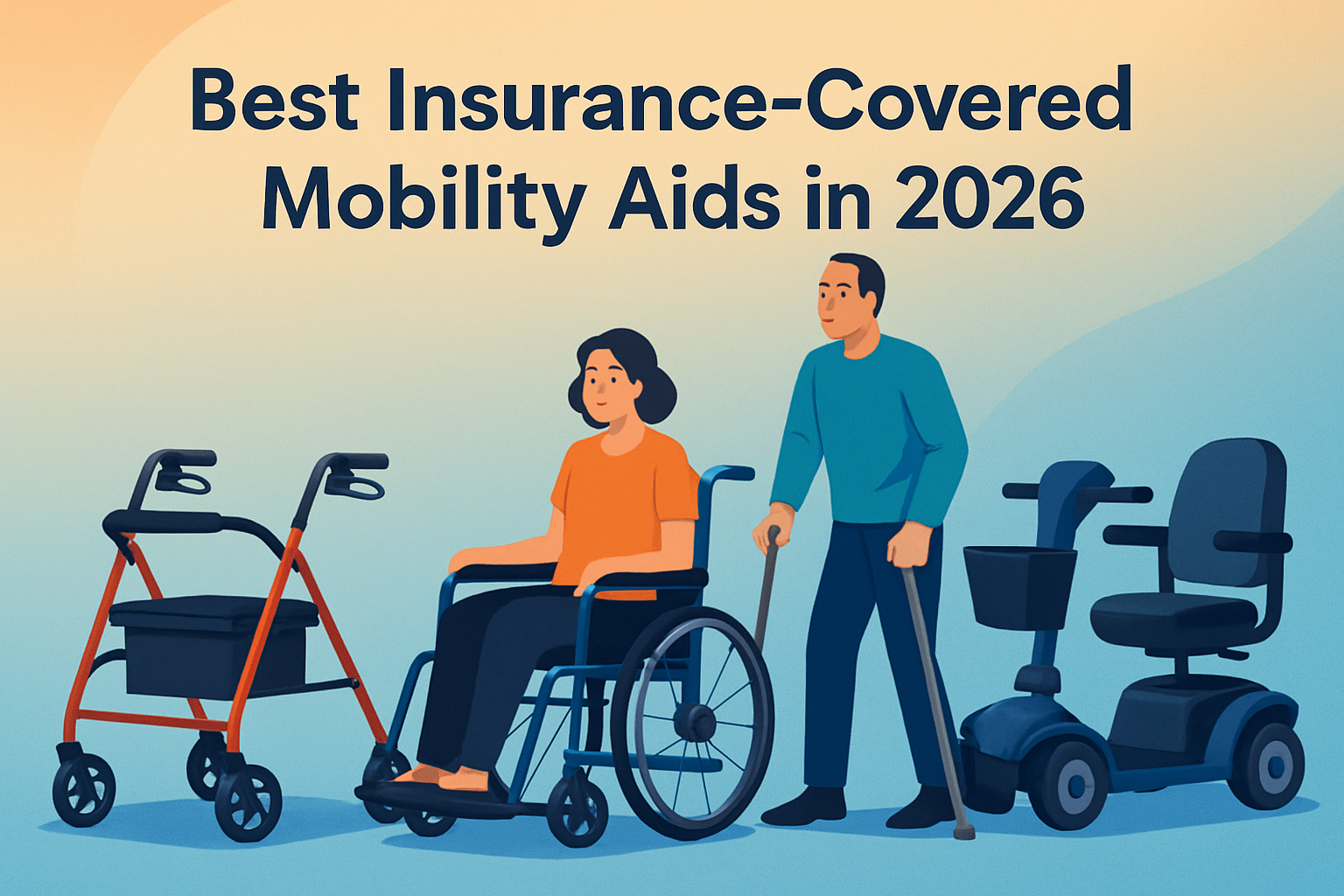
Choosing the best insurance-covered mobility aids in 2026 starts with understanding what insurers will pay for, how coverage rules work, and which devices actually improve safe movement at home and in the community. Mobility aids are devices that help people walk, transfer, stand, or travel when illness, injury, disability, or age-related weakness limits independent movement. In practical insurance language, most of these products fall under durable medical equipment, often shortened to DME. That category matters because Medicare, Medicaid programs, and many private insurers use DME rules to decide whether they will cover a cane, walker, manual wheelchair, power wheelchair, scooter, hospital bed, or patient lift.
I have worked with patients, rehab clinicians, and equipment suppliers long enough to see the same confusion repeat every year: people shop by brand first, then learn too late that coverage depends on medical necessity, documentation, and home-use criteria. In 2026, that sequence still matters more than marketing claims. The best mobility aid is not simply the most advanced model. It is the device that matches the user’s diagnosis, strength, balance, cognitive status, home layout, transportation needs, and payer rules. A lightweight rollator can be ideal for one person with mild endurance loss, while another person with severe neurological impairment needs a customized power chair with tilt, pressure relief seating, and alternative drive controls.
This topic matters because the financial stakes are high. A basic cane may cost little out of pocket, but a complex rehab wheelchair can cost thousands, and powered options can reach far beyond what most households can absorb without insurance. Coverage also affects access speed. If a device is correctly documented, approved, and fitted, it can prevent falls, reduce caregiver strain, support post-surgical recovery, and help people remain at home longer. If the wrong device is ordered, the result is often denial, delay, or equipment that sits unused in the corner. The smart approach in 2026 is to understand coverage categories, compare mobility aid types by function, and work backward from clinical need and insurer requirements.
How insurance coverage for mobility aids works in 2026
Insurance-covered mobility aids are generally approved when they are medically necessary, prescribed by an authorized clinician, and supplied by an in-network or approved DME provider. Medicare Part B remains the benchmark many private plans mirror, even when plan details differ. Under standard Medicare rules, covered DME must be durable, used for a medical reason, appropriate for home use, and expected to last at least three years in most cases. That home-use standard is especially important. Many people assume a scooter is covered because it would make shopping easier, but insurers usually ask whether the person can safely move around essential rooms in the home, such as the bedroom, bathroom, and kitchen.
Documentation drives approval. In real cases, the strongest files include a face-to-face evaluation, clear diagnosis coding, mobility-related limitations, fall history, objective strength or gait findings, and a statement explaining why a less intensive device will not meet the need. For powered equipment, insurers often require a detailed mobility assessment from a physical therapist or occupational therapist, plus a seven-element order and product-specific justification from the prescribing practitioner. Prior authorization is common in Medicaid managed care and many commercial plans. Competitive bidding rules, in states or regions where applicable, may also shape which supplier can provide the equipment.
Cost-sharing varies. Medicare beneficiaries usually face the Part B deductible and 20 percent coinsurance unless they carry supplemental coverage. Medicare Advantage plans may require prior authorization and use narrower supplier networks, but they often cap annual out-of-pocket spending. Medicaid can be more generous for low-income beneficiaries, though rules differ by state. Veterans may access equipment through the VA when clinically indicated. Private insurance can cover the same categories but may exclude convenience upgrades, luxury accessories, or dual-purpose items that are not strictly medical.
The key practical rule is simple: insurers cover function, not preference. If a less costly device can reasonably and safely meet the documented need, that is usually what gets approved first.
Best insurance-covered walking aids: canes, crutches, walkers, and rollators
For many adults, the best insurance-covered mobility aid in 2026 is still the simplest one. Canes, crutches, and walkers remain the most commonly approved devices because they address everyday mobility loss at a lower cost and with less administrative friction than wheelchairs. A standard cane may be appropriate for mild unilateral weakness, osteoarthritis, or balance impairment. Quad canes provide a larger base of support and are often prescribed after stroke or in more significant gait instability, though they can feel cumbersome on stairs. Crutches are typically used for short-term recovery, non-weight-bearing restrictions, or younger patients with enough upper-body strength to manage them safely.
Walkers deserve special attention because they cover a wide range of needs. A standard walker offers maximum stability but requires lifting with each step, which can be tiring. Two-wheel walkers reduce effort while preserving control. Four-wheel rollators add hand brakes and a seat, making them useful for people with chronic obstructive pulmonary disease, heart failure, Parkinsonian gait, or reduced endurance who need periodic seated rest. In clinic, I have seen rollators transform community participation for people who were housebound mainly because they had nowhere safe to sit during a longer outing.
Coverage, however, depends on matching the device to the user. A rollator is not ideal for someone with poor hand control who cannot manage brakes. A standard walker may be safer after a recent hip fracture if endurance is less important than stability. Height adjustment, home flooring, doorway width, and transport weight all matter. Aluminum frames are common because they balance strength and weight. Bariatric versions are available and often covered when weight capacity documentation supports the need. Trusted manufacturers frequently accepted by insurers and suppliers include Drive DeVilbiss Healthcare, Medline, Invacare, and Graham-Field. The best choice is the model that the patient can use correctly every day without increasing fall risk.
Best insurance-covered wheelchairs and scooters for larger mobility needs
When walking aids are not sufficient, insurers may cover a manual wheelchair, transport chair, power wheelchair, or mobility scooter. These categories are not interchangeable. A transport chair is pushed by a caregiver and may work for appointments, but it does not restore independent mobility. A standard manual wheelchair suits users with enough arm strength or access to a caregiver who can propel it. Lightweight and ultralight wheelchairs can improve efficiency and reduce shoulder strain, especially for long-term users, but insurers often require extra documentation to justify upgrades beyond a basic model.
Power mobility is where denials most often happen, because payers require precise evidence that a cane, walker, or manual chair cannot meet the need inside the home. Scooters are usually covered for people who can sit upright, transfer safely, operate tiller steering, and maintain trunk control. They work well for some individuals with cardiopulmonary limitation or lower-extremity weakness. Power wheelchairs are better for users with more complex neurological, orthopedic, or endurance impairments, especially when joystick controls, pressure management, tilt, recline, elevating leg rests, or customized seating are needed. Complex rehab technology chairs often involve ATPs, or Assistive Technology Professionals, who measure the user, coordinate the trial, and document configuration choices.
| Mobility aid | Best use case | Common coverage trigger | Main limitation |
|---|---|---|---|
| Manual wheelchair | User can self-propel or has caregiver assistance | Walking inside home is unsafe or too limited | Requires arm strength or helper support |
| Transport chair | Short trips with caregiver pushing | Intermittent seated mobility need | Not independently operated |
| Mobility scooter | Stable seated user with tiller control | Cannot manage walker/manual chair efficiently at home | Larger turning radius and transfer demands |
| Power wheelchair | Complex mobility or seating needs | Home mobility deficit plus inability to use lesser device | More documentation and higher approval scrutiny |
In 2026, some of the strongest insurance-supported options come from Permobil, Pride Mobility, Golden Technologies, Invacare, Sunrise Medical, and Ki Mobility, depending on category. Brand alone does not determine coverage, but supplier familiarity with payer rules often makes the process smoother.
Best insurance-covered transfer and home mobility equipment
Mobility is not only about walking or wheeling across a room. For many patients, the most important insurance-covered aids are the devices that make transfers and bed mobility safe. This includes lift chairs in limited circumstances, patient lifts, sit-to-stand lifts, transfer boards, gait belts, bedside commodes, and hospital beds with rails or specialty surfaces when criteria are met. Not every item is covered by every payer, and some products that consumers think of as mobility aids are classified differently, but these tools can be essential to keeping a person at home and reducing injuries to caregivers.
Patient lifts are especially important after major stroke, advanced multiple sclerosis, spinal cord injury, or progressive neuromuscular disease. A manual hydraulic hoyer lift may be covered when a person cannot transfer safely with one-person assistance. A power patient lift can also be covered when manual operation would be impractical or unsafe. Sit-to-stand lifts are useful when the individual can bear some weight and follow commands. Hospital beds are often approved when frequent position changes are medically necessary, when the head of the bed must be elevated more than a standard bed allows, or when transfers require height adjustment. For people with severe edema, aspiration risk, or pressure injury history, these details are not minor; they are the basis of approval.
From experience, the biggest mistake families make is focusing on the wheelchair and ignoring the transfer environment. A well-fitted power chair does not solve the problem of moving from bed to chair if there is no safe transfer plan. Occupational therapy home assessments often uncover simple barriers, such as carpet drag, threshold lips, bathroom door clearance, or bed height mismatch, that can turn a theoretically covered device into a daily struggle. The best results come when the clinician, supplier, and family plan the full mobility system rather than ordering one isolated product.
How to get the right device approved and avoid denials
The fastest path to approval begins with a comprehensive mobility evaluation, not a catalog. Ask the prescribing clinician to document exactly how the mobility problem affects bathing, toileting, dressing, feeding, grooming, and moving between essential rooms. Insurers respond better to specific statements than broad claims. “Patient cannot safely ambulate more than ten feet with a walker due to bilateral knee instability and oxygen desaturation” is far stronger than “patient has trouble walking.” Include falls, caregiver burden, failed trials of lesser devices, and whether pain, fatigue, weakness, spasticity, or poor balance limits function.
Use an accredited supplier whenever possible. In the United States, ACHC and The Joint Commission are recognized accreditation bodies for many DME suppliers, and RESNA credentials matter in complex seating. A knowledgeable ATP can preempt common problems such as ordering a scooter for a home that cannot accommodate its turning radius or selecting a wheelchair seat width that prevents bathroom access. Measurements should reflect actual use conditions, including doorways, ramp slope, vehicle transport, and floor surfaces. If the insurer denies the claim, appeal with additional clinical evidence, therapist notes, and photos or home measurements when relevant. Many denials are overturned because the initial submission lacked detail rather than because the equipment was inappropriate.
Also pay attention to replacement schedules and repairs. Insurers usually cover repairs for medically necessary equipment when parts fail from normal use, but they may not cover damage caused by misuse or neglect. If your needs change, a new evaluation may justify replacement before the standard useful lifetime ends. Good documentation is the difference between a prolonged battle and timely access. Start early, keep copies of every order and assessment, and confirm network status before delivery.
The best insurance-covered mobility aids in 2026 are the ones that match clinical need, satisfy payer rules, and fit the user’s real environment. For mild impairment, that may mean a properly sized cane or walker. For larger mobility deficits, it may mean a manual wheelchair, scooter, or complex power chair supported by detailed therapy documentation. For people with major transfer limitations, patient lifts and hospital beds can be just as important as any chair or walker. Across every category, the same principle holds: insurers pay for medical necessity backed by clear evidence, not for the device with the flashiest features.
If you remember only three things, remember these. First, start with an evaluation by a clinician who understands functional mobility and documentation standards. Second, choose the lowest-level device that safely meets the need, because that is what payers expect and what often works best in daily life. Third, work with an experienced, approved supplier who can measure accurately, manage prior authorization, and address repairs over time. These steps protect both independence and budget.
Mobility equipment should reduce risk, conserve energy, and make ordinary activities possible again. When the process is handled correctly, insurance coverage can turn a financially overwhelming purchase into a realistic care plan. Review your policy, schedule a mobility assessment, and ask your clinician and supplier to build the justification before you order. That is the most reliable way to get the right mobility aid approved and used successfully.
Frequently Asked Questions
What mobility aids are most commonly covered by insurance in 2026?
In 2026, the mobility aids most commonly covered by insurance are medically necessary devices that help a person move safely inside the home and complete basic daily activities. These often include canes, crutches, walkers, rollators in some cases, manual wheelchairs, transport chairs, power wheelchairs, mobility scooters, patient lifts, and certain transfer or standing support equipment when prescribed appropriately. Most insurers classify these products as durable medical equipment, or DME, which means they must usually be able to withstand repeated use, serve a medical purpose, and be appropriate for use in the home.
Coverage depends less on what is popular and more on what is medically justified. For example, a standard walker may be approved if someone has poor balance after surgery, while a manual wheelchair may be covered if walking is too limited or unsafe even with a cane or walker. Power wheelchairs and scooters are generally held to stricter standards because insurers want documentation showing that simpler devices are not enough and that the person cannot reasonably perform essential movement at home without powered assistance.
It is also important to understand that insurance does not always cover every version of a device. A basic medically necessary wheelchair may be approved, while luxury upgrades, premium materials, sport models, or convenience accessories may not be. In other words, the best insurance-covered mobility aid is usually the one that matches the user’s medical needs, home environment, and functional limitations while also meeting the insurer’s DME criteria and documentation rules.
How do insurers decide whether a mobility aid is medically necessary?
Insurers typically decide medical necessity by looking at whether the device is required to help a person safely perform essential movement-related activities in the home. This usually starts with a clinical evaluation from a doctor, physical therapist, or occupational therapist who documents the person’s diagnosis, strength, balance, endurance, fall risk, transfer ability, walking distance, and ability to complete tasks such as getting to the bathroom, kitchen, or bedroom. The insurer then compares that information against its coverage criteria to determine whether the requested device is reasonable and necessary.
In many cases, insurers use a step-by-step approach. They may ask whether the person can safely use a cane. If not, can they use a walker? If not, can they propel a manual wheelchair? If not, would a power wheelchair or scooter be appropriate? This process is meant to show that the least intensive effective option was considered first. Medical necessity is stronger when the records clearly explain why lower-level devices will not work, rather than simply stating that a more advanced device would be more convenient.
Documentation quality matters a great deal. A successful claim often includes detailed chart notes, a prescription, a face-to-face evaluation when required, and supporting therapy assessments. Insurers may also review whether the person’s home can accommodate the device and whether the device is intended for daily functional use rather than occasional outdoor travel. The more specifically the medical records connect the person’s limitations to the features of the requested mobility aid, the more likely coverage approval becomes.
Are walkers, wheelchairs, and mobility scooters all covered the same way?
No. Although walkers, wheelchairs, and mobility scooters can all fall under the DME category, they are not covered under the same standards. Walkers are usually among the easiest mobility aids to obtain coverage for because they are lower cost and often appropriate for people who still have some walking ability but need extra support for safety. A prescription and basic supporting documentation may be enough in many plans, especially when there is a clear diagnosis such as postoperative weakness, arthritis, neurological impairment, or fall risk.
Manual wheelchairs generally require more documentation because insurers want evidence that the patient cannot safely walk enough to complete important daily activities at home. The records may need to show why a cane or walker is insufficient and whether the person has enough upper body function, caregiver support, or alternative justification to use the chair effectively. For custom or lightweight wheelchair options, insurers often ask for even more detail about long-term use, posture, pressure needs, and seating requirements.
Mobility scooters and power wheelchairs usually face the highest scrutiny. Insurers may require proof that the person cannot use a walker or manual wheelchair safely and consistently, and that a scooter or power chair is necessary for in-home mobility rather than mainly for community outings. They may also assess whether the individual can operate the controls safely, transfer on and off the device, and navigate the home environment. So while all three categories may be covered, the approval process becomes more demanding as the device becomes more complex and costly.
What steps should you take to improve the chances that insurance will approve a mobility aid?
The best way to improve approval odds is to treat the process as a documentation-driven medical claim rather than a retail purchase. Start with an in-person evaluation by the appropriate healthcare professional and make sure the medical record clearly explains the diagnosis, mobility limitations, safety concerns, prior falls if relevant, and how the device will help with daily living activities inside the home. Vague statements such as “needs help walking” are much less effective than detailed notes describing distance limits, gait instability, transfer problems, fatigue, and failed use of lower-level devices.
It also helps to work with a supplier that understands insurance rules and participates with the plan when possible. Experienced DME suppliers often know what forms are required, whether prior authorization is needed, and what supporting records the insurer will expect. They can also help match the patient to a device that meets both clinical needs and coverage requirements, which reduces the risk of requesting a model that is unlikely to be approved. Before ordering, verify whether the supplier is in network, whether the item is rental or purchase, and what out-of-pocket costs may apply.
If a request is denied, do not assume the matter is over. Many denials happen because of missing documentation, coding issues, or an incomplete explanation of medical necessity. Ask for the denial reason in writing, review the insurer’s policy, and work with the prescribing clinician and supplier to submit an appeal with stronger evidence. A well-supported appeal that addresses the insurer’s exact concerns can often reverse an initial denial, especially when the requested mobility aid is clearly needed for safe, basic function.
How do you choose the best insurance-covered mobility aid for long-term safety and independence?
Choosing the best option means balancing medical need, insurance eligibility, ease of use, and real-world safety. The right device should support the person’s current function while also accounting for likely progression of weakness, pain, neurological disease, or recovery goals. A cane may be enough for mild balance problems, but someone with worsening endurance, repeated falls, or limited leg strength may be safer with a walker or wheelchair. The best choice is not automatically the most advanced device. It is the one that allows consistent, safe movement without overexertion or increasing fall risk.
Fit and environment are just as important as coverage. A mobility aid must match the user’s body size, strength, coordination, and ability to transfer. It should also work in the spaces where it will be used, including hallways, bathrooms, doorways, ramps, and vehicles. A scooter that is excellent for community travel may be too large for indoor navigation, while a properly fitted manual wheelchair may offer better indoor function. For many people, therapy input is especially valuable because it helps identify whether the device truly supports posture, turning, braking, reaching, and daily routines safely.
Finally, think beyond initial approval. Long-term value includes durability, serviceability, replacement timelines, maintenance needs, and whether future adjustments may be covered. Insurance-covered mobility aids can be excellent choices when they are selected carefully and backed by strong clinical reasoning. The goal is not simply to get something paid for. The goal is to obtain the device that meaningfully improves safety, independence, and quality of life in 2026 and beyond.