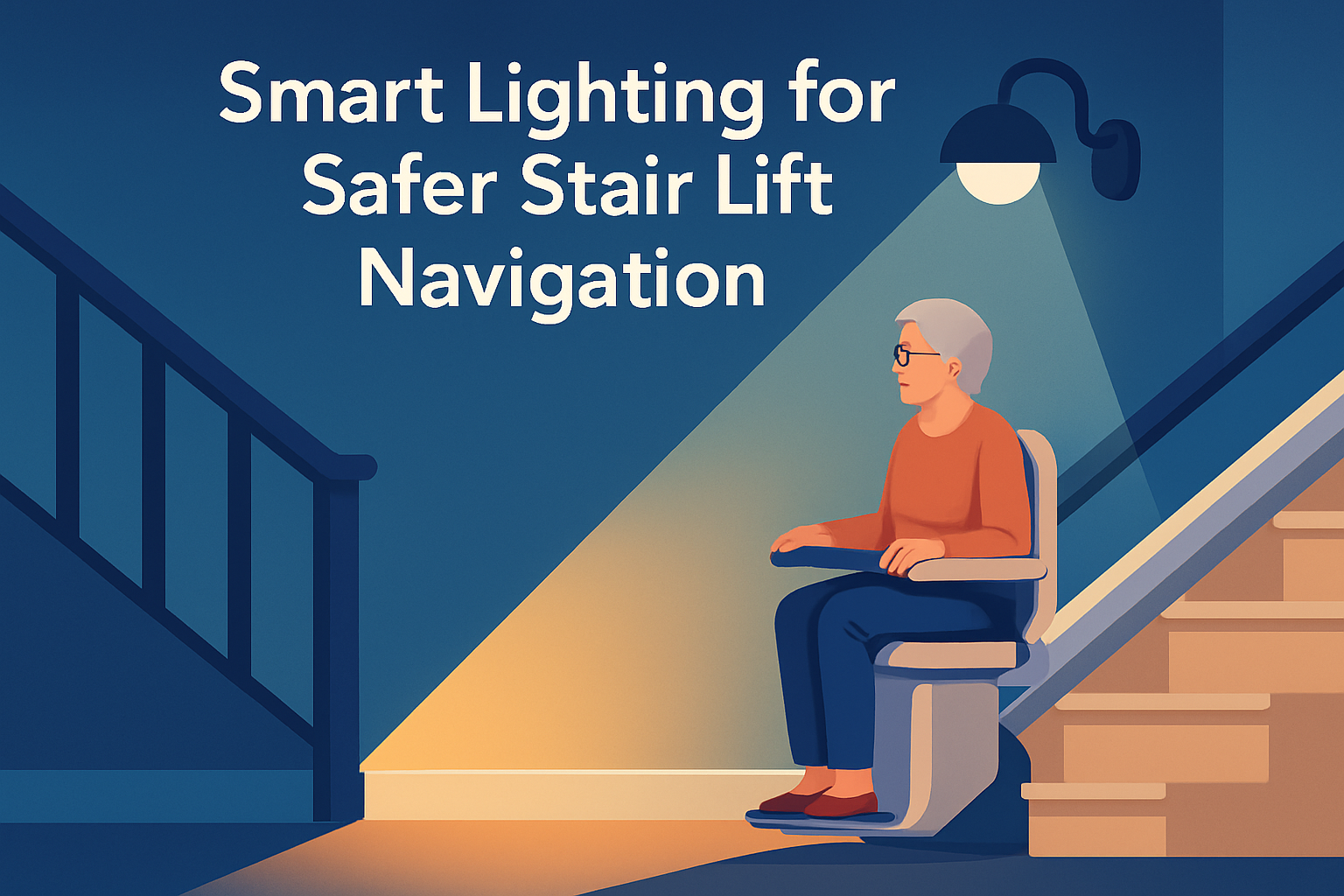
Smart lighting for safer stair lift navigation turns a basic accessibility upgrade into a coordinated safety system that reduces fall risk, improves confidence, and supports independent living. In practice, I have seen stair lifts perform well mechanically while users still struggled at the top landing because shadows hid the seat edge, the swivel position, or the final step. Lighting solves that gap. Smart lighting means connected fixtures, bulbs, switches, sensors, and automation rules that adjust brightness, color temperature, and timing based on movement, schedules, or voice control. For households focused on accessibility and mobility solutions, this matters because stair lifts are used during moments when balance, depth perception, and reaction time may already be limited. Better illumination at the exact right time helps riders approach the lift safely, transfer on and off with less hesitation, and navigate stair landings without searching for a switch. As a sub-pillar within smart home integration, this topic also connects directly to related planning areas such as fall prevention, home automation, emergency backup lighting, and aging-in-place design.
The goal is not simply brighter stairs. The goal is predictable, glare-controlled, low-effort visibility that works every time, including at night, during power interruptions, and when multiple caregivers need shared control. A strong smart lighting plan for stair lift navigation addresses approach paths, call/send stations, footrests, armrests, charging points, top and bottom landings, and any adjacent hallway or bedroom route. It should also consider how older eyes process contrast, how certain medical conditions affect light sensitivity, and how smart devices interact with the stair lift’s own safety features. When these details are planned together, the result is more than convenience. It is a safer, more usable home environment that supports independent transfers and reduces caregiver strain.
Why smart lighting improves stair lift safety
Smart lighting improves stair lift safety because it delivers light only when and where it is needed, with more consistency than manual switching. A user approaching a stair lift may be carrying a cane, walker, or medication cup, making a wall switch inconvenient. Motion-triggered pathway lights can activate before the rider reaches the first step, while landing lights can brighten to full output when the lift is called. This reduces the risky pause-and-reach behavior that often happens in dim spaces. In several home assessments I have worked on, the most dangerous area was not the staircase itself but the top landing, where poor contrast made it difficult to judge the swivel seat position and the edge of the floor.
There is also a visual science component. Aging eyes generally need more light and more contrast to distinguish edges, but they are also more sensitive to glare. That means a single very bright bulb above the staircase can be less effective than layered lighting with softer, directed illumination. Smart systems allow scenes that combine stair tread lighting, wall sconces, and landing fixtures at safe levels. Color temperature matters too. Warmer light around 2700K to 3000K can feel comfortable at night, while neutral white around 3500K to 4000K often improves contrast for tasks like seat transfers. The best setup depends on the user’s vision, routine, and tolerance for brightness.
Another advantage is reliability through automation. Instead of depending on memory, the home can trigger a “stair lift travel” scene from a sensor, a smart button, or a voice assistant. This is especially useful for users with arthritis, Parkinson’s disease, neuropathy, low vision, or mild cognitive decline. A safer environment is one that asks less of the user at the moment of movement.
Core components of a smart lighting system for stair lifts
A complete smart lighting system for stair lift navigation usually includes five layers: fixtures or smart bulbs, sensors, controls, automation logic, and power resilience. Fixtures can be recessed downlights, wall sconces, LED strip lights under handrails, toe-kick lights, or step-edge lights. In retrofit projects, smart switches are often better than smart bulbs for fixed stairwell lights because they preserve normal wall-switch behavior and avoid confusion. Trusted ecosystems include Lutron Caseta, Philips Hue, Leviton Decora Smart, TP-Link Kasa, Apple Home, Amazon Alexa, Google Home, and Samsung SmartThings. The right choice depends on local control, reliability, and ease of caregiver access.
Sensors are the trigger layer. Motion sensors at the hallway approach, occupancy sensors at the landing, door contacts on nearby bedroom doors, and ambient light sensors can all work together. For example, if the hall is already bright from daylight, the system may keep lights off. If it is after 10 p.m., the same movement can trigger a low-level amber scene that preserves sleep while still making the lift visible. Controls include smart switches, wireless Pico-style remotes, bedside buttons, voice commands, and app dashboards for caregivers. Automation logic ties these elements together using routines in the native platform or advanced tools such as Home Assistant.
Power resilience is often overlooked. Stair lifts typically rely on battery charging from a parked position, and lighting may be critical during a nighttime transfer. Battery-backed smart hubs, emergency-rated fixtures, and selected non-smart lights on UPS support can preserve basic visibility during outages. If a home is in an area with frequent storms, this is not optional planning; it is core accessibility design.
| Component | Best use near a stair lift | Practical benefit |
|---|---|---|
| Smart switch | Main stairwell or landing light | Keeps manual control familiar while enabling automation |
| Motion sensor | Hallway approach and top landing | Activates lighting before transfers begin |
| LED strip lighting | Handrail underside or step edge | Improves contrast without harsh overhead glare |
| Wireless remote | Bedside, wheelchair tray, or wall near chair | Provides one-touch access without reaching a switch |
| Smart hub | Whole-home integration | Coordinates scenes, schedules, alerts, and caregiver access |
Placement and design rules that reduce falls
Placement matters more than gadget count. The safest smart lighting for stair lift navigation illuminates the user’s route in sequence: the room they start from, the path to the staircase, the call/send controls, the seat, the footrest, and the landing they exit onto. At the bottom of the stairs, light should reveal the rail entry area and any flooring transitions such as carpet to wood. At the top landing, it should clearly show the final step edge and the floor area where the user pivots away from the chair. If the lift has a powered swivel seat or folding rail, those moving parts should be visible without shadows.
Good design also limits glare. Bare lamps in the user’s direct line of sight can wash out depth cues and create hesitation. Diffused sconces, shielded recessed fixtures, and indirect LED strips usually perform better. Contrast is equally important. A light wall against a light stair nose may still be hard to read, so many homes benefit from dark stair-edge markers combined with consistent lighting. In narrow staircases, I often recommend lower-wattage layered sources rather than one high-output fixture that casts hard shadows from the rail and seat frame.
Target illumination should be bright enough for safe transfers but not so bright that it feels clinical or causes night disorientation. Dimming is essential. Many successful installations use daytime scenes at higher brightness and nighttime scenes at 10 to 30 percent output in circulation areas, with a brighter burst at the actual boarding point. If the user wakes frequently, a delayed fade rather than an abrupt shutoff prevents sudden darkness mid-transfer.
Automation routines, voice control, and caregiver support
The most effective automation routines are simple, predictable, and easy to override. A useful baseline routine is: motion detected in the bedroom hall after dark turns on pathway lighting at low level; pressing the stair lift call button or a nearby smart button raises landing lights to transfer brightness; after ten minutes of no motion, lights fade down gradually. Another routine can trigger when the lift parks at the top or bottom charging point, keeping the immediate area illuminated for safe dismount. These routines should be tested with the actual user, not just configured from an app.
Voice control can be valuable when hands are occupied, but it should be treated as secondary control, not the only option. Users with speech changes, accent recognition issues, or hearing impairments may not find voice assistants reliable enough during a transfer. Physical buttons remain essential. A bedside scene button labeled “stairs” can turn on the exact path needed without opening an app. Caregivers also benefit from remote visibility. Through shared access in platforms like Apple Home or SmartThings, family members can confirm that scheduled lighting is active, adjust routines, or receive alerts if nighttime motion suggests frequent stair use.
Integration should never interfere with the stair lift’s built-in safety circuits. The lift’s seat sensors, obstruction sensors, and charging logic must remain independent. Smart home routines should support navigation around the lift, not attempt unsafe control of the lift motor unless the manufacturer explicitly allows certified integrations. This distinction protects reliability and warranty coverage.
Choosing products and planning for compatibility
Choosing products starts with the home’s existing wiring and internet stability. In older homes, replacing bulbs may be easier than rewiring for new fixtures, but smart bulbs can become unreliable if someone turns off the wall switch. Smart switches are usually better for shared households. If internet service drops often, prioritize devices with local processing or hub-based control. Lutron Caseta has a strong reputation for dependable lighting control, while Philips Hue is excellent for flexible color and dimming scenes. Home Assistant offers deep customization for advanced users, but it requires more setup and maintenance than mainstream platforms.
Compatibility planning should include the stair lift brand, nearby outlets, rail layout, and charger location. Some lifts park away from the staircase to keep halls clear, which changes where light is needed. Curved stair lifts often require extra attention because boarding points and turning positions vary. Outdoor stair lifts need weather-rated fixtures, sealed sensors, and careful brightness tuning to avoid glare on wet surfaces. If a wheelchair transfer is involved, check that lighting controls are reachable from seated height and that remotes can be mounted securely.
Cybersecurity and privacy also matter in smart home integration. Use strong passwords, two-factor authentication where available, and reputable brands that provide firmware updates. Avoid buying a mix of unsupported budget devices that may fail silently or lose cloud support. In an accessibility setting, reliability is part of safety, not just convenience.
Common mistakes and the best next steps
The most common mistake is focusing on gadget features instead of user movement. Colored bulbs, voice routines, and phone apps are secondary. First map the travel path and identify every point where the user pauses, turns, reaches, or transfers. Another frequent mistake is overlighting. Extremely bright stairs can produce glare, reflections on polished floors, and confusion during nighttime use. Poor sensor placement is another problem; if a motion detector triggers too late, the user may already be at the staircase in dim light. Testing at real walking speed and with mobility aids is the only way to confirm timing.
A smart lighting plan should also include maintenance. Label switches, document automations, replace weak batteries in sensors, and create a manual fallback if the hub fails. For many families, the best next step is a home accessibility walkthrough with an occupational therapist, stair lift provider, or experienced aging-in-place contractor who understands both mobility equipment and lighting design. Ask them to review landings, transfer points, lux levels, glare, and control reach ranges. Then build a phased plan: start with the main stair path, add night scenes, and expand to bedrooms, bathrooms, and entry routes.
Smart lighting for safer stair lift navigation works because it meets users where risk actually happens: in transitions, not just in transit. When lighting is placed carefully, automated intelligently, and matched to the user’s vision and routine, the stair lift becomes easier to approach, safer to board, and less stressful to use every day. If you are building an accessibility and mobility solution strategy for a home, make smart home integration a priority and start with the stairs. Audit the route, choose dependable controls, and create lighting scenes that support safe independence from the first step to the final landing.
Frequently Asked Questions
How does smart lighting make stair lift navigation safer?
Smart lighting improves stair lift safety by addressing the moments when users are most vulnerable: getting on the seat, traveling along the staircase, and stepping off at the landing. A stair lift may function perfectly from a mechanical standpoint, but if the seat edge is hidden in shadow, the footrest is hard to distinguish, or the top step blends into the landing, the user still faces a real fall risk. Smart lighting helps eliminate those hazards by delivering consistent, targeted illumination exactly where it is needed.
In practical terms, a well-designed system can brighten the boarding area when motion is detected, illuminate the stair path during travel, and increase light levels at the top landing before the user swivels and stands. This makes important visual cues easier to see, including armrests, seat position, foot placement, call/send controls, handholds, and changes in floor level. Better visibility supports safer transfers on and off the lift and reduces hesitation, especially for older adults, users with reduced depth perception, or anyone managing low vision.
Another major advantage is predictability. Traditional lighting depends on someone remembering to flip a switch before using the lift. Smart lighting can be automated so the staircase and landings are already lit when the user approaches. That reduces fumbling in the dark, avoids rushed movement, and creates a more comfortable, confident experience. For many households, the result is not just better visibility but a coordinated safety system that supports independent living and more reliable stair lift use day and night.
What types of smart lighting work best around a stair lift?
The best smart lighting setup for a stair lift usually combines several types of lighting rather than relying on a single overhead fixture. Ambient lighting provides overall brightness for the staircase and nearby hallways, while task lighting focuses on specific risk areas such as the lower boarding point, the upper landing, and any turn or transition where the user needs to reposition. Accent or low-level pathway lighting can also be very effective because it helps define the edges of steps, landings, and surrounding surfaces without creating glare.
Smart bulbs and smart switches are common starting points because they allow homeowners to automate existing fixtures, adjust brightness, and schedule lighting behavior. Motion sensors are especially useful for stair lift safety because they can trigger lights before the user reaches the staircase. In some homes, LED strip lighting under handrails, along stair skirts, or near landing edges can improve visibility of boundaries and walking surfaces. In others, dedicated wall sconces or ceiling fixtures with wide, even light distribution may be the better choice.
The most effective products are those that deliver clear illumination without harsh shadows. Brightness should be adequate, but placement matters just as much as output. Lights should reveal the seat, controls, footrest, and landing surface without shining directly into the user’s eyes. Warm-to-neutral white light is often preferred in residential environments because it feels comfortable while still providing good contrast. The right combination depends on the staircase layout, wall color, existing fixtures, and the user’s visual needs, but the overall goal is always the same: make critical features easy to see before, during, and after every lift ride.
Where should smart lights and sensors be placed for the best results?
Placement is one of the most important factors in a successful stair lift lighting plan. The lower and upper boarding zones should always receive special attention because these are the points where users sit down, transfer their weight, swivel, and stand. Lighting should clearly reveal the seat edge, armrests, footrest, and floor surface at the bottom, while at the top it should define the landing, the final step, and the area where the user exits the lift. If those spaces are dim or unevenly lit, the risk of missteps increases even when the lift itself is functioning properly.
Sensors should be positioned so they detect approach early enough for lights to activate before the user needs them. A motion sensor in a nearby hallway, bedroom doorway, or at the base of the stairs can trigger the system in advance. Another sensor near the top landing can help ensure that exit lighting is already on when the lift arrives. In some cases, contact sensors, smart routines, or integration with time-of-day settings can refine how the system behaves. For example, nighttime automations can bring lights to a softer level while still providing enough visibility for safe use.
It is also important to avoid creating glare, dead spots, or dramatic contrast. A single bright bulb at the top of the stairs may leave the seat area below too dark, while poorly aimed fixtures can cast shadows that hide step edges. Lighting should be layered and balanced across the full travel path. If possible, test the staircase from the user’s seated position as well as from standing height. This often reveals issues that are easy to miss during installation, such as reflections, dark corners, or hidden transitions. Thoughtful placement turns smart lighting from a convenience feature into a true safety enhancement.
Can smart lighting be added to an existing stair lift without replacing the lift itself?
Yes, in most homes smart lighting can be added around an existing stair lift without modifying or replacing the lift. That is one of the strongest advantages of this approach. Smart bulbs, switches, plugs, sensors, and automation hubs can usually be installed as a separate layer that supports safer navigation while leaving the lift’s core mechanical and electrical systems untouched. For homeowners who already have a functioning stair lift, this makes smart lighting a practical upgrade that can significantly improve day-to-day usability.
Retrofitting can range from very simple to more customized. A basic solution might involve replacing current bulbs with smart bulbs and adding motion-triggered routines for the staircase and landings. A more advanced setup could include smart wall switches, under-rail or under-handrail LED strips, sensor-based landing lights, and scheduled brightness adjustments for evening and overnight use. In some cases, the lighting system can also be coordinated with other smart home features such as voice assistants, door sensors, or occupancy routines to provide a more seamless experience.
That said, installation should be planned carefully. Stair lifts are safety devices, so any nearby lighting additions should avoid interfering with the rail, seat movement, folding components, charging points, or user controls. Wiring changes, if needed, should be handled by a qualified electrician, and homeowners should follow the stair lift manufacturer’s guidance regarding clearance and electrical safety. A good retrofit respects the lift’s operation while improving the visual environment around it. In many cases, that combination delivers a noticeable increase in safety and confidence without the cost of replacing existing accessibility equipment.
What should homeowners consider when choosing a smart lighting system for stair lift users?
Homeowners should focus first on the needs of the person using the stair lift rather than on smart home features alone. The best system is one that improves visibility, reduces uncertainty, and works consistently with minimal effort. Ease of use matters a great deal. If the user must manage multiple apps, complicated scenes, or confusing controls, the system may add frustration instead of safety. Straightforward automation, dependable motion activation, and reliable manual override options are usually more valuable than advanced features that are rarely used.
It is also important to consider vision, mobility, and cognitive needs. Some users benefit from brighter, more even lighting that makes floor changes and seat position easier to identify. Others may be sensitive to glare or may prefer gradual light transitions at night. The system should account for the staircase shape, the type of landings, the surrounding room layout, and whether there are pets, caregivers, or frequent overnight trips that affect how the lighting behaves. Compatibility with existing fixtures and with the home’s internet or smart home platform can also influence long-term reliability.
Finally, homeowners should think in terms of safety layers. Smart lighting works best when it supports, rather than replaces, good stair lift practices. That includes proper lift maintenance, secure transfer techniques, clear landings, and adequate handholds where appropriate. A quality lighting plan should create visibility at every critical moment, from approaching the stairs to exiting the lift safely. When chosen thoughtfully, smart lighting does more than make the staircase look modern. It helps transform a basic accessibility upgrade into a more dependable, confidence-building system for daily independent living.