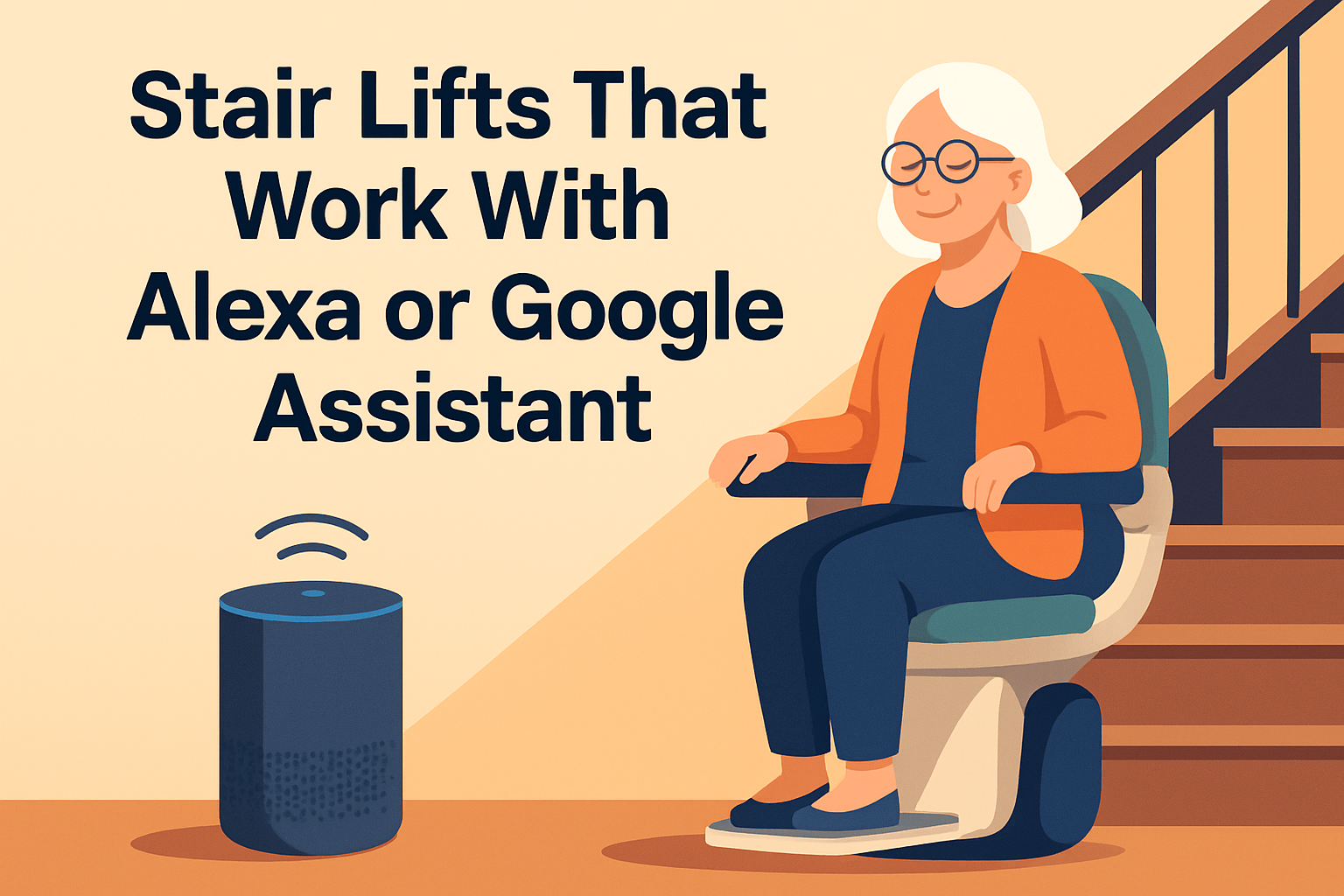
Stair lifts that work with Alexa or Google Assistant are changing how people move safely between floors, and they sit at the center of modern smart home integration for accessibility and mobility solutions. A stair lift is a motorized chair or perch that travels along a rail mounted to a staircase, while a voice assistant is a cloud-connected platform that lets users control devices through spoken commands, routines, and automations. When these systems connect, users can call a lift, send it away from the hallway, switch charging modes, check status, or coordinate lights and locks without fumbling for remotes. That matters for older adults, people recovering from surgery, wheelchair users transferring to a seat, and families supporting someone with limited grip strength, balance issues, or cognitive fatigue.
In projects I have worked on, the real value was not novelty. It was reducing friction at the exact moment a user felt unsteady or overwhelmed. A standard stair lift remote can be small, easy to misplace, and awkward for arthritic hands. Voice control and app-based automation solve a practical problem: they reduce the number of steps required to use the equipment safely. They also support caregivers, who can build routines that prepare the home before a transfer begins. For example, a “bedtime” command can turn on stair lighting, move the stair lift to the top landing, and lock the front door in one action.
This hub article explains how smart stair lifts integrate with Alexa or Google Assistant, which features are realistic today, what equipment is required, how safety rules limit automation, and how to choose a system that fits a real home. It also serves as the central guide within smart home integration under accessibility and mobility solutions, connecting the broader topics of voice control, sensors, routines, remote monitoring, and interoperability. If you are comparing products, planning a retrofit, or helping a family member age in place, understanding the difference between direct integration, hub-based integration, and custom automation will save time, money, and frustration.
What smart integration really means for stair lifts
Not every stair lift advertised as smart has native Alexa or Google Assistant support. In the market today, most systems fall into three categories. First, a few lifts or companion apps offer direct voice-assistant compatibility through a manufacturer skill or cloud service. Second, many lifts can be integrated indirectly through smart relays, dry-contact modules, or home automation hubs that mimic the wall call/send controls. Third, some lifts remain standalone and can only be made “smart-adjacent” by pairing them with lighting, locks, occupancy sensors, or caregiver alerts rather than controlling lift movement itself.
For consumers, the key question is simple: what functions can actually be controlled? The most common smart functions are call/send, parking the chair at one landing, checking whether the lift is charging, and receiving maintenance or fault notifications through an app. Full hands-free riding is far less common, because stair lift manufacturers prioritize onboard controls, seat sensors, swivel interlocks, overspeed governors, obstruction sensors, and constant-pressure operation. Those safety systems are essential and are usually designed to prevent unattended or overly automated movement. In other words, smart integration is useful, but it exists inside strict safety boundaries.
Alexa and Google Assistant typically enter the picture through routines. A user might say, “Alexa, bring the chair downstairs,” or “Hey Google, start upstairs transfer.” The voice assistant then triggers a manufacturer cloud action or a connected module that sends the same command a wall station would send. Better setups also include confirmation prompts, status announcements, and fallback controls. In my experience, the best implementations are conservative. They automate preparation and simple positioning, while leaving ride initiation and travel direction under the seated user’s direct control.
Common use cases in real homes
The most effective smart home integration starts with specific daily challenges, not with gadgets. One common use case is remote call/send. If the stair lift is parked upstairs and the user is on the main floor, a voice command or app button can bring the chair down without requiring a family member to help. In narrow hallways, users often prefer to send the chair away after use so it does not block a doorway. Smart control makes that easier and less stigmatizing, especially when several people share the staircase.
Another practical use case is environmental coordination. A stair transfer is safer when the path is well lit, doors are unlocked, and the destination area is ready. A routine can turn on stair tread lighting, activate motion-sensitive night lights, open smart blinds for daytime visibility, and adjust thermostat settings in advance. In homes with smart cameras or contact sensors, a caregiver can receive a notice that the chair has been called or that a transfer window has started. That kind of visibility is especially helpful for adults supporting a parent who lives independently but wants less intrusive supervision.
There are also accessibility cases beyond mobility alone. Users with Parkinsonian tremor, rheumatoid arthritis, neuropathy, low vision, or fatigue after stroke may find small remotes difficult. Voice control reduces fine motor demand. For people with mild cognitive impairment, routines can simplify a multi-step process into one consistent phrase. This is not a replacement for assessment by an occupational therapist or qualified installer, but in practice it can make a good stair lift easier to use every day.
| Use case | What the system does | Typical smart components | Main benefit |
|---|---|---|---|
| Remote call/send | Moves chair to top or bottom landing | Manufacturer app, smart relay, voice assistant | Reduces reaching and waiting |
| Transfer routine | Turns on lights and prepares destination area | Alexa or Google routines, smart bulbs, sensors | Improves visibility and confidence |
| Caregiver awareness | Sends status or activity alerts | App notifications, contact sensors, cameras | Supports remote family monitoring |
| Hallway management | Parks lift away after use | Call/send control, automation hub | Keeps stairs and landings clear |
How Alexa and Google Assistant integration is usually built
Direct integration is the cleanest option. The stair lift brand provides a mobile app, cloud account, and either an Alexa skill or Google Home action. Setup usually involves linking accounts, naming the device, assigning it to a room, and enabling supported commands. This approach is easiest for households that want reliability and warranty protection. If direct integration is available, confirm which commands are supported, whether there is two-factor authentication, and whether notifications cover battery charging, fault codes, and service reminders.
Hub-based integration is more common in custom accessibility projects. Here, the stair lift’s call/send inputs are connected through a dry-contact interface, smart relay, or automation controller such as Home Assistant, Hubitat, or Control4. The assistant triggers the hub, and the hub sends a momentary command. This can work well, but it requires installer-level knowledge of low-voltage control, relay isolation, and manufacturer restrictions. It also introduces more points of failure: internet service, local network, cloud accounts, and the automation platform itself.
A hybrid approach often delivers the best result. Keep the lift’s travel controls independent and certified, then automate adjacent functions around it. For example, a pressure sensor under the seat can trigger stair lights when the user sits down, or a smart plug can monitor charging behavior if the manufacturer approves it. Door sensors can pause nearby robot vacuums or send a caregiver alert when the top landing gate opens. These supporting integrations create a smarter mobility environment without overriding the safety logic engineered into the lift.
Safety, standards, and important limitations
Safety is the reason smart stair lifts cannot be treated like ordinary connected gadgets. Stair lifts sold in North America are generally designed to comply with ASME A18.1, while electrical components may intersect with UL requirements and local inspection rules. In the UK and parts of Europe, manufacturers typically reference Machinery Directive obligations and standards such as EN 81-40 for stairlifts and inclined lifting platforms. Those frameworks shape what can be automated, how controls behave, and what installers are allowed to modify.
Several safety features should never be bypassed for convenience. These include seat swivel interlocks, footrest and carriage obstruction sensors, overspeed protection, final limit switches, key switches where specified, and constant-pressure controls when required by the design. If a reseller promises unrestricted voice-operated movement with no need for confirmation, ask hard questions. A safe setup should preserve the original operating logic and should fail to a safe state if Wi-Fi drops, the assistant mishears a command, or a relay sticks.
Privacy also matters. Voice assistants process commands in the cloud, and cameras or activity notifications may create sensitive data about routines, sleep schedules, and health status. Use strong passwords, enable multifactor authentication where possible, and document who receives alerts. For many families, the right balance is limited event notifications rather than continuous surveillance. A stair lift is assistive equipment, and the user’s dignity should guide every technology choice.
Choosing the right system, installer, and smart ecosystem
Start with staircase geometry and user needs, not brand marketing. Straight stair lifts are easier to integrate and usually less expensive than curved models, which rely on custom rails and more complex parking positions. Heavy-duty models, outdoor lifts, and standing or perched designs may have different control options. Confirm seat width, transfer height, armrest design, and whether a powered swivel or powered footrest is necessary. These core specifications determine usability long before smart features do.
Then evaluate the smart ecosystem in the home. Alexa often has broader consumer-device compatibility, while Google Assistant is strong for households already using Google Nest speakers, displays, and Home app routines. If the home includes Apple devices, ask whether the integration can bridge through Home Assistant or another controller, but remember that every bridge adds maintenance. Wi-Fi coverage on both landings is essential. I have seen excellent equipment perform poorly simply because the router was hidden in a metal utility closet and the top floor had weak signal strength.
The installer matters as much as the product. Choose a dealer who understands both accessibility assessment and controls integration. Ask whether modifications affect warranty coverage, whether they have written approval from the manufacturer for any relay interface, and how service calls are handled if the automation layer fails. Request a plain-language handover: what commands work, what happens during a power outage, how to use manual controls, and who to call if the chair stops responding. A trustworthy installer will define those boundaries clearly instead of promising limitless automation.
Best practices for setup, maintenance, and future planning
Once installed, keep commands simple and distinct. Avoid phrases that sound like normal conversation. “Send stair lift up” is better than “Can you move the chair?” Create routines with one action each before building more advanced sequences. Test them at different times of day and with every intended user. If the home includes multiple assistants or speakers, make sure they do not trigger from another room accidentally. For users with speech changes after stroke or neurological disease, a smart display or large-button app shortcut can be a better primary interface than voice alone.
Maintenance should cover both the lift and the smart layer. The lift itself needs regular servicing, rail cleaning, battery checks, and safety inspections according to the manufacturer’s schedule. The smart home side needs firmware updates, password reviews, router health checks, and notification testing. Keep a written fallback plan near the staircase: charger location, key switch position, dealer phone number, and exact steps for calling the chair manually. That single sheet prevents panic during outages and helps visiting caregivers.
Future planning matters because needs change. A household may start with basic call/send control and later add door automation, smart locks, medication reminders, or remote wellness checks. Choosing open integrations and documented hardware makes those changes easier. Stair lifts that work with Alexa or Google Assistant are most valuable when they fit into a broader accessibility strategy, not when they operate as isolated showpieces. Build around safety, reliability, and the user’s real routine, and the technology becomes quietly useful rather than complicated.
Smart home integration can make a stair lift easier to call, easier to park, and easier to coordinate with the rest of the home, but the best results come from disciplined design. Direct integrations are simplest when available, hub-based automations can be powerful when professionally implemented, and supporting routines for lights, alerts, and locks often deliver the biggest everyday benefit. The central lesson is straightforward: voice control should reduce effort without weakening safety or overwhelming the user.
For families exploring accessibility and mobility solutions, this smart home integration hub is the place to start. Use it to compare control options, understand realistic features, and identify the right questions for dealers, occupational therapists, and home automation professionals. If you are planning an installation, map the user’s transfer routine, confirm manufacturer-approved integrations, and prioritize reliable basics before advanced automations. Done well, a connected stair lift supports independence with less strain, more confidence, and a home that responds when it is needed most.
Frequently Asked Questions
Can a stair lift be controlled with Alexa or Google Assistant?
Yes, some stair lifts can be integrated with Alexa or Google Assistant, but it is important to understand how that control typically works. In most cases, the voice assistant does not directly operate the lift’s core ride function in the same way a user would press and hold a control while seated. Instead, smart integration is usually focused on related convenience features such as calling the lift to a floor, sending it away when not in use, checking status, or triggering routines that support accessibility and daily living. This distinction matters because stair lifts are mobility devices with built-in safety requirements, and manufacturers often design them to limit fully hands-free movement unless specific safety conditions are met.
In a practical setup, a user might say, “Alexa, bring the stair lift downstairs,” or “Hey Google, send the stair lift to the top.” Depending on the system, those commands may work through a manufacturer app, a smart home hub, a relay interface, or a custom automation platform. Some lifts are sold with direct smart home compatibility, while others require add-on hardware or professional integration. The key is that compatibility is not universal. Buyers should verify whether the specific lift model, control module, and voice assistant ecosystem are officially supported before making assumptions about what commands will be available.
For households interested in accessibility, voice-enabled stair lift control can be especially valuable because it reduces the need to reach for remotes or wall-mounted call stations. It can also help caregivers manage equipment more easily. That said, smart features should be viewed as an enhancement to a properly installed lift, not a replacement for standard safety controls. The safest and most reliable approach is to work with an authorized dealer or installer who understands both mobility equipment and smart home integration.
What stair lift functions usually work with voice assistants?
The most common voice-enabled stair lift functions are the call and send commands. These allow the lift to be moved to the top or bottom landing when the seat is unoccupied, which is often one of the most useful smart features in everyday life. For example, if one family member uses the lift upstairs and another person downstairs needs the staircase clear, a simple voice command can send the unit out of the way. Likewise, if a user is waiting at one end of the staircase, they may be able to call the lift to them without pressing a handheld remote.
Beyond call and send controls, some integrated systems may support status checks, such as whether the lift is parked upstairs or downstairs, whether the chair is folded, or whether the device is ready for use. In more advanced smart home environments, voice assistants can also be tied into routines. A morning routine might turn on lights, adjust the thermostat, and call the stair lift to the bedroom level. An evening routine could send the lift away after use and switch on pathway lighting. These kinds of automations can improve convenience and reduce physical strain for users with mobility limitations.
However, not every motion-related function is voice accessible. Many stair lifts require continuous-pressure controls while riding to ensure the user remains actively engaged and able to stop movement if needed. Because of that, direct voice-commanded travel while seated may be restricted or unavailable. The exact feature set depends on the manufacturer, the local safety standards, and the integration method used. Anyone shopping for a smart stair lift should ask for a clear list of supported commands, supported assistant platforms, and any limitations on ride operation, parking, folding, or diagnostics.
Are stair lifts with Alexa or Google Assistant safe to use?
They can be very safe when the lift is professionally installed, correctly integrated, and used as intended. Modern stair lifts already include multiple built-in safety features such as seat belts, obstruction sensors, swivel seat locks, overspeed governors, and limit switches. Voice assistant integration generally sits on top of that safety framework rather than replacing it. In other words, a smart command should still be subject to the lift’s built-in protections. If the stairway is blocked, the seat is not in the correct position, or another safety condition is not met, the system should prevent movement or stop safely.
That said, safety depends heavily on the quality of the integration. A manufacturer-approved smart solution is usually the best option because it is designed with the lift’s control logic and safety systems in mind. Custom retrofits can work, but they should only be handled by experienced professionals who understand both low-voltage mobility controls and smart home automation. Poorly designed third-party modifications may interfere with intended operation, create reliability issues, or even affect warranty coverage. For that reason, homeowners should never attempt to wire their own unofficial voice-control setup into a stair lift unless specifically trained and authorized.
There are also practical safety considerations around voice control itself. Smart speakers can mishear commands, multiple people in the home may issue commands, and internet-connected systems can occasionally experience outages. That is why traditional controls such as armrest switches, call/send remotes, and emergency stop mechanisms remain essential. The safest mindset is to treat Alexa or Google Assistant as a convenience layer that complements standard operation. When selected carefully and installed properly, smart stair lift controls can improve accessibility without compromising safety.
Do you need a special smart home system to connect a stair lift to Alexa or Google Assistant?
Not always, but in many cases some type of smart home bridge, compatible app, or integration platform is required. A few manufacturers may offer direct support through their own mobile app or cloud service, which then links to Alexa or Google Home. In those cases, setup can be relatively straightforward: connect the lift system to the home network, enable the manufacturer’s skill or service, and authorize the voice assistant. Other stair lifts are not natively “smart” and need a separate interface device, relay controller, or home automation hub to translate commands into approved lift actions.
The exact setup depends on the stair lift model and the smart home ecosystem already in the house. Alexa and Google Assistant do not control mobility devices in a one-size-fits-all way. Some installations rely on platforms such as smart hubs or custom automation systems that can coordinate voice commands, sensors, and routines. For example, a dealer might configure a secure automation that allows a spoken command to trigger the lift’s call/send function only when certain safety conditions are confirmed. In more advanced homes, stair lift commands may also be paired with smart locks, lighting, door sensors, or caregiver notifications.
Before buying, it is wise to ask several specific questions: Is voice assistant support native or custom? Does it require Wi-Fi, Bluetooth, a hub, or a cloud subscription? What happens if the internet goes down? Can the lift still be used normally without the smart features? These details make a big difference in long-term satisfaction. A well-designed setup should preserve full manual operation at all times while adding reliable voice convenience where appropriate. If smart accessibility is a priority, choose a provider who can explain the entire integration path clearly, not just promise that it “works with Alexa.”
What should you look for when buying a stair lift that works with Alexa or Google Assistant?
Start with the fundamentals of the stair lift itself before focusing on the voice assistant features. The lift should match the staircase type, user weight capacity, seat style, rail configuration, and any transfer needs at the top and bottom landings. Safety, comfort, reliability, battery backup, and service support are far more important than smart features alone. Once those basics are covered, then evaluate how the voice assistant integration actually functions in real life. A quality smart-enabled stair lift should offer practical benefits such as easy call/send control, dependable connectivity, and simple routines that genuinely reduce effort for the user.
It is also important to confirm whether the integration is manufacturer-approved, dealer-installed, or dependent on third-party automation. Ask for a live demonstration of the available voice commands. Find out whether the system supports both Alexa and Google Assistant or only one platform. Review whether commands are local or cloud-based, whether there are app requirements, and whether setup will still be accessible to the user or caregiver after installation. Good questions include: Can the lift be called to a floor by voice? Can it be sent away? Can status be checked? Are there restrictions on occupied travel? What backup controls exist if voice commands fail?
Finally, think about the broader accessibility picture. The best smart stair lift setup is often part of a wider home mobility strategy that may include smart lighting, automated door locks, video doorbells, fall detection, or caregiver alerts. Voice control should make daily life easier, not more complicated. Choose a provider with experience in both mobility equipment and smart home integration, and prioritize products backed by dependable service and clear documentation. When selected thoughtfully, a stair lift that works with Alexa or Google Assistant can be a meaningful upgrade that improves independence, convenience, and confidence at home.