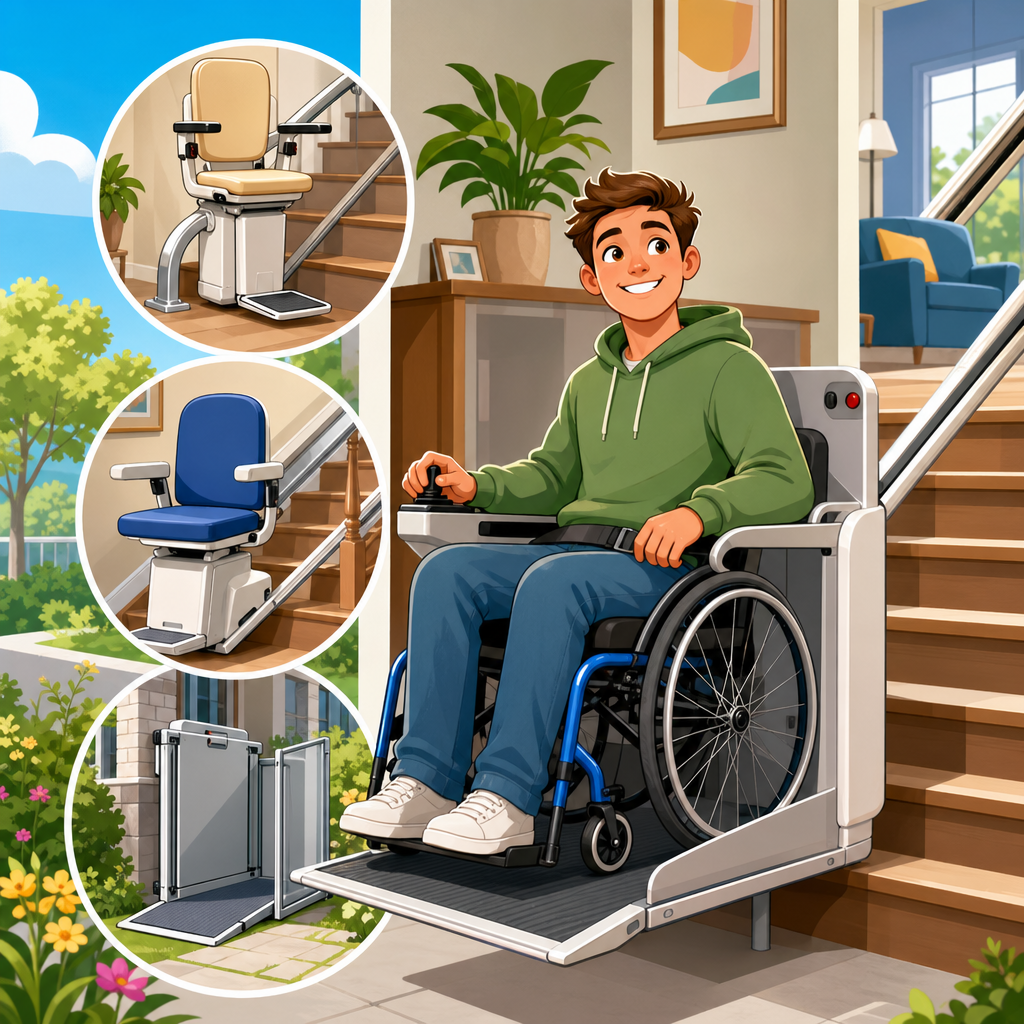
Best stair lifts for architects and interior designers are not simply mobility devices; they are integrated architectural elements that must satisfy accessibility, aesthetics, space planning, and long-term property value. In premium residential and boutique commercial projects, a stair lift has to do more than move a passenger safely between levels. It must respect sightlines, preserve circulation width, coordinate with finishes, and complement the design language of the interior. That is why luxury and premium models deserve separate evaluation from standard buying guides focused only on price or basic function.
For design professionals, the key terms matter. A straight stair lift runs on a fixed rail for a single, uninterrupted flight. A curved stair lift is custom-fabricated to follow turns, landings, or intermediate rests. A standing stair lift supports users who cannot comfortably bend at the hip or knee. A perch model offers a compact compromise for narrow stairs. Premium stair lifts typically add quieter drive systems, slimmer rails, upgraded upholstery, motorized swivel seats, advanced obstruction sensors, battery backup, and finish options chosen to blend with bespoke interiors. In practice, these details determine whether a lift feels like an intrusive medical accessory or a thoughtfully integrated product.
I have worked on renovations where the stair was the visual centerpiece of the home, and the wrong lift would have undermined months of careful detailing. In those projects, the specification process always extended beyond load capacity and code review. We looked at balustrade geometry, tread nosing projection, folded depth, seat height, hinge-rail requirements at the lower landing, and whether the parked chair would conflict with casework, art placement, or a front door swing. Architects and interior designers need this broader lens because clients buying in the premium segment expect seamless functionality without sacrificing the character of the space.
This hub article explains how to choose the best stair lifts for architects and interior designers when luxury and premium models are the priority. It covers the core selection criteria, compares leading premium brands, and highlights the design tradeoffs that matter on real projects. If you are specifying for aging-in-place, multi-generational homes, high-end renovations, or client presentations where visual impact matters, this guide will help you shortlist products with confidence.
What Makes a Stair Lift Premium in Design-Led Projects
A premium stair lift distinguishes itself in four areas: customization, visual restraint, ride quality, and service support. Customization is essential because luxury homes rarely have generic stair geometry. Winder turns, split landings, and sculptural handrails are common, which means the rail must be precisely surveyed and manufactured. Brands operating at the high end typically rely on photo measuring or digital surveying systems to reduce installation tolerances. That matters because a poorly aligned curved rail introduces ride vibration, inconsistent seat leveling, and visible hardware compromises.
Visual restraint is equally important. The best premium models minimize visual mass through slim carriage housings, compact arm geometry, and rails with clean profiles. Upholstery, seat shell finish, and rail color should coordinate with the palette rather than default to institutional beige. On strong contemporary interiors, neutral matte finishes and reduced bulk perform better than heavily padded traditional seats. In more classic settings, upholstered seats with warmer tones and soft forms may integrate more naturally. A premium model should also park neatly at the top or bottom landing, ideally with a folding rail or compact footprint to preserve the architectural reading of the stair.
Ride quality is where design professionals often notice the difference immediately. Better units start and stop more smoothly, generate less gear noise, and feel more stable on transitions. Clients interpret that refinement as quality, even if they cannot identify the motor or transmission type. Finally, service support matters because premium clients expect uptime. Reliable dealers, warranty coverage, and parts availability are not secondary concerns; they are part of the specification. A beautiful lift that takes weeks to repair damages the user experience and the reputation of the project team.
Best Premium Stair Lift Brands for Luxury Residential Work
Among premium brands, Stannah, Handicare, Bruno, Savaria, and Access BDD are the names most often evaluated for design-sensitive work. Each has strengths, but they do not suit every project equally. Stannah is widely respected for refined engineering, dependable ride quality, and strong curved-lift capability. Its Siena, Sadler, and Starla lines are frequently considered where finish options and ergonomic fit matter. The Starla in particular is often chosen for higher-end interiors because the seat design feels more like tailored furniture than hospital equipment.
Handicare competes strongly in the premium category through models such as the 1100 straight lift and Freecurve system. The 1100 is notable for a friction-drive approach with a slim rail and no grease-coated rack, which can be a real advantage in pristine interiors where visible lubricant is unacceptable. Freecurve is one of the more adaptable curved systems for tight or complex stairs, including installations requiring steeper inclines or reduced parking intrusion. For architects managing narrow circulation zones, that flexibility can save a project from a much more invasive stair rebuild.
Bruno remains a leading choice in North America, especially for reliability and dealer support. The Elite straight and Elite curved lines are robust, comfortable, and well supported in the field. They are not always the most visually minimal, but they perform consistently and are often preferred when the client values durability and a proven maintenance network. Savaria, with roots in accessibility products and home elevators, offers premium options that fit well in integrated accessibility planning. Access BDD, known in many markets for bespoke curved solutions and the Flow X, stands out for compact parking and suitability for difficult stair configurations.
| Brand | Best Use Case | Premium Strength | Design Consideration |
|---|---|---|---|
| Stannah | High-end homes with visible staircases | Refined ride, strong finish options | Best results with careful upholstery and rail color matching |
| Handicare | Narrow or complex stairs | Slim rail, flexible curved geometry | Excellent when circulation width is critical |
| Bruno | Clients prioritizing reliability and support | Strong dealer network, durable build | Slightly more utilitarian appearance in some models |
| Savaria | Whole-home accessibility planning | Good fit within broader accessible design packages | Coordinate early with elevator or platform lift discussions |
| Access BDD | Architecturally difficult curved stairs | Compact parking, advanced custom rail capability | Ideal for preserving handrail and landing function |
Straight, Curved, and Perch Models: Choosing by Stair Geometry
The best stair lift type is determined first by stair geometry, not by brochure appeal. Straight lifts are the simplest and usually the cleanest visually because the rail is standardized and the carriage path is predictable. If the stair has one uninterrupted run and adequate landing space at both ends, a straight model is usually the most cost-effective premium solution. In luxury projects, that often means spending more on finish quality and parking convenience rather than on mechanical complexity.
Curved lifts are the real focus in architect-led work because custom homes and renovations frequently involve turns, pie-shaped treads, or intermediate landings. A curved lift can follow the inside or outside line of the stair, and that choice changes the visual impact significantly. Inside-line installations generally reduce rail length and keep the lift tighter to the stair, but they may demand more precise transfer at landings. Outside-line rails can improve boarding in some layouts, yet they can also become more visually prominent. During design review, I always evaluate both paths because the better accessibility solution is not always the better spatial composition.
Perch and standing models are valuable when folded depth is critical or when the user has limited knee flexion. Products in this category can unlock installations on stairs that appear too narrow for a conventional seated lift. However, they require a user with enough balance and trunk control to ride safely, so they are not universal solutions. For interior designers, the main advantage is reduced bulk. For architects, the caution is clear: do not choose a compact model purely to protect aesthetics if it compromises ergonomic suitability for the actual user.
Key Specification Criteria for Architects and Interior Designers
When evaluating luxury stair lifts, the most important dimensions are folded width, seat-to-footrest relationship, arm height, rail projection, and landing overrun. These measurements determine how the lift interacts with egress, handrail reach, and adjacent millwork. On paper, a difference of a few inches may look minor. On site, it can determine whether a front hall remains gracious or becomes pinched. I recommend overlaying manufacturer dimensional drawings directly onto staircase elevations and plan details before approving a model.
Power and drive system also affect specification quality. Battery-powered lifts that charge at park points remain the dominant residential solution because they continue operating during power outages. That is not a luxury feature; it is a resilience requirement. Drive technology shapes maintenance and cleanliness. Rack-and-pinion systems are common and proven, but grease management should be reviewed closely in high-finish interiors. Friction-drive systems can reduce visible residue and support a cleaner rail appearance, though brand-specific performance should be confirmed through dealer demonstrations and local service history.
Safety systems should include overspeed governors, obstruction sensors on the carriage and footrest, seat belts, lockable controls, and swivel-seat interlocks. For premium clients, add powered options carefully. Motorized folding footrests, automatic swivels, and powered hinges improve usability, especially for older users with limited reach. Yet every powered feature adds components that may require future service. The right balance depends on the client’s dexterity, the household’s support structure, and whether the stair lift is expected to serve daily independent use or occasional assisted use.
Integrating Stair Lifts Without Compromising Interior Architecture
A stair lift can coexist with excellent interior design if integration decisions happen early. Start with parking positions. The best visual outcome often depends less on the chair design and more on where it rests when not in use. A parked chair at the bottom landing can dominate an entry sequence, while parking at the top may preserve the view from the main floor. Hinged rails are especially important when the lower rail would project into a doorway, corridor, or circulation path. In several townhome projects, a powered hinge transformed an otherwise awkward installation into one that disappeared when folded.
Color and material selection should be treated like any other interior specification. Match rail color to adjacent trim, wall tone, or metalwork so the rail recedes visually. Contrast can work in deliberately modern interiors, but most premium installations benefit from subtle blending rather than statement making. Seat upholstery should coordinate with the furniture and architectural palette, not simply with the stair carpet. The lift is a permanent object in the room; it should be selected with the same care as a lounge chair or banquette.
Lighting and detailing matter too. Shadows can exaggerate the presence of rails and carriage housings, especially on open-riser or sculptural stairs. Where possible, review the lift under actual project lighting conditions. Also coordinate with handrails, newel posts, and balustrades during survey. Installers can often solve conflicts, but late-stage fixes tend to be more visible and more expensive. The best stair lifts for architects and interior designers are rarely chosen from catalog images alone; they are resolved through measured coordination between dealer, designer, and user.
Cost, Lifecycle Value, and When a Stair Lift Is the Right Premium Solution
Luxury and premium stair lifts typically cost more because they involve custom surveying, upgraded finishes, and complex fabrication, especially for curved rails. Straight premium models may start in the mid-thousands, while bespoke curved systems can rise substantially depending on geometry and options. For clients comparing a stair lift with a residential elevator, the cost difference is still significant. An elevator delivers greater long-term universality and can elevate resale appeal in some markets, but it requires major construction, shaft space, and much higher capital investment. A premium stair lift often provides the fastest path to safe access with minimal structural disruption.
Lifecycle value depends on matching the product to the real occupancy plan. If a client intends to age in place for many years and has a stair that can safely accept a lift, a premium model can preserve independence without forcing a major renovation. If multiple users with differing mobility needs are expected, or wheelchair access between floors is necessary, the stair lift may be an interim solution rather than the final one. Be honest about that distinction. Good specification protects the client from buying the wrong premium product beautifully.
For architects and interior designers, the main takeaway is simple: evaluate premium stair lifts as designed building components, not afterthoughts. Focus on geometry, parking, ride quality, finish integration, and dealer capability. Shortlist proven brands, request precise surveys, and test real units whenever possible. Done well, a luxury stair lift can support accessibility while preserving the elegance of the stair and the intent of the interior. Use this hub as your starting point, then move into brand-specific reviews, curved-model comparisons, and installation planning guides to build the right specification for your next project.
Frequently Asked Questions
What should architects and interior designers prioritize when selecting the best stair lift for a high-end residential or boutique commercial project?
Architects and interior designers should begin by treating the stair lift as part of the architecture rather than as an afterthought. The best stair lifts for design-led projects must satisfy several criteria at once: code awareness, user safety, visual integration, stair geometry compatibility, and long-term usability. In practice, that means evaluating how the rail follows the stair, how much folded and unfolded space the chair occupies, how the system affects circulation width, and whether parking positions can be planned to keep the lift discreet when not in use.
Aesthetics are equally important. In premium spaces, the stair lift should align with the interior language of the home or commercial setting, including finishes, upholstery tones, rail color, and overall visual lightness. Designers often look for compact profiles, clean lines, and customization options that allow the lift to blend with wood stairs, metal balustrades, stone treads, or contemporary minimalist interiors. A bulky or visually intrusive system can undermine an otherwise carefully curated stair hall or entry sequence.
It is also essential to think beyond installation day. A well-selected stair lift should support aging in place, improve accessibility, and preserve property functionality without forcing major structural intervention. For architects, that makes the ideal model one that can be integrated early in planning or sensitively retrofitted later while maintaining design intent. For interior designers, the right choice is one that resolves practical mobility needs while still contributing to the comfort, elegance, and perceived value of the finished space.
How can a stair lift be integrated into a design-focused interior without compromising aesthetics?
The key is to approach stair lift integration the same way you would approach millwork, lighting, or built-in hardware: as a designed component with visual consequences. The best stair lifts for architects and interior designers are usually those with slim rails, compact carriage assemblies, fold-away seats, and customizable finish options. These features help the lift recede into the background when parked and reduce its impact on the stair’s sculptural presence, especially in entry foyers, feature staircases, and open-plan living areas.
Placement strategy makes a major difference. Designers should identify parking locations that minimize visual interruption, such as at a top landing, around a corner, or in a lower-level recess where the chair is not the first thing occupants see. On curved staircases, custom rail design can help the system track the architecture more gracefully rather than appearing mechanically imposed on it. Coordination with wall color, trim, railing materials, and nearby furnishings can also soften the lift’s visual presence.
In many projects, success comes down to early collaboration with the stair lift provider. When design professionals engage manufacturers and installers during the planning phase, they can review rail routing, seat orientation, charge points, and fold-clearance requirements before finishes are finalized. This allows the stair lift to feel intentional rather than reactive. In premium interiors, that level of planning helps preserve sightlines, maintain material harmony, and ensure that accessibility supports the design concept instead of competing with it.
Are stair lifts practical for narrow, curved, or architecturally complex staircases?
Yes, but practicality depends on precise measurement, product engineering, and careful design coordination. Straight stair lifts are generally simpler, more economical, and easier to fit, but many architecturally significant homes and boutique commercial spaces feature curved, winding, split-level, or intermediate-landing staircases that require custom solutions. In those cases, a made-to-measure curved stair lift is often the best option because the rail can be fabricated to follow the exact geometry of the stair while preserving as much usable width as possible.
For narrow stairs, compact design becomes critical. Architects and interior designers should review folded seat depth, footrest projection, arm width, and rail placement to determine whether the lift allows safe passage for other users when not in operation. They should also assess how the system interacts with handrails, newel posts, wall moldings, and door swings at the top or bottom landings. A lift can be technically installable yet still create an awkward or noncompliant circulation condition if these factors are overlooked.
Complex stairs often benefit from a site-specific feasibility review. Experienced suppliers can advise whether a hinge rail, parking curve, or alternative boarding point would improve usability and reduce obstruction. In design-sensitive settings, this review is especially valuable because it helps balance accessibility with preservation of architectural character. The most practical stair lift is not simply the one that fits the stair; it is the one that works with the stair’s form, the user’s needs, and the project’s spatial priorities.
How do stair lifts affect property value, accessibility, and long-term livability?
A thoughtfully selected stair lift can enhance long-term livability by allowing occupants to remain in a multi-level property safely and comfortably as needs change over time. For residential projects, this supports aging in place and reduces the pressure to relocate or undertake disruptive renovation. For architects and interior designers working with clients who want future-ready homes, a stair lift can be part of a broader universal design strategy that preserves independence without sacrificing the character of the interior.
From a property value perspective, the impact is often strongest when the installation is discreet, high quality, and aligned with the overall design of the home. A poorly chosen system may feel temporary or visually intrusive, but a premium stair lift integrated with care can make a property more appealing to buyers who value accessibility, flexibility, and thoughtful planning. In luxury and custom markets, the presence of mobility solutions is increasingly seen as a sign of intelligent design rather than a compromise, especially when the equipment complements the architecture.
Long-term value also comes from reliability and serviceability. Designers should guide clients toward stair lifts backed by strong warranties, dependable maintenance support, and durable construction. A system that operates smoothly, folds neatly, and remains visually appropriate over many years contributes more to livability than one chosen solely on initial price. In short, the best stair lift can strengthen both functional accessibility and the enduring usefulness of the property, provided it is selected and detailed with the same care as any other premium architectural element.
Why is early collaboration with a stair lift specialist important for architects and interior designers?
Early collaboration reduces compromise. When architects and interior designers bring in a stair lift specialist during concept development or early detailing, they gain accurate guidance on clearance needs, rail geometry, power requirements, boarding positions, and user ergonomics before those constraints become costly problems. This is particularly important in projects where the stair is a focal feature, circulation is tight, or the client expects accessibility solutions to be nearly invisible within the finished design.
Specialists can also help the design team compare product types and identify which models best support the project goals. For example, one system may offer a slimmer folded profile, another may provide more refined upholstery and rail finish options, while another may solve a difficult landing condition with a powered hinge or custom park position. These distinctions matter in design-led projects because they affect not only performance but also visual integration and day-to-day user experience.
Most importantly, collaboration helps ensure the final result feels intentional. Rather than trying to retrofit around completed finishes or discovering late-stage conflicts with balustrades, trim details, or circulation width, the team can make informed decisions from the beginning. That leads to cleaner installations, better aesthetic outcomes, smoother client communication, and a more successful balance between accessibility and design excellence. For architects and interior designers, that proactive approach is usually what separates a merely functional stair lift from one that genuinely belongs in the space.