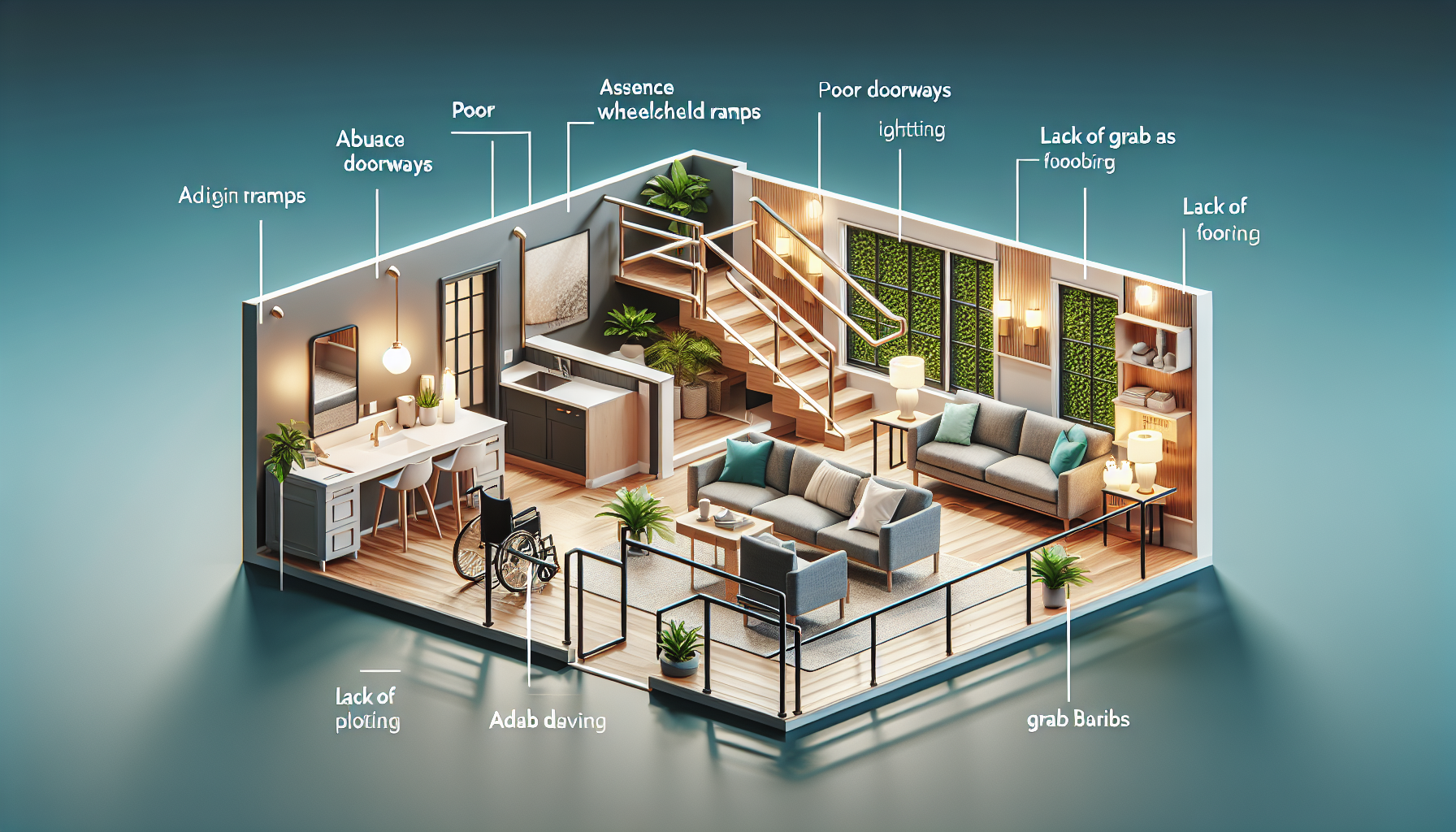
Aging in place means staying safely and comfortably in your own home as you grow older, rather than relocating to assisted living or a nursing facility. Accessibility support includes the home modifications, transportation options, healthcare access, caregiver services, and state policies that make that choice realistic. The best states for aging in place with accessibility support are the ones that combine affordable housing, strong Medicaid home and community-based services, accessible public infrastructure, and a deep network of local providers. After working with families comparing relocation options, I have seen that the right state can extend independence for years, while the wrong one can turn ordinary tasks such as bathing, cooking, or getting to appointments into daily obstacles.
This topic matters because most older adults want to remain at home, yet that preference depends on systems far beyond the front door. A good aging in place strategy is not only about installing grab bars or a ramp. It is about whether a state funds personal care attendants, whether occupational therapists can assess fall risks, whether paratransit is reliable, and whether zoning allows accessory dwelling units for multigenerational support. Climate, utility costs, tax policy, and broadband access also shape long-term success. A home can be physically accessible and still fail as an aging in place setting if the resident cannot get home health visits, refill prescriptions, or recover after a hospitalization.
For this hub article, the central question is straightforward: which states give older adults the best chance to remain independent with practical accessibility support? The answer is not identical for every household. A retired homeowner with savings may prioritize contractor availability and low property taxes, while someone managing disability on a fixed income may care more about Medicaid waivers, subsidized housing, and public transit. Still, certain states consistently perform better because they treat aging in place as a coordinated policy area instead of an individual burden. Understanding how those states differ helps families plan earlier, compare tradeoffs clearly, and choose strategies that match health needs, budget, and mobility goals.
What Makes a State Good for Aging in Place
The best states for aging in place share five traits. First, they support home and community-based services, often called HCBS, through Medicaid waivers or state-funded programs. These services can include personal care, adult day programs, respite, meal delivery, home health aides, and case management. Second, they have an accessible housing stock or strong home modification programs. Third, they offer healthcare access across urban and rural areas, including geriatric care, rehabilitation, and durable medical equipment suppliers. Fourth, they provide transportation options beyond driving. Fifth, they maintain consumer-friendly information systems, usually through Area Agencies on Aging, aging resource centers, and statewide benefits portals.
In practice, I evaluate states by asking very concrete questions. How long is the waitlist for HCBS? Does Medicaid cover environmental accessibility adaptations? Are there certified aging-in-place specialists, occupational therapists, and licensed contractors nearby? Can a resident book paratransit with reasonable notice? Are sidewalks, curb cuts, and public buildings compliant with accessibility standards? How expensive is a one-story home near a hospital? These questions reveal more than broad rankings. A state can look retirement-friendly on paper yet perform poorly for people with balance issues, vision loss, wheelchair use, or progressive conditions such as Parkinson’s disease or multiple sclerosis.
Another important factor is whether support exists before a crisis. States that do well typically have fall prevention programs, evidence-based caregiver education, and hospital discharge pathways that connect people to home modifications quickly. Standards from the Centers for Medicare & Medicaid Services, ADA design principles, and universal design concepts all influence what good support looks like, but execution varies widely. The strongest states integrate agencies that usually operate separately: housing finance departments, Medicaid administrators, transportation planners, and public health networks. That coordination reduces the common gap between a medical recommendation and actual implementation inside the home.
Best States for Aging in Place With Accessibility Support
Minnesota consistently stands out because it has a mature HCBS ecosystem, strong senior service coordination, and practical local supports. The state has long invested in alternatives to institutional care, and many counties have robust aging services navigation. In real cases I have reviewed, families in Minnesota often find clearer paths to homemaker services, caregiver respite, and home-delivered meals than in states where programs are fragmented. Winters are harsh, which is a real accessibility challenge, but snow management, indoor healthcare access, and coordinated county-level services often offset that drawback for residents who plan carefully.
Washington is another strong choice, especially for people who need policy support as much as physical accessibility. The state has a reputation for funding community-based long-term services well and for building consumer-directed care options. Urban areas such as Seattle and Tacoma add stronger transit, major health systems, and more contractors experienced with accessible remodeling. Housing costs are a limitation, but the service infrastructure is unusually deep. For households that can manage the cost of living, Washington often offers a better chance of staying home through higher-need stages of aging than lower-cost states with weak support networks.
Colorado performs well because it combines active aging culture, accessible recreation planning, reputable health systems, and decent community-based service infrastructure. In Denver and several Front Range communities, I have seen especially strong access to rehabilitation medicine, mobility equipment providers, and contractors familiar with zero-step entries, curbless showers, stair lifts, and wider door clearances. Snow and elevation can create barriers, particularly for cardiopulmonary conditions, so Colorado is not ideal for everyone. Still, for many older adults who value preventive health, walkable communities, and broad service options, it remains a leading state.
Massachusetts belongs near the top because of healthcare density and aging services professionalism. The state has high costs, but it also has major hospital systems, strong municipal senior centers, and better-than-average transit access in many communities. When families need occupational therapy home evaluations, post-acute care coordination, or complex specialist support, Massachusetts usually offers more depth than rural, lower-cost states. Property taxes and housing prices can be burdensome, yet the ability to find home care agencies, accessible housing specialists, and nonprofit supports often makes the difference between sustainable independence and repeated institutional transitions.
Oregon, Wisconsin, and Vermont also deserve attention. Oregon has a long history of emphasizing community living and coordinated aging services. Wisconsin performs well in many communities on livability, healthcare access, and elder resource coordination. Vermont is smaller and rural, but its scale can make local systems easier to navigate, and many towns have strong community support traditions. Pennsylvania and Arizona are often practical middle-ground options: each has sizable retiree populations, established healthcare markets, and numerous contractors serving accessibility needs. However, outcomes vary sharply by county, so families should verify local capacity rather than relying on statewide averages alone.
| State | Key Strengths | Main Tradeoffs |
|---|---|---|
| Minnesota | Strong HCBS, county coordination, broad senior services | Harsh winters, snow-related mobility barriers |
| Washington | Community-based care funding, transit, large health systems | High housing and living costs |
| Colorado | Rehab access, accessible remodeling market, active communities | Snow, elevation, regional cost differences |
| Massachusetts | Dense healthcare network, professional aging services, transit | Very high housing and tax burden |
| Oregon | Longstanding community-living focus, service coordination | Variable rural access, some housing pressure |
Accessibility Support That Matters Most at Home
Accessibility support starts with the built environment. The highest-value modifications are usually the least glamorous: no-step entries, lever handles, improved lighting, handrails on both sides of stairs, non-slip flooring, and bathrooms designed for transfers. A curbless shower with blocking installed for future grab bars often does more for long-term independence than expensive smart home gadgets. Doorways of at least thirty-six inches, hallways that allow walker or wheelchair turning, and bedroom-bathroom proximity are equally important. Universal design principles matter because they reduce the need for repeated remodeling as mobility changes over time.
State quality affects whether these changes are affordable and available. Some states support home modifications through Medicaid waivers, state assistive technology programs, vocational rehabilitation pathways, or nonprofit repair grants. Rebuilding Together affiliates, local housing rehabilitation agencies, and community development block grant programs can fill funding gaps. I always advise families to confirm whether a recommended contractor understands ADA-informed dimensions, even in private homes where ADA rules may not formally apply. A beautifully remodeled bathroom can still fail if the toilet height, turning radius, or grab bar placement does not match the user’s body mechanics and transfer pattern.
Technology also plays a supporting role, but it should never substitute for physical access. Video doorbells, medication reminders, fall detection systems, voice assistants, and remote patient monitoring can reduce risk, especially for people living alone. Yet these tools only help when broadband is reliable, caregivers can respond, and the resident is comfortable using them. States with strong telehealth policies and broadband coverage give aging in place plans more resilience, particularly in rural communities. The best approach combines structural modifications, personal assistance, and technology instead of expecting one tool to solve every mobility challenge.
Healthcare, Transportation, and Community Services
Healthcare access is a decisive factor in aging in place, especially after age seventy-five or after a major diagnosis. A state may offer beautiful housing and low taxes, but if residents must drive two hours for wound care, cardiology, or infusion services, independence erodes quickly. Strong states provide layered healthcare access: primary care, home health agencies, rehabilitation, pharmacy delivery, and hospital systems with reliable discharge planning. PACE programs, where available, can be especially valuable because they integrate medical care and long-term support for eligible older adults who might otherwise need nursing home placement.
Transportation is just as important as healthcare. When older adults stop driving, isolation can set in fast unless a state and local community offer workable alternatives. The most useful systems include ADA paratransit, volunteer driver networks, reduced-fare transit, and ride programs coordinated through senior centers or nonprofits. I have seen households remain independent largely because a county transportation office could consistently get them to dialysis, physical therapy, and grocery stores. In contrast, in car-dependent regions without backup options, even minor vision decline or medication changes can force premature moves into congregate settings.
Community services often determine whether care remains sustainable for the family caregiver. Area Agencies on Aging, evidence-based fall prevention classes, Meals on Wheels, respite grants, dementia support groups, legal aid, and benefits counseling all reduce the risk of burnout and crisis placement. States that maintain good referral systems save families time and money because they make it easier to find vetted providers. This is one reason smaller service details matter. A state with average tax policy but excellent care coordination can outperform a cheaper state where every service search starts from zero and every agency operates in isolation.
Costs, Policy, and How to Choose the Right State
Cost should be measured broadly, not just by home prices. Families need to compare property taxes, homeowners insurance, utility bills, contractor rates, in-home care hourly costs, and out-of-pocket medical spending. A low-cost state can become expensive if personal care aides are scarce, forcing agencies to charge more or leaving families to patch together unreliable schedules. Medicaid eligibility rules, spousal impoverishment protections, and waiver enrollment limits also affect affordability. I have worked with clients who moved for cheaper housing only to discover that the local service workforce was too thin to support bathing assistance, meal prep, and transfers safely.
Policy signals are worth reading closely. States that support accessory dwelling units, home modification tax relief, caregiver training, and direct care workforce development usually create better aging in place outcomes. So do states that publish clear data and maintain centralized long-term care resource portals. Before choosing a state, families should contact the local Area Agency on Aging, ask about HCBS waitlists, verify home care agency staffing levels, and price three common scenarios: independent living now, moderate support after a fall, and high-support living with daily personal care. That scenario planning exposes weaknesses early.
The best states for aging in place with accessibility support are the ones that make independence practical, not merely aspirational. Minnesota, Washington, Colorado, Massachusetts, Oregon, and several others rise to the top because they combine service infrastructure, accessible housing options, healthcare depth, and transportation alternatives. Still, the best choice depends on your budget, health profile, climate tolerance, and family network. Use this hub as your starting point for deeper research into home modifications, caregiver planning, Medicaid pathways, and accessible housing selection. The earlier you plan, the more control you keep over where and how you age.
Frequently Asked Questions
What makes a state one of the best places for aging in place with accessibility support?
A strong state for aging in place usually offers a practical mix of affordability, healthcare access, and day-to-day support that helps older adults remain safe and independent at home. That starts with housing costs that are manageable for retirees on fixed incomes, but it also includes the availability of home modification programs for features like ramps, grab bars, wider doorways, stair lifts, and accessible bathrooms. States that rank well often have robust Medicaid Home and Community-Based Services, which can help cover in-home care, personal assistance, adult day services, and other supports that reduce the need for institutional care.
Transportation is another major factor. Even when a home is fully accessible, aging in place can become difficult if medical appointments, grocery stores, pharmacies, and community centers are hard to reach. The best states typically have reliable paratransit, senior transportation programs, or transit systems with accessibility features that make it easier to stay active and connected. On top of that, access to primary care doctors, specialists, hospitals, rehabilitation services, and home health agencies plays a major role in whether someone can age safely in their own home over the long term.
State policy matters as well. Some states invest more heavily in caregiver support, respite care, long-term services, and programs designed to prevent unnecessary nursing home placement. Others may offer tax relief, property tax exemptions, weatherization assistance, or grant programs that make home updates more affordable. In short, the best states are not just affordable on paper—they create a full support system that makes independent living realistic, sustainable, and safer as needs change with age.
Why are Medicaid home and community-based services so important when choosing a state for aging in place?
Medicaid home and community-based services, often called HCBS, are one of the most important indicators of whether a state truly supports aging in place. These programs are designed to help older adults and people with disabilities receive care in their homes or communities rather than in nursing facilities. Depending on the state, HCBS may include personal care assistance, homemaker services, skilled nursing visits, home-delivered meals, caregiver support, adult day care, and case management. For many families, these services make the difference between staying at home and having to move into institutional care.
The reason HCBS matters so much is that aging in place often becomes more complex over time. Someone may start out needing only minor accessibility upgrades, but later require help with bathing, dressing, meal preparation, medication management, or transportation. In states with stronger HCBS systems, there are often more pathways to receive that help while remaining at home. States vary widely in how they fund these services, how long waitlists are, what functional needs qualify, and how easy it is to navigate the application process. That variation can significantly affect quality of life and family caregiving burdens.
When comparing states, it is wise to look beyond whether HCBS exists and instead ask how well it works in practice. Key questions include whether there are long waiting lists, whether family caregivers can receive training or compensation in some cases, whether services are available in rural as well as urban areas, and whether people can access support before a crisis occurs. A state with strong HCBS infrastructure is often better equipped to help residents adapt to changing needs without disrupting their independence, routines, or connection to their community.
How do housing affordability and home modification programs affect aging in place?
Housing affordability is foundational to aging in place because staying in your home is only sustainable if the overall costs remain manageable. That includes mortgage or rent payments, property taxes, insurance, utilities, maintenance, and repair expenses. A state may appear attractive for retirees, but if housing prices, tax burdens, or insurance costs are rising quickly, aging in place can become financially stressful. For older adults on fixed incomes, affordability is not just about monthly housing costs—it is about having enough flexibility in the budget to pay for care, medications, transportation, and accessibility improvements when needed.
Home modification programs are equally important because many homes were not built with aging-related mobility or safety needs in mind. Even relatively modest changes, such as installing grab bars, lever-style door handles, non-slip flooring, improved lighting, and a walk-in shower, can significantly lower fall risk and improve everyday comfort. More extensive upgrades, including wheelchair ramps, widened hallways, stair lifts, and first-floor bedroom or bathroom conversions, may be necessary for people with more advanced mobility limitations. States and local communities that offer grants, low-interest loans, nonprofit assistance, or weatherization and repair programs can make these upgrades much more attainable.
Together, affordability and modification support determine whether a person can remain at home safely rather than simply remain at home precariously. A lower-cost state with limited support for accessibility upgrades may still be difficult for older adults with physical challenges. By contrast, a state with strong housing assistance, repair programs, and accessible housing initiatives can help residents adapt their homes before a health event forces a sudden move. The best environments for aging in place are those where older adults can afford both the home itself and the changes needed to keep that home functional over time.
What role do transportation and healthcare access play in successful aging in place?
Transportation and healthcare access are essential because aging in place is about more than remaining inside a familiar home—it is about continuing to live a connected, healthy, and manageable life. If an older adult cannot reliably get to medical appointments, pick up prescriptions, shop for groceries, attend physical therapy, or participate in social activities, independence can erode quickly. States that support aging in place well often have a combination of accessible public transit, senior ride programs, paratransit services, volunteer driver networks, and community transportation partnerships that reduce isolation and make routine tasks more practical.
Healthcare access is just as critical. Older adults often need regular interaction with primary care providers, specialists, pharmacies, rehabilitation professionals, and home health workers. In the best states for aging in place, residents tend to have stronger access to hospitals, outpatient clinics, telehealth options, rehabilitation services, and in-home care providers. This becomes especially important for people managing chronic conditions such as arthritis, diabetes, heart disease, vision loss, or cognitive decline. Easy access to preventive care and follow-up treatment can help avoid hospitalizations and support better long-term function at home.
It is also important to consider geographic differences within a state. A state may perform well overall, but rural residents may still face provider shortages, long travel distances, or limited transit options. That is why the strongest aging-in-place environments usually combine healthcare infrastructure with accessible transportation and community-based support. When those systems work together, older adults are better able to maintain routines, respond to health changes early, and preserve both independence and quality of life.
How can families compare states if they are planning a move for better aging-in-place support?
Families should start by thinking about daily living needs, not just broad rankings. A state may score well in national retirement lists, but the better question is whether it fits the specific person’s health, mobility, financial situation, and support network. Begin by reviewing housing costs, property taxes, climate-related maintenance needs, and the availability of accessible or easily modifiable homes. Then look at practical support systems: Medicaid HCBS programs, in-home care availability, caregiver support services, senior centers, accessible transportation, and the local healthcare network. These real-world details often matter more than a generalized “best state” label.
It is also helpful to compare how easy programs are to access. Families should look into whether there are waiting lists for home and community-based services, how home care agencies are staffed, whether there are nearby hospitals and specialists, and what local Area Agencies on Aging provide. State websites, county aging offices, disability resource centers, and nonprofit aging organizations can be useful starting points. If possible, speak directly with local providers, social workers, or care coordinators to get a sense of how the system functions in practice. A state with excellent policies on paper may still be difficult to navigate if services are fragmented or oversubscribed.
Finally, families should weigh social and emotional factors alongside cost and care. Aging in place works best when older adults remain connected to family, neighbors, faith communities, and familiar routines. Proximity to relatives, community engagement opportunities, and the overall accessibility of the neighborhood can be just as important as statewide policy. The best move is usually the one that balances affordability, strong support services, healthcare access, and personal connection—creating an environment where aging at home is not only possible, but genuinely sustainable and comfortable.