
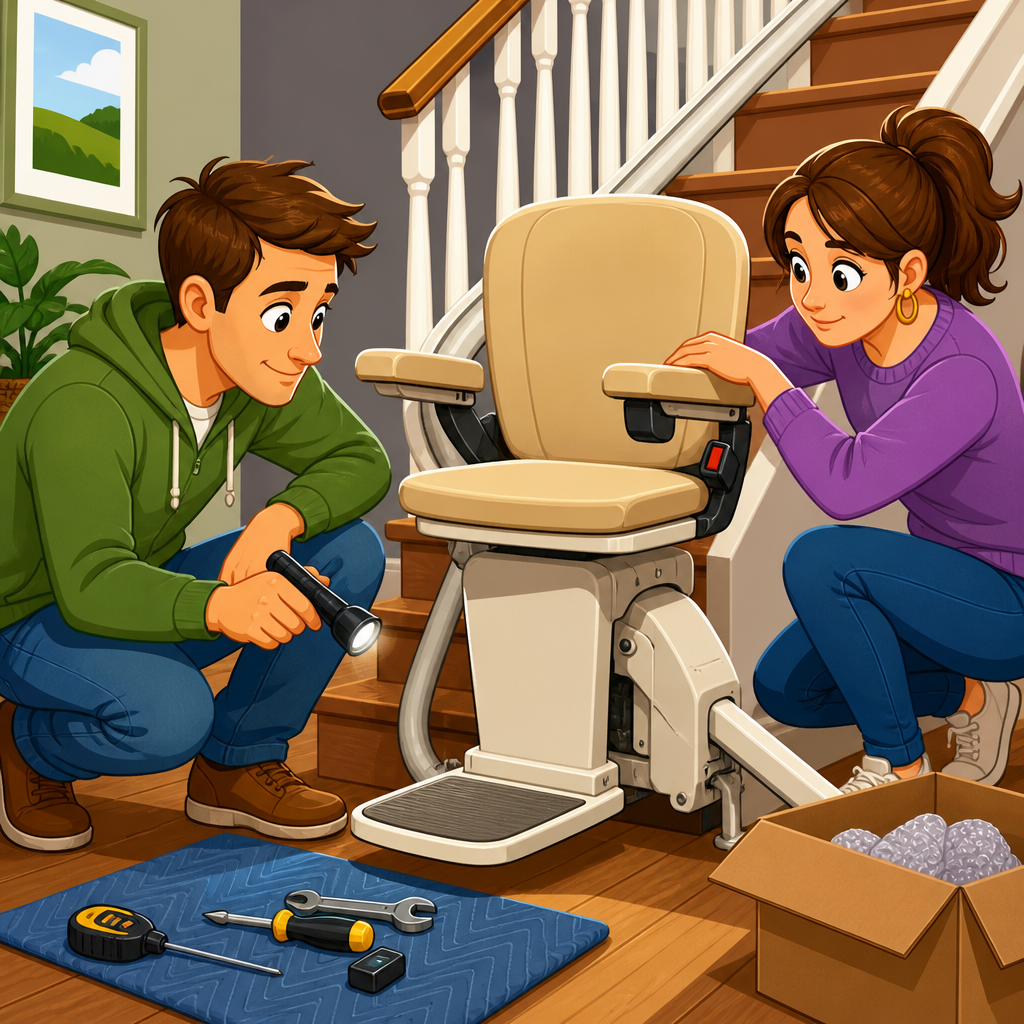
Buying a used stair lift on Craigslist can save thousands of dollars, but only if you inspect the unit like a technician instead of shopping like a bargain hunter. In this market, “used stair lift,” “refurbished chair lift,” and “secondhand stair chair” are often treated as interchangeable terms, yet they are not the same. A used stair lift is typically sold as-is by a homeowner or liquidator. A refurbished chair lift has usually been cleaned, tested, repaired, and sometimes fitted with new batteries, rollers, or seat parts by a dealer. Craigslist listings blur those distinctions, which is why buyers need a disciplined inspection process before paying.
I have reviewed private-party stair lift sales for families trying to equip a parent’s home quickly, and the pattern is consistent: the cheapest listing is not usually the lowest total cost. Removal labor, missing remotes, worn batteries, incompatible track sections, and unavailable replacement parts can turn a “$800 bargain” into a failed installation and a second purchase. Because stair lifts are safety devices that carry people with limited mobility on a fixed rail, a bad buy creates more than inconvenience. It can create fall risk, entrapment risk, electrical issues, and code or insurance questions if installed poorly.
This guide serves as a hub for evaluating used and refurbished chair lifts, especially those found on Craigslist, Facebook Marketplace, estate sales, and local classifieds. It explains what to inspect before handing over money, how to separate reusable equipment from scrap, and when a private-party deal makes sense. You will learn how to identify the lift type, verify model support, inspect the rail, carriage, seat, controls, and batteries, and estimate the real installation cost. If you understand those checkpoints, you can negotiate from facts instead of hope and avoid buying a unit that cannot be safely reused in your home.
Start With the Right Questions Before You Drive to See It
Before inspecting any used stair lift in person, ask the seller for the brand, model number, age, staircase type, and whether the unit is still installed. Reputable manufacturers include Bruno, Harmar, Stannah, Acorn, Handicare, Savaria, and Sterling. The exact model matters because parts availability varies widely, especially for discontinued lifts. Ask for a photo of the data plate on the carriage or chassis, not just a picture of the seat. That label usually lists the serial number, voltage, manufacture date, and model family. Without it, you cannot confirm support status or manuals.
You also need to know whether the lift came off a straight staircase or a curved staircase. Straight stair lifts use modular or cut-to-length rail sections and are often reusable in another home if the stair dimensions work. Curved stair lifts are usually custom built to one staircase and rarely transfer economically. Many first-time buyers do not realize this and travel to inspect a curved unit that is effectively worthless for resale outside parts salvage. Ask whether the seller has the full rail, mounting brackets, charging points, call-send remotes, seat belt, footrest safety edges, and installation hardware.
Request a video of the stair lift running up and down the rail while occupied, then folding and unfolding. In practice, that short video reveals more than most listing descriptions. Listen for grinding, hesitation, beeping fault codes, or rail joint impacts. Watch whether the seat swivel locks positively at the top landing, whether the footrest sensors stop the unit when obstructed, and whether the charger indicator shows normal charging. If the seller says the lift was removed already, ask who removed it and whether the rail sections were labeled. Unlabeled rails and missing brackets are common reasons used stair lifts never get reinstalled.
Inspect the Rail, Mounting System, and Staircase Compatibility
The rail is the backbone of the system, and rail problems are among the most expensive issues to correct. On a straight stair lift, inspect every rail section for dents, bends, corrosion, stripped fastener holes, and wear patterns from drive components. Even a small bend can cause the carriage to bind or ride roughly. Look closely at gear rack teeth if the lift uses a rack-and-pinion drive. Broken or rounded teeth create jerking, slipping, and shutdown faults. If the rail has overrun sections at the top or bottom, verify they are included and not cut off during removal. Missing overruns can affect safe transfers.
Compatibility with your staircase is just as important as rail condition. Measure your stairs from the top landing nosing down to the bottom landing, note the number of steps, width, and any obstructions such as doors, radiators, or tight turns. A used straight rail can sometimes be shortened, but not every system can be lengthened easily, and proprietary brackets may be hard to source. The rail should mount to treads, not the wall, on most residential systems, so inspect whether all stair tread brackets are present. Missing brackets force custom fabrication or replacement orders that can erase the savings of a used purchase.
If the unit is still installed, check how firmly the rail sits on the staircase. There should be no wobble when the carriage moves with a rider. Excess vibration often points to loose brackets, damaged tread anchors, or an out-of-level rail. During removal, rails can also be twisted if handled roughly by movers instead of lift technicians. I advise buyers to sight down the rail length from both ends. It should appear straight and consistent, with clean joints and no improvised shimming. Homemade spacers, mixed hardware, or drilled modifications are signs the system may already have been adapted badly once.
Examine the Carriage, Drive System, and Safety Controls
The carriage contains the motor, gearbox, control board, charging contacts, and overspeed or safety systems, so it deserves the closest inspection. Start with the drive: many stair lifts use a battery-powered DC motor with a transmission that drives a pinion along the rail. During operation, the ride should sound steady, not clattering or surging. Loud clicking can indicate worn gears or damaged rack engagement. Oil leaks around the gearbox are a red flag. Some older lifts use components that are expensive or no longer supported, and a failed gearbox can make a low-cost private sale uneconomical to repair.
Test every safety feature you can safely verify. The armrest joystick or toggle should respond instantly in both directions. The seat swivel should lock securely in travel and transfer positions. The seat belt latch should engage positively without fraying or damage. Pressure-sensitive safety edges on the footrest and carriage should stop travel when they contact an obstruction. The final limit switches should stop the lift at the charging points without overrunning. If the unit throws a fault code, photograph the display or note the beep pattern. Many manufacturers publish diagnostic charts that help you estimate whether the issue is minor or terminal.
Also inspect for signs of water exposure, rodent contamination, or storage damage. Stair lifts removed to a garage or shed often develop corrosion on connectors and control boards. Open battery compartments, if accessible, and look for swelling, leakage, or heavy oxidation at terminals. Burn marks, brittle wiring insulation, and cracked plugs suggest electrical neglect. Ask whether the lift ever required service and whether any parts were replaced. A documented battery change, charger replacement, or annual tune-up is a good sign. A seller who can describe routine maintenance usually has a unit worth considering; a seller who knows nothing may still be fine, but price accordingly.
Check the Seat, Batteries, Charger, and Included Parts
The seat assembly affects both comfort and safety, and replacement upholstery or plastics are often harder to find than buyers expect. Inspect the seat frame for cracks, loose pivot points, and excessive play in folding arms or the footrest linkage. The seat should fold smoothly and stay in position. Torn upholstery is not just cosmetic if padding has collapsed or moisture reached the base. Check whether the seat height or arm width was customized. Some lifts used in bariatric applications have reinforced or wider seats, which can be useful, but only if they match the user and the staircase clearance.
Most residential stair lifts use sealed lead-acid batteries charged through contacts at the ends of the rail. Batteries are consumables; assume a used unit may need new ones unless there is clear proof of recent replacement. A lift can run fine unloaded and still fail under a rider because weak batteries drop voltage under demand. Ask for the battery date codes. Replacement battery sets are usually manageable in cost, but only if the rest of the system is healthy. Verify that the charger is included, powered, and matching the unit. An incorrect charger can damage batteries or fail to maintain them properly.
| Component | What to Inspect | Why It Matters | Typical Risk if Faulty |
|---|---|---|---|
| Rail and brackets | Bends, corrosion, missing mounts, worn rack teeth | Determines safe travel and fit on your stairs | Binding, unsafe ride, failed installation |
| Carriage and gearbox | Noise, leaks, fault codes, rough movement | Core mechanical reliability | Expensive repair or total loss |
| Batteries and charger | Date codes, charging lights, voltage sag under load | Needed for consistent operation and emergency use | Stops on stairs, no-start condition |
| Seat and swivel | Locking action, cracks, belt condition, folding parts | User transfer safety | Fall risk at top landing |
| Controls and remotes | Call-send function, joystick response, displays | Daily usability and diagnostics | Intermittent operation, hidden faults |
Make an inventory before paying. The minimum package should include the rail, all rail joints and brackets, carriage, seat, footrest, armrests, charger, power supply, call-send remotes if originally equipped, key switch if used, and all exposed covers. Cosmetic covers matter because some models will not pass service inspection with internal parts exposed. Missing remotes are not always a deal-breaker, but missing top or bottom charge strips, final limit cams, or proprietary mounting feet can be. If the seller says, “It should all be there,” treat that as uncertainty, not confirmation. Count the parts yourself and photograph them.
Price the Real Cost: Removal, Installation, Support, and Risk
A used stair lift is only a deal when the total installed cost remains meaningfully below a professionally supplied refurbished unit. Start with the purchase price, then add removal if the seller expects you to handle it, transportation, new batteries, missing hardware, and installation labor by a qualified stair lift technician. Many dealers will install only brands they service regularly, and some will not install private-party units at all because they do not want liability tied to unknown equipment history. Call installers before you buy, not after. Ask specifically whether they support that model and whether parts are still available.
Compare your projected total with dealer-refurbished pricing in your region. In many markets, a straight used stair lift from Craigslist may sell for $500 to $2,000, while a dealer-supplied refurbished straight lift with installation and limited warranty may range from roughly $2,500 to $4,500 depending on brand, rail length, and features. That price spread sounds large until you factor in service support and the risk of a failed DIY purchase. Curved lifts are a different category: used custom curved rails rarely transfer well, and new curved systems commonly cost far more because each rail is manufactured to staircase measurements.
Supportability should influence your offer as much as condition. A well-kept older Bruno or Harmar unit with current parts channels can be a better buy than a cleaner-looking but unsupported off-brand lift. Search manufacturer manuals, dealer bulletins, and battery specifications before negotiating. If a model uses common 12-volt sealed lead-acid batteries and still has available remotes, charging contacts, and boards, its future maintenance outlook is better. If key parts are obsolete, pay salvage value only. The best Craigslist transactions happen when the buyer knows exactly what post-purchase costs to expect and is willing to walk away when the math stops working.
When to Buy, When to Walk Away, and How to Pay Safely
Buy a used stair lift on Craigslist only when five conditions are met: the brand and model are clearly identified, the lift is appropriate for your staircase type, the rail and carriage pass inspection, parts support is still available, and you already have an installer willing to take the job. If one of those conditions fails, the listing is speculative at best. Walk away immediately from units with custom curved rails for a different house, visible rail bends, severe corrosion, missing brackets, active fault codes with unknown causes, or sellers who cannot demonstrate that the lift worked before removal. Sentiment does not make a lift reusable.
Private-party payment should be handled carefully because mobility equipment scams exist. Meet at the installation site when possible, not a parking lot, so you can verify the unit’s origin and see it operating. Avoid deposits unless the seller is a known dealer. Use a payment method with records, such as a bank transfer or documented cash receipt, and list the exact model and included parts on the bill of sale. If the lift has already been removed, insist on photographs of all components laid out before you arrive. A complete paper trail helps if a disputed serial number or missing charger becomes an issue later.
The biggest benefit of this careful approach is simple: you protect both the user and your budget. A properly chosen used or refurbished chair lift can restore safe access to a multilevel home at a reasonable cost. A rushed purchase can leave a family with unusable metal, urgent mobility needs, and a second round of spending. Inspect the rail, carriage, batteries, controls, seat, and support status before paying. Price the full project, not the listing. Then move forward only if the lift can be installed safely and serviced locally. If you are comparing options now, build an inspection checklist and start with models your local technician already supports.
Frequently Asked Questions
What is the difference between a used stair lift, a refurbished chair lift, and a secondhand stair chair?
These terms are often used loosely in online listings, but they do not mean the same thing, and that distinction matters before you hand over money. A used stair lift usually means the unit is being sold as-is, often by a homeowner, family member, estate seller, or liquidator. In many cases, the seller is simply removing it from a home and has little documentation about service history, battery age, rail compatibility, or whether all parts are present. A refurbished chair lift, by contrast, should mean the equipment has been inspected, cleaned, tested, repaired where needed, and prepared for resale by a dealer or technician. Some refurbished units also receive new batteries, replacement wear parts, updated controls, or a limited warranty. A secondhand stair chair is a broad, informal phrase that can refer to either category.
When shopping on Craigslist, do not rely on the label alone. Ask exactly what has been done to the unit. Was it removed by a professional? Has it been powered on and run through a full travel cycle? Were the batteries replaced recently? Is the charger included? Are the seat, armrests, footrest, remotes, mounting brackets, and track sections all accounted for? If the seller says the lift is “refurbished,” ask for specifics, not marketing language. A truly refurbished unit should come with evidence of inspection and ideally some proof of operational testing. The biggest mistake buyers make is assuming “used” and “refurbished” represent similar risk. They do not. A used unit may still be a good buy, but only if you price it like a project and inspect it like a technician.
What should I inspect first when I see a used stair lift in person?
Start with the rail, carriage, seat assembly, and power system, because these are the core components that determine whether the lift is complete, usable, and worth transporting. Visually inspect the rail for bends, dents, cracks, missing gear rack sections, corrosion, or signs of rough removal. A damaged rail can make the unit unsafe or impossible to reinstall properly. Check whether the carriage moves smoothly along the rail and whether the seat swivels and locks correctly at the top or bottom landing. Fold and unfold the seat, armrests, and footrest to make sure hinges are not loose or broken. Look for excessive wobble, stripped hardware, or evidence of improvised repairs.
Next, inspect the electrical side carefully. Most stair lifts run on batteries that are charged continuously from a wall-powered charger. Confirm the charger is included and ask whether the unit still charges properly. Look for frayed wires, cracked insulation, non-original connectors, taped repairs, or corrosion at terminals. If possible, power up the lift and run it the full length of the rail in both directions several times. Listen for grinding, slipping, clicking, or hesitation. Test the call/send controls if included. Make sure the safety edges on the footrest and carriage stop the unit when pressed, because those sensors are important. Also inspect the data plate or manufacturer label for the make, model, and serial number. Without that information, it becomes much harder to verify age, parts availability, weight capacity, and whether an installer will agree to work on it.
How do I know whether a used stair lift will fit my staircase?
Fit is one of the most overlooked issues in private-party stair lift purchases. A stair lift is not a one-size-fits-all product, especially when curved rails are involved. Straight stair lifts are more flexible because the rail is built for a direct staircase without turns, intermediate landings, or curves. Even then, you still need accurate measurements. Measure the staircase length from the top landing to the bottom landing along the edge where the rail would be installed, not just the vertical height. Count the number of steps, note the tread depth and width, and check whether there is enough clearance for the seat and footrest without blocking the staircase excessively. Also verify the folding dimensions of the lift if the home has a narrow stairway.
If the unit came from a curved staircase, you should assume it will not fit your home unless your staircase is nearly identical and a specialist confirms compatibility. Curved rails are typically custom-made for a specific staircase layout, including every angle, landing, and overrun. For most buyers, a used curved lift sold on Craigslist has very limited reuse value unless it is being purchased mainly for parts. Also ask whether all mounting feet, brackets, and rail segments are included. Missing hardware can turn a cheap purchase into an expensive parts hunt. Before paying, compare the model against your staircase type and, if possible, consult an installer with photos and measurements. The rail fit issue alone is enough to make or break the deal.
What mechanical and safety problems are red flags when buying a stair lift from Craigslist?
Major red flags include jerky travel, loud grinding noises, intermittent stopping, battery failure, missing safety features, and visible signs of poor storage or rough removal. A stair lift should move smoothly and stop predictably. If it hesitates, surges, or stalls during travel, that could point to battery weakness, charger failure, gear wear, control board issues, or rail alignment damage. Listen carefully to the motor and transmission area. Some operating noise is normal, but harsh grinding, clunking, or slipping sounds deserve caution. Inspect the drive components for oil leaks, cracked housings, or excessive dirt buildup that may indicate neglect.
Safety system issues are even more important. Test the seat belt, swivel lock, footrest obstruction sensors, and arm controls. If the seat does not lock securely in the riding and exit positions, that is a serious concern. If the lift keeps moving when a footrest edge is obstructed, walk away. Check whether the unit appears to have been stored in a garage, basement, or outdoors, where moisture and temperature swings may have damaged electronics and batteries. Missing remotes, broken covers, exposed wiring, rust, and stripped mounting points are also warning signs. Another red flag is a seller who cannot demonstrate the unit working, cannot identify the model, or insists that “it worked when removed” but has no charger, no hardware, and no proof. On Craigslist, incomplete lifts and parts units are often priced as though they are ready to install. They are not the same thing.
Is buying a used stair lift on Craigslist actually worth it, and what should I confirm before paying?
It can absolutely be worth it, but only when the savings remain meaningful after you account for transportation, missing parts, batteries, installation, and the possibility of repairs. Buyers are often attracted to the low sticker price and overlook the full cost of ownership. A bargain stair lift becomes expensive fast if you need a new charger, replacement remotes, mounting brackets, a service call to diagnose electronics, and professional installation. Before paying, confirm the exact make and model, whether the rail is straight or curved, whether the unit is complete, and whether parts are still available from the manufacturer or aftermarket suppliers. Some older models are difficult to service because components have been discontinued or local dealers refuse to work on units they did not sell.
You should also confirm who will install it. Many stair lift companies will not install a random Craigslist unit, especially if it is incomplete, very old, or lacks documentation. Ask local installers in advance whether they will touch the model you are considering. Verify the weight capacity and user suitability as well, since not every chair lift is appropriate for every rider. Finally, never pay based solely on a seller’s claim that the lift is “barely used.” A lightly used unit can still have worn batteries, damaged electronics, or a custom rail that is useless in your home. The best Craigslist purchases are complete, clearly identified, tested under power, appropriate for your staircase, and priced low enough to leave room for replacement parts and professional setup. If any of those pieces are missing, the safer move is often to pass and keep shopping.





