Comparing chair lift financing terms across retailers starts with understanding that the sticker price is only one part of the purchase, while the financing structure often determines whether a lift is affordable, flexible, and low risk over the full repayment period. In my work reviewing accessibility purchases for families, I have seen buyers focus on monthly payment ads and miss details that matter more: promotional deadlines, deferred interest triggers, dealer fees, installation exclusions, warranty limits, and whether the loan can be used for straight, curved, or outdoor stair lift models. A chair lift, often called a stair lift, is a powered seat that travels along a rail attached to the staircase, helping people with mobility limitations move safely between floors. Financing terms are the rules governing how the purchase is paid over time, including interest rate, repayment length, down payment, fees, credit requirements, and penalties. This matters because stair lifts commonly cost several thousand dollars, and curved models can cost far more due to custom rail fabrication. For many households, the practical question is not whether a chair lift is needed, but which retailer offers financing terms that protect cash flow without creating avoidable long-term costs.
Retailers structure payment plans differently because they sell through different channels, use different lending partners, and bundle different services. National brands may promote quick approvals through healthcare financing companies, while local dealers may rely on bank loans, installment contracts, rent-to-own agreements, or manufacturer-backed specials. Some retailers advertise zero percent financing, but that phrase can mean either a true no-interest loan or deferred interest that charges retroactive interest if any balance remains at the end of the promo period. Others provide low monthly payments by extending terms to sixty or eighty-four months, which can raise total cost even when the payment feels manageable. Installation, service calls, and removal are also treated differently across sellers. Because this page serves as the hub for financing and payment plans, it explains the core terms buyers need to compare, shows how retailer offers differ in practice, and outlines the questions that should be answered before signing any chair lift financing agreement.
The most useful way to compare offers is to treat financing as part of total acquisition cost rather than as a separate afterthought. A strong offer combines transparent pricing, suitable term length, a realistic monthly payment, and protections if the buyer needs to prepay, reschedule installation, or seek service under warranty. A weak offer hides interest mechanics, excludes essential costs, or depends on conditions that are easy to violate. Buyers also need to distinguish between financing for new stair lifts and financing for used or reconditioned units, because lenders often treat them differently. Throughout this article, chair lift financing means any structured payment arrangement for a stair lift purchase, lease, rental conversion, or installation package. By the end, you will know how to evaluate retailer financing terms with the same rigor you would use to compare the lift itself, and you will be better prepared to choose a plan that fits both mobility needs and household finances.
What retailers usually include in chair lift financing offers
Most chair lift retailers present financing in one of four ways: promotional credit cards, installment loans, in-house payment plans, or short-term rental-to-purchase agreements. Promotional credit is common among larger dealers because approval can be fast and marketing is simple. The offer may feature six, twelve, or eighteen months at zero percent, but the actual contract can be either true simple interest at zero percent or deferred interest. That distinction is critical. With deferred interest, failing to pay the full balance by the deadline can trigger interest on the entire original amount from the purchase date, not just on what remains. I have seen this surprise families who thought a small residual balance would only incur interest going forward. Installment loans are more straightforward. They usually specify a fixed annual percentage rate, equal monthly payments, and a set payoff date. In-house plans vary the most and require careful reading because some dealers subsidize part of the financing while others charge administrative fees that function like interest.
Retailer financing also differs in what costs can be financed. Some lenders will finance the chair lift unit, rail, and standard installation, but not electrical work, permit fees, landing modifications, or service contracts. Others allow a single financed package, which is easier for budgeting. This matters especially for curved stair lifts. A curved rail is custom manufactured to fit the staircase, so deposits are often nonrefundable after measurements are approved. Retailers may require a larger down payment before custom production begins, even when the rest of the purchase is financed. Outdoor stair lifts can raise similar issues because weatherproofing and specialized components increase price and may not qualify for every promotional plan. If a buyer compares only the advertised monthly payment without checking what is excluded, the final out-of-pocket cost can be much higher than expected.
Another factor is whether financing is tied to the retailer, the manufacturer, or an independent lender. A manufacturer-sponsored promotion can sometimes offer lower rates for standard models, particularly during seasonal campaigns, but local dealers still control installation scheduling and service responsiveness. Independent medical financing companies may offer broader use of funds, including ramps or bathroom safety upgrades bundled into one home accessibility loan. That flexibility can be valuable when a household needs more than one modification. Still, broader-use loans often carry higher rates than narrowly targeted promotional financing. The retailer’s role matters because the seller controls the sales process, disclosures, and practical interpretation of policy. A good dealer will explain financing mechanics line by line, provide a printed amortization schedule or payment summary, and clarify what happens if installation is delayed. If that information is difficult to obtain before signing, buyers should assume the financing process will not become clearer afterward.
How to compare chair lift financing terms side by side
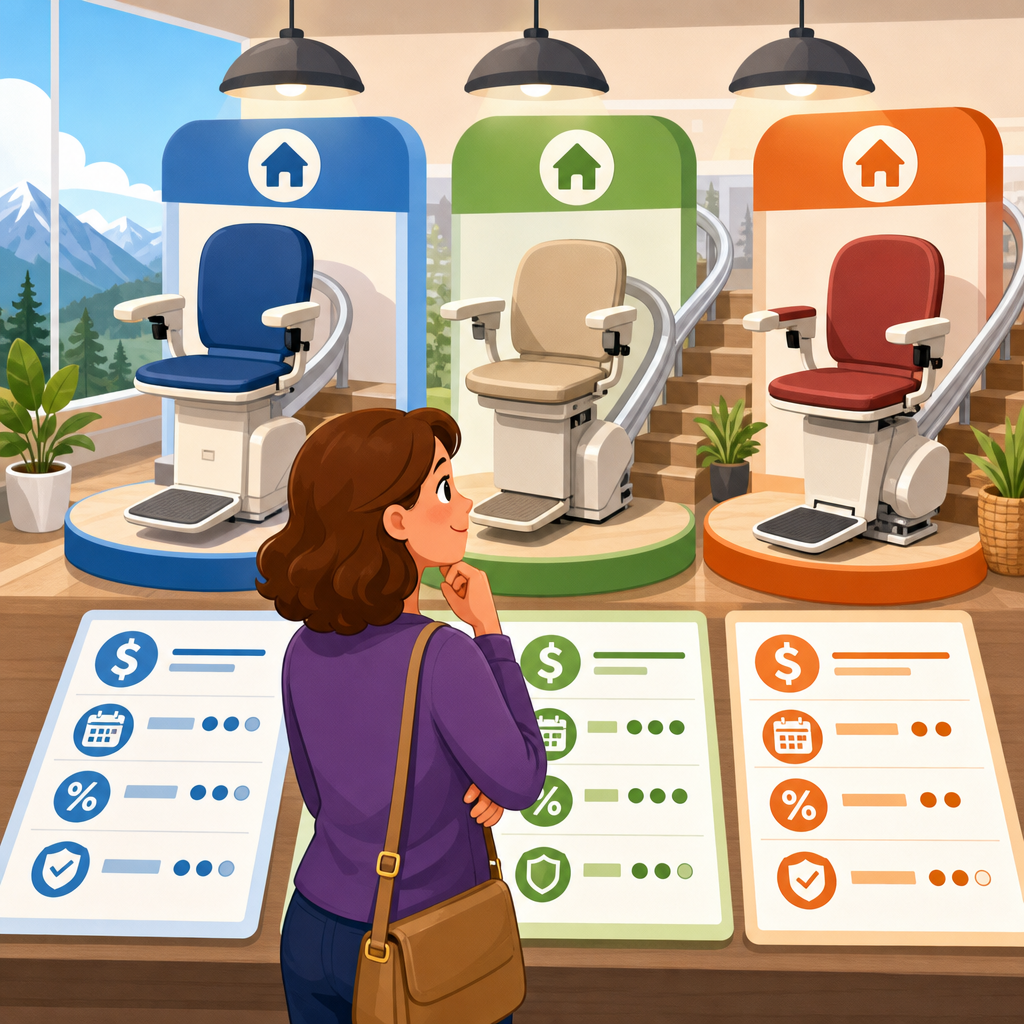
The fastest way to compare retailer financing is to standardize five variables: financed amount, annual percentage rate, term length, down payment, and total repayment. Use the same assumed purchase across every quote. For example, if a straight stair lift costs $4,500 installed at one retailer and $4,900 at another, compare each using the full installed price, not just the equipment base price. Then ask whether the quote includes tax, delivery, warranty upgrades, maintenance, and removal if the unit is temporary. I recommend requesting both the monthly payment and the total of payments. Retailers naturally emphasize the monthly number because it makes comparisons feel simple, but total repayment reveals the real cost. A $99 monthly payment can be attractive until you realize it stretches across seven years for equipment that may be replaced or removed sooner. APR is the legal standard for comparing the price of credit because it reflects interest and certain fees in a single annualized number.
When buyers compare offers, they should also test two payoff scenarios: paying exactly as scheduled and paying off early. Some healthcare financing products allow prepayment with no penalty, which is ideal if insurance reimbursement, a home sale, or family support arrives later. Other agreements impose precomputed interest or minimum finance charges that reduce the savings from paying early. Ask for this in writing. Retailers should also disclose whether the approval creates a hard credit inquiry, whether there are promotional expiration dates, and whether the financing can be reassigned if the buyer moves the lift to another address. This last point matters less for straight lifts and more for temporary installations, where relocation or resale may become part of the ownership plan. A serious comparison should include servicing terms too, because a cheap financing package loses value if warranty labor is weak or emergency service is expensive.
| Comparison point | Why it matters | What to ask the retailer |
|---|---|---|
| APR or promo structure | Determines the true cost of borrowing | Is this true 0% interest or deferred interest, and what APR applies after the promo? |
| Financed items | Shows whether installation and extras are covered | Does financing include rail, installation, tax, warranty, and service plan? |
| Term length | Affects monthly payment and total paid | What are the payment options for 12, 24, 48, and 60 months? |
| Down payment | Changes approval odds and custom-order risk | Is a deposit required before measurement or fabrication? |
| Prepayment rules | Impacts flexibility if funds arrive later | Can I pay off early without penalty or minimum finance charge? |
| Cancellation and refund policy | Important for custom curved lifts | At what stage does my deposit become nonrefundable? |
One more comparison rule is worth stressing: never mix payment types when evaluating value. A cash discount should be compared against the financed total, not against the advertised list price. Some retailers quietly offer lower cash pricing because they avoid lender fees, while others hold the same price but provide free upgrades under financing promotions. The only reliable method is to ask for a written out-the-door price for cash and a written out-the-door price for each financing option. Once buyers normalize the numbers, patterns become obvious. The best retailer is not always the one with the lowest APR; it is the one whose financing aligns with the expected duration of use, service needs, and the buyer’s ability to absorb unexpected costs.
Key retailer differences: national brands, local dealers, and online sellers
National chair lift brands often have the most polished financing promotions because they work at volume and maintain recurring partnerships with lenders such as Synchrony, Wells Fargo dealer services programs, or specialized healthcare finance companies. Their advantage is process consistency. Applications can be completed quickly, sales staff are trained on standard terms, and promotional campaigns may be available across many markets. The downside is rigidity. National programs may fit standard installations well but offer less room to customize terms for unusual staircases or mixed projects. In practice, I have found that national dealers are strongest when the buyer wants a straight stair lift with standard installation, clear warranty coverage, and a fast decision. However, families should still verify whether the local franchise or dealer branch handles service directly or relies on subcontractors, because financing value depends in part on post-sale support.
Local dealers can be more flexible, especially when they stock reconditioned units, offer rental conversions, or understand local grant programs and nonprofit assistance. They may arrange financing through a community bank, a credit union, or an internal installment plan instead of a national credit product. That flexibility can reduce upfront cost for buyers with uneven credit profiles or unusual project requirements. It can also produce highly variable disclosures. Some local dealers are excellent at packaging a fair deal; others use informal language that obscures key terms. Buyers should insist on the same documentation standards they would expect from any major lender: APR, repayment schedule, fees, cancellation terms, and what happens if measurements reveal a more expensive rail configuration after approval. A local dealer is often the best source for realistic service expectations, but only if its financing offer is documented with equal clarity.
Online sellers typically compete on price and may advertise chair lift financing even when they are not handling installation locally. This model can work for stair lift buyers in regions with limited showroom access, but it introduces extra variables. Financing may apply only to the equipment, while installation is billed separately by a regional contractor. Return rights can be narrower, especially once a rail is cut or a curved system is manufactured. Because stair lifts are safety devices installed in homes, buyers should be cautious with online financing offers that seem materially cheaper than local quotes without explaining who is responsible for fit, code compliance, and service. A lower online financed price may not remain lower after adding freight, installation, and future support. For that reason, online offers are best evaluated as complete project packages rather than equipment-only transactions.
Reading the fine print on rates, fees, and promotions
The most important fine-print issue in chair lift financing is the difference between simple interest and deferred interest. Simple-interest loans calculate interest on the remaining principal, so each payment reduces the balance and future interest burden. Deferred-interest promotions waive interest only if the entire balance is paid within the promotional window. If the balance is not paid in full, the lender can charge all accrued interest retroactively from day one. This is legal when disclosed, and it is common in medical and home improvement financing. Buyers who choose these plans should set automatic payments based on full payoff before the deadline, not on the minimum due. Another fine-print issue is dealer participation fees. In some subsidized zero-percent offers, the retailer pays the lender a fee, which can reduce room for price negotiation. That does not make the offer bad, but it explains why a cash price may differ.
Late fees, returned-payment fees, and re-amortization rules also matter. Missing one payment on a promotional plan can sometimes void favorable terms. Ask what happens after a late payment and whether the APR changes. For custom curved stair lifts, confirm whether the deposit is refundable before fabrication and whether a credit approval remains valid if measurements change the final price. Some lenders approve a range, while others require a new application if the amount increases. Buyers should also read arbitration clauses, billing dispute procedures, and warranty exclusions linked to misuse or unauthorized service. These details are rarely highlighted in a showroom conversation, yet they shape real-world outcomes when something goes wrong. If a retailer cannot provide sample financing documents before a deposit, that is a meaningful warning sign.
Promotions tied to seasonal sales, home accessibility awareness campaigns, or end-of-quarter manufacturer incentives can be worthwhile, but they should not rush the decision. A one-month no-payment promotion may help with immediate cash flow, yet interest may still accrue in the background depending on the contract structure. Likewise, “same as cash” language should be treated as a prompt for more questions, not as a guarantee of no borrowing cost. Reliable retailers welcome those questions and answer them plainly. The best financing offers stand up to scrutiny because every cost, deadline, and contingency can be explained without evasive language.
Building a smarter payment strategy for a chair lift purchase
The strongest payment strategy begins with matching the financing term to the expected use case. If the stair lift is likely to be temporary after surgery or rehabilitation, a long installment loan may be inefficient compared with a rental, rent-to-own plan, or shorter term with no prepayment penalty. If the lift is part of long-term aging in place, a fixed-rate installment loan with predictable payments can be sensible, especially when the household wants to preserve savings for caregiving or home maintenance. Buyers should also evaluate alternative funding sources before accepting retailer financing. Health savings accounts, flexible spending arrangements for eligible expenses, Veterans Affairs programs, state assistive technology loan programs, Medicaid waiver pathways in some states, nonprofit grants, and credit union home accessibility loans can sometimes beat dealer financing or reduce the amount that needs to be borrowed.
It also helps to negotiate the project in layers. First, settle the installed price of the chair lift itself. Second, compare warranty and service options. Third, evaluate financing on the agreed package. Mixing these steps lets financing complexity hide equipment markups. In actual negotiations, I have seen retailers lower the equipment price, extend the labor warranty, or waive an installation surcharge when buyers present competing written quotes. Those concessions can be worth more than a small APR difference. Finally, buyers should keep copies of the signed sales agreement, financing disclosures, measurement approval, and warranty terms in one file. Chair lift purchases intersect with safety, mobility, and household budgeting, so documentation is not bureaucracy; it is protection. Compare retailers carefully, ask direct questions, and choose financing that supports independence without creating financial strain later.
Frequently Asked Questions
What financing terms matter most when comparing chair lift offers across retailers?
When comparing chair lift financing terms across retailers, the most important point is that the advertised monthly payment rarely tells the full story. A lower payment can sometimes come from a longer repayment term, a deferred interest promotion, or financing that excludes key costs such as installation, track customization, service plans, or removal of old equipment. The terms that deserve the closest review are the annual percentage rate, loan length, total repayment amount, down payment requirement, promotional period rules, late payment penalties, and whether interest is fixed, variable, or deferred.
You should also confirm exactly what the financing covers. Some retailers finance the full project, including the lift, installation, rail modifications, permits, and warranty upgrades. Others finance only the base unit price, leaving you to pay installation or stairway adjustments separately. That difference can change the true affordability of the purchase more than a small difference in the monthly payment. It is also wise to ask whether there are dealer fees, loan origination charges, prepayment penalties, or administrative costs built into the agreement. These are often overlooked because they do not appear in large promotional headlines.
Another major factor is flexibility. A good financing offer should not only fit your budget today, but also give you room to manage unexpected expenses later. Retailers vary in how they handle early payoff, payment date changes, hardship requests, and refinancing options. If two offers seem similar on the surface, the one with fewer restrictions and clearer repayment terms is usually the safer choice. In practical terms, the best financing offer is not simply the one with the lowest monthly payment. It is the one with the most transparent structure, the lowest total borrowing cost, and the least risk of surprise charges over the full term.
How do promotional financing offers, such as “same as cash” or deferred interest, work for chair lifts?
Promotional financing can be useful, but it is one of the most misunderstood parts of a chair lift purchase. Terms such as “same as cash,” “no interest if paid in full,” or “0% for 12 months” may sound interchangeable, but they often work very differently. In some cases, true 0% financing means no interest accrues during the promotional term. In other cases, the lender is charging deferred interest, which means interest is accumulating in the background from the purchase date and will be added retroactively if the balance is not paid off in full by the deadline.
This distinction matters a great deal. With deferred interest financing, even a small remaining balance at the end of the promotional period can trigger interest on the entire original amount, not just what is left unpaid. That can make an affordable-looking chair lift deal suddenly much more expensive. Buyers who assume that making the minimum payment will clear the balance are especially vulnerable, because minimum payments are often not enough to pay off the full amount before the deadline. The result is a financing surprise that could have been avoided with a careful reading of the contract.
When reviewing a promotional offer, ask the retailer or financing partner very specific questions: Is this true zero-interest financing or deferred interest? What exact date does the promotion end? What payment amount is required to avoid retroactive interest? What happens if one payment is late? In many financing programs, a single late payment can void the promotion. Also verify whether the promotion applies to the entire project cost or only to the chair lift equipment itself. A promotional offer can be valuable if you are confident you can pay within the required period, but it should be approached with discipline and full clarity about the triggers and deadlines.
Why is the total project cost more important than the sticker price of the chair lift?
The sticker price of a chair lift is only the starting point. What really affects affordability is the full installed cost and the financing applied to that amount. Many buyers compare retailers based on the listed price of the lift itself, only to learn later that essential services were not included. Installation labor, custom rail sections, power supply upgrades, folding rail options, swivel seat upgrades, service coverage, and in-home assessments may all affect the final invoice. If one retailer has a lower base price but finances fewer components, that offer may be less favorable than a higher advertised price that includes everything in one transparent financing package.
This is especially important because chair lifts are often customized to the staircase and user needs. Straight stair lifts are generally simpler, but curved stair lifts can involve design, manufacturing, and installation costs that vary significantly from one provider to another. Retailers may structure financing around different portions of that project, which means the “same” chair lift can produce very different out-of-pocket costs and repayment obligations depending on the seller. A fair comparison requires matching all line items, not just comparing product brochures or promotional banners.
From a financing perspective, the total project cost determines both your monthly obligation and your long-term risk. If parts of the job are excluded from financing, you may end up using a credit card, dipping into emergency savings, or delaying necessary installation work. That can create a more expensive and less stable payment picture than expected. The best approach is to request a complete written estimate from each retailer and compare what is included, what is financed, what is due upfront, and what the total repayment amount will be over the life of the agreement. That is the comparison that reveals the real value of each offer.
What hidden fees or contract details should buyers watch for in chair lift financing agreements?
Hidden costs in chair lift financing are often less about secret charges and more about details buried in contracts that buyers do not realize will affect the final cost. Common examples include loan origination fees, dealer participation fees, processing charges, mandatory down payments, and charges tied to optional service contracts that are bundled into financing without much discussion. Some retailers also promote financing terms that appear simple but are attached to conditions involving autopay enrollment, limited-time approval windows, or exclusions for installation and accessories.
Late payment provisions are another area that deserves careful attention. Some financing agreements impose flat late fees, while others may increase the interest rate after a missed payment or cancel a promotional term. If the offer includes deferred interest, contract language about missed payments can be especially important because a payment problem may trigger added costs far beyond the late fee itself. You should also look for whether the financing contract includes a prepayment penalty, although that is less common in consumer medical-adjacent purchases. If it does, it reduces your ability to save money by paying off the balance early.
Warranty and service terms should be reviewed alongside the financing agreement as well. Sometimes buyers assume their monthly payment includes long-term maintenance or repair coverage when it only covers the lift and basic installation. If a retailer is bundling service plans into the financing, make sure you understand their cost, duration, cancellation rules, and practical value. Ask for all documents in writing and read them before signing. A trustworthy retailer should be willing to explain every fee, every financing trigger, and every excluded cost clearly. If the answers are vague or rushed, that alone is a reason to slow down and compare other options.
How can buyers choose the best chair lift financing option for their budget and risk tolerance?
The best chair lift financing option is the one that matches both your immediate cash flow and your comfort with financial risk. Start by determining the maximum monthly payment you can handle without strain, then work backward to compare offers based on total repayment cost rather than marketing claims. If you have the ability to pay off the purchase quickly, a true 0% promotional offer may be the cheapest route. If your priority is predictability over a longer period, a fixed-rate installment loan with clear terms may be safer than a deferred interest plan, even if the monthly payment is slightly higher.
It also helps to think in scenarios. Ask yourself what happens if you need a repair, face a medical expense, or miss a payment during the financing term. Some buyers are comfortable using a short promotional period because they have savings or reliable income to eliminate the balance before the deadline. Others are better served by a straightforward fixed payment schedule with no retroactive interest risk. There is no single best financing structure for everyone. The right choice depends on your ability to absorb surprises and your likelihood of paying the balance ahead of schedule.
Before making a final decision, compare at least three written offers if possible. Review the APR, repayment period, full amount financed, all included project costs, payment due dates, consequences of late payment, and whether early payoff reduces total cost without penalty. It is also smart to evaluate the retailer’s reputation for installation quality and post-sale support, because a financing deal is only part of the overall purchase value. In my experience, the most successful buyers are the ones who treat financing as a contract to be audited, not a convenience to be accepted at face value. That mindset leads to better terms, fewer surprises, and a chair lift purchase that remains manageable over time.