Customizing routines for chair lift use with smart apps has become one of the most practical ways to make accessibility technology feel personal, predictable, and easier to use every day. In the accessibility and mobility solutions field, “chair lift” can refer to a stair lift inside a home, a vertical platform lift, or a seat-based lifting system designed to move a person safely between levels. “Smart apps” refers to the mobile applications, voice-assistant dashboards, automation platforms, and cloud-connected controls that manage schedules, sensors, notifications, and linked devices. When these tools work together, a lift becomes more than a motorized seat or platform. It becomes part of a connected routine that supports safety, independence, caregiver coordination, and energy management.
I have seen the difference firsthand in homes where lift use was technically possible but emotionally tiring. A user might remember the handheld remote, but forget to turn on stairway lights. A caregiver might wonder whether a parent reached the second floor safely. A spouse might need the lift parked downstairs in the morning but upstairs at night. Smart home integration solves these friction points by connecting the lift to the rhythms of the household. Instead of asking the user to adapt to the machine, the system can adapt to the user’s preferred wake-up time, medication schedule, mobility level, and support network.
This matters because consistency is often the deciding factor in whether assistive equipment truly improves quality of life. The best accessibility setup is not simply the one with the most features. It is the one that reduces effort while preserving control. Smart routines can trigger lights, adjust thermostat settings, send alerts, lock doors, open smart blinds, or pause a robot vacuum when the chair lift is in motion. For users aging in place, that level of coordination can reduce fall risk and lower dependence on constant in-person supervision. For families and installers, it creates a framework for reliable daily use rather than a collection of disconnected devices.
As the hub for smart home integration within accessibility and mobility solutions, this guide explains how to customize routines around chair lift use, what equipment and standards matter, where automation helps most, and where limits still apply. It covers practical planning, examples, security, and the related topics that support a fully connected accessible home.
How Smart Home Integration Changes Chair Lift Use
Smart home integration means linking the chair lift or its surrounding environment to a control system that can respond automatically or on command. In practice, many lifts are not directly app-controlled from the factory. Instead, the integration often happens through adjacent devices: smart plugs for approved peripherals, occupancy sensors, door and motion sensors, smart lighting, contact relays installed by qualified technicians, or automation hubs such as Apple Home, Google Home, Amazon Alexa, Samsung SmartThings, or Home Assistant. In more advanced projects, installers use dry-contact interfaces, programmable logic modules, or manufacturer APIs where available.
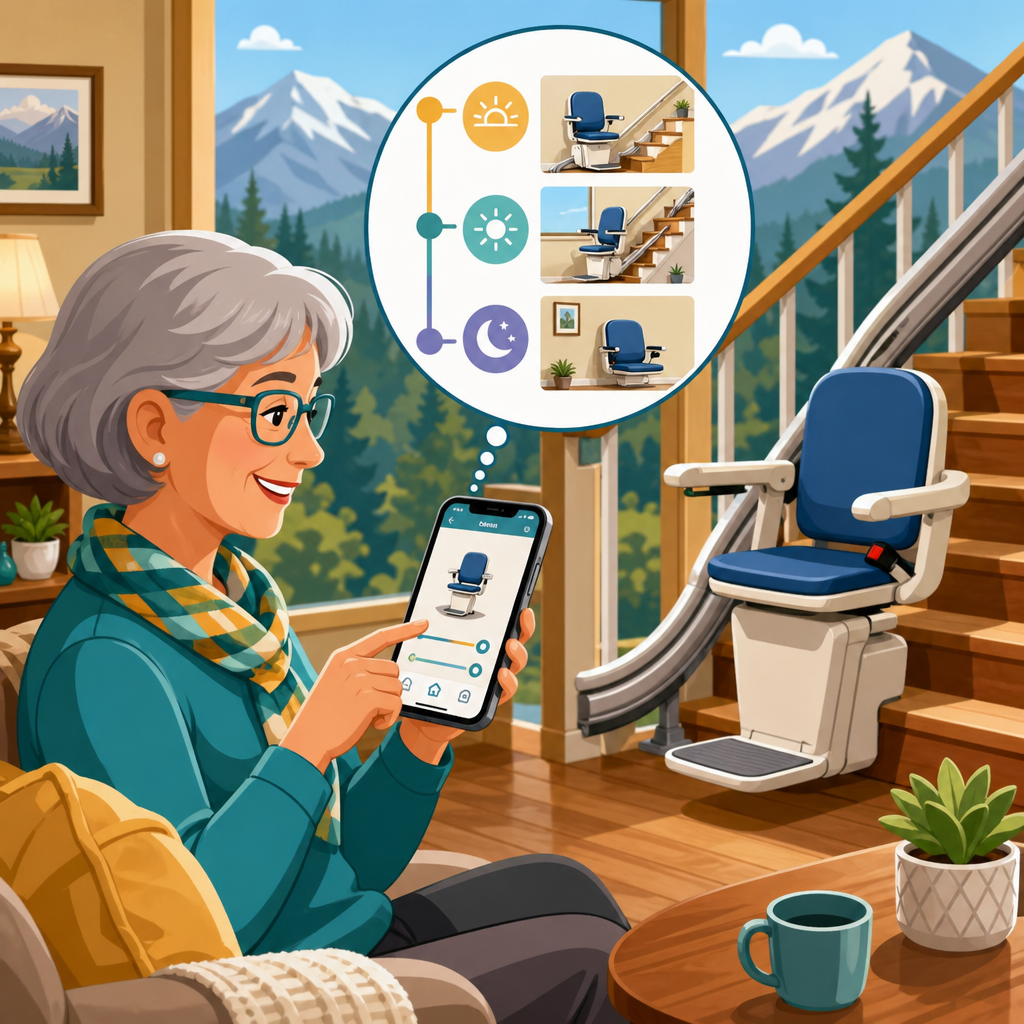
The result is a set of routines built around the user journey. For example, a “Morning Upstairs to Kitchen” routine may turn on hallway lights to 60 percent, preheat the kitchen area by two degrees, move the lift to the landing if parked elsewhere, and send a silent caregiver notification if the trip does not begin within a typical time window. A “Bedtime Return” routine can confirm the stair path is clear, illuminate edge lighting, lower audio volume on connected speakers, and park the lift where the next user needs it. These are not novelty automations. They address real issues: visibility, timing, reachability, and reassurance.
Well-designed routines also reduce cognitive load. Users with arthritis, Parkinson’s disease, stroke-related weakness, low vision, or mild cognitive impairment often benefit when repeated tasks are consolidated into one button, one voice command, or one scheduled event. In the homes I have worked around, success usually comes from simplifying choices. Too many optional actions create hesitation. A good routine uses plain labels such as “Go Upstairs Safely” or “Call Lift Down,” backed by obvious visual feedback and audible confirmation.
Core Components Needed for a Reliable Setup
A dependable chair lift automation setup starts with the lift itself. Reputable stair lift brands such as Stannah, Bruno, Handicare, and Acorn offer different levels of remote control, diagnostic access, and accessory support, but direct smart integration varies widely by model. Before planning any app-based routine, confirm the manufacturer’s position on third-party controls, warranty implications, and safety circuit restrictions. No automation should bypass seat swivel locks, footrest sensors, armrest interlocks, overspeed governors, final limit switches, or obstruction sensors. Those protections are essential, and any integrator who suggests defeating them should be ruled out immediately.
Next comes the control layer. Some households use a mainstream voice assistant for simple commands and a separate automation hub for logic. Others prefer a local-first platform such as Home Assistant to reduce cloud dependence and improve customization. For many families, the best architecture is mixed: cloud voice control for convenience, local automations for core safety routines, battery-backed Wi-Fi for resilience, and manual remotes always available as a fallback. Reliable connectivity matters because accessibility equipment cannot depend on a weak router in a distant room.
Supporting devices usually include smart bulbs or switches, contact sensors on doors or gates, presence sensors, indoor cameras positioned with privacy in mind, smart locks, thermostats, and caregiver notification tools. In homes with vertical platform lifts, access doors and interlocks may require additional professional coordination. Power backup deserves special attention. Many stair lifts use onboard batteries charged from the rail, which helps during short outages, but your app, router, and hub may still go offline without an uninterruptible power supply. A smart routine is only useful if it remains available when conditions are less than ideal.
How to Customize Routines Around Real Daily Needs
The best chair lift routines are mapped to moments, not gadgets. Start with a simple assessment: when is the lift used, by whom, with what assistance, under what lighting conditions, and what commonly goes wrong? I typically group routines into time-based, event-based, and exception-based categories. Time-based routines support regular patterns such as wake-up, meals, therapy appointments, and bedtime. Event-based routines respond to a button press, voice command, or sensor trigger. Exception-based routines handle unusual situations such as missed movement, obstruction alerts, or a caregiver arriving remotely.
For users living alone, the highest-value routines usually focus on visibility and confirmation. A stair lift trip should trigger reliable lighting on both landings and along the route. If the user wears a smartwatch, a haptic prompt can confirm that the chair is parked and ready. If the lift has diagnostic outputs available to an approved installer, notifications can flag charging issues before a battery failure interrupts use. For a household with two users, parking logic becomes more important. The chair may need to auto-return to a preferred floor after a trip, provided the manufacturer permits remote calling and the routine does not create confusion or unsafe motion.
Caregiver households often need layered permissions. The primary user should have the simplest interface, while family members receive status alerts without unnecessary control. For example, a daughter may get a message that “lift trip completed at 8:12 AM” but not the ability to operate the system remotely unless clinically appropriate and manufacturer-approved. In rehabilitation settings, therapists may build routines that encourage independent use within defined windows while preserving staff oversight.
| Routine Type | Typical Trigger | Connected Actions | Main Benefit |
|---|---|---|---|
| Morning transfer | Scheduled time or voice command | Turn on lights, position lift, adjust thermostat, send silent readiness alert | Safer start to the day |
| Meal trip | Calendar event | Illuminate stairway, pause vacuum, unlock interior door if needed | Fewer obstacles and delays |
| Bedtime return | Single app button | Dim lights elsewhere, brighten landing, park lift at preferred floor | Reduced fatigue and confusion |
| Caregiver check-in | No expected trip detected | Send notification, open camera view in hallway, prompt voice assistant | Faster response to concerns |
| Maintenance follow-up | Diagnostic or charging anomaly | Log issue, notify family, create service reminder | Prevents downtime |
Safety Rules, Privacy, and Compliance Considerations
Any article about smart chair lift routines must be clear about limits. Automation should support safe lift use, never replace safe lift use. The applicable standards depend on lift type and location, but installers commonly reference ASME A18.1 for platform lifts and stairway chairlifts in the United States, along with National Electrical Code requirements and local building regulations. Manufacturer installation instructions remain controlling. If a routine interferes with required clearances, call/send controls, charging contacts, or emergency stop functions, it is not acceptable.
Voice control requires extra caution. A command like “bring the chair down” may be convenient, but accidental activation from television audio or another household member is a real risk. Use confirmation steps, individualized voice profiles where supported, and clear audible cues. For users with speech changes, app buttons with large text and high contrast often outperform voice assistants. For blind or low-vision users, spoken feedback and tactile backup controls are critical. For wheelchair users transferring onto a platform lift, door status and landing alignment matter more than generalized automation convenience.
Privacy also deserves careful design. Cameras should monitor approaches or landings only when justified, not private bedrooms or bathrooms. Notification systems should share the minimum needed information. A caregiver may need completion status, not a constant live feed. If cloud services are involved, use strong passwords, multifactor authentication, unique admin accounts, and regular software updates. In homes with home health aides or multiple relatives, document who can view data and who can change routines. Good accessibility technology protects dignity as well as mobility.
Building a Smart Home Integration Roadmap
Because this page serves as the smart home integration hub, it helps to see chair lift routines as one part of a wider accessibility ecosystem. The most effective projects are staged. First, stabilize the basics: lift reliability, lighting, internet coverage, and backup power. Second, add high-value automations such as scene-based lighting, caregiver alerts, and preferred parking routines. Third, connect adjacent systems including locks, thermostats, blinds, video doorbells, medication reminders, and fall detection wearables. This phased approach keeps complexity manageable and makes troubleshooting easier.
Several related article topics naturally branch from this hub. One is voice assistant setup for mobility devices, which should cover command design, accessibility settings, and failure handling. Another is sensor placement for stairways and landings, including passive infrared versus mmWave presence sensing and how false positives affect automations. A third is privacy-centered monitoring for aging in place, balancing supervision with autonomy. You can also link deeper guides on backup power for accessibility equipment, universal design for smart switches, app accessibility for users with low vision, and service planning for connected lifts. Together, those topics create strong internal pathways for readers trying to build a full smart accessibility strategy rather than solving one device in isolation.
Budgeting should reflect this roadmap. Many families spend too much on flashy devices before addressing router placement, electrical reliability, or simple illuminated switches. In practice, modest investments in dependable networking and clear automation logic often deliver better outcomes than expensive gadgets. Start with one or two routines that remove daily friction, test them for several weeks, gather user feedback, and only then expand. Good customization is iterative. The goal is not maximum automation. The goal is minimum effort with maximum confidence.
Customizing routines for chair lift use with smart apps works best when the technology follows the user’s habits, limitations, and preferences instead of forcing new behavior. A successful setup connects the lift with lighting, sensors, notifications, climate control, and caregiver tools in a way that feels predictable and respectful. The practical gains are clear: safer transfers, fewer missed steps, less confusion, better family visibility, and a stronger foundation for aging in place. Just as important, a well-planned system preserves manual control and keeps safety circuits, manufacturer rules, and privacy protections intact.
If you are building out smart home integration under the broader accessibility and mobility solutions umbrella, treat the chair lift as a central workflow, not an isolated appliance. Review the lift’s approved control options, map the daily routines that matter most, choose reliable platforms, and implement changes in phases. Start with lighting, alerts, and connectivity, then expand into broader household automations that support comfort and independence. When done thoughtfully, smart apps do not merely add convenience. They make accessibility equipment easier to trust and easier to live with every day.
Audit your current lift routine today, identify one repeated friction point, and build a single smart automation around it. That small improvement is often the first step toward a safer, more connected home.
Frequently Asked Questions
How do smart apps help customize routines for chair lift use?
Smart apps make chair lift use more personalized by turning a basic mobility device into part of a daily routine that fits the user’s schedule, preferences, and household needs. Depending on the system, an app may let a user call or send the lift, save preferred travel times, receive status alerts, monitor battery or maintenance information, and connect the lift to broader home automation settings. For example, someone might create a morning routine that brings the stair lift to the bedroom level before they wake up, adjusts nearby smart lighting, and sends a confirmation notification to a family member or caregiver. In the evening, the same user could set an automated return routine so the lift parks in a preferred location after use. These features reduce guesswork, improve consistency, and make the lift easier to integrate into everyday life. The biggest benefit is predictability: when routines are customized well, the chair lift becomes less of a task to manage and more of a seamless part of safe movement throughout the home.
What types of chair lifts can usually be integrated with smart apps?
The term “chair lift” can describe several accessibility solutions, and smart app compatibility depends on the manufacturer, model, and control system. In many cases, indoor stair lifts are the most commonly discussed because they are frequently used in homes and often include call/send controls that can be adapted to app-based management. Vertical platform lifts may also support app-connected features, especially in newer systems designed for residential or light commercial accessibility. Some seat-based transfer or lifting systems can also work with mobile apps or connected control hubs if they are built with modern electronic interfaces. That said, not every lift is designed for direct smart integration. Older models may require manufacturer-approved upgrades, accessory modules, or professionally installed bridges that connect the lift to a secure app or home automation platform. Before assuming compatibility, it is important to confirm whether the equipment supports remote controls, status monitoring, routine scheduling, or voice-assistant integration. The safest approach is to work with the lift manufacturer, installer, or an accessibility technology specialist who can verify what functions are officially supported and what modifications, if any, can be made without affecting safety or warranty coverage.
Are smart app routines for chair lifts safe to use in everyday mobility planning?
Yes, smart app routines can be safe and highly useful when they are designed around the lift’s intended operating limits and the user’s actual mobility needs. The key is to treat automation as a support tool, not as a shortcut around safety features. A properly configured system should still rely on built-in protections such as obstruction sensors, seat positioning requirements, armrest and footrest safeguards, and manufacturer-approved control methods. Smart routines are most effective for predictable tasks like calling the lift to a landing, setting preferred parking locations, receiving battery or service alerts, or coordinating lighting and door access around lift use. They should not bypass manual safety checks or encourage operation in situations where direct supervision is needed. For households with caregivers, app-based notifications can add another layer of reassurance by confirming that the lift has arrived, completed a trip, or needs attention. To keep the setup safe, routines should be tested carefully, user permissions should be limited appropriately, and software updates should be installed regularly. It is also wise to have a simple backup plan in case of app issues, internet outages, or power interruptions, so the lift remains dependable under normal and unexpected conditions.
What are the best routine ideas to set up for a chair lift with a smart app?
The best routines are usually the ones that remove friction from repeated daily actions. A common starting point is a morning call routine that sends the chair lift to the user’s usual starting floor at a set time. Another practical option is a nighttime parking routine that returns the lift to a designated landing so hallways, stairs, or entry points stay clear. Some users benefit from routines tied to occupancy patterns, such as activating hallway lights when the lift is called, adjusting smart thermostats for comfort near the transfer area, or unlocking interior doors when the lift reaches a floor. Caregiver-focused routines can be especially helpful as well, including notifications when the lift is used, reminders for regular charging or folding components into place, and maintenance alerts when the system reports a fault or low battery. Voice-assisted routines can simplify use for people who prefer hands-free control, though these should only be enabled if the commands are reliable and secure. The most effective routines are simple, repeatable, and centered on safety, comfort, and confidence rather than adding unnecessary complexity. Starting with one or two high-value automations is usually better than trying to automate every possible function at once.
What should homeowners consider before setting up smart app automation for a chair lift?
Homeowners should begin by evaluating compatibility, safety requirements, and the specific needs of the person who uses the lift most often. The first question is whether the chair lift manufacturer supports smart app integration directly or through approved accessories. Next, it is important to understand which features can be automated and which should remain manual for safety reasons. Ease of use matters just as much as technical capability; an app should have clear controls, readable text, dependable notifications, and access settings that fit the user’s comfort level. Households should also think about internet reliability, backup power, cybersecurity, and who will have permission to control or monitor the system. For example, a family may want a primary user, a secondary caregiver account, and limited guest access rather than giving everyone the same level of control. Installation and setup should ideally involve the lift provider or a qualified professional who understands both accessibility equipment and smart home platforms. Finally, homeowners should plan for long-term usability by reviewing warranty implications, ongoing software support, maintenance schedules, and what happens if the app platform changes. A successful setup is not just technologically impressive; it is stable, safe, easy to understand, and truly helpful for everyday mobility.