Paying for a stair chair lift can feel overwhelming, but veterans and their families have more support options than many people realize. A Veterans Affairs chair lift grant is not one single national check with that exact label. Instead, it usually means financial help accessed through U.S. Department of Veterans Affairs housing adaptation programs, prosthetics benefits, clinical referrals, and in some cases state or nonprofit assistance connected to VA eligibility. Understanding how these programs work matters because stair lifts are often medically necessary, not luxury equipment. They can reduce fall risk, preserve independence, and make it possible for an older or disabled veteran to remain at home rather than move to assisted living. I have worked through these applications with families who assumed they would need to self-pay, only to find that documentation, the right VA office, and the correct grant pathway changed the outcome completely. This hub explains the major grants and assistance programs, who qualifies, how to apply, what paperwork to gather, and where chair lifts fit within the broader cost and financing picture. If you are comparing funding sources, start here, because the fastest path is usually the one that matches the veteran’s disability status, homeownership situation, and clinical need.
What a Veterans Affairs chair lift grant usually means
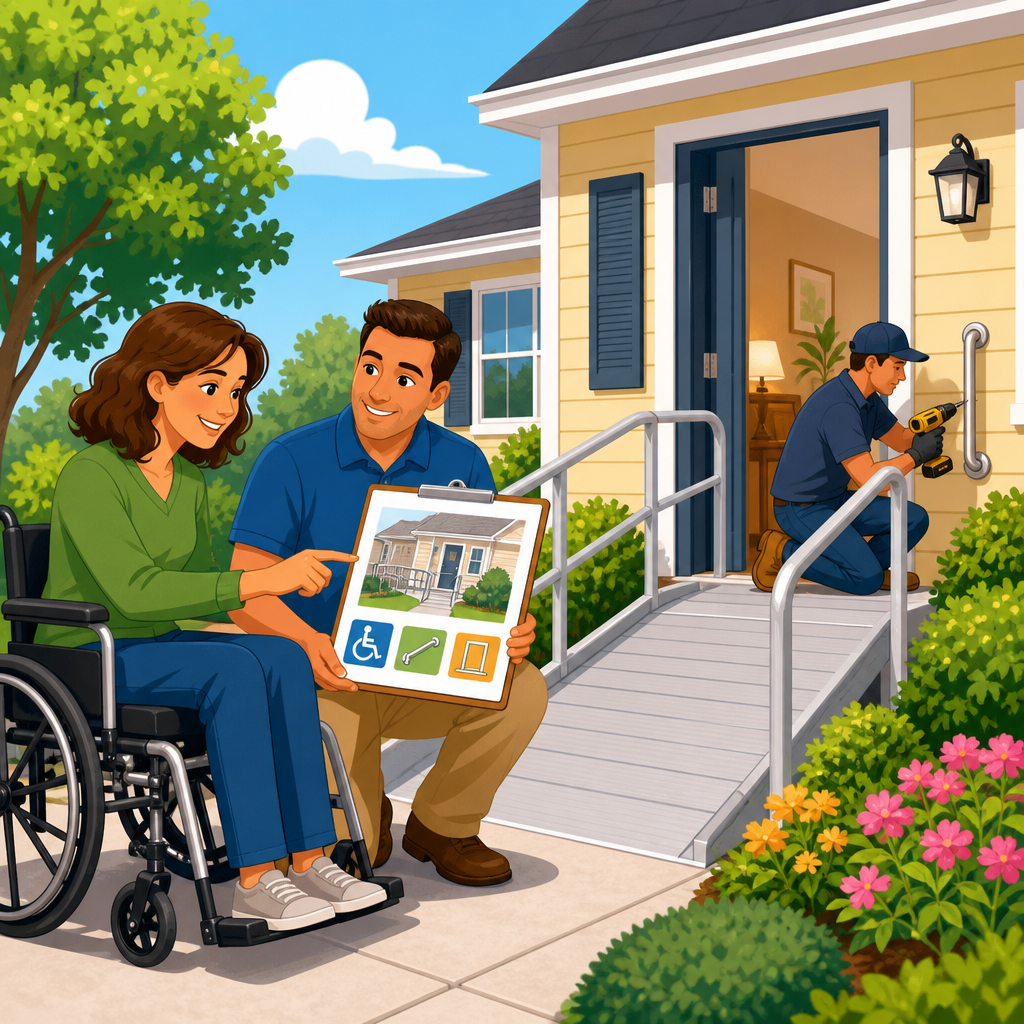
When people search for a Veterans Affairs chair lift grant, they are usually referring to one of several VA-backed ways to pay for home accessibility improvements. The most important distinction is that the VA often funds mobility-related home changes through housing adaptation grants rather than a consumer rebate program. The two headline programs are the Specially Adapted Housing grant and the Special Housing Adaptation grant. These were designed for qualifying service-connected disabilities and can be used for structural accessibility modifications, which may include stair lift installation when medically justified and compatible with the home. In practice, veterans may also receive support through the Home Improvements and Structural Alterations benefit, commonly called HISA, or through prosthetics and rehabilitation channels if the equipment is tied to clinical treatment goals.
The phrase grant can therefore describe different funding mechanics. Some programs pay approved adaptation costs directly up to a statutory limit. Others reimburse after approval and documentation. Others still operate through clinical ordering, where the veteran does not shop independently but works through the VA care team and approved vendors. This matters because the application strategy changes. A veteran with a severe service-connected disability may begin with housing adaptation benefits, while a veteran without that rating may have a stronger path through HISA or a combined plan that includes Medicaid waiver assistance, state veterans agencies, and nonprofit support.
It is also important to define chair lift clearly. In this article, chair lift refers to a stair lift installed along a staircase to carry a seated user between levels. It does not mean a patient transfer lift, vehicle lift, or porch lift, though those may appear in related funding programs. The VA evaluates whether a stair lift is medically appropriate, safe for the user, and suitable for the property. If the home layout or user condition makes a ramp, bedroom relocation, or bathroom conversion more practical, the VA may support that option instead.
Main VA grants and benefits that may cover a stair lift
The strongest starting point is understanding the major programs. Veterans with qualifying service-connected disabilities should review Specially Adapted Housing and Special Housing Adaptation first. These programs support modifications to help veterans live more independently in a barrier-free environment. Eligibility is tied to specific disability categories established by federal law and VA rules, such as loss of use of extremities, certain severe burns, or blindness combined with other impairments. Not every mobility limitation qualifies, but when it does, the available funding can be substantial enough to cover major accessibility work, including a stair lift as part of a broader plan.
The HISA benefit is often the most relevant program for veterans who need medically necessary home modifications but do not qualify for the larger housing adaptation grants. HISA can help pay for improvements necessary for treatment or access to essential home areas. Historically, HISA has had different lifetime benefit caps based on whether the disability is service-connected. Because funding limits and program guidance can change, applicants should verify current amounts directly with the VA prosthetics department or official VA materials before relying on older numbers from contractor websites. In real cases, I have seen HISA used for bathroom access, doorway widening, and entry modifications, with stair lift requests evaluated based on medical justification and the home’s physical constraints.
Another route is VA Prosthetic and Sensory Aids Service. If a veteran is enrolled in VA health care and a clinician determines that specific equipment is needed for safe mobility at home, prosthetics staff may coordinate evaluation and procurement. This is less like a traditional grant and more like a medically managed benefit. The veteran typically needs a clinical assessment documenting why the stair lift is necessary, how it supports activities of daily living, and why alternatives are not sufficient.
For veterans with spinal cord injuries, traumatic brain injury, amputations, or progressive neurologic conditions, specialty clinics can be especially important. These teams often understand home function better than a general primary care visit and can produce stronger documentation. That documentation is often the difference between an incomplete request and an approved one.
Who qualifies and what the VA looks for
Eligibility depends on the program, but several themes appear across nearly all chair lift funding decisions. First, the VA wants a clear medical need. A stair lift is easier to justify when the veteran has documented difficulty climbing stairs, a high fall risk, lower-extremity weakness, cardiopulmonary limitations, balance disorders, or another condition that makes routine stair use unsafe. Notes from physical medicine and rehabilitation, occupational therapy, primary care, neurology, or orthopedics can all help if they describe the functional problem in specific terms.
Second, the VA considers whether the modification is tied to the veteran’s condition in a way that is reasonable and necessary. A statement such as “patient would benefit from a stair lift” is weak. A stronger statement explains that the veteran sleeps on the second floor, cannot safely manage twelve interior steps due to bilateral knee instability and prior falls, and needs a powered seated lift to access the bedroom and full bathroom daily. Specifics matter.
Third, the property itself must be suitable. The staircase width, number of landings, electrical access, load capacity, and structural condition all affect feasibility. A curved staircase generally costs more than a straight one, so funding sources may ask for detailed bids. If the home is rented, landlord permission is usually required. If the veteran co-owns the home with family, proof of ownership or authorization may be needed before installation.
| Program | Best fit | What it may cover | Key limitation |
|---|---|---|---|
| Specially Adapted Housing | Veterans with qualifying severe service-connected disabilities | Major accessibility renovations, potentially including stair lifts | Strict disability criteria |
| Special Housing Adaptation | Veterans with other specific qualifying service-connected disabilities | Home modifications for accessibility and function | Not available for all mobility conditions |
| HISA | Veterans needing medically necessary structural changes | Targeted home improvements such as access modifications | Lower lifetime funding caps |
| VA Prosthetics | Veterans with strong clinical justification for equipment | Assessment, ordering, and possible provision of mobility equipment | Process varies by facility and clinical review |
How to apply step by step
The most effective application process starts before any purchase. Do not sign a stair lift contract assuming reimbursement will happen later. The VA often requires prior review, and self-procured installations can create major reimbursement problems. Begin by contacting the veteran’s VA primary care team or local prosthetics department and state clearly that the veteran needs a home accessibility evaluation for a stair lift. Ask which program is the best fit: housing adaptation, HISA, prosthetics, or a combined review.
Next, schedule the clinical assessment. In successful applications, this is where the case is built. The clinician should document diagnosis, mobility limitations, fall history if relevant, current home layout, and why a stair lift is necessary for safe access to essential living spaces. Occupational therapy home safety evaluations can be especially persuasive because they connect medical need to the exact home barrier.
Then gather property documents and contractor information. Most applications move faster when the veteran submits ownership documentation, landlord approval if renting, photos of the staircase, and itemized estimates from licensed installers. Many stair lift companies provide free in-home assessments and written quotes that separate equipment cost, rail design, power supply needs, permits, and labor. For a curved stair lift, insist on a detailed drawing and exact model information, because vague estimates slow review.
After that, complete the required VA forms for the identified program. Housing adaptation grants have their own application pathway. HISA requests usually involve a prescription or medical authorization plus estimates and home information processed through prosthetics or engineering review, depending on the facility. Keep copies of everything, including clinical notes, emails, bids, and submission confirmations. In my experience, the families who create a simple application binder or digital folder are better positioned when the VA asks for clarification.
Finally, follow up consistently. Call every one to two weeks, ask whether the request is pending clinical review, prosthetics review, engineering review, or grant processing, and document the name of the staff member you speak with. Polite persistence helps because chair lift requests often touch multiple departments.
Documents, timelines, denials, and appeals
Most veterans should expect to provide medical records, a clinician’s prescription or recommendation, proof of service or enrollment information already on file, homeownership or lease documents, contractor estimates, and photographs. Some cases also need a justification letter explaining why lower-cost alternatives are not appropriate. If the veteran cannot transfer safely to a bedroom on the main floor, for example, that should be stated plainly.
Timelines vary widely by VA medical center and by the program used. A straightforward HISA-related request with complete documentation may move faster than a large housing adaptation project, but there is no universal schedule. Delays commonly happen when estimates are incomplete, the medical note is too general, or the home requires engineering review. Curved stair lifts and outdoor lifts often take longer because they raise more technical questions.
Denials are not always final. Many are really documentation failures. I have seen requests turned down because the note did not connect the lift to a service-connected condition, because the staircase measurements were missing, or because the reviewer believed a first-floor living arrangement was available. If the denial is based on incomplete evidence, ask what specific information would address the issue. If it is a formal adverse decision, use the VA appeal or review options available for that program and submit stronger medical support. A focused letter from a rehabilitation physician or occupational therapist can materially change the record.
Veterans should also know that grant approval does not always mean full coverage. If the bid exceeds program limits, families may need to combine VA funding with other assistance sources. Planning for that possibility early prevents costly delays.
Other grants and assistance programs that can fill the gap
Because this page is the hub for grants and assistance programs under cost and financing options, it is important to look beyond the VA alone. State veterans agencies sometimes offer emergency assistance, home modification grants, or referral support that complements federal benefits. Area Agencies on Aging may know about local accessibility funds even for younger disabled veterans. Medicaid Home and Community-Based Services waivers can help in some states, especially when the goal is to avoid institutional care. Rules differ significantly by state, so local case management is essential.
Nonprofit organizations can also help bridge funding gaps. Rebuilding Together, local Centers for Independent Living, and disease-specific charities sometimes support accessibility work or can coordinate volunteer labor for related modifications. Some communities have hospital foundation funds or faith-based grant pools for medically necessary equipment. These sources rarely cover an entire curved stair lift, but they can reduce out-of-pocket costs for electrical work, doorway changes, or safety upgrades paired with the lift installation.
Manufacturer financing and dealer payment plans are another layer, though they are not grants. If a veteran receives partial VA approval, a short-term financing plan may cover the remainder while preserving immediate access to the home. Used or refurbished stair lifts can lower costs for straight staircases, but they are less common for curved designs and may not meet all program standards. Always confirm whether the funding source permits refurbished equipment before choosing that route.
The smartest approach is usually stacking eligible resources in the right order: secure VA clinical approval, confirm grant limits, identify state or nonprofit gap funding, and only then consider loans or dealer financing for any remaining balance.
Common mistakes to avoid and what improves approval odds
The biggest mistake is treating the process like a retail purchase instead of a medical accessibility request. Buying first and asking later often creates avoidable denial issues. Another common error is submitting a contractor quote without a strong clinical narrative. The VA is not approving a product because it is convenient; it is reviewing whether the modification is necessary, appropriate, and connected to the veteran’s health needs and living situation.
Approval odds improve when the application answers five questions directly: What condition limits stair use? Why is the staircase a daily barrier? Why is a chair lift the safest solution? Is the home physically suitable? What will the installation cost in itemized terms? If your file answers all five, reviewers have less room to delay the decision.
It also helps to work with installers familiar with accessibility funding. Experienced dealers know how to produce specification sheets, measurement diagrams, and detailed invoices that align with grant review requirements. On the clinical side, ask for functional language, not just diagnostic language. “Severe osteoarthritis” is less persuasive than “unable to ascend stairs safely without hands-on assistance; history of two falls in past six months.” Functional facts drive decisions.
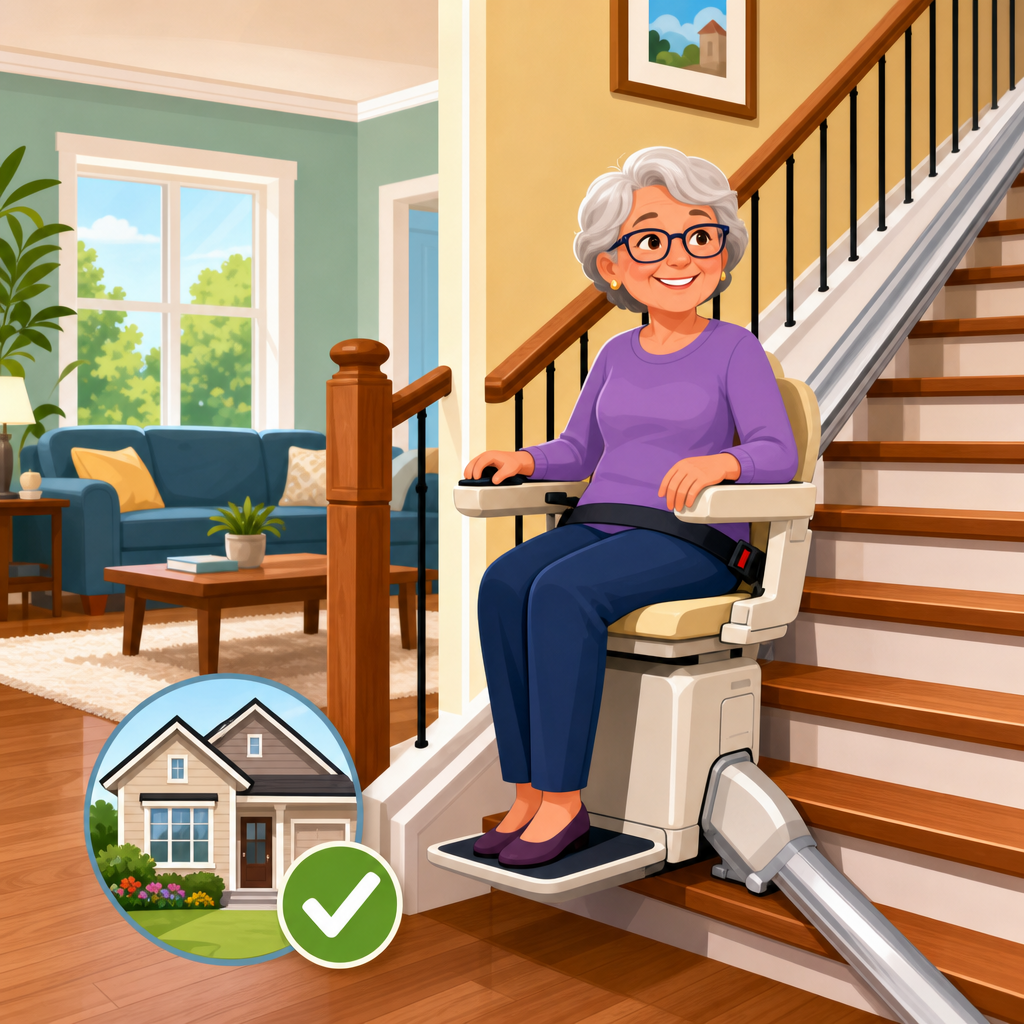
A Veterans Affairs chair lift grant is often the key that allows a veteran to stay safely at home, but success depends on using the right program and presenting the need clearly. The main options usually include housing adaptation grants for qualifying service-connected disabilities, HISA for medically necessary structural changes, and prosthetics or rehabilitation pathways when equipment is clinically indicated. Eligibility turns on medical necessity, disability status, and home suitability, not simply age or preference. The application process works best when veterans start before purchase, obtain detailed clinical documentation, gather complete contractor estimates, and follow up consistently through the correct VA office.
This grants and assistance programs hub should help you see the full landscape, not just one funding source. Many veterans need a blended strategy that combines VA benefits with state programs, nonprofits, or limited financing to close a remaining gap. The practical goal is simple: reduce fall risk, protect independence, and make the home usable now, not months after a preventable crisis. If you are starting this process, contact the veteran’s VA care team and prosthetics department first, request a home accessibility evaluation, and build the application around documented daily need. That one step will put every other funding option in clearer focus.
Frequently Asked Questions
Is there actually a specific “Veterans Affairs chair lift grant” program?
Not usually in the way many people expect. There is not typically one nationwide VA benefit formally titled a “Veterans Affairs chair lift grant” that every veteran can apply for through a single form and receive as a direct payment. In most cases, this phrase refers to financial assistance that may be available through several different VA pathways, depending on the veteran’s medical needs, service connection, disability rating, housing situation, and clinical documentation. For example, support may come through VA home modification programs, prosthetics and durable medical equipment channels, or housing adaptation grants designed to make a home safer and more accessible.
The most common programs people explore include the Specially Adapted Housing (SAH) grant, the Special Home Adaptation (SHA) grant, and the Home Improvements and Structural Alterations (HISA) benefit. A stair chair lift may fit within one of these programs if it is medically necessary and the veteran meets eligibility rules. In some cases, the VA may also be involved through a physician referral, occupational therapy assessment, or prosthetics department review rather than through a housing grant alone. That is why two veterans with similar mobility issues may be guided into different benefit channels.
It is also important to understand that state veterans agencies, local nonprofits, and community accessibility programs sometimes help cover costs that the VA does not fully pay. As a result, the practical meaning of a “VA chair lift grant” is often a combination of federal VA benefits and additional assistance tied to veteran status. The best approach is to think of the process as identifying the right funding route rather than searching for one single chair lift check.
What VA programs may help pay for a stair chair lift?
Several VA-related programs may be relevant, but eligibility depends on the veteran’s condition and the purpose of the modification. One of the most discussed options is the Home Improvements and Structural Alterations, or HISA, benefit. HISA can help pay for medically necessary home improvements when those changes are needed for treatment or access to essential areas of the home. Depending on the facts of the case, a stair lift may be considered when it helps the veteran safely access living spaces and supports medical needs identified by a VA clinician.
Another possibility is the Specially Adapted Housing, or SAH, grant. This program is generally intended for veterans with certain severe service-connected disabilities and can be used for substantial home modifications. The Special Home Adaptation, or SHA, grant is similar but applies to a different set of qualifying disabilities. These larger housing adaptation grants may be especially relevant if the stair chair lift is part of a broader accessibility project, such as bathroom remodeling, ramp installation, doorway widening, or first-floor living modifications.
In addition, some veterans may be referred through VA prosthetics, rehabilitation medicine, spinal cord injury programs, or occupational therapy services. In these situations, the VA may evaluate whether a stair lift is medically appropriate, whether another mobility solution is safer, and whether the item should be funded through a clinical or structural benefit. Veterans should also ask about temporary lodging needs during installation, whether a home assessment is required, and whether contractor estimates must meet VA standards.
Because these programs operate differently, the smartest next step is usually to speak with a VA care team, local VA medical center, or a Veterans Service Officer. They can help determine whether the stair lift should be pursued as a housing adaptation, a medical necessity modification, or part of a larger accessibility plan.
How do I apply for VA assistance for a chair lift?
The application process usually starts with documentation, not with the lift company itself. A veteran should first speak with a VA primary care provider, specialist, social worker, prosthetics representative, or occupational therapist to explain the mobility issue in detail. The VA will often want clear medical support showing why a stair chair lift is necessary, how it will improve safe access within the home, and why other options may not be sufficient. A clinical evaluation can be one of the most important parts of the entire process.
After that, the veteran may be directed to the correct VA benefit pathway. If the request appears to fit the HISA program, the VA may require a prescription or written recommendation from a physician, along with forms, estimates, and information about the home. If the veteran may qualify for SAH or SHA, the process may involve a housing grant application, review of service-connected disability status, and coordination with a VA-assigned agent or housing specialist. In some cases, the VA will ask for photos, measurements, proof of home ownership or landlord permission, and written bids from licensed contractors.
It is wise to gather a complete file before submitting anything. Helpful documents often include the veteran’s VA identification information, disability award letter if applicable, medical records related to mobility loss, a statement describing daily challenges with stairs, contractor estimates, and any prior home accessibility assessments. Veterans should avoid assuming that buying a lift first will guarantee reimbursement later. In many cases, pre-approval matters, and unauthorized installation can complicate the claim.
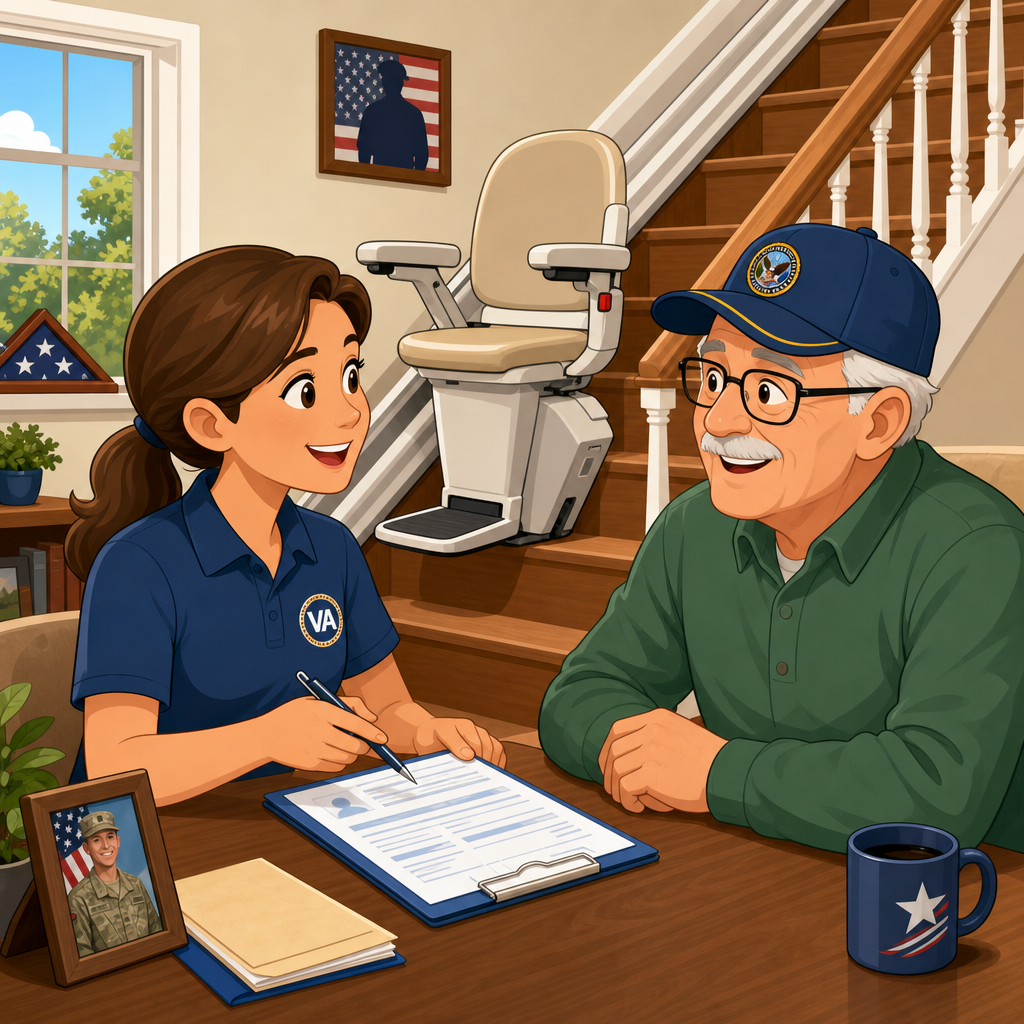
Working with a Veterans Service Officer can make the process much smoother. VSOs understand the differences between benefits, can help prevent paperwork mistakes, and may know whether state-level grants or nonprofit assistance can be layered with VA support. They can also help track the claim, follow up on delays, and make sure the request is framed around medical necessity and safety rather than convenience alone.
What are the eligibility requirements for a VA-funded stair chair lift?
Eligibility depends on which benefit program is being used, so there is no one-size-fits-all rule. In general, the VA looks at whether the stair chair lift is medically necessary, whether the veteran’s condition justifies the modification, and whether the requested equipment is appropriate for the home. For some programs, service-connected disability is central. For others, the veteran may still qualify for limited assistance even if the condition is not service-connected, though the benefit amount and rules may differ.
For example, SAH and SHA grants are typically tied to specific severe service-connected disabilities, such as loss of use of certain extremities, blindness in certain circumstances, or other qualifying impairments defined by VA rules. HISA, by contrast, is often discussed in terms of medically necessary home improvements and may apply in both service-connected and non-service-connected situations, although the maximum available benefit can differ. That distinction is important because many veterans assume they are ineligible if they do not meet the requirements for a major housing grant, when they may still qualify for another type of help.
The VA may also evaluate the home environment itself. If the staircase is unusually narrow, if electrical upgrades are needed, or if the property is rented, additional review may be required. Landlord approval can be necessary for tenants. The VA may also consider whether another accommodation would better meet the veteran’s needs, such as relocating sleeping space to the first floor, installing ramps, or modifying bathrooms. The goal is not simply to approve a piece of equipment, but to fund the safest and most medically appropriate solution.
Because eligibility can turn on very specific facts, veterans should not self-disqualify based on assumptions. A denial under one program does not always mean all VA-related options are closed. It may simply mean the request needs to be pursued under a different benefit, with stronger medical support, or alongside outside funding sources.
What if the VA does not fully cover the cost of the chair lift?
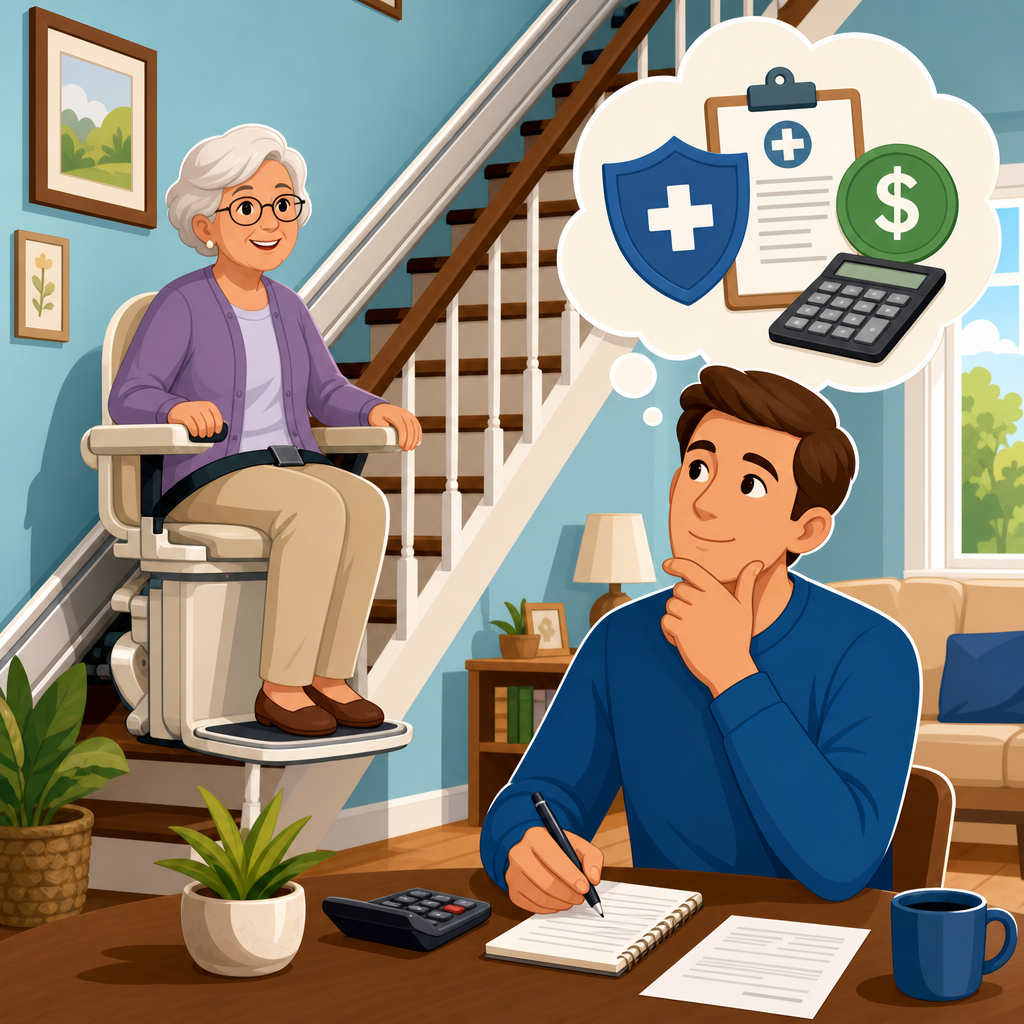
This is a common situation, and it does not necessarily mean the project has to stop. If the VA approves only part of the cost, or if the veteran does not qualify for full funding through a single program, there may still be ways to combine benefits and outside assistance. Some veterans use VA support as a foundation and then close the remaining gap with state veterans benefits, county assistance programs, nonprofit grants, military charity organizations, or manufacturer financing. In many communities, accessibility organizations and local service groups also help with home safety upgrades for disabled veterans.
It is also worth asking whether related costs are covered separately. For example, one program may help with the structural alteration, while another may address clinical evaluation, accessibility planning, or a different piece of mobility equipment. If the initial funding source does not cover installation, wiring, track modifications, or permit costs, a VSO or hospital social worker may know where to look next. Veterans should request a detailed written estimate from the lift provider so that every line item can be reviewed for possible reimbursement or supplemental support.
If the request is denied altogether, veterans should ask for the reason in writing. Sometimes denials happen because of missing medical documentation, use of the wrong form, lack of pre-authorization, unclear service-connection evidence, or an incomplete contractor bid. In those cases, strengthening the file and resubmitting may make a difference. If the denial is based on medical appropriateness, a second clinical opinion or occupational therapy assessment may be helpful.
The key point is that partial funding is often the beginning of the strategy, not the end of it. Veterans and family caregivers should treat the process as a funding stack: VA benefits first, then state and nonprofit resources, then payment options if needed. With persistence and the right documentation, many families are able to make a chair lift affordable even when no single program covers the full amount.