Negotiating a stair lift quote is not about haggling blindly; it is about understanding how dealers build pricing, where costs vary, and which concessions can reduce your total bill without sacrificing safety. In the stair lift industry, a quote usually includes the chair, rail, installation labor, warranty terms, service coverage, and optional upgrades such as powered swivel seats or folding rails. Dealer pricing refers to the final amount offered by a local supplier after measuring your staircase, selecting a model, and adding delivery and installation. This matters because stair lift prices can differ by thousands of dollars for products that serve the same basic need: safe access between floors.
I have reviewed many in-home accessibility proposals, and the biggest mistake buyers make is treating the first quote as fixed. In practice, it is often flexible. Dealers may discount inventory they want to move, waive installation fees, match competing proposals, or recommend lower-cost configurations that still meet code and mobility needs. A straight stair lift, for example, commonly costs far less than a custom curved unit because the rail is standardized. Buyers who know that distinction early avoid wasting time comparing fundamentally different products.
Budget-friendly options deserve a hub article because affordability in this category is nuanced. The cheapest quote is not always the best value, and the most expensive quote is not always overpriced. A lower initial price may exclude maintenance, use a shorter warranty, or rely on a less responsive local service network. A higher quote may include better battery backup, faster installation, or a reconditioned buyback program that lowers long-term ownership cost. To compare dealer pricing intelligently, you need to separate essential costs from optional add-ons and ask direct questions that force a clear apples-to-apples comparison.
For most households, the core goal is simple: get a reliable stair lift at the lowest defensible total cost. That means understanding base price, financing, rental availability, used inventory, manufacturer reputation, and the negotiating leverage created by multiple quotes. It also means knowing where not to compromise. Safety sensors, seat stability, rail fit, and installer competence are not luxury features. They are baseline requirements. If you approach the process methodically, you can often reduce the price meaningfully while still choosing a stair lift that is safe, durable, and practical for daily use.
Understand what drives stair lift pricing before you negotiate
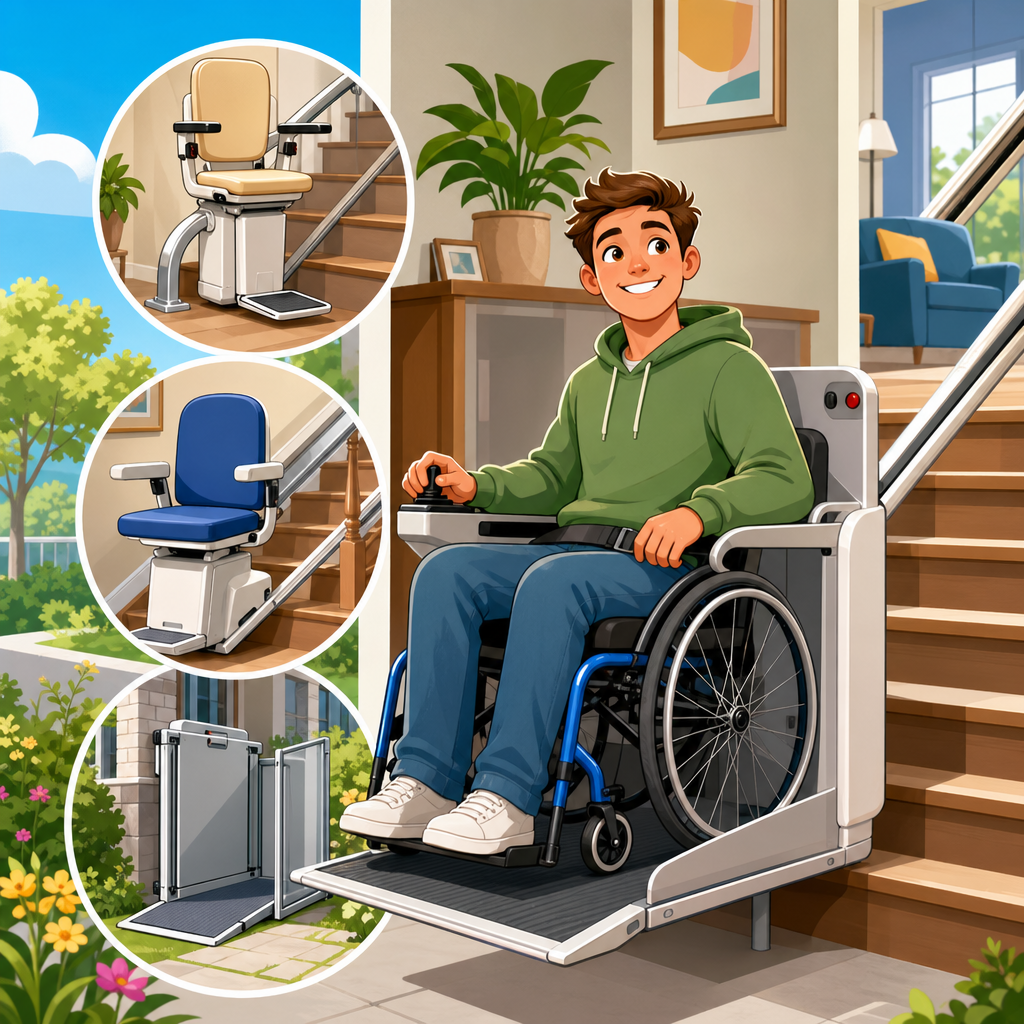
The first rule of negotiating a stair lift quote is knowing what you are buying. Straight stair lifts are usually the budget-friendly category because they use modular rails cut to length. Curved stair lifts cost more because the rail is custom manufactured to the exact turns, landings, and pitch of the staircase. Outdoor lifts add weatherproofing, sealed controls, and corrosion-resistant components, which also raises the quote. In my experience, some buyers think two lifts are comparable because the seat looks similar, when in reality one quote includes a custom rail and site-specific fabrication while the other does not.
Brand and dealer structure also affect price. Dealers selling Bruno, Harmar, Access BDD, Handicare, or Stannah may receive different manufacturer incentives, hold different local inventory, and provide different labor coverage. Some are factory-direct in practice, while others are independent mobility dealers bundling subcontracted installation. Ask who performs service calls, what response time is typical, and whether the warranty covers parts only or parts and labor. A quote that is $800 lower can become more expensive if the first repair requires an out-of-pocket service visit and labor charge.
Options are another major pricing variable. Powered footrests, power swivel seats, retractable rails, upgraded upholstery, and higher weight-capacity models all increase cost. Some options are helpful but not essential. Others are necessary depending on the user’s strength, balance, and transfer ability. The right negotiating posture is not “strip everything out.” It is “justify every line item.” If a dealer recommends a powered swivel, ask why. If the user has weak knees or limited trunk rotation, that explanation may be legitimate. If the answer is vague, it may be an upsell.
Installation complexity matters more than many buyers realize. A narrow staircase, a doorway at the top landing, low overrun clearance, or electrical limitations can add labor or require a hinged rail. Reputable dealers account for this during the home assessment. Less rigorous dealers sometimes quote low first and add costs later. That is why detailed written proposals matter. You want rail type, seat model, warranty, installation scope, and every option listed in plain language.
How to compare dealer quotes on an apples-to-apples basis
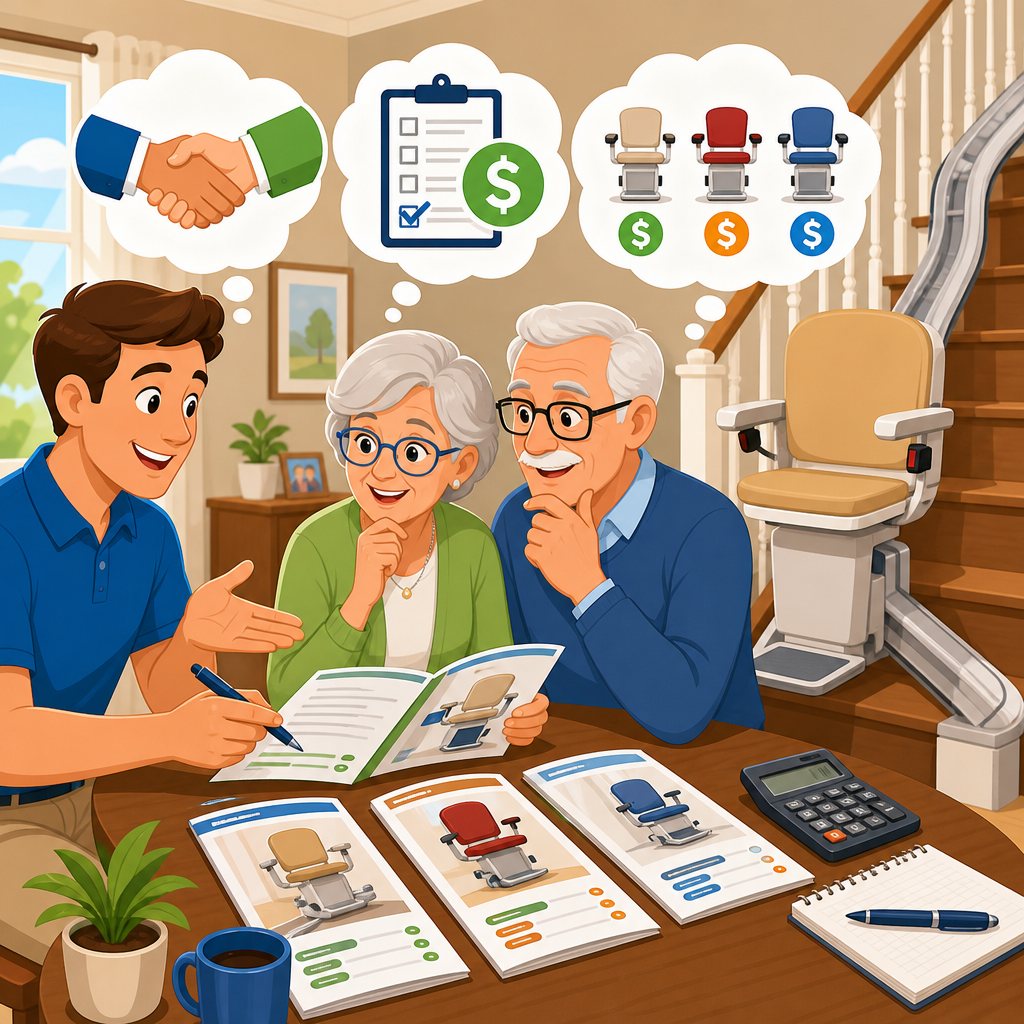
The most effective way to compare dealer pricing is to standardize the information you request. Give each dealer the same use case: who will use the lift, their height and weight, whether they transfer independently, and what obstacles exist at the top and bottom landings. Then ask for a fully itemized written quote. Without itemization, one dealer may appear cheaper only because a service plan, powered option, or permit-related task is omitted.
When I compare stair lift proposals, I look at six categories first: equipment model, rail type, installation scope, warranty coverage, service response, and removal or buyback terms. The buyback point is frequently overlooked. Some dealers offer repurchase or trade-in on straight lifts, especially if the rail can be reused or the chair can be reconditioned. That can materially reduce lifetime cost for a short-term need after surgery or rehabilitation.
| Quote Element | What to Ask | Why It Changes Value |
|---|---|---|
| Lift type | Is it straight, curved, or outdoor? | Custom rails and weatherproofing raise price significantly. |
| Warranty | How many years on parts, motor, batteries, and labor? | Short labor coverage can make a lower quote cost more later. |
| Installation | Is installation, delivery, and stair measurement included? | Hidden labor fees distort comparisons. |
| Options | Which features are required versus optional upgrades? | Useful negotiation starts with removable add-ons. |
| Service | Who performs repairs and what is the response window? | Local support affects downtime and ownership cost. |
| Used or rental availability | Do you offer reconditioned units or monthly rentals? | These can be the most budget-friendly path for short-term use. |
Do not compare monthly payment alone. Financing can make a quote feel manageable while increasing total cost through interest, dealer fees, or deferred-payment terms. Ask for the cash price, financed total, annual percentage rate, and any prepayment penalty. If one dealer offers “same as cash” financing, verify the exact end date and whether interest is retroactive. In accessibility equipment, promotional financing can be useful, but only if the household can pay the balance before the promotional period ends.
Also compare timeline. A straight lift from in-stock inventory may be installed within days, while a curved lift often takes weeks because of custom manufacturing. If urgency is high, speed has value. If timing is flexible, you may be able to negotiate more aggressively, especially near month-end or quarter-end when dealers want to close business.
Practical ways to negotiate a stair lift quote without compromising safety
The strongest negotiating tactic is obtaining two or three serious quotes from reputable dealers. Once you have them, do not simply say, “Can you do better?” Point to specific differences. For example: “Dealer B quoted the same weight capacity and a longer labor warranty for $1,100 less. Can you match that, or explain the value difference?” This keeps the conversation professional and evidence-based. Dealers are more responsive when they see you understand the components of the proposal.
Another effective tactic is asking for concessions beyond headline price. In many cases, the dealer cannot reduce the equipment cost much, but can include installation, the powered hinge, an extended labor warranty, or the first annual service visit. I have seen buyers save meaningfully by negotiating batteries, service coverage, or removal terms instead of chasing an unrealistic base-price cut. These extras affect real ownership cost and can be easier for the dealer to approve.
Ask whether there is showroom inventory, canceled-order stock, factory-refurbished equipment, or certified pre-owned straight lifts available. Straight lifts are the category where used and reconditioned options can produce the biggest savings because the rails are simpler and components are easier to redeploy. Curved lifts are harder to buy used cost-effectively because the rail is custom to the staircase, though a used chair on a new custom rail is sometimes possible through certain dealers.
Timing helps. Dealers may be more flexible at the end of the month, during local home accessibility promotions, or when manufacturers run rebates. Ask directly: “Are there current factory promotions, installer discounts, or package offers?” Also ask whether paying by check or paying in full at installation changes the price. Some companies will not advertise a discount, but may quietly reduce the total when financing fees are removed.
What should you avoid? Do not pressure a dealer to remove necessary safety features, skip a site assessment, or install a lift that does not fit the user. A stair lift is a medical-adjacent mobility device, not a decorative purchase. The better negotiation outcome is a lower total cost with the right configuration, qualified installation, and dependable service support.
Budget-friendly options that lower total cost
The most budget-friendly stair lift option for many homes is a basic straight unit with essential features only. If the staircase is straight and the user can operate manual seat swivel and footrest functions safely, avoiding power upgrades can keep the price down. Reconditioned straight lifts often provide another step down in cost, particularly when sold by established local dealers that replace wear components, test charge circuits, and provide at least a limited warranty. Ask exactly what “reconditioned” means, because standards vary widely between companies.
Rental stair lifts can be an excellent value for short-term needs. They usually make sense after orthopedic surgery, during cancer recovery, or in hospice situations where the expected duration is limited. Rental pricing typically includes installation and monthly fees, but contract terms vary. Some companies charge a high initial rail setup fee and a lower monthly rate; others spread more cost into the monthly payment. Compare the total expected cost over the likely usage period before assuming rental is cheaper than buying used.
Financial assistance may also improve affordability, although availability depends on location and eligibility. Medicaid waiver programs in some states may help with home modifications, but rules differ and approval is not guaranteed. The U.S. Department of Veterans Affairs offers programs that can support home accessibility improvements for eligible veterans. Area Agencies on Aging, state assistive technology programs, nonprofit loan closets, and local disability organizations can sometimes identify grants, low-interest loans, or recycled equipment programs. Tax treatment can matter too. In some situations, medically necessary home accessibility equipment may qualify as a deductible medical expense if total unreimbursed medical costs exceed the applicable threshold and documentation is maintained. Buyers should confirm details with a tax professional.
Finally, think beyond acquisition price. A dealer with strong local service, available parts, and a realistic warranty often delivers the best budget outcome over five years. Downtime, emergency repair visits, and battery replacement costs are part of the real price of ownership.
Questions every buyer should ask before signing
Before accepting any stair lift quote, ask these direct questions and insist on direct answers. Is the quoted model appropriate for the user’s mobility, height, and weight? Is the rail mounted to the stairs rather than the wall, and will installation require structural changes? Are permits needed in this jurisdiction? What is included in the warranty, and who performs warranty service? How long does battery backup operate during a power outage, and what is the expected battery replacement interval? Can the lift be removed later, and if so, what does removal cost?
Also ask about nuisance details that become major issues after installation. How much space remains for other stair users when the seat and footrest are folded? Does the rail create a trip hazard at the bottom landing? Is a folding rail or zero-intrusion design available if there is a doorway nearby? Will the seat height support a safe transfer for the primary user? A good dealer should answer these questions confidently during the home visit and reflect the answers in the written proposal.
If a quote feels vague, that is a warning sign. Trust dealers who measure carefully, explain tradeoffs, and document everything. The best price is the one you still feel comfortable with after the paperwork is signed.
Negotiating a stair lift quote and comparing dealer pricing comes down to structure, not guesswork. Learn what drives cost, gather itemized proposals, compare warranty and service terms, and negotiate with specifics instead of emotion. Budget-friendly options exist in every category, but they are most effective when matched to the staircase, the user’s mobility, and the expected length of need.
For most buyers, the smartest path is to start with the simplest safe solution: a straight lift if the staircase allows it, minimal necessary upgrades, and a reputable local dealer with clear service terms. Then explore reconditioned inventory, rentals for short-term use, financing only when the math works, and any available assistance programs. Those steps reduce total cost without increasing risk.
If you are building out your buying research, use this page as your hub for budget-friendly stair lift decisions. Create a side-by-side quote checklist, schedule two or three in-home assessments, and ask every dealer the same questions. A careful comparison today can save you substantial money and help you choose a stair lift that remains reliable long after installation.
Frequently Asked Questions
What should be included in a stair lift quote before I try to negotiate?
Before negotiating, make sure every quote is itemized so you can see exactly what you are being asked to pay for. A complete stair lift quote should break out the cost of the chair and rail, installation labor, electrical requirements if any, warranty coverage, service terms, and any custom work needed for your staircase. It should also list optional features such as a powered swivel seat, power folding footrest, folding rail, upgraded seat styles, or remote controls. If the staircase has turns, landings, or narrow sections, the quote should explain whether the rail is a standard straight model or a custom curved rail, since that has a major effect on price.
You should also confirm what is not included. For example, some dealers may quote a lower initial number but exclude permit fees, follow-up service visits, battery replacement, or removal of an old unit. Others may bundle these items into the total. Negotiation becomes much more effective when you are comparing equal offers instead of reacting to one big number. Ask the dealer to provide the total installed price, the length of warranty, what parts and labor are covered, response times for service calls, and whether there are any recurring maintenance costs. The more transparent the quote, the easier it is to identify areas where pricing can reasonably be adjusted.
How do local stair lift dealers usually build their pricing?
Local stair lift dealers typically build pricing from several layers rather than from one flat product price. The base cost usually starts with the type of lift itself. Straight stair lifts are generally less expensive because they use standardized rails and involve faster installation. Curved stair lifts cost more because the rail is custom manufactured to match the exact shape and turns of the staircase. Beyond that base, dealers factor in the brand they carry, the weight capacity of the model, upholstery or seat options, and any powered features selected by the customer.
Installation complexity is another major part of pricing. A simple straight staircase with clear access may require less labor than a staircase with tight landings, obstructions, or unusual mounting challenges. Dealers also account for overhead costs such as in-home assessments, measurement visits, warehouse handling, technician scheduling, travel time, local market conditions, and post-installation support. In some cases, the quote also reflects the level of service included after the sale, such as warranty labor, annual tune-ups, or emergency response availability. Understanding this structure helps you negotiate intelligently because you can ask targeted questions about labor charges, optional upgrades, service plans, and warranty value instead of simply requesting a lower number without context.
What parts of a stair lift quote are usually negotiable?
Not every part of a stair lift quote will move, but several areas often leave room for negotiation. Dealers may be willing to reduce or waive installation charges, discount optional upgrades, include a better warranty at no extra cost, or offer free service visits for a limited period. If you are comparing multiple dealers, you may also be able to negotiate a lower total based on competing quotes, especially for straight stair lifts where equipment is more standardized. Accessories such as powered features, seat upgrades, rail overruns, or call/send controls are sometimes the easiest items to discuss because they do not always carry the same hard cost structure as the main unit itself.
You can also ask about seasonal promotions, manufacturer rebates, open-box units, certified reconditioned models, or package pricing that includes installation and service. For customers who need the lift quickly, dealers may still have flexibility if they want to secure the sale without prolonged comparison shopping. That said, there are limits. Safety-related components, custom curved rail fabrication, and core installation requirements may have less pricing flexibility because they reflect fixed production and labor costs. The best approach is to ask, “Is there any flexibility in the installed price, warranty coverage, or included features?” That keeps the conversation practical and professional while signaling that you understand value goes beyond the sticker price.
How can I compare dealer pricing fairly if one quote is much lower than another?
A lower quote is not always the better deal, so the key is to compare what each dealer is actually providing. Start by checking whether both quotes are for the same type of lift, the same brand quality level, and the same configuration. One dealer may be quoting a basic unit with a short warranty, while another includes a more robust model, longer parts-and-labor coverage, and better service support. You should also verify whether both quotes include installation, stairway measurements, follow-up adjustments, and any required modifications to fit the lift safely.
Pay close attention to service and warranty differences. A dealer offering a lower upfront number may charge separately for labor after a short initial period, while another may include longer labor coverage or faster service response. For many buyers, especially older adults or households depending on the lift daily, after-sale support is a significant part of the real value. Ask each dealer for a written comparison of equipment, included features, warranty terms, service availability, and final installed cost. If one quote still comes in much lower, ask why. Sometimes the answer is legitimate, such as a promotional discount or a reconditioned unit. Other times, the lower quote may leave out important costs that appear later. Fair comparison means evaluating total ownership value, not just the lowest number on the page.
What is the best way to negotiate a better stair lift deal without compromising safety or quality?
The best negotiation strategy is informed, specific, and respectful. Start by getting two or three written quotes from reputable local dealers so you understand the normal price range for your staircase and equipment needs. When you speak with a dealer, focus on value-based questions rather than aggressive bargaining. You might ask whether they can match a competitor’s installed price, include an upgrade at no charge, extend the labor warranty, or reduce the cost of add-ons. This approach works well because it shows you are evaluating the full offer, not just trying to force an unrealistic discount.
At the same time, do not negotiate away essentials that protect safety and long-term reliability. Professional installation, proper stair measurements, dependable batteries, quality rail construction, and solid service support should remain priorities. A stair lift is a mobility device, not just a household convenience item, so cutting corners can create expensive or unsafe problems later. It is usually smarter to negotiate on extras, bundled service, financing terms, or promotional discounts than to accept a poorly supported installation. Ask the dealer to explain why their product and service justify the price, and use that information to compare offers confidently. A good negotiation outcome is not simply the cheapest quote; it is the best combination of safety, support, and total cost.