Pre-approval tips for insurance-covered chair lifts start with one practical truth: most chair lifts are not automatically covered, and approvals depend on medical necessity, policy language, documentation quality, and the route you use to request payment. In this context, a chair lift usually means a stair lift installed on an existing staircase, while some people also use the term for seat lift mechanisms built into recliners. Insurers often treat those products very differently, so the first step is defining exactly what device you need. That distinction matters because Medicare, Medicaid, private insurance, workers’ compensation, and veterans’ programs each apply separate rules, exclusions, and evidence standards.
I have worked with families comparing invoices, physician letters, and denial notices, and the biggest mistake is assuming a mobility need alone guarantees reimbursement. It does not. Insurance plans typically ask whether the equipment is primarily medical, whether safer lower-cost alternatives exist, and whether the requested item helps a patient perform essential daily activities inside the home. A stair lift may be life-changing for someone who cannot climb steps after a stroke, but many plans still classify it as a home modification rather than durable medical equipment. A seat lift mechanism may be considered differently if it helps a patient stand from a seated position due to severe neuromuscular disease or advanced arthritis.
This article serves as a hub for the question, does insurance cover chair lifts, by explaining where coverage is possible, where exclusions are common, and how to improve your chance of pre-approval before paying a deposit. You will learn how insurers evaluate medical necessity, what documents strengthen a request, how prior authorization works, and what alternatives may help if coverage is denied. The goal is not to promise approval. The goal is to help you ask the right questions early, avoid expensive ordering mistakes, and build a request that matches how payers actually review accessibility equipment claims.
Understand what insurers mean by “chair lift”
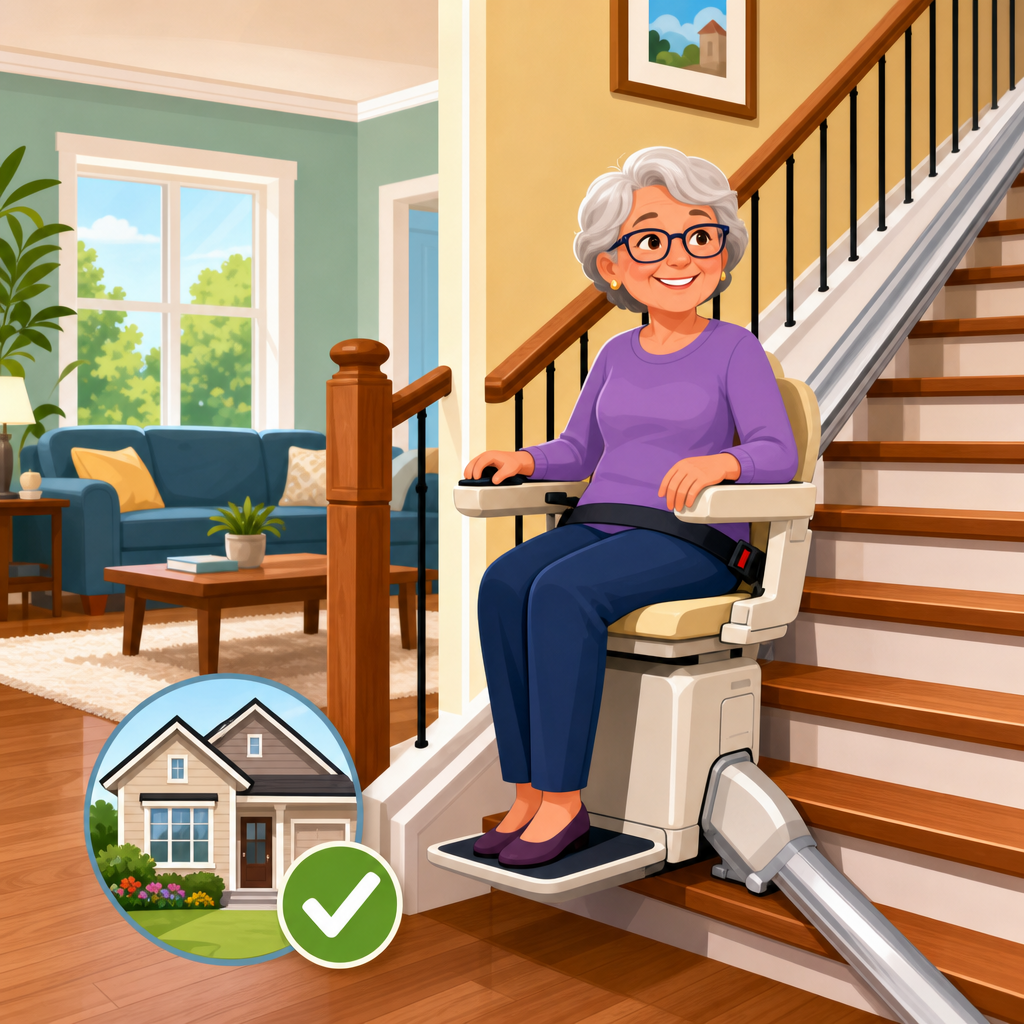
Before starting a claim, clarify the product category in writing. Many consumers say chair lift when they mean a stair lift, but payer systems often distinguish among stair lifts, platform lifts, vertical platform lifts, patient lifts, power seat elevation features on wheelchairs, and seat lift mechanisms in recliners. Those categories have different billing pathways and exclusions. If your doctor writes “chair lift needed,” that vagueness can trigger delays because the utilization reviewer cannot tell whether the request is for a staircase-mounted transport device or a seat-assist component.
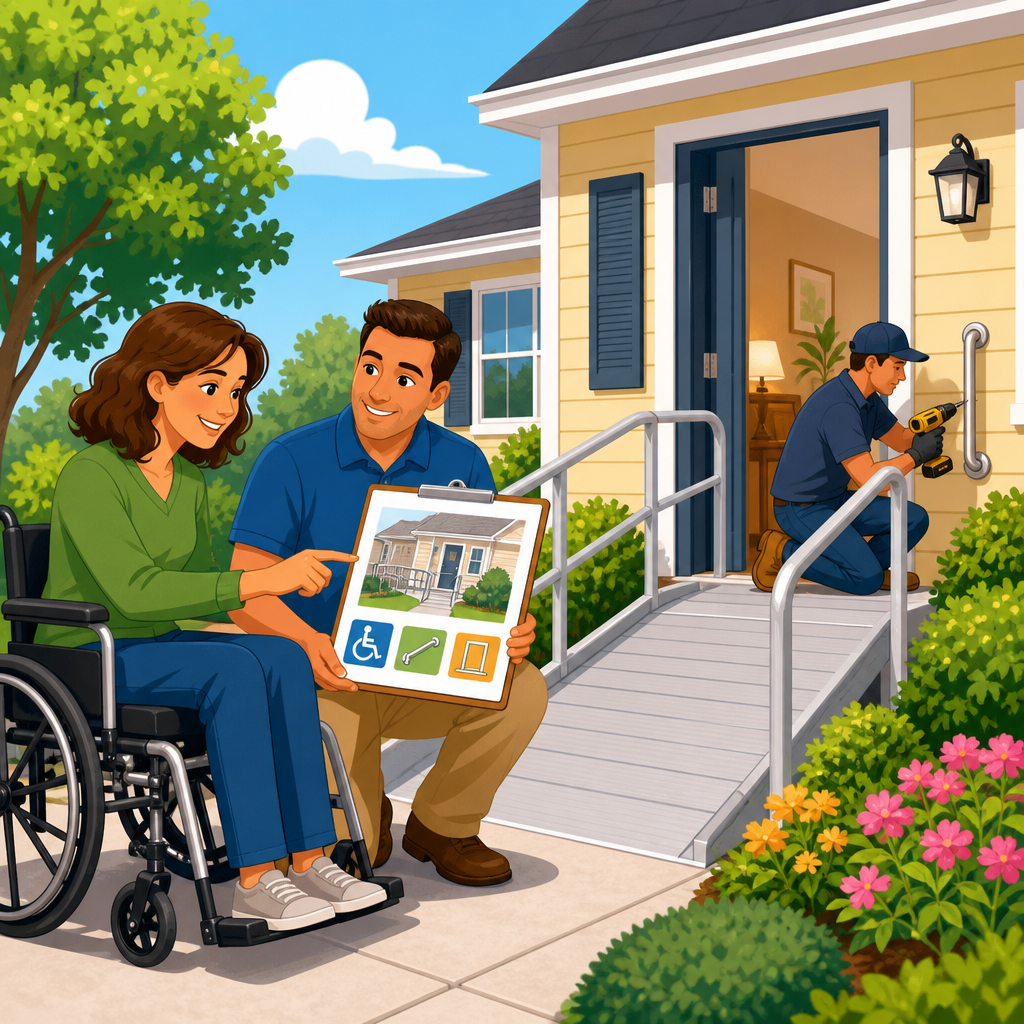
For home stair lifts, the common obstacle is that insurers frequently view installation rails, wiring, and structural attachment as environmental modifications rather than covered medical equipment. Medicare Original, for example, generally excludes items intended to improve home accessibility, even when medically helpful. By contrast, a seat lift mechanism may be reviewed under specific criteria if it is part of a physician-prescribed treatment plan for a patient who cannot stand from an ordinary chair. The motor that lifts the seat may be eligible in some cases, while the chair frame, upholstery, and nonmedical features usually are not.
Ask every supplier for an itemized quote that separates the device, installation labor, accessories, maintenance, and warranty. I recommend requesting the HCPCS code if one applies, the manufacturer model, and a plain-language description of function. If the vendor cannot explain how the device is categorized for insurance purposes, treat that as a warning sign. Pre-approval is far easier when the request uses the insurer’s terminology instead of consumer shorthand.
Know which insurance sources may help and where limits usually apply
Coverage possibilities depend heavily on the payer. Original Medicare generally does not cover stair lifts because they are considered home modifications, not durable medical equipment. Medicare Advantage plans may offer supplemental home support benefits, but those vary by carrier and county, and many still exclude stair lifts specifically. Medicaid is more flexible in some states through Home and Community-Based Services waivers, which can fund accessibility improvements when they prevent institutional placement. Private insurance plans often exclude stair lifts unless an employer-sponsored policy has a special rider or case management exception. Workers’ compensation may cover a lift when the mobility limitation stems directly from a compensable workplace injury. Veterans may qualify through Department of Veterans Affairs programs such as HISA grants or other prosthetics and home modification benefits, depending on service connection and clinical assessment.
| Payer | Stair Lift Coverage Likelihood | Common Conditions |
|---|---|---|
| Medicare Original | Low | Usually excluded as home modification |
| Medicare Advantage | Low to moderate | Plan-specific supplemental benefits may apply |
| State Medicaid | Moderate | Waiver programs, medical necessity, state rules |
| Private Insurance | Low | Policy exclusions common; exceptions rare |
| Workers’ Compensation | Moderate to high | Must relate to covered workplace injury |
| VA Programs | Moderate | Clinical approval, benefit eligibility, grant limits |
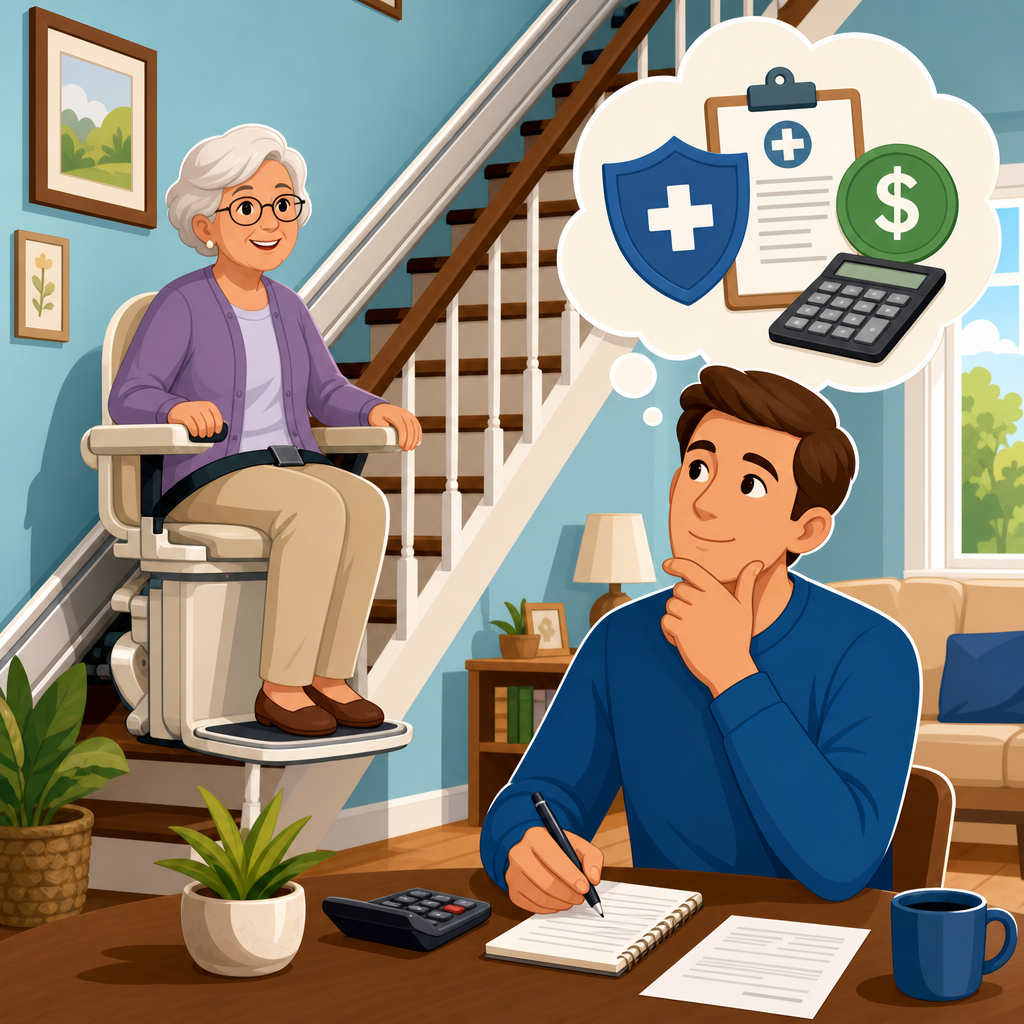
The practical lesson is simple: never order based on assumptions or a sales representative’s general statement that insurance might pay. Call the plan, ask for benefits and prior authorization, and request the answer in writing through a secure message or emailed summary. If you have secondary insurance, verify coordination of benefits. I have seen families rely on a primary plan’s verbal denial only to learn later that a Medicaid waiver or VA benefit was the better path all along.
Build a medical necessity case before you submit anything
Strong pre-approval requests connect the equipment directly to functional limitations and safety risks inside the home. A physician note should identify the diagnosis, but diagnosis alone is not enough. Reviewers want to know what happens on the stairs today, why the risk is significant, and why less costly alternatives are inadequate. Useful details include repeated falls, inability to safely transfer between floors, severe dyspnea on exertion, post-surgical restrictions, caregiver limitations, and whether essential rooms such as the bathroom or bedroom are only reachable by stairs.
The best supporting notes usually come from a physical therapist or occupational therapist who has evaluated gait, strength, endurance, transfers, and home layout. In successful cases, the therapist documents measurable findings: for example, lower-extremity weakness rated 3/5, inability to climb more than three stairs without maximal assistance, or oxygen desaturation during stair negotiation. Those specifics are more persuasive than broad language like “patient would benefit from a stair lift.” Insurers respond to concrete evidence showing that the requested equipment addresses a defined hazard and supports activities of daily living.
If the request involves a seat lift mechanism rather than a stair lift, documentation should show that the patient can walk once standing but cannot rise independently from a standard chair or toilet-height surface, even after trying conservative treatment. Many policies expect proof that cane, walker, medication, therapy, and lower-cost seating options were considered first. The more your records show a stepwise clinical decision, the stronger the request becomes.
Prepare the paperwork insurers actually use to decide
A clean file shortens review time and reduces avoidable denials. At minimum, gather the prescription, detailed letter of medical necessity, therapy evaluation, itemized supplier quote, product brochure, and any forms required for prior authorization. Include chart notes from recent visits, usually within the last six to twelve months depending on plan rules. Make sure the diagnosis codes on the prescription and physician note align with the records. Mismatched coding is one of the most common administrative problems.
For stair lifts, I advise adding photos of the staircase, notes on where the bedroom and bathing facilities are located, and a short home access summary written by the therapist or case manager. That summary should explain why relocating the patient to the first floor is not feasible, if true. Insurers often ask whether a bedroom move, commode setup, or temporary caregiver assistance could solve the issue at lower cost. If those options are impractical, state why plainly.
Keep a timeline with dates, reference numbers, and names of every person you speak with. Upload documents through the insurer portal when possible, then confirm receipt. If the supplier says they will handle authorization, still request copies of everything submitted. In my experience, families who maintain their own complete file can respond far faster when a reviewer asks for clarification or when an appeal becomes necessary.
Use pre-approval strategies that reduce denials
Pre-approval is partly about timing and partly about framing. Submit the request before installation, before signing a nonrefundable contract, and before assuming a retroactive exception will be granted. Many plans will deny automatically if equipment was purchased before authorization. Ask the insurer whether the item needs prior authorization, pre-certification, or a case management review; those terms are not interchangeable. Then confirm whether the supplier must be in network, licensed in your state, or enrolled with the payer.
When speaking to the insurer, ask direct questions: Is this considered durable medical equipment, a home modification, or a supplemental benefit? What documentation establishes medical necessity? Is there a specific form for home accessibility requests? Are there coverage caps or annual benefit limits? Can an out-of-network exception be requested if no in-network installer serves the area? Those questions often reveal the path that matters most.
If the first answer is no, ask whether another benefit channel exists. Some Medicare Advantage plans route accessibility requests through supplemental benefits rather than standard equipment claims. Some Medicaid programs require a waiver case manager instead of the regular medical claims department. Some employers offer health reimbursement arrangements or flexible spending tools that cannot provide insurance coverage but can reduce after-tax cost. Good pre-approval work means identifying the correct lane before paperwork disappears into the wrong department.
What to do if coverage is denied or only partially approved
A denial is common, but it is not always final. Read the denial letter carefully and identify whether the reason is contractual exclusion, insufficient documentation, lack of prior authorization, out-of-network supplier use, or failure to prove medical necessity. If the item is excluded by the policy, an appeal may still be worth filing when the language is ambiguous, but a parallel funding search is usually smarter. If the issue is documentation, appeals often succeed after adding a stronger therapist evaluation, physician clarification, and home safety details.
Ask for the full policy section that supports the denial and request a peer-to-peer review when allowed. In appeals, address the insurer’s exact reasoning point by point. For example, if the plan says the request is a convenience item, explain why it is not about convenience but about preventing falls and preserving access to medically necessary living spaces. If the insurer says a lower-cost alternative exists, document why that alternative fails clinically or logistically. Precision matters.
When insurance will not cover the lift, look at layered financing options. Many reputable suppliers offer monthly payment plans. State assistive technology programs, Area Agencies on Aging, local disability nonprofits, and disease-specific foundations sometimes provide grants or low-interest loans. Veterans should revisit VA pathways even after a private denial. If the need follows a workplace or motor vehicle injury, coordinate with the relevant insurer or attorney before paying out of pocket. The best result often comes from combining smaller funding sources rather than waiting for one perfect approval.
Insurance coverage for chair lifts is possible in limited situations, but it is never something to assume. The central question, does insurance cover chair lifts, has different answers depending on whether you need a stair lift or a seat lift mechanism, which insurer is involved, and how well the medical record explains the need. Most stair lifts face exclusion as home modifications. Some Medicaid waivers, VA benefits, workers’ compensation claims, and select private or Medicare Advantage benefits can help. Seat lift mechanisms may fit coverage rules more often when documentation proves severe standing difficulty and medical necessity.
The strongest pre-approval strategy is disciplined preparation. Define the equipment precisely, verify benefits directly with the payer, use in-network providers when required, and build a file that includes a detailed physician letter, therapy evaluation, itemized quote, and home safety context. Submit before purchase, track every conversation, and respond quickly to requests for more information. If denied, read the reason carefully and tailor the appeal to the policy language rather than arguing in general terms.
Families save the most money when they slow down at the beginning. A one-hour benefits call and a well-documented evaluation can prevent a costly order that no payer will reimburse. If you are exploring cost and financing options, use this article as your starting point, then compare your plan’s rules, ask your clinician for specific documentation, and request written pre-approval before moving forward with any chair lift purchase.
Frequently Asked Questions
1. Are chair lifts usually covered by insurance, and how do insurers define them?
Not usually, at least not automatically. One of the most important pre-approval tips is to confirm exactly what product is being discussed before you submit anything. Many people use the phrase “chair lift” to describe a stair lift mounted to an existing staircase, but insurers may classify that as a home modification rather than durable medical equipment. A seat lift mechanism inside a recliner or lift chair may be handled under a completely different benefit category, and it may be reviewed under separate medical necessity rules. That distinction matters because a policy that excludes home accessibility modifications may still evaluate a mechanical seat lift component differently, while another plan may deny both outright.
Before requesting pre-approval, ask the insurer to identify the exact coverage category, the billing terminology they use, and whether prior authorization is even available for the product in question. You should also ask whether the request should be routed through durable medical equipment, home health, rehabilitation benefits, a case manager, or an out-of-network exceptions team. If the representative gives verbal guidance, write down the date, time, reference number, and the person’s name. That record can help if you later need to challenge a denial based on inconsistent instructions. The biggest mistake applicants make is assuming that any mobility-related device will be reviewed the same way. It will not. The first step in a strong pre-approval strategy is matching your request to the insurer’s exact definitions and procedures.
2. What documentation gives me the best chance of getting pre-approval for an insurance-covered chair lift?
The strongest submissions combine medical evidence, functional evidence, and policy-specific paperwork. Start with a detailed prescription or order from the treating physician, but do not stop there. Insurers typically want to see more than a simple statement that a chair lift would be helpful. The medical record should clearly explain the diagnosis, the mobility limitations, the fall risk, the difficulty using stairs, and why the device is medically necessary in the home environment. If the patient has arthritis, neuromuscular disease, stroke-related weakness, balance impairment, cardiopulmonary limitations, or another condition affecting stair use, the chart notes should describe how those issues directly interfere with safe access to essential parts of the home.
It also helps to include a letter of medical necessity that is specific rather than generic. The letter should explain why standard alternatives are not sufficient. For example, if the patient cannot safely relocate sleeping or bathing facilities to the main floor, cannot reliably use a cane or walker on stairs, or faces a documented risk of falls, those details should be stated plainly. Physical therapy or occupational therapy evaluations can be especially valuable because they translate medical conditions into practical functional limits. Insurers may also respond better when the documentation identifies the exact staircase layout, the essential rooms accessed by that staircase, and whether the patient requires the lift for basic daily living rather than convenience. Finally, include any insurer-required forms, product specifications, itemized quotes, and provider credentials in one organized packet. Strong documentation is not just about quantity; it is about making the medical necessity easy for the reviewer to understand and difficult to misclassify.
3. How can I prove medical necessity instead of having the request treated as a convenience or home upgrade?
This is one of the most important issues in pre-approval. Insurers often deny stair lift requests by saying the device is primarily for convenience, safety enhancement, or home improvement rather than medically necessary treatment. To counter that, your documentation needs to connect the chair lift to essential access within the home and show that without it, the patient cannot safely perform normal daily activities. In other words, the request should focus less on comfort and more on medically documented barriers to sleeping, bathing, toileting, entering or exiting the home, or reaching medically necessary living spaces.
Specificity matters. A strong file might explain that the patient’s bedroom and full bathroom are on the second floor, that stair climbing causes severe instability or shortness of breath, that a first-floor rearrangement is not feasible, and that the patient has already had near-falls or documented falls. If prior conservative measures have failed, such as handrails, supervision, cane use, or therapy, that should be stated clearly. It may also help to document whether the patient would otherwise require a more restrictive or more expensive level of care, such as transfer to assisted living or extensive caregiver support. While not every insurer will consider that argument, some reviewers do look at whether the requested device could help maintain safe function at home.
Just as important, avoid language that unintentionally weakens the request. Phrases such as “for easier movement,” “for comfort,” or “to improve convenience” can hurt the case if they are not paired with clinical details. The better approach is to frame the lift as necessary because the patient is unable to safely navigate stairs despite appropriate alternatives. The more the record shows functional necessity, failed alternatives, and a direct medical rationale, the harder it is for the insurer to dismiss the request as simply a lifestyle upgrade.
4. What should I do before buying or installing a chair lift if I want the best shot at reimbursement?
Do not buy first and ask questions later. In many plans, retroactive reimbursement is much harder to obtain than pre-approval, and some policies exclude payment entirely if the item was purchased before authorization or before the insurer completed its review. The safest approach is to contact the insurer early, ask whether prior authorization, pre-determination, or a medical exception request is required, and get the process in writing if possible. You should also confirm whether the vendor must be in-network, whether a physician must submit the request, whether competitive bidding rules apply, and whether the insurer requires multiple quotes or a home assessment.
It is also smart to vet the supplier before anything is installed. Choose a company that can provide detailed product descriptions, pricing breakdowns, installation specifications, and experience supporting insurance-related documentation. Some vendors understand the distinction between stair lifts and seat lift mechanisms and can help ensure the paperwork matches the product being requested. Ask whether the quote separates equipment cost, installation labor, service agreements, and optional upgrades, because insurers are more likely to scrutinize bundled invoices. Features that are not medically necessary, such as premium upholstery or cosmetic upgrades, can complicate the review and give the payer more room to deny the claim.
Finally, keep a complete file. Save policy excerpts, call notes, referral forms, the physician’s order, letters of medical necessity, therapy reports, quotes, and all insurer correspondence. If the request is denied, these materials become the foundation of an appeal. Good pre-approval planning is really about reducing preventable errors: wrong terminology, wrong vendor, missing authorization, incomplete records, or premature installation. Avoiding those mistakes can significantly improve your chances of a fair review.
5. What happens if the insurance company denies the request, and how should I appeal?
A denial is common, but it is not always the end of the process. The first step is to read the denial letter carefully and identify the exact reason. Insurers may deny a request because the item is excluded under the policy, because they consider it not medically necessary, because the documentation was incomplete, because the request was submitted under the wrong benefit category, or because they say a lower-cost alternative should be used instead. Each of those reasons calls for a different response. If the denial is based on missing information, the appeal should focus on supplying stronger records. If it is based on an exclusion, the issue may be whether the product was misclassified or whether an exception pathway exists. If it is a medical necessity denial, the appeal should directly rebut the insurer’s reasoning point by point.
A strong appeal usually includes an updated letter of medical necessity, supporting chart notes, therapy evaluations, fall history if relevant, and a cover letter that addresses the denial language line by line. It helps to quote the policy when possible and show how the patient’s condition fits the plan’s own criteria or why the original review was incomplete. You can also ask the physician to request a peer-to-peer review if the insurer allows it. In some cases, that conversation can correct misunderstandings about the patient’s functional limitations or the nature of the equipment. If the first-level appeal fails, ask about second-level internal appeals and independent external review rights. Those options vary by plan type, but they can be important, especially when the denial appears inconsistent with the medical record.
Throughout the appeal, stay organized and persistent. Submit everything by trackable method, keep copies of all documents, and note every deadline. If the patient is covered by an employer plan, Medicaid program, Medicare-related arrangement, or Medicare Advantage plan, the review rules may differ, so tailor the appeal to that framework. If needed, you can also seek help from the prescribing clinician’s office, a patient advocate, or an attorney familiar with insurance appeals. The key is not to respond emotionally but strategically: identify the denial reason, strengthen the evidentiary record, and force the review to focus on documented medical necessity rather than generalized assumptions about home modifications.