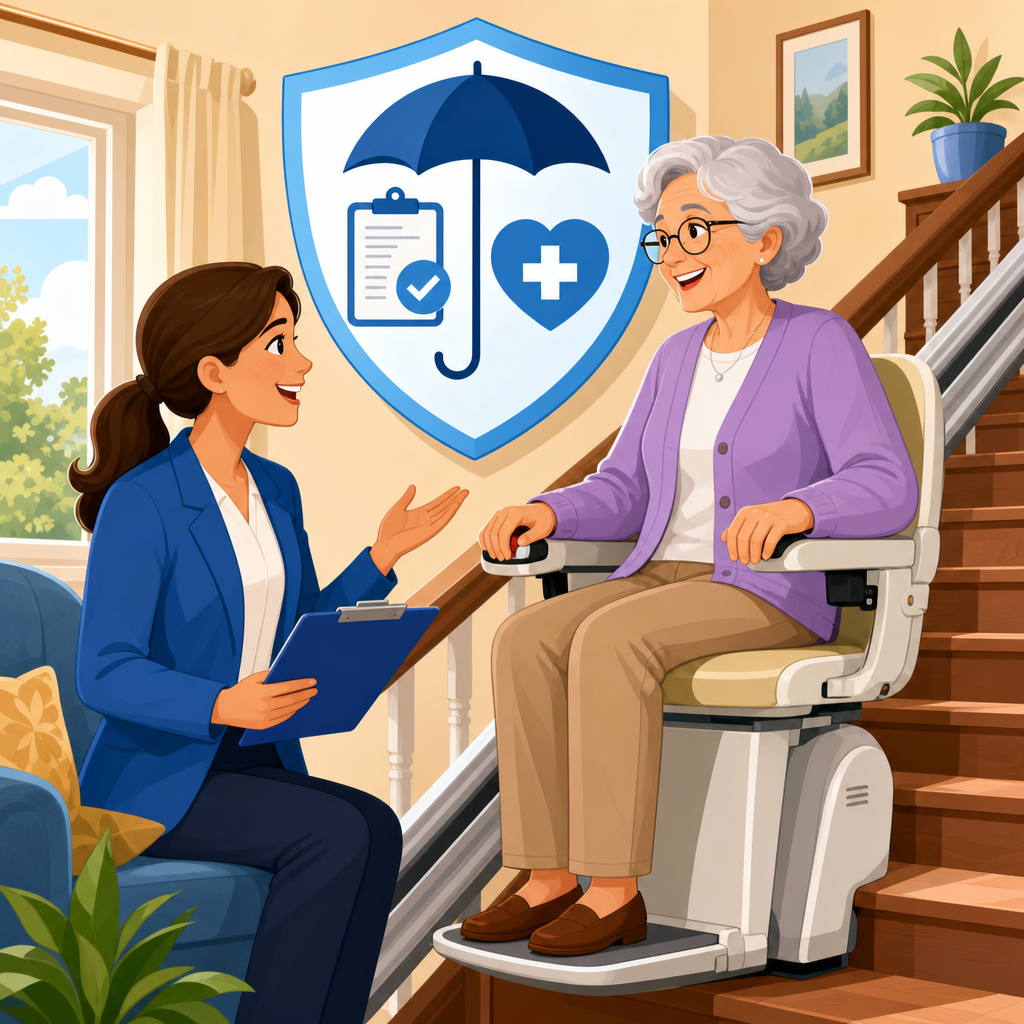
Private insurance and stair lifts: what’s covered? The short answer is that most private health insurance plans do not routinely pay for a stair lift, but coverage can exist in limited situations through durable medical equipment benefits, home health-related riders, rehabilitation benefits, or employer and long-term care policies. Because families often search for “does insurance cover chair lifts” when a fall, surgery, or progressive mobility condition suddenly makes stairs unsafe, it is important to understand exactly how insurers classify stair lifts, what documentation they require, and where coverage usually stops.
A stair lift, sometimes called a chair lift for stairs, is a motorized seat attached to a rail that carries a person up and down a staircase. Private insurance refers to commercial health coverage obtained through an employer, the Affordable Care Act marketplace, or an individual policy purchased directly from an insurer. In claims language, the central question is not whether a stair lift would help, but whether it qualifies as medically necessary under the plan’s durable medical equipment rules and whether it is considered primarily medical rather than environmental or convenience-related. That distinction determines almost everything.
After helping families review benefits, collect letters of medical necessity, and compare insurer responses with dealer quotes, I have seen the same pattern repeatedly. Insurers recognize wheelchairs, walkers, hospital beds, and patient lifts more readily than stair lifts because those devices are standard clinical equipment used across settings. A stair lift is installed into the home itself, customized to a particular staircase, and frequently categorized as a home modification. Once a product falls into the home modification bucket, private insurance coverage becomes much harder to secure.
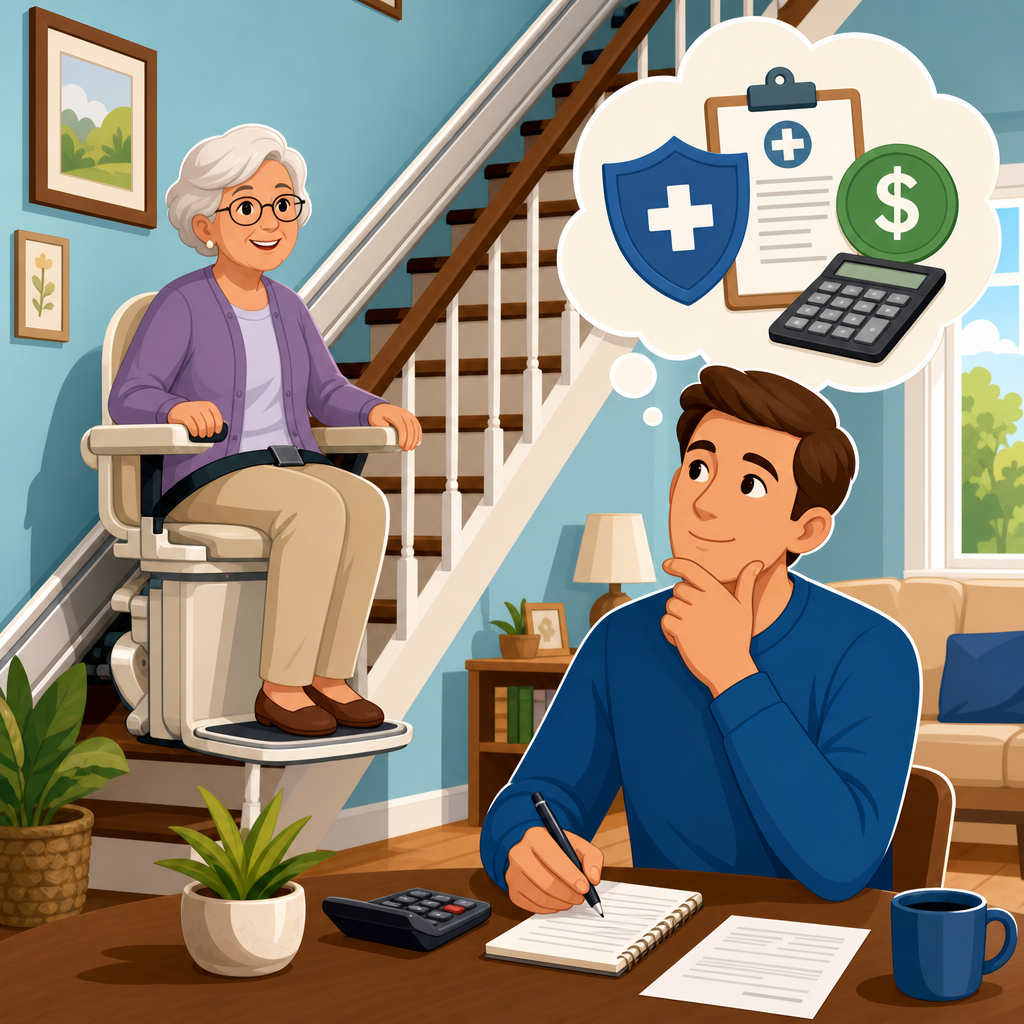
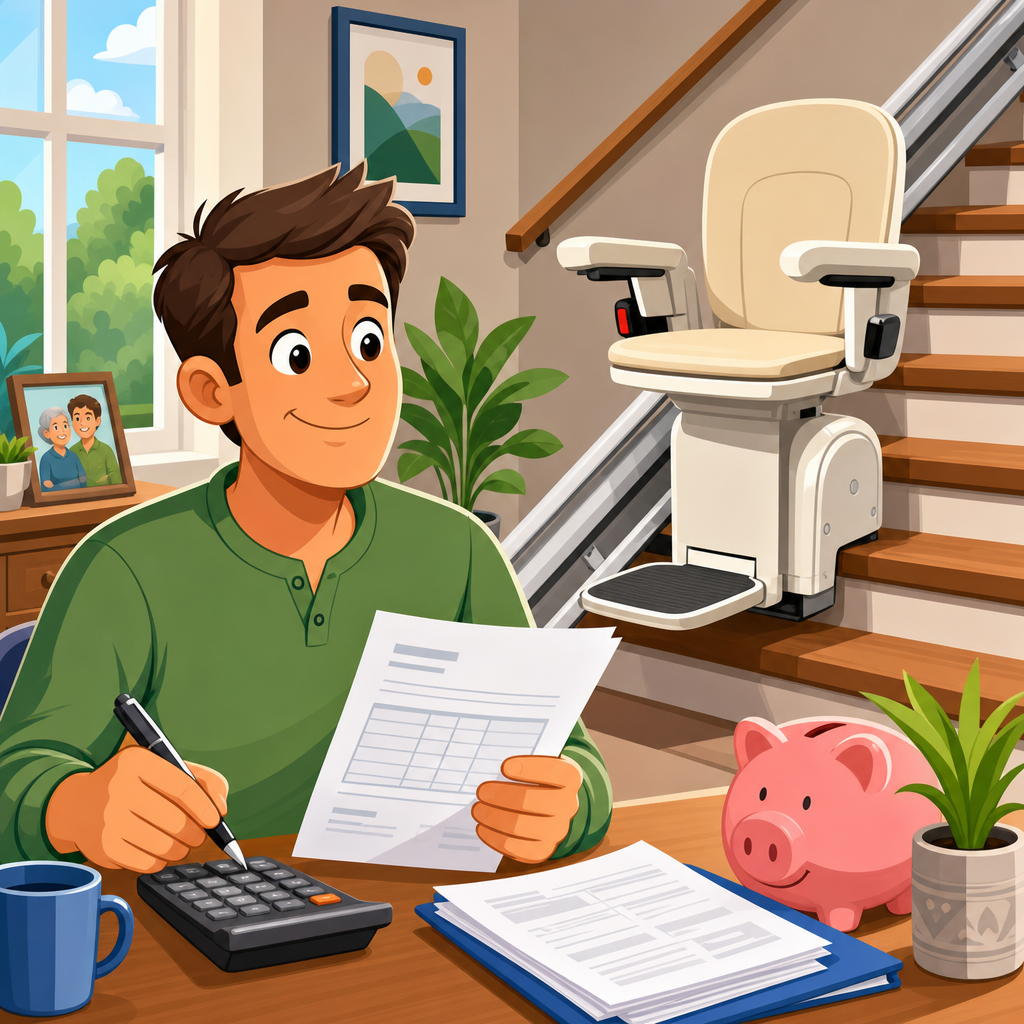
This topic matters because the financial gap is significant. A straight stair lift commonly costs several thousand dollars, while a curved stair lift can run far higher because the rail is custom fabricated. Add installation, electrical work in some homes, folding rail options, service contracts, and eventual removal, and the out-of-pocket burden becomes substantial. For a family trying to keep an older adult at home safely, understanding what private insurance covers, what it excludes, and what alternatives exist can prevent weeks of delay and thousands of dollars in avoidable expense.
Why private insurance often denies stair lift claims
Most denials come down to plan definitions. Commercial insurers generally cover medically necessary treatment and equipment that diagnose, treat, or compensate for an illness or injury. They are far less likely to cover structural changes to a home. Even though a stair lift has a motor, seat, footrest, and safety belt like a piece of equipment, insurers often view it as an accessibility adaptation tied to a specific residence rather than a portable medical device. In practice, that means a chair lift may be described as a convenience item, a home modification, or an item not primarily medical in nature.
Another reason is standardization. A manual wheelchair or walker has established coding, broad clinical usage, and predictable pricing benchmarks. Stair lifts are more variable. Straight and curved units differ greatly in cost. Weight capacity, swivel seats, hinged rails, battery backup, and outdoor ratings all affect price. Because insurers prefer categories with established utilization controls, they often exclude stair lifts outright in policy language or handle them only through case-by-case exceptions. If the policy booklet says home modifications are excluded, the claim usually ends there unless another benefit category can be used.
Medical necessity also creates friction. An insurer may ask whether the member can safely remain on one level of the home, whether a bedroom and bathroom could be relocated downstairs, or whether less costly alternatives exist. If the answer is yes, the stair lift may be deemed unnecessary. Families often find this frustrating because the practical goal is full use of the home, but insurers often define necessity more narrowly than daily life does.
When a private insurer may cover a stair lift
Coverage is uncommon, but not impossible. The strongest cases usually involve a recent clinical change and unusually specific plan language. A member recovering from major orthopedic surgery, stroke, spinal cord injury, or severe neurologic disease may have a better chance if the treating physician documents why stair negotiation is unsafe and why no lower-cost option allows safe access to essential living areas. Even then, approval often depends on whether the plan has a durable medical equipment or home care provision broad enough to include the device.
Employer-sponsored plans can be more flexible than standardized individual policies because some large employers self-fund benefits and may allow exceptions through third-party administrators. I have seen approvals where a benefits manager treated a stair lift as part of a return-home discharge plan after rehabilitation, especially when the projected cost was lower than extended facility care. Those approvals were exceptions, not the norm, but they show that wording and advocacy matter.
Long-term care insurance is a separate category worth checking. Some policies reimburse home modifications intended to maintain independence, and a stair lift may fit that definition more easily than it does under medical insurance. Likewise, certain hospital indemnity, critical illness, or recovery rider benefits can provide cash that the member may use toward a stair lift even if the policy does not directly “cover” the equipment. That is not the same as a standard claim approval, but financially it can have the same effect.
What insurers look for in documentation
If you want the best chance of reimbursement, documentation must be precise. A physician letter should identify the diagnosis, functional limitations, fall risk, failed alternatives, and why the staircase blocks access to medically necessary living areas such as a bathroom or bedroom. It should explain why the member cannot safely use stairs with a cane, walker, handrail, or caregiver assistance. Broad statements like “patient would benefit from a stair lift” are rarely enough.
Insurers also respond better to objective evidence. Include therapy notes showing impaired balance, reduced lower-extremity strength, poor endurance, unsafe transfers, or post-surgical restrictions. A home assessment from an occupational therapist can be especially useful because it ties the medical condition to the actual physical environment. Dealers can supply a written quote, product specifications, and a statement distinguishing straight versus curved rail needs, but dealer paperwork alone will not establish medical necessity.
Preauthorization is critical. Many families install first and ask later, then learn the plan excludes post-service review for nonemergency equipment. Before signing a contract, request the summary plan description, durable medical equipment policy, exclusions for home modifications, and appeal procedures. Ask the insurer to identify the exact benefit category being reviewed. That question often reveals whether the claim has any realistic pathway.
Costs, plan types, and likely outcomes
Price affects strategy. Straight stair lifts are generally less expensive because they use standardized rails on uncomplicated staircases. Curved stair lifts require custom measurements and manufacturing, so costs rise quickly. Used or rental units may reduce the burden for short-term recovery, but curved rentals are less common because the rail is custom fit. From an insurer’s standpoint, higher customization can make a stair lift look even more like a home alteration than a reusable device.
| Scenario | Typical private insurance outcome | Why |
|---|---|---|
| Employer PPO, straight staircase, strong physician documentation | Possible exception or partial reimbursement | Some self-funded plans allow case review beyond standard exclusions |
| Marketplace or individual ACA plan | Usually denied | Benefits are standardized and often exclude home modifications |
| Long-term care insurance policy with home modification benefit | More likely than medical plan approval | Policy may focus on maintaining independence at home |
| Temporary post-surgery need, short recovery window | Direct coverage uncommon; cash rider or rental may help | Insurer may view downstairs living setup as a lower-cost alternative |
| Curved stair lift with custom rail | Rarely approved | High customization and installation reinforce home alteration classification |
Deductibles, coinsurance, and network rules also matter. Even if a plan approves part of the claim, the member may still owe a substantial share. Some policies reimburse only up to an allowed amount that falls well below the dealer’s installed price. Others require contracted suppliers, and many stair lift dealers are not enrolled as medical equipment providers. In those cases, a nominal approval can still leave most of the bill unpaid.
How to appeal a denial and improve your odds
If the insurer says no, ask for the denial in writing and review the exact rationale. Common reasons include home modification exclusion, lack of medical necessity, noncovered convenience item, or out-of-network supplier. Each reason suggests a different response. For medical necessity denials, strengthen the clinical record with therapy evaluations, fall history, and a more detailed physician letter. For exclusion denials, look closely at whether the insurer misclassified the request under the wrong benefit category.
A strong appeal is factual, organized, and tied to policy language. Quote the relevant section of the plan, then explain how the member meets the criteria. If the plan covers durable medical equipment that improves activities of daily living or prevents injury in the home, connect the stair lift directly to those standards. Include evidence that alternatives are unsafe or infeasible, such as a bathroom only available upstairs or a patient who cannot transfer safely to a downstairs temporary bed.
External review can help when internal appeals fail, especially if the denial rests on medical judgment rather than a clear exclusion. State insurance departments and employer benefits administrators may also provide procedural guidance. That said, an appeal cannot usually overcome an explicit exclusion written into the contract. When the policy plainly excludes home modifications, the practical value of further appeals may be limited, and energy may be better spent on alternate funding.
Alternatives when private insurance will not pay
Because denials are common, families should evaluate other funding paths early. Health savings accounts and flexible spending accounts may allow payment with pre-tax dollars if the stair lift is supported by medical documentation. Financing through the dealer can spread costs over time, though interest rates vary and should be compared carefully. Some nonprofit organizations, disease-specific charities, veterans programs, state assistive technology projects, and local aging agencies offer grants or low-interest loans for accessibility equipment.
Home equity products are sometimes used, but they deserve caution because they convert a mobility need into housing debt. A more targeted approach is to ask the stair lift company about refurbished straight units, short-term rentals, or buyback options. In my experience, rental is most practical for straight staircases after surgery or injury; for a long-term neurologic condition, a purchased unit often makes more financial sense.
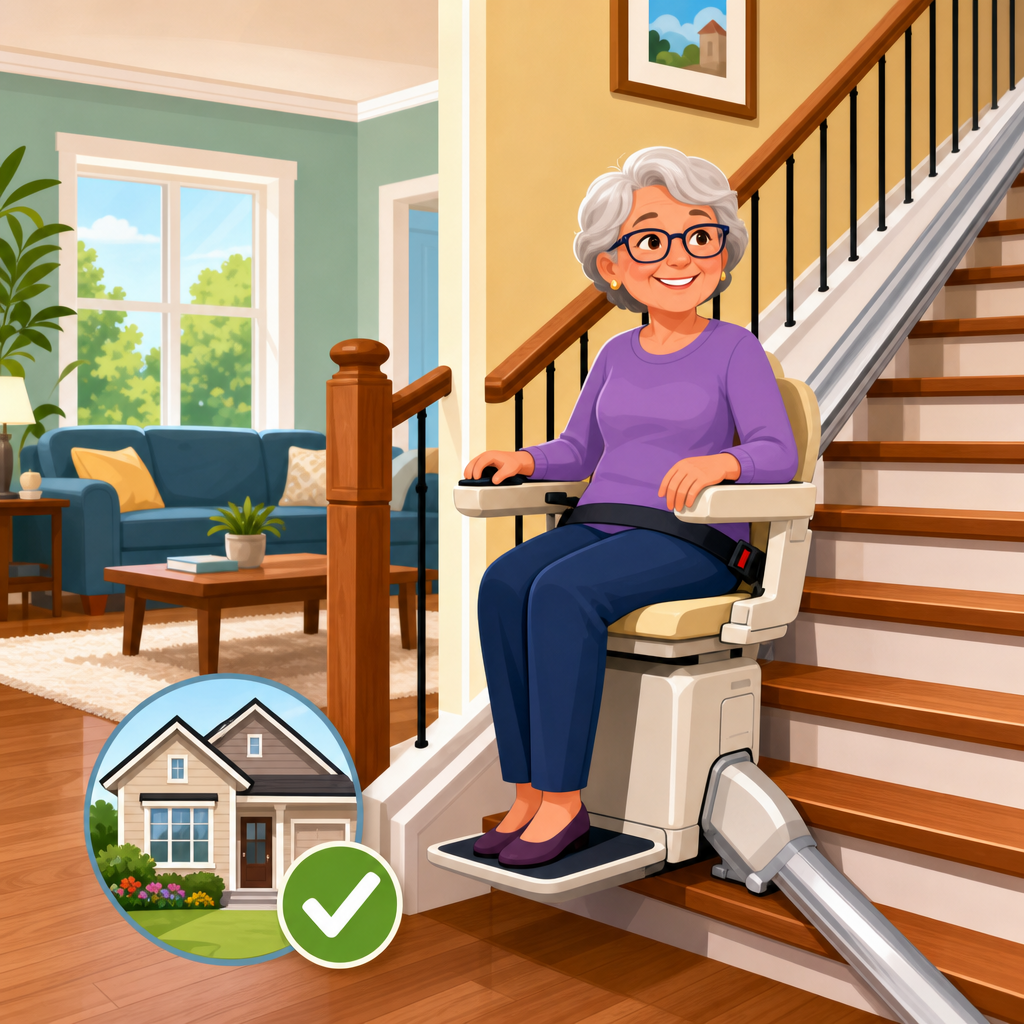
Do not overlook the broader housing plan. If a move to a single-level home is likely within a year, the economics of a custom curved stair lift may be weak. If aging in place is realistic for many years, the lift may prevent falls, reduce caregiver strain, and delay institutional care. Those benefits are not always reflected in insurance coverage rules, but they are central to a sound family decision.
The clearest answer to “does insurance cover chair lifts” is that private insurance usually does not, yet rare approvals and partial reimbursements do happen when plan language, medical documentation, and case circumstances align. Families should assume nothing, verify every benefit in writing, and treat the stair lift question as both a medical necessity issue and a contract interpretation issue. That approach avoids the most common mistake: buying equipment based on a verbal comment from a call center rather than a documented coverage determination.
The practical path is straightforward. First, read the policy’s exclusions and durable medical equipment rules. Second, gather a detailed physician letter, therapy notes, and a home assessment. Third, obtain written quotes from reputable stair lift dealers and request preauthorization before installation. Fourth, if denied, appeal strategically only when the policy language leaves room to argue. Finally, line up alternate funding sources early so a coverage dispute does not delay a needed safety solution.
For many households, the main benefit of understanding private insurance and stair lifts is speed. When you know where coverage is likely, where it is unlikely, and what proof insurers require, you can make a safer, more cost-effective decision without losing valuable time after a fall, diagnosis, or hospital discharge. Use this hub as your starting point, then compare your policy documents, speak with your clinician, and get a written coverage review before committing to any stair lift purchase.
Frequently Asked Questions
Does private insurance usually cover a stair lift?
In most cases, private health insurance does not routinely cover the full cost of a stair lift. Many insurers classify stair lifts as home modifications or convenience items rather than standard medical treatment, which means they are often excluded under basic policy terms. That said, coverage is not impossible. Some plans may offer limited benefits if the stair lift can be tied directly to medically necessary mobility support and falls under a durable medical equipment, rehabilitation, or home health-related provision. Coverage is more likely to be considered when a doctor documents that climbing stairs is unsafe because of a recent surgery, neurological condition, severe arthritis, injury, or progressive mobility disorder.
Even when a policy does not explicitly mention stair lifts, families should not assume the answer is automatically no. Insurance language varies widely, and some employer-sponsored plans, higher-tier policies, or policies with supplemental riders may include partial reimbursement options. The key is to review the plan’s exclusions, definitions of durable medical equipment, and any language related to in-home mobility assistance. If a stair lift is denied, it is also worth asking whether the insurer covers related alternatives such as walkers, wheelchairs, physical therapy, or temporary home health support.
Under what circumstances might a private insurance plan approve a stair lift?
A private insurance plan is most likely to consider stair lift coverage when there is strong evidence of medical necessity. This usually means the stair lift is not being requested for comfort or aging in place alone, but because the person cannot safely access essential parts of the home without it. For example, if a bedroom or bathroom is only reachable by stairs and the individual faces a significant fall risk due to recovery from surgery, a disabling injury, multiple sclerosis, Parkinson’s disease, or another serious condition, the case for coverage becomes stronger. Insurers may also be more open to reviewing requests if the alternative would be a more costly hospital stay, rehabilitation placement, or repeated fall-related treatment.
Approval, if available, often depends on documentation. The insurer may require a physician’s prescription, clinical notes describing the mobility limitation, and sometimes an occupational or physical therapy assessment explaining why the stair lift is medically necessary in the home. Some plans may only offer partial benefits, such as reimbursement through a rehabilitation allowance, a home care rider, or a broader accessibility-related benefit rather than direct stair lift coverage. In short, the more clearly the request shows safety need, functional limitation, and lack of practical alternatives, the better the chance of at least some financial help.
What documents do I need when asking insurance to pay for a stair lift?
Start with a detailed prescription or letter of medical necessity from the treating physician. This document should explain the diagnosis, how the condition affects stair use, why the person is at risk of falling, and why a stair lift is needed for safe access to necessary living spaces. Strong letters usually go beyond a simple statement of need and describe why other equipment, such as a cane or walker, is not enough. If possible, the letter should also explain whether the need is expected to be temporary during recovery or long term because of a progressive condition.
It also helps to include supporting records such as therapy evaluations, discharge paperwork after surgery or hospitalization, fall history, and a written estimate from a stair lift provider. Some insurers may ask for product specifications, proof that the device meets safety standards, or photographs of the staircase and living layout. If the home has no realistic main-floor alternative for sleeping or bathing, note that clearly. Keeping records of every phone call, claim submission, and denial letter is important as well, especially if you need to file an appeal. The more complete and organized the paperwork, the easier it is for the insurer to understand that this is a legitimate medical safety request rather than a general home upgrade.
If insurance denies the claim, can I appeal the decision?
Yes, and appealing is often worth the effort. Initial denials are common because stair lifts are frequently excluded by default or misunderstood as non-medical equipment. A denial does not always mean the matter is closed. Request a written explanation of the denial and review the exact reason. Sometimes the insurer denied the claim because the request was submitted under the wrong benefit category, lacked enough documentation, or did not clearly show medical necessity. In those cases, a more complete resubmission or formal appeal can make a difference.
When appealing, include an updated letter from the doctor, any therapy assessments, and a direct response to the insurer’s denial reason. If the plan says stair lifts are not covered as durable medical equipment, ask whether the request can be reviewed under rehabilitation benefits, home health support, case management assistance, or any rider related to in-home recovery and mobility. If the coverage is through an employer-sponsored plan, involve the HR or benefits department, since they may help interpret plan provisions or escalate the issue. Appeals are especially compelling when the stair lift could prevent falls, reduce caregiver strain, and avoid more expensive medical complications. Even if full approval is not granted, an appeal may lead to partial reimbursement or access to another benefit category.
Are there other insurance-related options if my private plan will not cover a stair lift?
Yes. If a standard private health insurance policy will not pay, there may still be other insurance-related avenues to explore. Long-term care insurance is one possibility, especially if the policy includes benefits for home safety, functional support, or aging-in-place services. Some employer-sponsored benefit packages also include flexible wellness funds, supplemental accident or critical illness coverage, health savings accounts, or flexible spending accounts that may help with stair lift costs in certain situations. In some cases, workers’ compensation or a liability settlement may contribute if the mobility problem stems from a work-related or covered injury.
It is also smart to ask whether the insurer has partnerships with case managers, preferred equipment vendors, or home transition programs that can reduce out-of-pocket costs even when direct coverage is unavailable. Families should review all policy layers, not just the main medical plan, because riders and supplemental benefits are often where limited stair lift assistance appears. If no insurance benefit applies, people commonly look to financing, manufacturer payment plans, local grants, nonprofit support, or tax-advantaged health accounts to bridge the gap. While private insurance rarely offers straightforward stair lift coverage, combining smaller benefits and alternative funding sources can still make the purchase much more manageable.