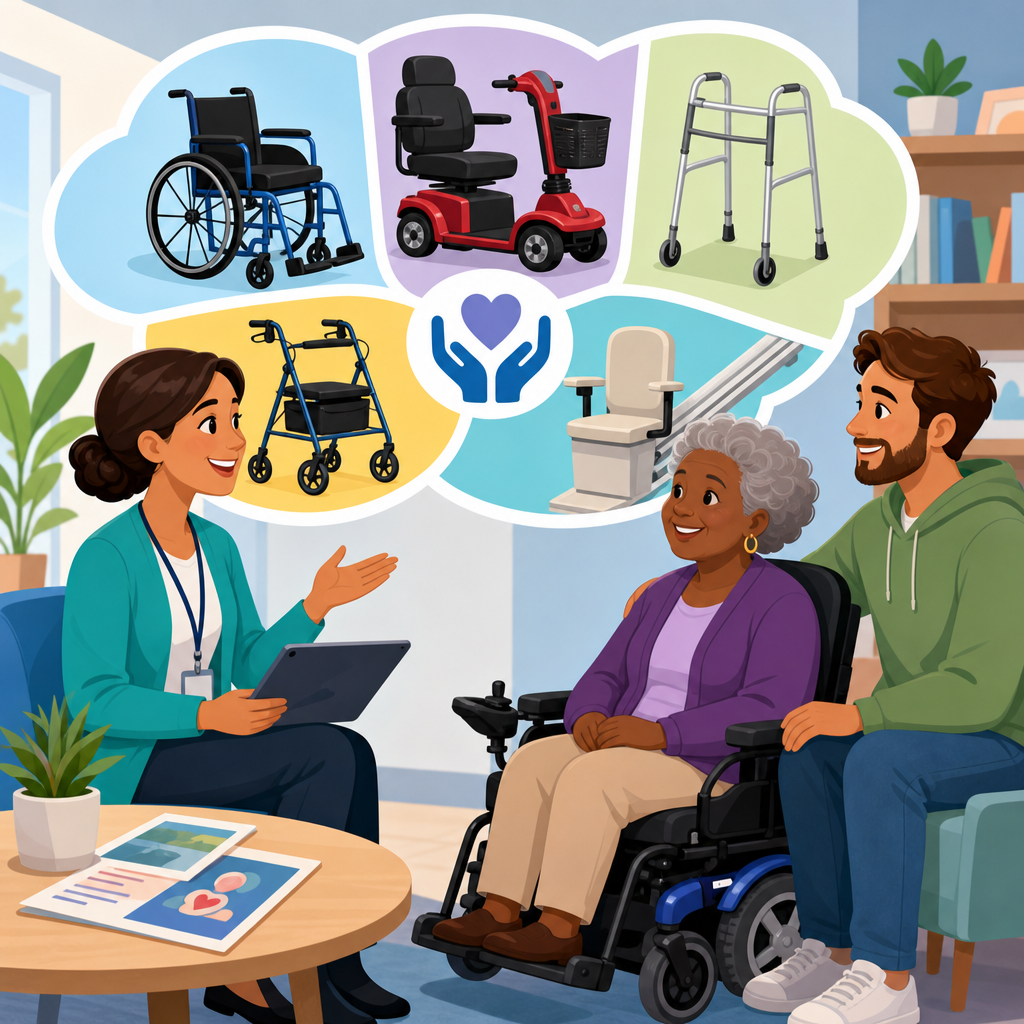
Chair lifts can make a home usable again for people with limited mobility, but the first question most families ask is practical: does insurance cover chair lifts? In most cases, standard health insurance, including Original Medicare, does not routinely cover a stair chair lift installed in a home, because insurers usually classify it as a home modification rather than durable medical equipment. Medicaid coverage for mobility equipment is more flexible, though, and that distinction is why understanding Medicaid coverage for mobility equipment matters so much when a chair lift becomes medically necessary.
In my experience working through mobility funding cases, confusion starts with terminology. A stair lift, sometimes called a chair lift, is a motorized seat that travels along a rail mounted to a staircase. It is different from a patient lift, which transfers a person from bed to chair, and different from a wheelchair lift, which raises a person and mobility device vertically between levels. Insurers do not treat these products the same way. A family may hear that Medicaid covers lifts and assume that means a stair lift, when the approval may actually apply to a Hoyer-style patient lift or a platform lift under a specific waiver program.
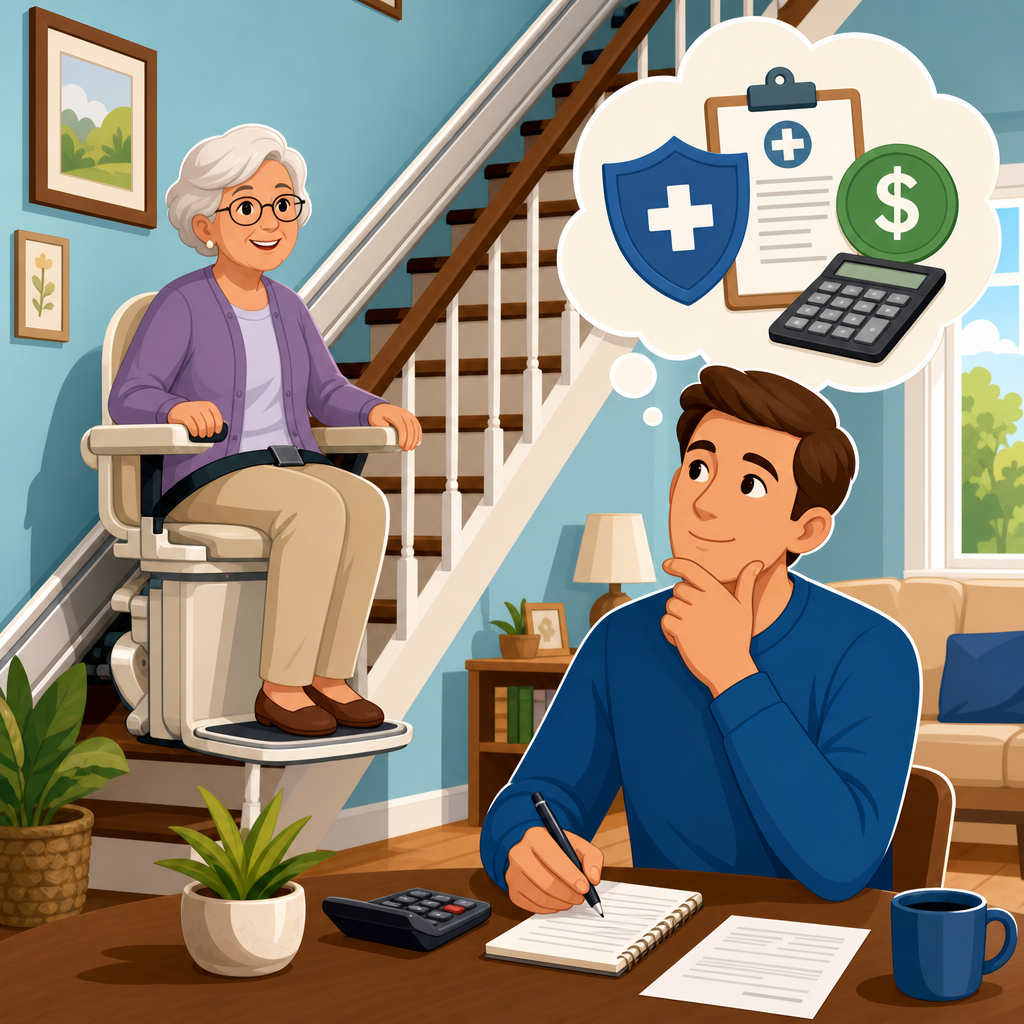
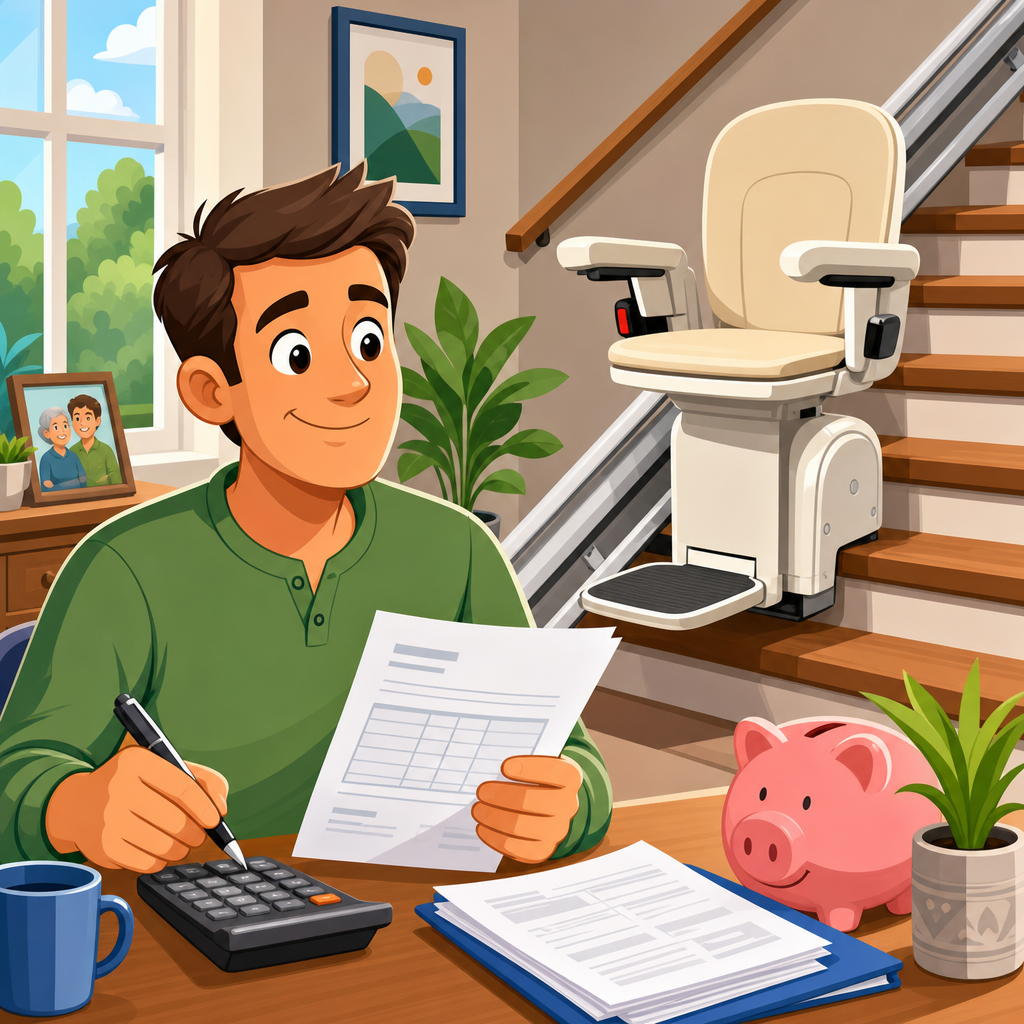
The issue matters because the cost is significant. A straight stair lift often ranges from about $2,500 to $6,000 installed, while a curved stair lift commonly runs from $10,000 to $20,000 or more due to custom rail fabrication. For households already paying for caregiving, prescriptions, and transportation, that expense can delay a needed safety upgrade. Falls on stairs are a major source of injury for older adults and disabled individuals, so the financing question is directly tied to health outcomes, caregiver strain, and whether someone can remain at home instead of moving to a facility.
This article explains how Medicaid, Medicare, private insurance, veterans benefits, and other funding sources approach chair lifts. It also answers the practical questions people ask during the buying process: what counts as medical necessity, which programs are most likely to help, what documentation improves the chance of approval, and what alternatives exist when insurance says no. As a hub article within cost and financing options, it gives you the full landscape so you can evaluate coverage, avoid common dead ends, and identify the funding pathways most likely to apply to your situation.
Does Medicaid cover chair lifts?
Medicaid sometimes covers chair lifts, but not through one simple nationwide rule. Medicaid is a joint federal and state program, so benefits vary by state, by managed care plan, and by eligibility category. In practice, direct coverage for a home stair lift is uncommon under a standard medical equipment benefit, yet possible under Home and Community-Based Services waivers, home modification benefits, Money Follows the Person programs, or state-specific alternatives designed to keep people safely at home. When coverage exists, approval usually depends on proving that the lift is medically necessary, cost effective compared with institutional care, and appropriate for the member’s home environment.
The most important point is that Medicaid is more likely to pay for mobility-related equipment when the equipment prevents higher-cost care. I have seen approvals where a stair lift allowed a beneficiary to access a bedroom or bathroom without daily hands-on assistance, reducing caregiver burden and fall risk. I have also seen denials when the state determined that relocating the sleeping area to the first floor was a lower-cost alternative. Medicaid programs often look at the least costly way to meet the medical need, not simply the beneficiary’s preferred solution.
States may label these benefits as environmental accessibility adaptations, assistive technology, home modifications, or waiver services. A case manager or waiver coordinator typically plays a central role. If you are asking whether Medicaid pays for stair lifts, the most accurate answer is: sometimes, especially through long-term services and supports programs, but rarely without prior authorization and strong documentation.
Why Medicare and private insurance usually deny stair chair lift coverage
Original Medicare Part B generally covers durable medical equipment such as wheelchairs, walkers, hospital beds, and patient lifts when prescribed for use in the home. However, Medicare usually does not cover stair lifts because they are considered home modifications attached to the house rather than equipment primarily serving a medical purpose independent of the home. That distinction surprises people, but it is consistent with Medicare’s benefit design. A stair lift improves access within the residence, yet Medicare typically reserves coverage for items meeting its durable medical equipment criteria through enrolled suppliers.
Medicare Advantage plans may offer supplemental benefits beyond Original Medicare, but stair lift coverage is still not common. Some plans provide allowances for certain in-home support services or safety devices, and those extra benefits are worth checking, especially for chronically ill members. Even then, a plan may approve grab bars or bathroom safety devices and still exclude a stair lift.
Private health insurance behaves similarly. Most employer and individual plans focus on medically necessary treatment and standard medical equipment, not structural improvements to a home. A stair chair lift may be excluded outright in plan documents, or it may fail review because the insurer believes less expensive alternatives exist. Long-term care insurance is different from health insurance and may reimburse some home modifications if the policy includes home care benefits, but coverage depends entirely on contract language. Always request the exact exclusion or approval criteria in writing before assuming a policy will contribute.
Which Medicaid pathways are most likely to fund a chair lift
If Medicaid coverage is possible, it usually flows through specific program channels rather than a broad equipment benefit. The pathways below are the ones families should investigate first with a state Medicaid office, Area Agency on Aging, or disability resource center.
| Program pathway | What it may cover | Common requirements |
|---|---|---|
| HCBS waiver | Environmental modifications including stair lifts in some states | Medical necessity, cost effectiveness, prior authorization |
| Managed long-term services and supports | Home accessibility changes tied to care plans | Assessment, service coordinator approval, vendor quotes |
| Money Follows the Person | Transition-related home modifications after leaving an institution | Community transition plan, safety justification |
| State plan personal care supports with add-on benefits | Occasional assistive technology or limited home adaptation | State-specific rules, physician documentation |
| 1915(k) Community First Choice in participating states | Some home and community support items | Functional eligibility and service plan approval |
HCBS waivers are often the strongest possibility because their purpose is to help beneficiaries avoid institutional placement. If a stair lift is cheaper than nursing facility care, repeated emergency treatment after falls, or daily paid assistance on stairs, that economic argument can matter. Managed Medicaid long-term care plans may also be receptive when a therapist documents that the lift will maintain independence in activities of daily living. Funding caps, wait lists, and age or disability criteria still apply, so starting early is important.
How medical necessity for a chair lift is documented
Medical necessity is the backbone of any chair lift funding request. A persuasive file usually includes a physician’s order, but that alone is rarely enough. The strongest cases add a physical therapy or occupational therapy home assessment explaining the person’s diagnosis, functional limitations, history of falls or near falls, stair negotiation ability, caregiver limitations, and why lower-cost alternatives are not sufficient. If the home has the only full bathroom or bedroom on an upper level, that fact should be stated clearly. Vague statements like “patient would benefit from a stair lift” do not carry much weight.
Specificity matters. Diagnoses might include severe osteoarthritis, multiple sclerosis, stroke residuals, Parkinson’s disease, spinal cord injury, congestive heart failure causing exertional intolerance, or advanced balance impairment. Functional findings should describe what happens on the stairs: inability to climb more than a few steps, need for two-person assist, unsafe use of a cane on stairs, oxygen desaturation with stair climbing, or inability of an aging spouse to provide physical help. Good documentation also addresses home layout, because reviewers want to know why sleeping downstairs or using a commode is not a safe or realistic substitute.
Vendor documentation matters too. Insurers and Medicaid programs often request at least one detailed quote, and some require multiple bids. The estimate should identify whether the lift is straight or curved, weight capacity, power source, seat features, installation scope, warranty, and maintenance terms. If electrical upgrades or rail modifications are needed, those costs should be separated. Clear paperwork reduces delays and helps the reviewer see exactly what is being requested.
What to do when insurance does not cover a stair lift
A denial does not mean the search is over. Many families patch together funding from several sources. State assistive technology programs, authorized under the Assistive Technology Act, may provide device loans, demonstration programs, or financing assistance. Vocational rehabilitation agencies sometimes help when the lift supports employment or return to work. The Department of Veterans Affairs may assist eligible veterans through programs such as HISA grants for home improvements and structural alterations, though stair lifts are reviewed case by case and benefit rules evolve. Nonprofit groups, local civic organizations, and disease-specific foundations occasionally offer grants, especially when a child or veteran is involved.
Manufacturers and dealers may offer financing, rentals for short-term recovery in limited markets, or refurbished straight stair lifts at lower prices. Used curved lifts are less common because the rail is custom built, but a reconditioned seat and carriage paired with a new rail can sometimes lower cost. Home equity products, medical credit lines, and flexible spending or health savings accounts may also help, although those are financing tools rather than insurance coverage.
If you receive a denial, appeal if the facts support it. Ask for the exact reason, the policy citation, and the clinical criteria used. Then respond directly. If the insurer says the lift is a convenience item, submit therapist evidence showing a substantial safety risk and the lack of feasible alternatives. If Medicaid says a first-floor setup is cheaper, document why that arrangement fails medically or practically. Strong appeals are factual, organized, and tied to the decision language.
How this hub connects related mobility funding decisions
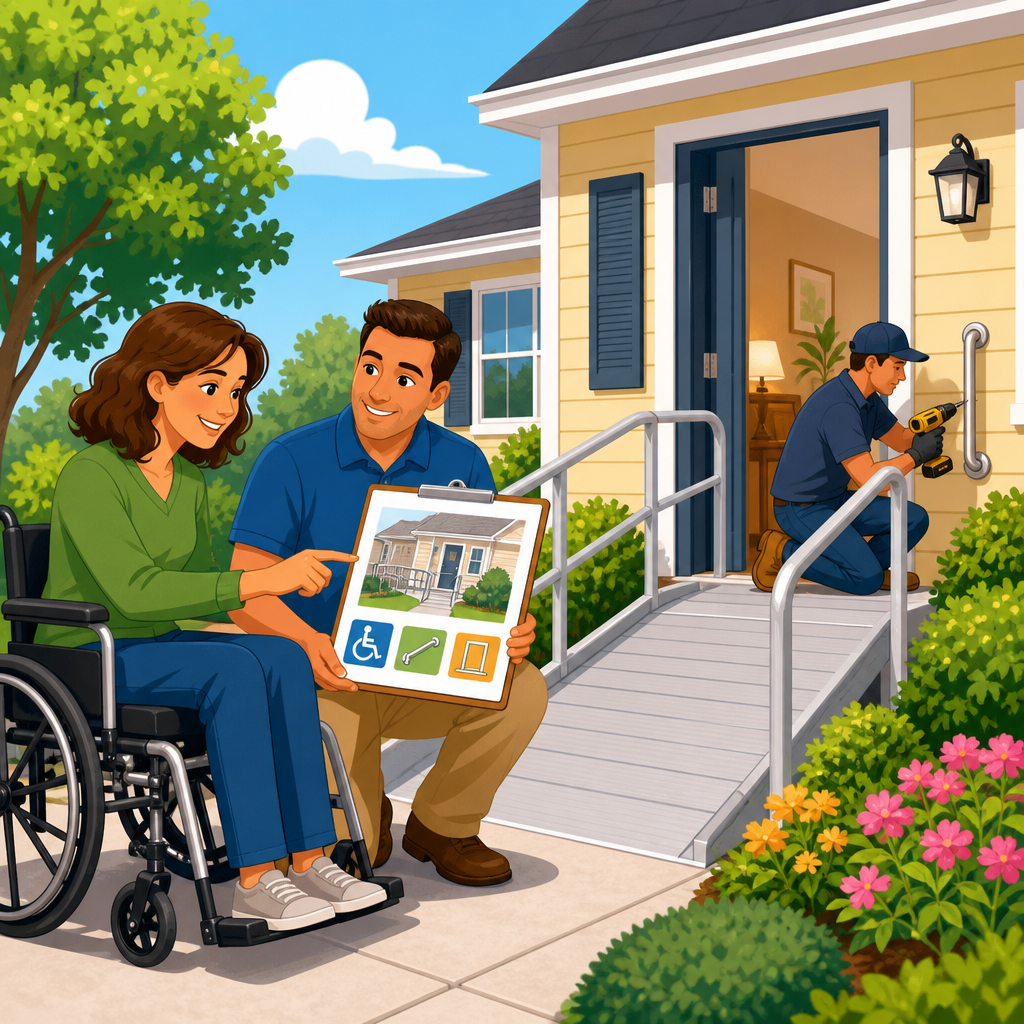
Chair lift coverage sits within a larger financing picture. Families considering a stair lift often also need to compare wheelchair ramps, vertical platform lifts, walk-in showers, transfer aids, and bedroom relocation costs. The right choice depends on diagnosis, prognosis, home design, caregiver support, and budget. A person with a progressive neurologic condition may outgrow a stair lift and ultimately need a wheelchair-accessible first-floor space or a platform lift. Someone recovering from joint replacement may only need a temporary solution. Funding strategy should match that timeline.
This is why a hub article matters. The question “does insurance cover chair lifts?” cannot be answered well in isolation. It connects to Medicaid waiver rules, Medicare’s equipment definitions, veterans benefits, tax treatment of medical home improvements, and the total cost of aging in place. For readers exploring cost and financing options, the next step is to review the narrower topics linked from this hub: Medicaid waiver eligibility, Medicare exclusions for home modifications, grants for home accessibility, stair lift financing, and how to compare quotes from reputable dealers. Looking at those related issues together leads to better decisions and fewer expensive surprises.
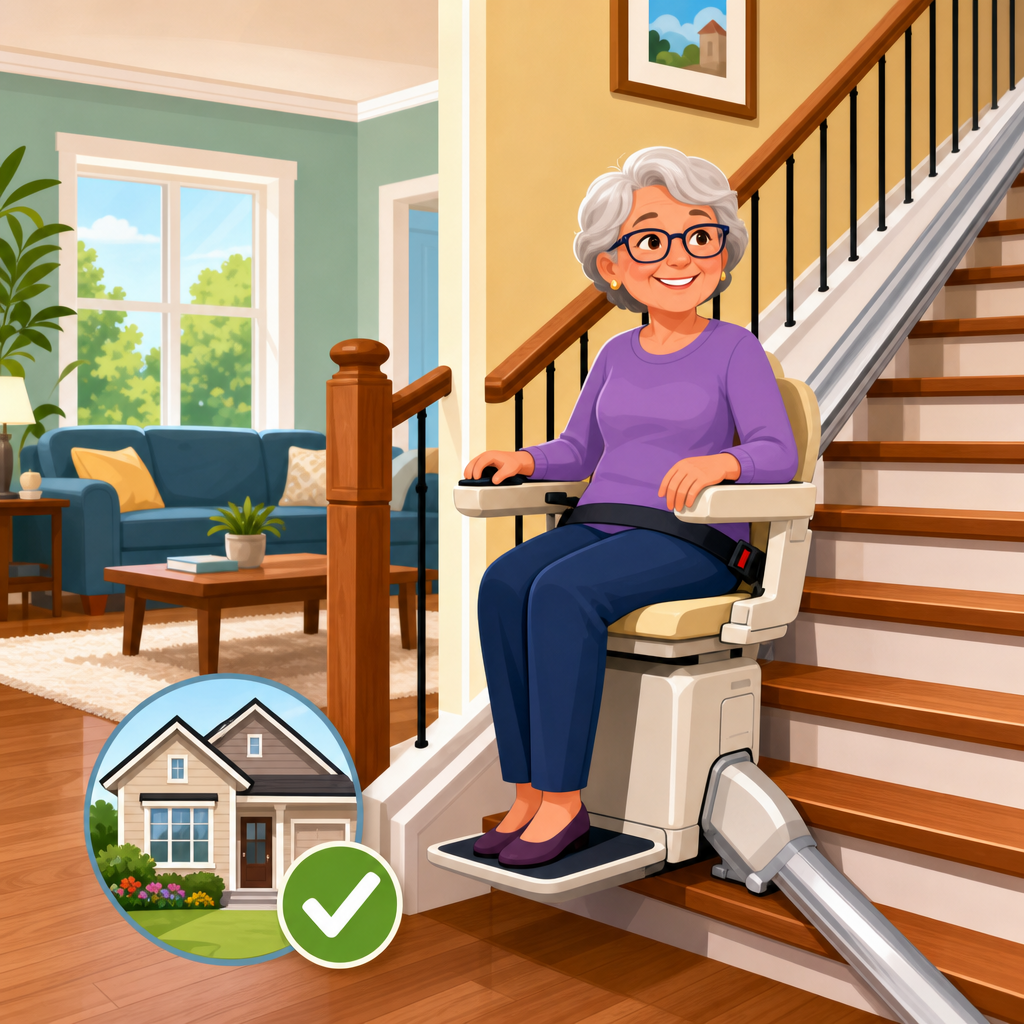
The key takeaway is straightforward. Standard health insurance usually does not cover stair chair lifts, but Medicaid sometimes can through waiver or home modification pathways when strong medical necessity and cost-effectiveness are documented. Medicare coverage is generally limited, private insurance often excludes home modifications, and alternative funding sources may fill the gap. Start with a therapist assessment, gather detailed vendor quotes, contact your state Medicaid or managed care coordinator, and appeal denials with specific evidence. A careful funding plan can turn a chair lift from an overwhelming expense into a practical step that keeps a home safer, more accessible, and livable.
Frequently Asked Questions
Does Medicaid cover mobility equipment like chair lifts, stair lifts, and other accessibility devices?
Medicaid may cover certain types of mobility equipment, but coverage depends heavily on the state program, the medical necessity of the equipment, and how the item is classified. In general, Medicaid is more flexible than standard private insurance and Original Medicare when it comes to helping people remain safe and functional at home. However, that does not automatically mean every home accessibility product is covered. Many state Medicaid programs will cover durable medical equipment such as wheelchairs, walkers, hospital beds, patient lifts, and similar medically necessary devices when prescribed by a qualified provider. Stair lifts and chair lifts installed in a home often fall into a more complicated category because they may be treated as home modifications rather than standard medical equipment.
In some cases, Medicaid may help pay for a stair lift through a Home and Community-Based Services waiver, a state-specific long-term services program, or another benefit designed to prevent institutional care. These programs are intended to help eligible individuals stay in their homes safely instead of moving into a facility. That means coverage is usually tied not only to medical need, but also to functional limitations, financial eligibility, and the rules of the specific Medicaid plan. The best approach is to contact the state Medicaid office or managed care plan directly and ask whether the item is covered under durable medical equipment benefits, waiver services, or home modification benefits.
Why are stair chair lifts often not covered the same way as wheelchairs or other durable medical equipment?
The key issue is classification. Insurance programs often distinguish between equipment that directly treats or manages a medical condition and modifications that improve access within the home. Wheelchairs, scooters, and walkers are usually considered durable medical equipment because they are medically necessary devices used to support mobility across settings. A stair chair lift, by contrast, is frequently viewed as a structural or environmental adaptation to the home. Because of that distinction, many insurers do not cover it under standard medical equipment benefits, even if it is clearly helpful to the person using it.
That said, the line is not always absolute under Medicaid. While a stair lift may not be approved through a basic durable medical equipment benefit, it may still be considered under programs that fund home accessibility improvements for people with disabilities or chronic mobility limitations. Medicaid is designed not only to pay for treatment, but in many cases to support long-term functioning and independence. If a stair lift is necessary to access a bedroom, bathroom, or main living area and helps prevent falls or avoid nursing home placement, a state Medicaid program may be more open to reviewing it under a waiver or home modification benefit. This is why documentation matters so much: families often need to show how the equipment supports health, safety, and the ability to remain at home.
What does Medicaid usually require before approving mobility equipment coverage?
Most Medicaid programs require clear proof that the equipment is medically necessary. That usually starts with an evaluation by a physician, therapist, or other qualified clinician who can document the individual’s diagnosis, mobility limitations, fall risk, and daily functional needs. The provider may need to explain why the equipment is required for safe movement within the home, why simpler or less expensive alternatives are not enough, and how the item will improve health outcomes or prevent complications. For standard mobility devices, the process may be relatively straightforward. For more specialized equipment or home-related accessibility items, the review is often more detailed.
Families should also expect Medicaid to ask for supporting paperwork such as a prescription, letter of medical necessity, home assessment, supplier quote, and prior authorization request. If the equipment is being considered through a waiver program, additional eligibility steps may apply, including proof that the individual meets nursing-home-level care criteria or other program-specific standards. In many states, the request must go through an approved provider or Medicaid-contracted supplier. Because requirements vary so much, it helps to gather complete records early and ask the Medicaid caseworker exactly what documentation is needed before submitting the request.
If Original Medicare usually does not cover a home stair lift, can Medicaid still help pay for it?
Yes, it is possible. Original Medicare generally does not cover stair lifts installed in the home because they are usually not classified as durable medical equipment. Medicaid operates under a different framework, especially for people who qualify for community-based long-term care services. If someone is eligible for both Medicare and Medicaid, Medicaid may still provide assistance where Medicare does not, depending on the state and the specific benefit category involved. This is one of the most important distinctions for families researching how to make a home safer for someone with limited mobility.
For dual-eligible individuals or people enrolled in Medicaid managed care, the path to coverage may involve more than one program layer. The stair lift might not be payable as a standard medical claim, but it could be considered under a waiver, an environmental accessibility adaptation benefit, or a state program intended to reduce institutional care costs. In practical terms, that means a denial from Medicare does not necessarily end the conversation. Families should ask whether Medicaid offers home modification assistance, personal care support programs, or community transition benefits that can help fund accessibility equipment that falls outside traditional Medicare rules.
How can families improve the chances of getting Medicaid approval for mobility equipment?
The strongest applications are specific, well documented, and tied directly to health and safety needs. Families should start by working with the person’s doctor, physical therapist, or occupational therapist to build a clear record of why the equipment is necessary. Instead of describing the item as a convenience, it is much more effective to explain the functional problem it solves. For example, if a person cannot safely reach a bedroom or bathroom without using stairs, has a history of falls, or is at risk of needing facility placement without home access improvements, those details should be documented clearly. Medicaid reviewers are more likely to approve requests that show the equipment is essential to daily living and helps avoid more costly care.
It also helps to contact the Medicaid plan before buying anything. Ask whether prior authorization is required, whether only certain vendors are approved, and whether the request should be filed under durable medical equipment, home modifications, or waiver services. Keep copies of every prescription, assessment, denial, and appeal notice. If an initial request is denied, families should not assume the answer is final. Many denials happen because of missing documentation, incorrect coding, or filing under the wrong benefit category. An appeal with additional medical support, or a resubmission through a more appropriate Medicaid program, can sometimes lead to approval.