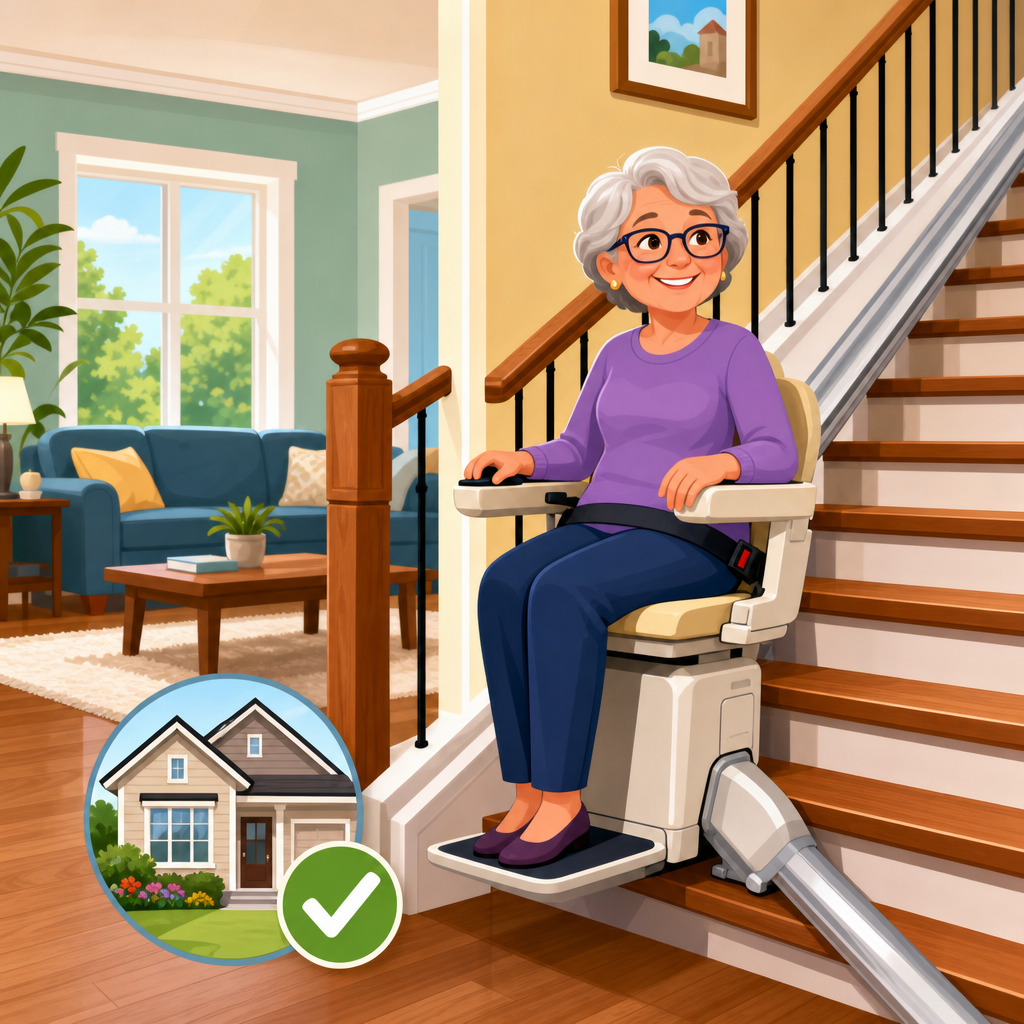
Stair lift financial assistance for low-income homeowners can come from public benefits, nonprofit grants, housing rehabilitation funds, veterans’ programs, and disease-specific charities, but the right source depends on why the lift is needed, who owns the home, and whether the funding can pay for equipment, installation, or both. A stair lift is a motorized chair or platform that travels along a rail mounted to a staircase, allowing a person with limited mobility to move safely between floors without climbing steps. For many households, it is not a convenience purchase. It is a home accessibility modification that reduces fall risk, supports aging in place, and can delay or prevent a move into assisted living. In my work with families comparing payment options, the biggest barrier is rarely interest in the equipment. It is figuring out which assistance programs are real, which rules apply, and how to combine partial funding sources without losing time.
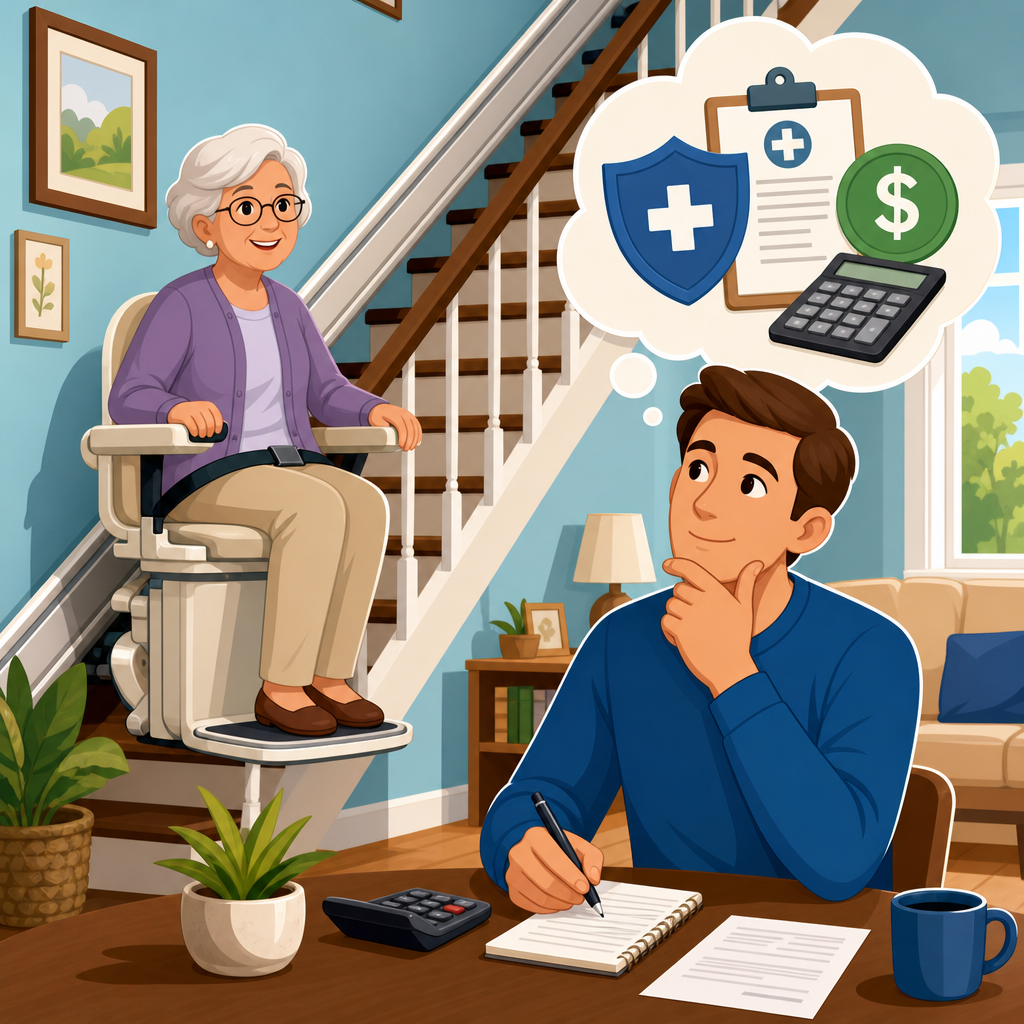
That confusion matters because stair lifts usually cost several thousand dollars. A straight stair lift often lands in the range of about $2,500 to $6,000 installed, while a curved model commonly starts much higher because the rail is custom built to the staircase. Additional electrical work, power swivel seats, heavy-duty capacity, and outdoor weather protection can increase the total. For a low-income homeowner, even the lower end of that range can be unaffordable. Yet waiting has a cost too. Falls on stairs are a major source of injury for older adults, and repeated near-falls often force people to sleep downstairs, avoid bathing, or depend heavily on relatives. That is why grants and assistance programs are worth pursuing early, before a short-term mobility problem becomes a housing crisis.
This article serves as a hub for grants and assistance programs under the broader cost and financing conversation. It explains where to look first, how eligibility usually works, what documents programs request, and which funding paths are most practical for owner-occupied homes. It also clarifies an important point many homeowners miss: Medicare generally does not pay for stair lifts because they are usually treated as home modifications rather than durable medical equipment, but Medicaid waiver programs, state assistive technology resources, Veterans Affairs benefits, and local housing agencies may help in specific cases. If you need a clear starting map for stair lift financial assistance, the sections below cover the programs most likely to produce real funding.
Start with public programs tied to health, disability, and housing
The strongest first stop for low-income homeowners is usually a public program with an established accessibility mandate. In practice, that means checking Medicaid home and community-based services waivers, state non-Medicaid disability programs, Area Agencies on Aging, and local housing rehabilitation offices. These programs vary by state and county, but they exist specifically to keep people safe at home. In cases I have seen move fastest, the homeowner or family member starts by framing the stair lift as a medically necessary accessibility modification tied to safe home access, not as a retail purchase. That wording matters because many agencies budget for fall prevention, independent living, and avoidance of institutional care.
Medicaid is one of the most important places to look, especially for people who already qualify based on income and assets. Traditional Medicaid rules differ from waiver programs, but many states offer home and community-based services that can cover environmental modifications when they prevent nursing home placement. Stair lifts are not approved in every state or every waiver, and some programs prefer ramps, first-floor living adjustments, or less expensive alternatives first. Still, when a physician, occupational therapist, or case manager documents that the individual cannot safely reach an essential bathroom or bedroom, funding becomes much more plausible. The process usually involves an assessment, a service plan, contractor bids, and proof that the work is cost effective compared with institutional care.
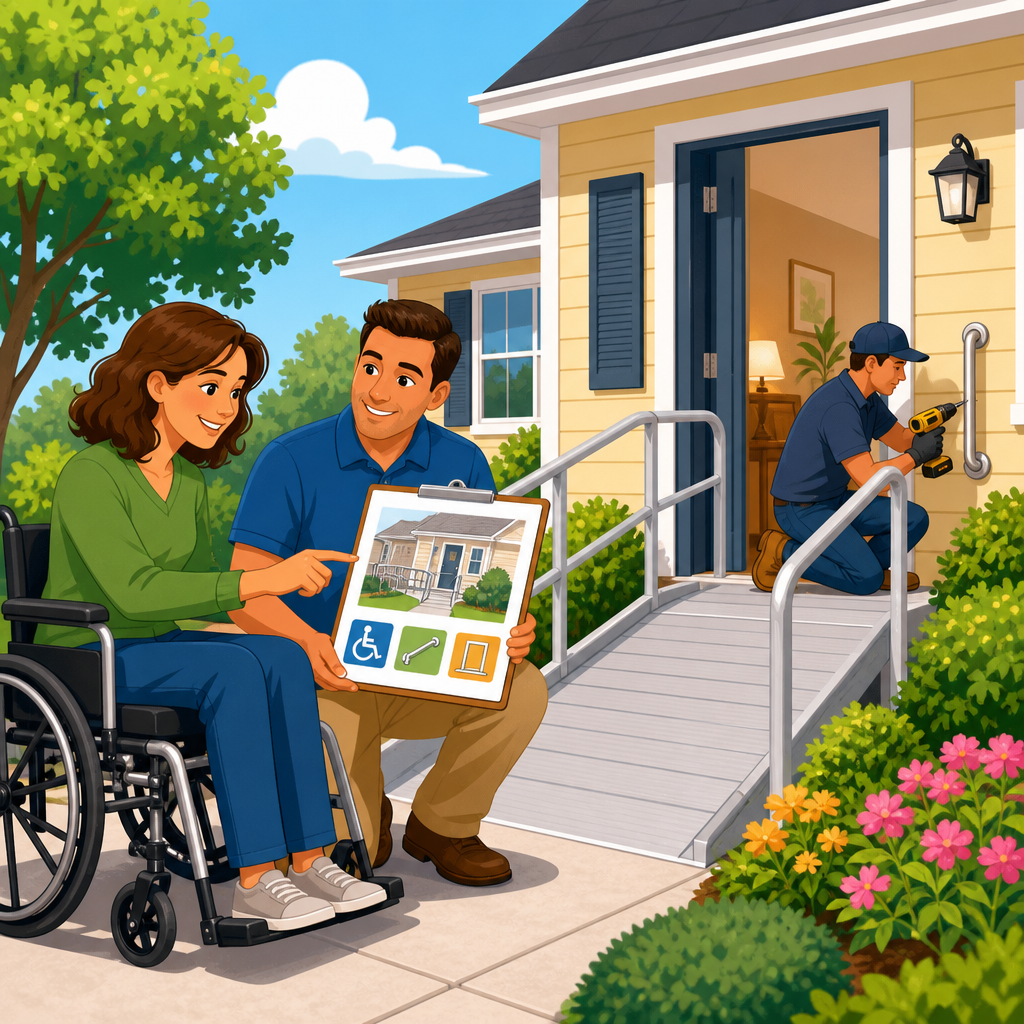
Housing-focused aid can be just as valuable. Many cities and counties administer Community Development Block Grant funds, HOME funds, or local housing trust money for owner-occupied repair and accessibility work. These programs often have income caps based on area median income and may prioritize seniors, people with disabilities, and households facing code or safety issues. Unlike health programs, housing offices may be more comfortable paying for the installation itself, electrical updates, or related carpentry. The tradeoff is that funding cycles can be seasonal and waitlists can be long. Ask specifically whether the jurisdiction has an accessibility modification grant, emergency repair program, or deferred forgivable loan for owner-occupants.
Area Agencies on Aging deserve attention even when they do not directly write checks. They often know the local nonprofit landscape, state respite funds, caregiver support grants, and home modification initiatives that do not appear in a basic web search. Centers for Independent Living can play a similar role for disabled adults of any age. These organizations frequently help with benefits navigation, home assessments, and referrals to funding sources that ordinary stair lift dealers do not track closely.
Understand the major funding sources and what each one typically pays for
Homeowners save time when they match their application to the right funding category. A veteran with a service-connected disability should not begin with the same strategy as an older adult seeking county aging services, and a homeowner with ALS may have disease-specific options that a general housing office would never mention. The table below summarizes the most common sources and the practical limits I regularly see during funding searches.
| Funding source | Who it best fits | What it may cover | Common limitations |
|---|---|---|---|
| Medicaid waivers or state HCBS programs | Low-income disabled adults or seniors meeting state criteria | Environmental modifications, assessments, sometimes installation | State-specific rules, waitlists, prior authorization, medical necessity documentation |
| Local housing rehabilitation or accessibility grants | Owner-occupants under local income limits | Equipment, labor, electrical work, related repairs | Annual funding cycles, geographic limits, contractor requirements |
| Veterans Affairs housing adaptation benefits | Eligible veterans, often with service-connected disabilities | Accessibility modifications, depending on program and approval | Eligibility complexity, paperwork, not every case fits stair lift installation |
| State assistive technology programs | Residents needing adaptive equipment financing or reuse options | Low-interest loans, device reuse, demonstrations | May not be a grant, inventory varies, used equipment may have fit limits |
| Nonprofit and disease-specific charities | People with qualifying diagnoses or urgent financial hardship | Small grants, gap funding, referrals | Limited budgets, competitive awards, narrow eligibility |
| Medicare Advantage supplemental benefits | Some enrolled beneficiaries in qualifying plans | Occasional limited home support benefits | Not standard Medicare coverage, highly plan-specific, often modest |
Veterans should review housing adaptation programs through the U.S. Department of Veterans Affairs, especially Specially Adapted Housing and Special Housing Adaptation pathways when severe disability criteria are met. HISA, the Home Improvements and Structural Alterations benefit, is another program to examine because it can assist with medically necessary home improvements prescribed by a VA physician. Not every stair lift request is approved under every benefit, and service connection can affect available amounts, but veterans often have better funding paths than civilian homeowners realize. I have seen families overlook VA routes entirely while trying to patch together small community grants, which is why veteran status should be one of the first screening questions.
State assistive technology programs are less famous but often useful. Every state has an assistive technology act program that may offer device demonstrations, financing assistance, reutilization programs, and referrals. A stair lift is not always available through reuse because rails are staircase-specific, but straight lifts can sometimes be sourced used more easily than curved systems. If a program cannot provide direct funding, it may still connect the homeowner with a low-interest alternative loan program or a nonprofit partner.
Know which programs usually do not pay, and why
Many homeowners begin by asking whether Medicare covers a stair lift. In most cases, original Medicare does not. The reason is regulatory, not personal. Medicare Part B generally covers durable medical equipment used in the home when it meets specific criteria, but a stair lift is usually classified as a home modification rather than a covered piece of durable medical equipment. Even when a doctor prescribes it, that prescription alone does not create Medicare coverage. This is one of the most persistent misunderstandings in the market, and it causes families to delay better options while waiting for an approval that is unlikely to come.
Medicare Advantage plans are different because some offer supplemental benefits beyond original Medicare. However, those benefits are plan specific and often limited. A plan may provide in-home support, safety devices, or broader supplemental benefits for chronically ill members, but a full stair lift installation is still uncommon. The right approach is to call the plan directly, ask whether home accessibility modifications are covered under any supplemental benefit, and request a written explanation. Treat it as a possible bonus source, not the foundation of the funding strategy.
Homeowners insurance also rarely pays for stair lifts unless the need arises from a covered claim and the policy language supports part of the work. Long-term care insurance may help in select circumstances if the contract covers home modifications or care alternatives, but policy wording drives everything. Reverse mortgages and home equity products can solve affordability issues for some homeowners, yet they are financing tools, not assistance programs, and they require careful counseling because fees, repayment rules, and home equity risk matter.
Build a stronger application with the documents agencies expect
Most assistance applications fail for ordinary reasons: missing income proofs, vague medical notes, incomplete contractor bids, or no explanation of why a stair lift is the least restrictive effective option. The strongest applications are specific. They identify the user’s diagnosis or functional limitation, describe the staircase barrier, explain which essential rooms are inaccessible, and include a clinician statement connecting the lift to safety and independence. An occupational therapy home assessment can be especially persuasive because it translates daily limitations into documented environmental needs.
Programs commonly request proof of homeownership, property insurance, income statements, tax returns, bank records, benefit award letters, and identification for all household members. Housing agencies may also require a deed, mortgage statement, and proof that property taxes are current. Contractor requirements vary. Some agencies want one bid; others want two or three from licensed installers. Curved stair lifts can complicate comparison shopping because custom rail designs differ by manufacturer, so ask whether the agency will accept brand-specific bids when the staircase geometry limits equivalent comparisons.
Photographs help. Clear images of the staircase, the user’s mobility aid, and any current sleeping arrangement downstairs can support urgency. So can incident records if falls or near-falls have already happened. I also advise families to write a short narrative in plain language: who needs the lift, what daily tasks are blocked, why the home cannot be reconfigured easily, and what will happen if no modification is made. Good caseworkers can infer some of this, but a concise narrative prevents the file from becoming just another stack of estimates and forms.
Use local nonprofits, community groups, and disease organizations as gap funding
Even when no single program covers the full cost, layered funding often works. Local nonprofits, faith-based organizations, civic clubs, and disease-specific foundations may contribute toward the deductible, permit fee, or installation gap after a larger agency approves part of the project. National organizations tied to conditions such as multiple sclerosis, ALS, spinal cord injury, or muscular dystrophy sometimes maintain resource lists, emergency assistance funds, or chapter-level grant programs. Independent Living Centers and hospital social workers often know which local groups are currently active and which have paused grants due to budget limits.
Rebuilding Together affiliates, volunteer home repair ministries, and local senior service charities can also matter, especially when the funding need includes related carpentry or electrical work. Some will not buy the stair lift itself but will prepare the site, widen access, improve lighting, or make landings safer so a formal grant can stretch further. If a household is denied for one program, that denial letter may still help unlock charitable aid by documenting unmet need. Persistence matters here. Small grants are fragmented, but two or three modest awards can close the gap that stops an installation.
For homeowners who need help quickly, used equipment is worth discussing carefully. Straight stair lifts can sometimes be purchased reconditioned at a lower price, though the rail is usually cut to length and the seat, battery, and drive components should be inspected and warranted by a reputable dealer. Curved lifts are less portable between homes because the rail follows the exact staircase shape. A funding agency may approve a new straight unit more readily than a used curved unit simply because serviceability and fit are clearer.
Plan next steps strategically to improve approval odds
The best results come from a simple sequence. First, confirm the user’s functional need with a doctor, therapist, or case manager. Second, contact the state Medicaid office, Area Agency on Aging, Center for Independent Living, and city or county housing department the same week. Third, request a home assessment and at least one itemized bid from a licensed stair lift dealer. Fourth, ask every agency whether other local funds can be combined with theirs. Fifth, document deadlines and follow up consistently. Homeowners who treat the search like a coordinated project, rather than a series of isolated phone calls, usually find more options and lose less time.
Stair lift financial assistance for low-income homeowners is available, but it is rarely automatic and almost never found in one place. The most reliable path is to pursue health-related, disability-related, and housing-related programs at the same time, then fill remaining gaps with veteran benefits, assistive technology resources, and nonprofit support. The payoff is substantial: a safer home, preserved independence, and a realistic chance to remain in place without exhausting savings. Start by gathering medical documentation, proof of income, and homeownership records, then contact your local aging, disability, and housing agencies today to identify the programs that match your situation.
Frequently Asked Questions
What types of financial assistance can help low-income homeowners pay for a stair lift?
Low-income homeowners may be able to piece together stair lift funding from several different sources, and the best option usually depends on the reason the lift is needed and the homeowner’s eligibility. Common places to look include Medicaid-related home and community-based services programs, state assistive technology programs, local housing rehabilitation grants, Area Agencies on Aging, veterans’ benefits, nonprofit organizations, and disease-specific charities. Some communities also offer deferred-payment loans or forgivable loans for accessibility improvements through city or county housing departments. In certain cases, a charitable foundation or local service organization may help cover part of the cost when government programs do not fully pay.
It is important to understand that not every funding source treats a stair lift the same way. One program may pay for the equipment but not installation, while another may cover home modifications only if the person is trying to avoid nursing home placement. Some programs focus on older adults, some on people with disabilities of any age, and others on veterans or people with specific medical conditions such as multiple sclerosis or muscular dystrophy. Because of that, homeowners should ask very specific questions: Does the program cover straight stair lifts, curved stair lifts, or platform lifts? Is a prescription or medical necessity letter required? Must the applicant own and occupy the home? Are income limits based on household size? Getting clear answers early can save time and help narrow the search to the most realistic funding options.
Does Medicare or Medicaid pay for a stair lift?
Medicare usually does not pay for stair lifts in the way many families hope. In most situations, Original Medicare does not classify a stair lift as durable medical equipment that it routinely covers for home use, so beneficiaries are often left looking elsewhere. Some Medicare Advantage plans may offer limited supplemental benefits related to home safety or support services, but coverage for a stair lift is not standard and varies by plan. That means it is still worth calling the plan directly and asking whether any home modification or mobility-related supplemental benefit is available, but homeowners should not assume Medicare will cover the purchase or installation.
Medicaid can sometimes be a more promising route, especially through waiver programs or home and community-based services designed to help people remain safely at home instead of moving into institutional care. In many states, Medicaid-related programs may fund environmental accessibility adaptations when they are considered medically necessary. However, rules vary widely by state. A stair lift might be covered in one state under a waiver and denied in another, or it may be subject to spending caps, waiting lists, prior authorization, and documentation requirements. Applicants may need a doctor’s statement, a functional assessment, income verification, and proof that the modification is necessary for safe access within the home. If Medicaid is part of the household’s financial picture, contacting the state Medicaid office, a Medicaid waiver case manager, or the local aging and disability resource center is often one of the smartest first steps.
Where should homeowners start looking if they need help quickly?
If a stair lift is needed soon, homeowners should start with organizations that can point them to multiple programs at once rather than applying randomly. A strong first stop is the local Area Agency on Aging, aging and disability resource center, or county social services office. These organizations often know which local, state, and nonprofit programs are active, whether there are waiting lists, and what documents are usually required. Local housing departments are also important, especially if the homeowner meets low-income guidelines and the stair lift may qualify as an accessibility-related home modification under a rehabilitation or safe-at-home program.
It can also help to contact the stair lift dealer directly and ask whether they have experience working with grant-funded purchases, veterans’ programs, or nonprofit referrals. Reputable dealers often know which local funding sources are most realistic and may be able to provide itemized estimates, model details, and installation breakdowns needed for applications. Homeowners should gather a doctor’s note, proof of income, proof of homeownership, photographs of the staircase, and any disability documentation before applying. Having these materials ready can speed up the process. If the need is urgent but funding is delayed, ask whether there are refurbished or rental stair lifts available, since these options may reduce costs while longer-term financial assistance is being arranged.
Can veterans get help paying for a stair lift?
Yes, veterans may have access to some of the strongest stair lift funding options, depending on their service history, disability status, and medical needs. The U.S. Department of Veterans Affairs offers several programs that may help with home accessibility improvements, including grants intended to make a home safer and more functional for veterans with service-connected or certain non-service-connected disabilities. In some situations, a stair lift may be considered part of a medically necessary accessibility plan if it helps the veteran move safely within the home. VA health care teams, prosthetics departments, and social workers can often explain what is available and what clinical documentation is required.
Veterans should not rely on one benefit name alone, because multiple VA pathways may be relevant depending on the circumstances. Some grants focus on adapting the home itself, while other supports may be tied to broader disability or housing needs. It is also worth checking with Veterans Service Organizations, county veterans service officers, and nonprofit groups that support disabled veterans, since they may assist with applications or identify supplemental funding if a VA grant does not cover the full project cost. As with other aid sources, the details matter: whether the veteran owns the home, whether the stair lift is straight or curved, whether structural work is needed, and whether the home is the primary residence can all affect eligibility and approval.
What documents and eligibility factors usually matter most when applying for stair lift assistance?
Most stair lift assistance programs look at three core issues: financial need, medical necessity, and housing status. Financial need is often measured through household income, assets in some cases, and participation in means-tested programs. Medical necessity usually requires documentation showing that the person has limited mobility and that a stair lift is needed for safe movement between levels of the home. Housing status matters because many programs help only owner-occupants, while some require that the property be a primary residence and meet basic safety or code standards. If the applicant is not the homeowner, options may still exist, but they often involve different rules or landlord approval.
Typical paperwork includes proof of income, tax returns or benefit award letters, proof of homeownership, identification, a physician’s prescription or letter of medical necessity, contractor or dealer estimates, and sometimes a home assessment. Some programs also ask whether less costly alternatives have been considered, whether other funding sources were denied, and whether the staircase layout requires a standard or custom lift. Being organized can make a real difference. Homeowners should keep copies of every estimate, letter, and application, and they should ask each program whether funds can be combined with other aid. In many real-world cases, the final stair lift purchase is paid for through a mix of sources rather than one single grant, so understanding exactly what each program will and will not cover is essential.