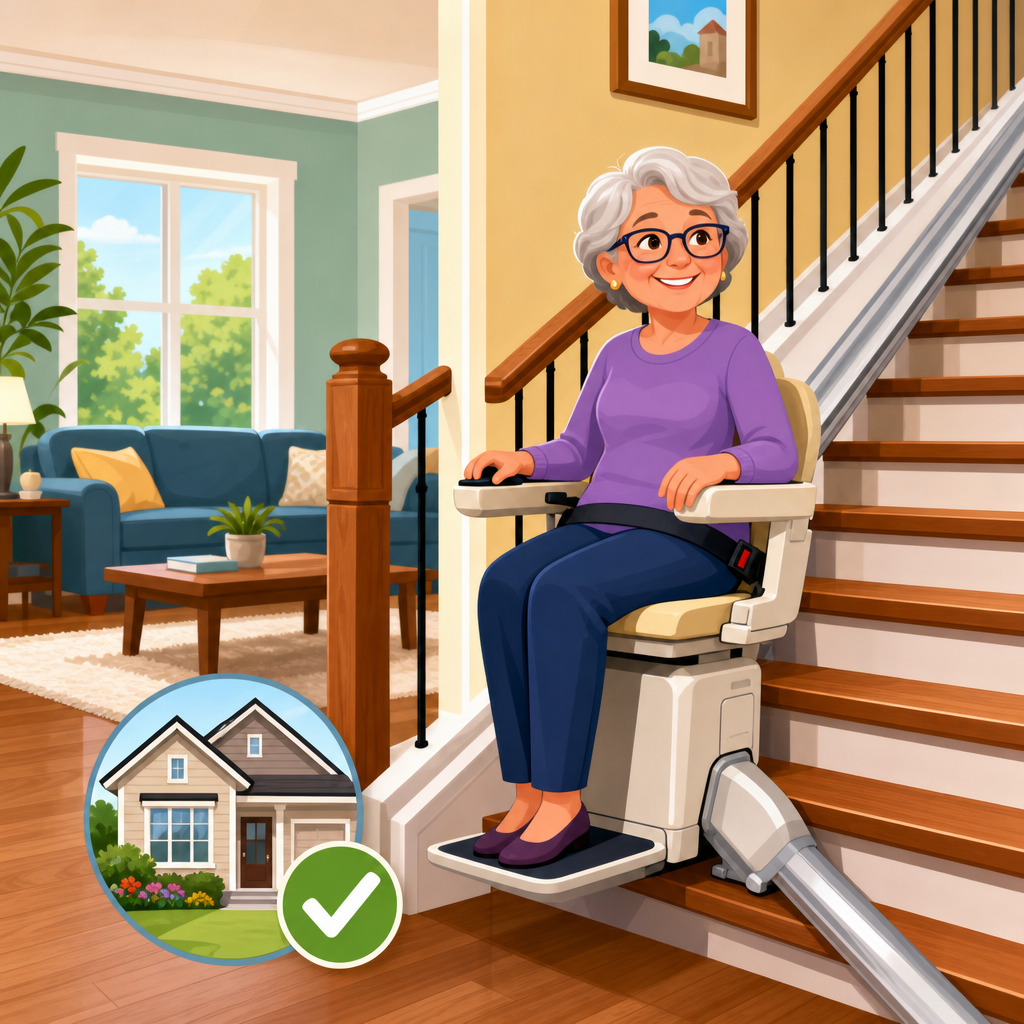
Paying for a stair lift is often the hardest part of staying safely at home, and state assistive technology programs are one of the most overlooked resources for reducing that cost. A stair lift is a motorized chair or platform that travels along a rail mounted to a staircase, helping people with limited mobility move between floors without climbing steps. State assistive technology programs are publicly funded initiatives, established in every U.S. state and territory under the federal Assistive Technology Act, that improve access to devices and services supporting daily living. For many households, these programs can mean low-interest loans, device reuse options, demonstrations, short-term loans, and guidance that lowers out-of-pocket stair lift expenses.
This topic matters because stair lifts are rarely cheap and are not always covered by traditional health insurance. A straight stair lift commonly costs several thousand dollars installed, while curved models can cost much more because rails are custom built for the staircase. In practice, I have seen families focus only on Medicare, learn that original Medicare usually does not pay for stair lifts because they are considered home modifications rather than durable medical equipment, and then assume they have no other path forward. That is where assistive technology programs become important. They do not always hand out direct grants, but they frequently connect residents to financing, refurbished equipment, or partner agencies that can close a large funding gap.
As the hub page for grants and assistance programs, this guide explains what state assistive technology programs are, how they may help with stair lift costs, what eligibility usually looks like, how these programs compare with other funding sources, and how to build a realistic application plan. It also points to the types of support often found through Medicaid waiver programs, vocational rehabilitation agencies, Centers for Independent Living, Area Agencies on Aging, and nonprofit home modification initiatives. If you are researching cost and financing options for a stair lift, understanding this state-level system is essential because it often serves as the entry point to several other forms of assistance.
What state assistive technology programs do and why they matter for stair lift funding
Every state and territory has an assistive technology program funded through the federal Assistive Technology Act. Although services vary, the core mission is consistent: increase access to assistive devices and related supports for people with disabilities and older adults. In plain terms, these programs help residents find, try, borrow, finance, or reuse equipment that improves safety and independence. Stair lifts may fall within that mission when mobility limitations create barriers to entering, leaving, or using the home safely.
The most important point is that these programs are usually access programs, not simple grant offices. Some people expect a direct check for a stair lift and stop there. In reality, I have found that the strongest programs help in several practical ways at once. A resident may receive a device demonstration to confirm that a stair lift is the right solution, a referral to a home accessibility evaluator, a low-interest financial loan, and a lead on a refurbished unit through an equipment reuse network. Even when no direct grant exists, combining those services can materially reduce the total project cost.
State programs also matter because they understand local funding ecosystems. A national article can explain broad options, but state program staff often know which county agencies have emergency home modification funds, which nonprofit chapters help veterans or older adults, and which lenders participate in alternative financing specifically for accessibility equipment. That local knowledge saves time and prevents applications from being submitted to the wrong agencies.
Types of stair lift help you may find through these programs
Support usually falls into a few predictable categories. The first is alternative financing. Many state assistive technology programs operate or partner with low-interest loan programs designed for disability-related purchases. These loans may be more flexible than standard consumer credit because they are built around accessibility needs rather than broad retail lending criteria. Terms vary, but the goal is to make a high-cost item such as a stair lift manageable over time.
The second category is equipment reuse. Some states maintain reuse exchanges, device donation programs, or referral networks for refurbished mobility equipment. Stair lifts are less commonly reused than portable devices because they must fit a specific staircase and require safe reinstallation, but reuse programs can still help by identifying pre-owned straight stair lift inventory or approved removal and reinstall options. In the field, straight lifts are the most realistic candidates for reuse; curved lifts are custom and rarely transferable without major cost.
The third category is device demonstration and short-term loan. Before spending thousands of dollars, families need to confirm that a stair lift matches the user’s transfer ability, balance, and long-term plans. Demonstration centers and borrowing programs can prevent expensive mistakes. If a resident ultimately needs a vertical platform lift, ramp, or first-floor bathroom modification instead, discovering that early protects limited funds.
The fourth category is information and referral. This sounds basic, but it is often the service with the highest real-world value. Staff can point applicants toward Medicaid home and community-based services waivers, state unit on aging programs, housing rehabilitation grants, community development block grant-funded repair programs, and disease-specific nonprofits. That coordination is especially useful when stair lift funding requires stacking several sources together.
| Program support type | How it may reduce stair lift cost | Common limitation |
|---|---|---|
| Low-interest loan | Lowers upfront burden by spreading payments over time | Still requires repayment and credit review |
| Equipment reuse | May provide refurbished straight lift components at lower cost | Limited inventory and fit constraints |
| Demonstration or trial | Prevents paying for the wrong accessibility solution | Not direct funding |
| Referral coordination | Connects users to grants, waivers, and local repair funds | Application processes can be slow |
Who qualifies and how eligibility usually works
Eligibility differs by state and by service type, but most programs are broader than people expect. Many serve individuals with disabilities of any age, older adults, family caregivers, and professionals helping a resident access assistive technology. Income limits may apply for financial assistance or grant-linked services, yet demonstration, information, and referral services are often available regardless of income. That makes state assistive technology programs a strong starting point even for middle-income households that assume they earn too much for help.
For stair lift-related assistance, programs often look at functional need rather than diagnosis alone. They may ask whether the applicant can safely use stairs, whether the home layout creates a daily barrier, whether a physician, occupational therapist, or physical therapist has documented mobility limitations, and whether the proposed solution supports community living. Documentation commonly includes proof of residence, income information for means-tested aid, contractor estimates, and a clinical note explaining why the modification is needed.
One nuance matters here: need for a stair lift does not automatically mean a stair lift is the best funded option. Some agencies will ask whether relocating sleeping space to the first floor, installing grab bars, adding a ramp, or pursuing a bathroom modification would address the same risk more cost-effectively. That is not obstruction; it is standard stewardship of public funds. Applicants who present a clear functional case, a professional recommendation, and competitive bids usually move faster than applicants who only submit a product brochure.
How state programs connect with Medicaid, aging services, and disability networks
State assistive technology programs rarely operate in isolation. The most successful stair lift funding cases typically involve coordination across several systems. Medicaid is a major one. While coverage rules differ by state, certain home and community-based services waivers may pay for environmental accessibility adaptations when the modification helps a person remain at home and avoid institutional care. Stair lifts are not universally covered, and some states exclude them or approve them only under narrow conditions, but waiver staff and assistive technology programs often know the workable pathways.
Older adults should also look at Area Agencies on Aging, state units on aging, and local senior home repair programs. These agencies may not advertise stair lifts specifically, yet they often administer caregiver support funds, minor home modification assistance, or referrals to county grant programs. I have seen cases where an assistive technology program supplied financing guidance while an aging agency covered part of the installation cost through a separate safety initiative.
Centers for Independent Living are another important partner. These community-based organizations, led by and for people with disabilities, regularly help consumers navigate housing access barriers and benefits systems. They may know local charitable funds, advocacy strategies for waiver denials, and trusted accessibility contractors. Vocational rehabilitation agencies can also matter if the stair lift directly supports employment, job training, or the ability to leave the home for work-related activity.
Veterans have additional routes. The U.S. Department of Veterans Affairs offers housing adaptation programs in certain circumstances, including grants connected to service-related disabilities. State assistive technology programs can still be useful here because they help veterans compare options, document need, and identify non-VA gap funding when grant amounts do not fully cover the project.
Limits, tradeoffs, and common misunderstandings
The biggest misunderstanding is assuming that every state assistive technology program offers direct grants for stair lifts. Many do not. Their value often lies in access, expertise, and funding coordination rather than direct cash awards. Another misconception is that any used stair lift is a bargain. In reality, reused equipment must be evaluated for rail fit, seat condition, battery health, service availability, and code-compliant installation. A low sticker price means little if the unit cannot be safely adapted to the staircase.
Timing is another tradeoff. Public and nonprofit assistance can take weeks or months, especially when an occupational therapy assessment, landlord approval, or multiple contractor bids are required. Families facing an urgent hospital discharge sometimes need an interim plan, such as a short-term loan, bridge financing, or a temporary first-floor living arrangement. State program staff are often candid about timelines, which helps applicants set realistic expectations.
There are also property issues. Renters may need written landlord approval. Homeowners in associations may need architectural review for exterior accessibility work, though stair lifts are usually interior installations. If the resident may move soon, buying a custom curved stair lift may be hard to justify compared with relocating a bedroom or exploring a single-level housing option. Good programs acknowledge these tradeoffs rather than pushing one answer for everyone.
How to apply and improve your chances of getting help
Start by contacting your state’s assistive technology program directly and asking four questions: Do you offer alternative financing for home access equipment, do you have an equipment reuse network that includes stair lifts, what partner agencies fund home modifications, and what documentation should I gather before applying? That conversation often determines the fastest route.
Next, build a complete file. Include a prescription or letter of medical necessity if available, a brief statement describing daily stair barriers, photos of the staircase, measurements, and at least two estimates from reputable stair lift dealers. If an occupational therapist has evaluated the home, include that report. Clear documentation turns a general request into a fundable accessibility case.
Finally, ask about blended funding. Many successful projects combine a state assistive technology loan, a local grant, family contribution, and dealer discount on installation or service. Keep notes on deadlines and contacts, and follow up consistently. If you are comparing broader stair lift financing options, use this grants and assistance hub as your starting point, then move into the specific articles on Medicaid, veterans benefits, nonprofit aid, and low-interest accessibility loans. The more organized your approach, the better your odds of turning a costly stair lift into an affordable home safety upgrade.
State assistive technology programs may not eliminate the full price of a stair lift, but they often unlock the practical support that makes the purchase possible. They help residents evaluate the right solution, find affordable financing, locate reuse opportunities, and connect with Medicaid waivers, aging services, independent living organizations, and local grant programs. For a product that can cost thousands of dollars and is frequently excluded from standard insurance coverage, that coordination is not minor help; it is often the difference between staying home safely and facing an unnecessary move.
The core takeaway is simple: do not stop at asking whether a stair lift is covered by Medicare or private insurance. Start with your state assistive technology program because it sits at the center of the broader grants and assistance landscape. Even when direct grant dollars are limited, the program can identify realistic next steps, warn you away from poor-fit solutions, and show you how to combine resources effectively.
If you are planning a stair lift purchase now, contact your state assistive technology program, request financing and referral information, and begin gathering bids and medical documentation today. Acting early gives you more funding options, more time to compare solutions, and a better chance of lowering the total cost of making your home accessible.
Frequently Asked Questions
What are state assistive technology programs, and how can they help pay for a stair lift?
State assistive technology programs are public programs available in every U.S. state and territory that help people find, try, borrow, reuse, and sometimes finance equipment that improves daily living. They were created under the federal Assistive Technology Act and are designed to expand access to devices for people with disabilities, older adults, caregivers, and families. While these programs do not always provide direct grants to buy stair lifts, they can still be extremely valuable when you are trying to manage the cost.
For example, many state programs operate low-interest loan programs, device demonstration centers, short-term equipment loan libraries, and device reutilization or exchange programs. In practical terms, that means a person who needs a stair lift may be able to compare models before buying, get guidance on what type of lift is appropriate for their staircase, locate refurbished equipment, or apply for financing with better terms than a standard credit card or unsecured personal loan. Some programs also help people identify additional funding sources, such as Medicaid waivers, vocational rehabilitation, veterans benefits, nonprofit grants, or local aging services.
One of the biggest benefits is that these programs can help you avoid costly mistakes. Stair lifts are major accessibility purchases, and the wrong model or rail configuration can create unnecessary expense. A state assistive technology program may help you understand whether a straight stair lift, curved stair lift, or platform lift is more appropriate, and whether there are safer or more affordable alternatives based on your home layout and mobility needs. Even when a program does not directly cover the full cost, the guidance and financing support it provides can substantially reduce the total financial burden.
Do state assistive technology programs give free stair lifts or direct grants for installation?
Sometimes, but not always. This is one of the most important things to understand before applying. Most state assistive technology programs are not structured as broad “free equipment” programs, and direct funding for a brand-new stair lift is less common than people expect. Instead, many programs focus on access, education, financing, and reuse. That means the help may come in the form of a low-interest loan, a refurbished unit through an equipment reuse program, or a referral to another agency that offers home modification funding.
In some states, there may be grant opportunities tied to specific populations or goals, such as helping older adults avoid nursing home placement, assisting people with disabilities to remain in the community, or supporting home accessibility for employment-related needs. However, eligibility rules can be narrow, funds may be limited, and waiting lists are possible. Installation costs may also be treated differently from equipment costs, so it is important to ask whether the program can assist with both the stair lift itself and the labor, rail customization, electrical work, and maintenance.
The best approach is to contact your state’s assistive technology program and ask very specific questions. Find out whether they offer financial assistance, device reutilization, loan financing, or partnerships with other agencies. Also ask whether they maintain a marketplace for used devices, work with certified accessibility contractors, or coordinate with Medicaid waiver case managers and Area Agencies on Aging. In many cases, the program’s real value is not just whether it gives away equipment, but whether it helps you piece together several forms of support to make the project affordable.
Who is eligible for help from a state assistive technology program for stair lift costs?
Eligibility varies by state and by the specific service being offered, but these programs are generally intended to serve people with disabilities, older adults with mobility limitations, family caregivers, and sometimes professionals helping a consumer obtain adaptive equipment. Unlike some benefit programs, access to device demonstrations, information and referral services, and equipment exchange listings may be broadly available even if you do not meet a strict income threshold. Financial assistance programs, however, often have additional requirements related to disability status, creditworthiness, residency, age, or intended use of the equipment.
For stair lifts specifically, a state program may ask for documentation showing that the equipment is medically or functionally necessary. This could include a note from a physician, occupational therapist, physical therapist, or another qualified professional explaining why climbing stairs is unsafe or impractical. If you are applying for a loan or grant through a partner program, you may also need proof of residence, income information, contractor estimates, and details about the home where the stair lift will be installed. Renters may need landlord approval, while homeowners may need to confirm that the staircase and structure can support the equipment safely.
It is also worth remembering that eligibility for one service within the program does not guarantee eligibility for every service. You might qualify to borrow equipment, receive technical guidance, or access a used-device exchange even if you do not qualify for direct financial assistance. Because each state administers its services differently, the smartest next step is to contact your state program directly and ask for a full breakdown of available options. Even if your situation falls outside one category, there may be another path to support through a related agency or partner organization.
How do I apply for stair lift assistance through a state assistive technology program?
The application process usually starts by locating your state or territory’s assistive technology program and contacting them by phone, email, or through an online intake form. From there, a staff member may ask about your mobility needs, the type of home you live in, whether your staircase is straight or curved, and what kind of assistance you are seeking. Some people need financing, while others are looking for reused equipment, professional guidance, or referrals to additional funding sources. The more detail you can provide at the start, the more useful the program’s recommendations are likely to be.
Before applying, it helps to gather basic documents such as a prescription or letter of medical necessity, one or more stair lift estimates, photos of the staircase, proof of state residency, and financial information if you are requesting a loan or grant. If the program operates a financial loan service, there may be a formal application with underwriting criteria. If the program offers equipment reuse or exchange, you may need to monitor listings, join a waiting list, or coordinate directly with a donor, vendor, or partner agency. Some states also have regional offices or partner organizations that can conduct home accessibility assessments or connect you with installers familiar with program requirements.
Be prepared to ask detailed questions during the process. Ask what services are available now, whether funds are limited, how long approval typically takes, and whether there are restrictions on the brand, installer, or type of stair lift. You should also ask whether the program can connect you with other resources if it cannot fully cover the cost. In many cases, the most successful applicants are those who treat the state assistive technology program as a starting point for a broader funding strategy rather than as the only possible source of help.
What other programs can be combined with a state assistive technology program to reduce stair lift costs?
State assistive technology programs often work best when combined with other funding sources. Because stair lifts can be expensive, especially for curved staircases or homes requiring custom installation, many families build a layered plan using several types of assistance. Common options include Medicaid Home and Community-Based Services waivers, state Medicaid home modification benefits, Veterans Affairs programs for eligible veterans, vocational rehabilitation services, Older Americans Act resources, local Area Agencies on Aging, nonprofit disability organizations, and community grant programs. Some homeowners also explore financing through state housing agencies or local accessibility modification initiatives.
In addition, equipment reuse and refurbishment can make a major difference. If your state assistive technology program maintains a device reuse network, you may be able to obtain a previously owned stair lift or locate parts and accessories at a lower cost. Manufacturer promotions, dealer discounts, charitable fundraising, and flexible payment plans may also help fill remaining gaps. For some households, a medical flexible spending account, health savings account, or tax deduction related to medically necessary home modifications may reduce out-of-pocket expenses, though it is wise to confirm tax treatment with a qualified professional.
The key is coordination. When speaking with a state assistive technology program, ask them to help you identify all possible funding avenues, not just their in-house services. A knowledgeable program representative may know which local agencies actually pay for installation, which nonprofit groups have current grant cycles, and whether a case manager or therapist can strengthen your application. By combining technical guidance, financing assistance, reuse opportunities, and outside benefits, many families are able to reduce the cost of a stair lift much more effectively than they could by pursuing only one program alone.