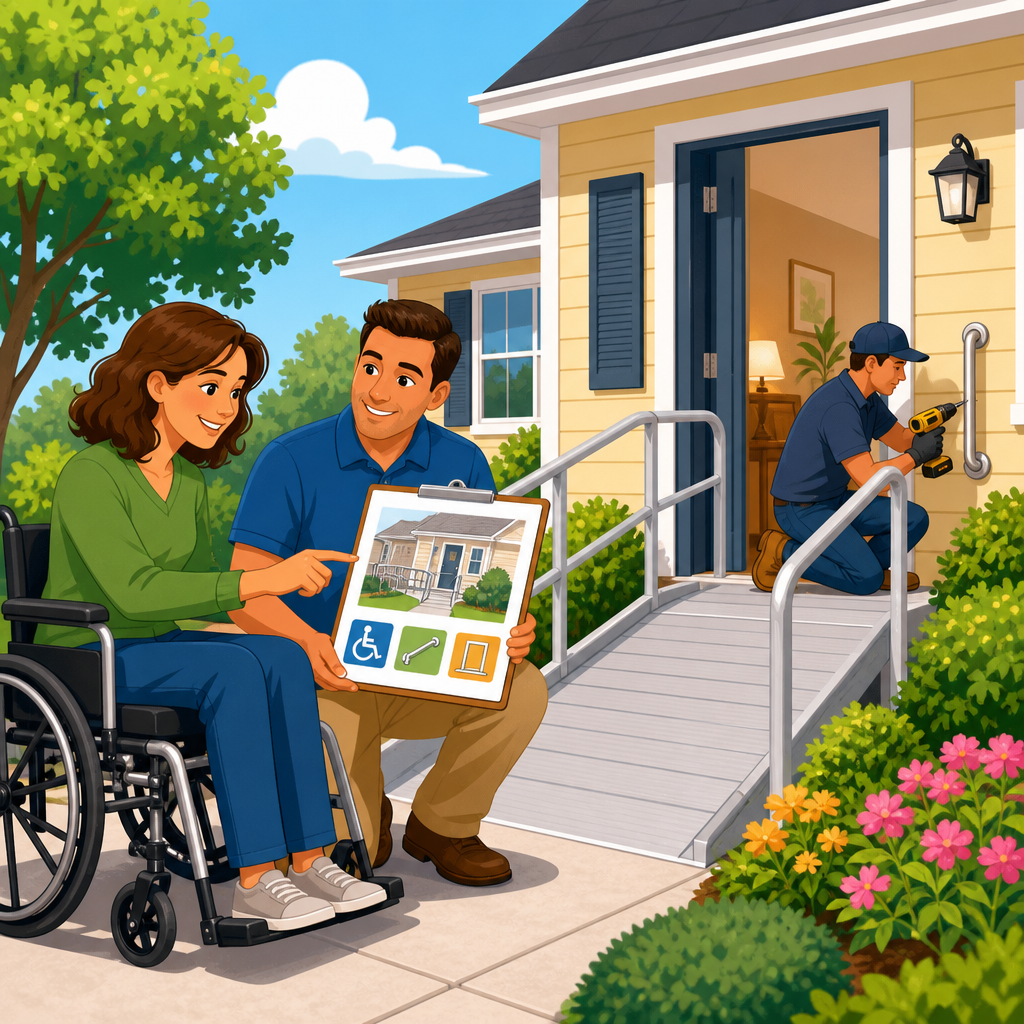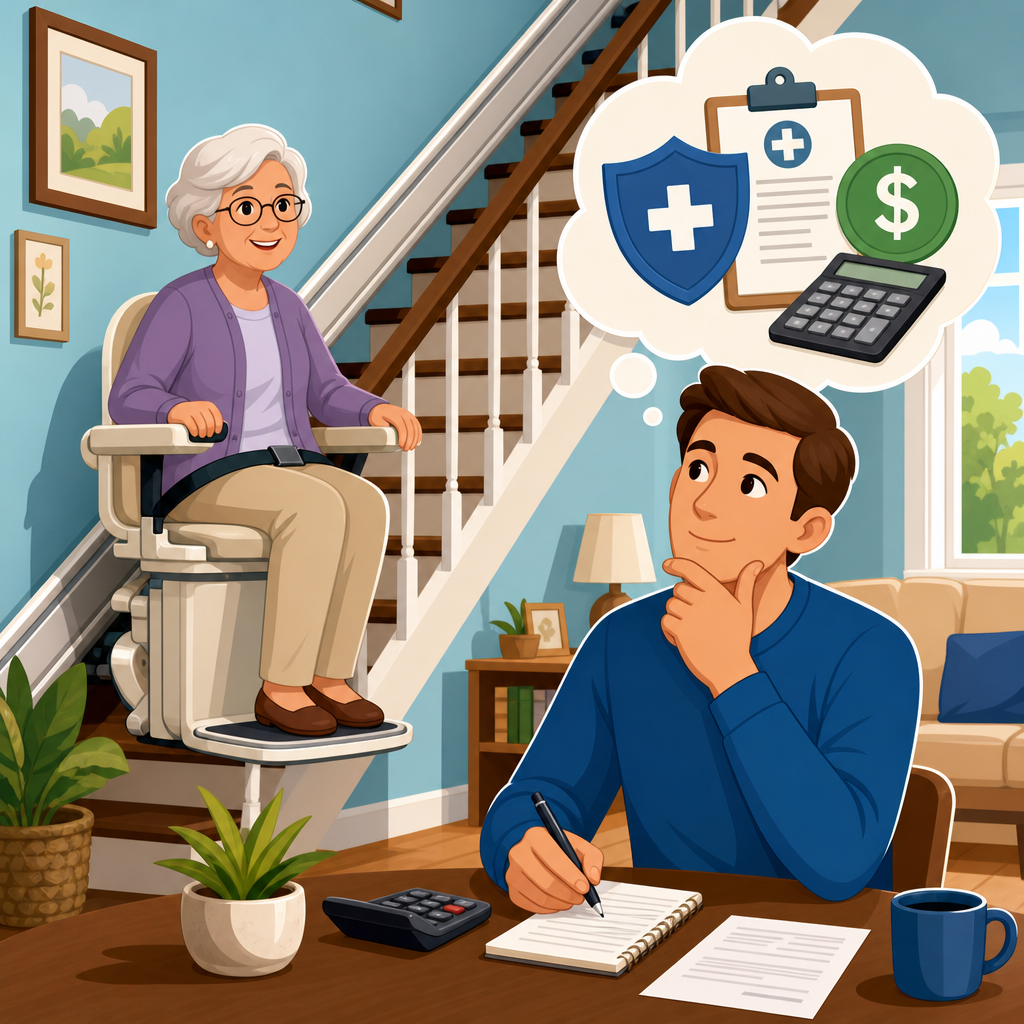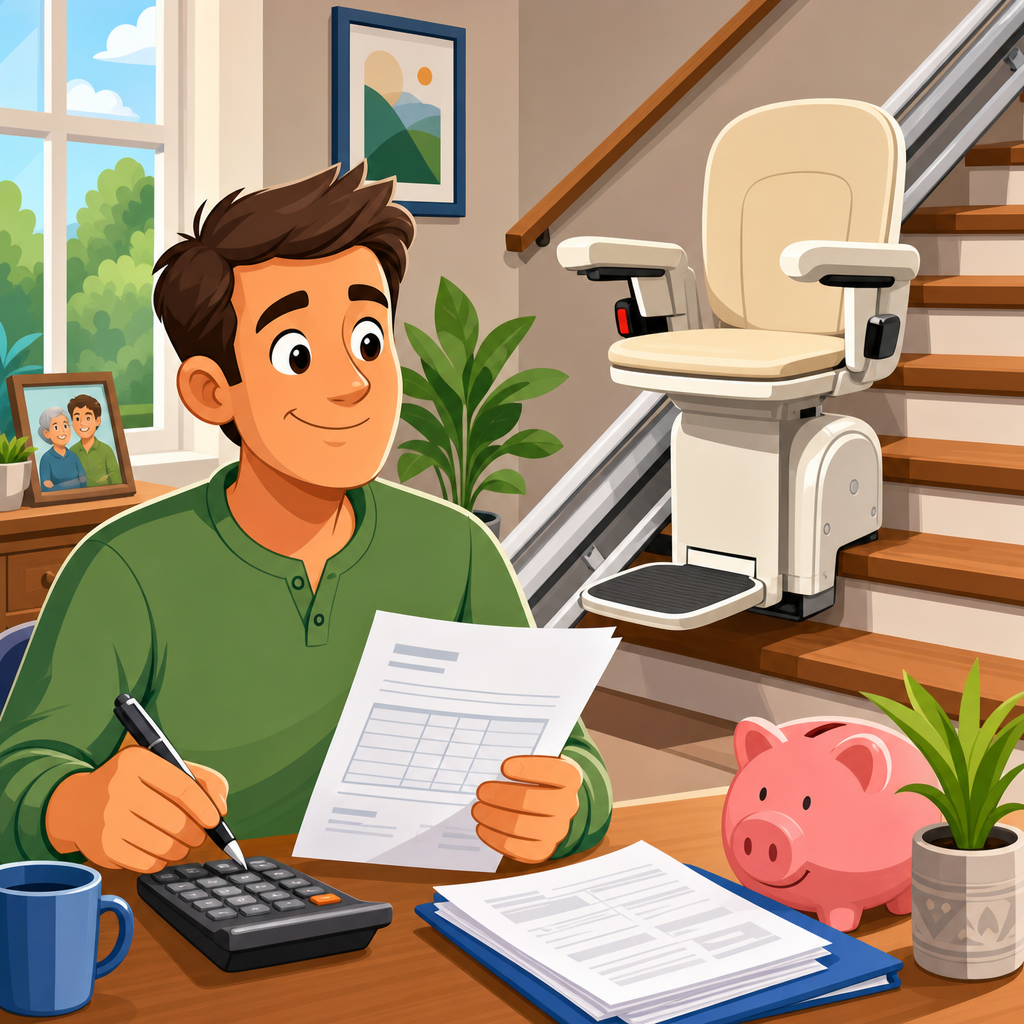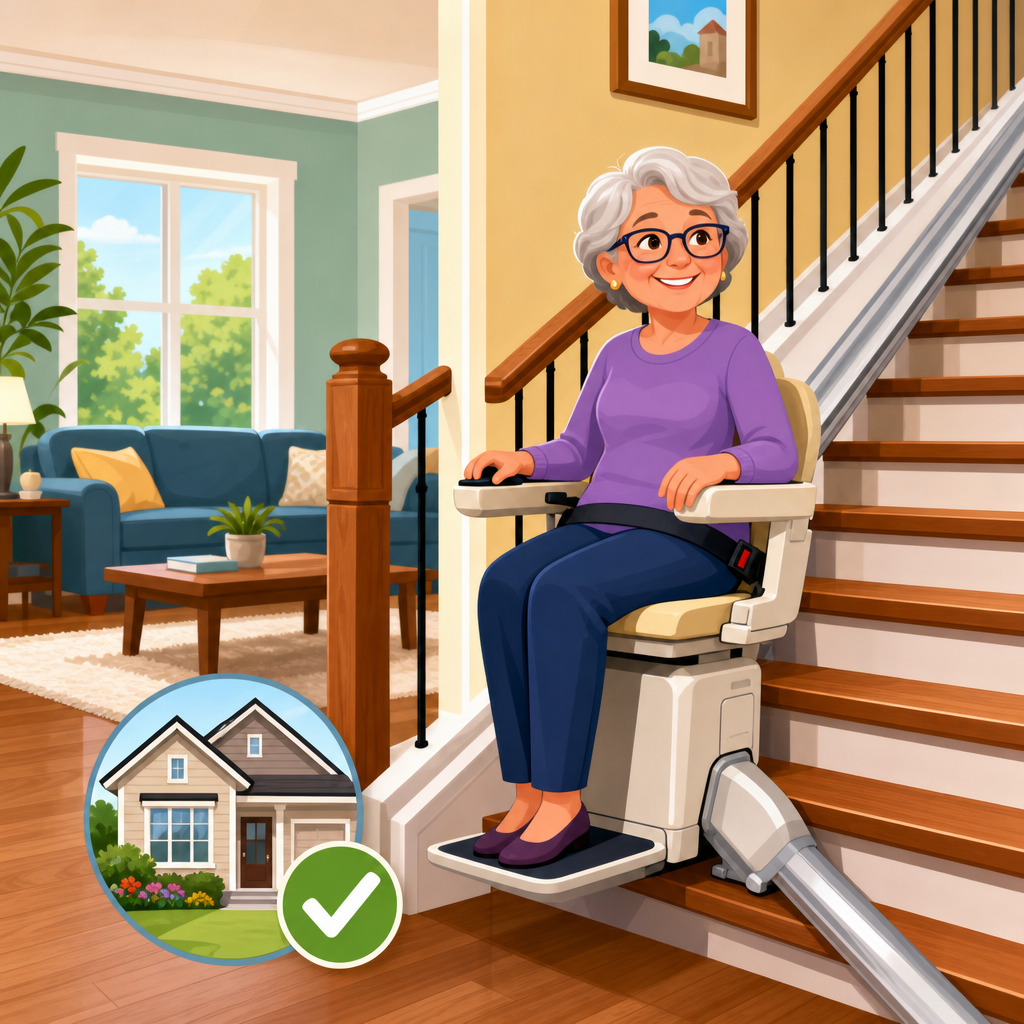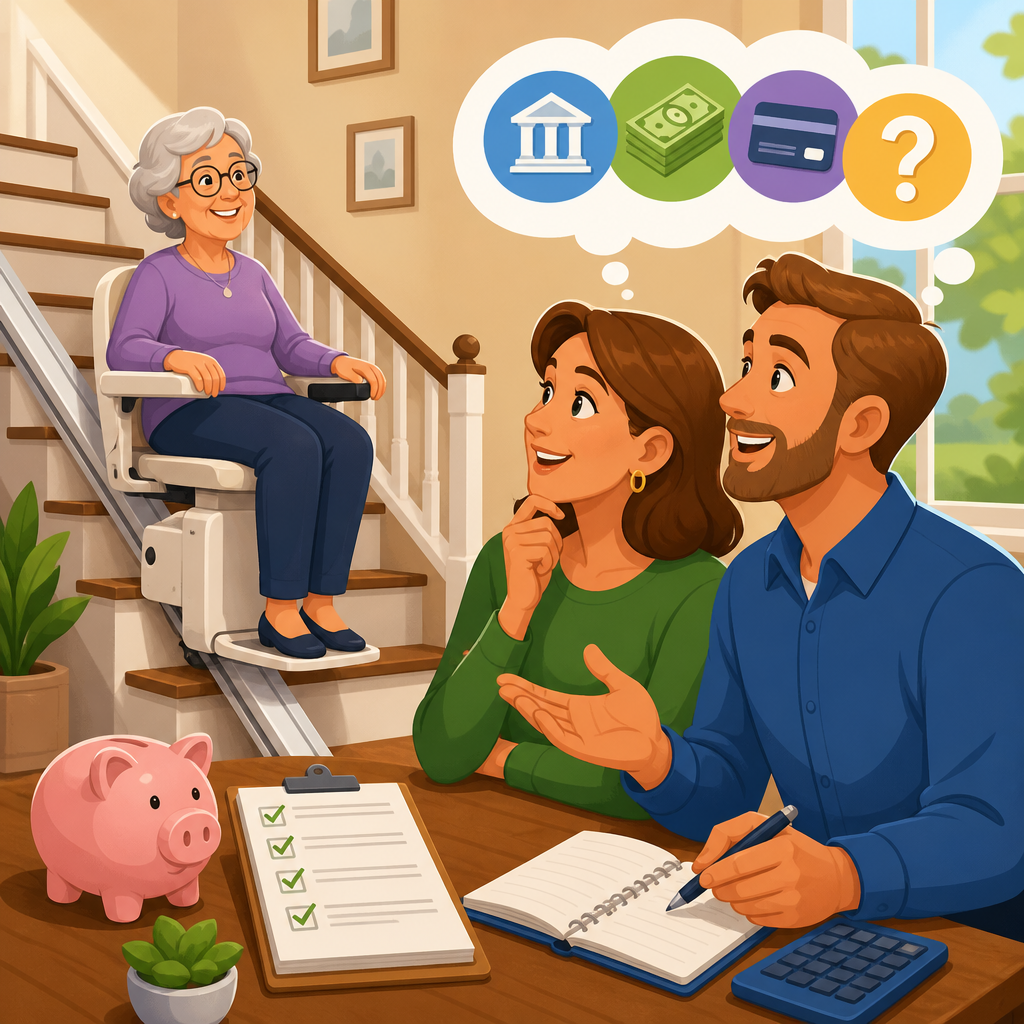
Stair lift financing with bad credit can feel intimidating, but there are practical ways to pay for a mobility device even when traditional lending is difficult. A stair lift is a motorized chair or platform that travels along a rail attached to a staircase, helping people move safely between floors at home. Financing refers to any arrangement that spreads the cost over time rather than requiring full payment upfront. Payment plans, loans, leases, grants, and benefit programs all fall under that umbrella. This topic matters because stair lifts are often urgent purchases. A fall risk, a hospital discharge, or worsening arthritis does not wait for a credit score to improve.
In my work with families comparing mobility equipment, the biggest source of stress is rarely choosing a model. It is figuring out how to afford it quickly without agreeing to terms that create a worse problem later. New straight stair lifts commonly cost a few thousand dollars, while curved stair lifts can run much higher because the rail is custom built to the staircase. Installation, service coverage, power-swivel seats, folding rails, and weight-capacity upgrades can add to the total. For many households, that means financing is not optional. It is the only way to keep a loved one safely at home.
Bad credit usually means a borrower has a low credit score, limited credit history, prior late payments, collections, charge-offs, or a high debt-to-income ratio. Lenders use those signals to predict repayment risk. The result may be denials, higher annual percentage rates, shorter repayment terms, larger down payment requirements, or offers from lenders that are expensive enough to be dangerous. The good news is that stair lift financing is broader than unsecured personal loans. Dealers may offer in-house plans, medical credit companies may approve some applicants who are declined elsewhere, and nonprofit or public benefit programs can reduce the amount that needs financing in the first place.
This article is the hub for financing and payment plans within the wider cost and financing topic. It explains the main funding paths, how approval decisions are made, what paperwork to prepare, and which questions protect you from hidden costs. It also addresses a crucial reality: the cheapest monthly payment is not always the best deal, and the fastest approval is not always the safest choice. By understanding your options before you apply, you can compare lenders and dealers with confidence, lower the total cost of borrowing, and make a decision that supports long-term mobility at home.
What stair lift financing usually covers and why bad credit changes the offer
Most stair lift financing is designed to cover equipment, installation, and sometimes service or warranty packages. Some agreements include only the chair and rail, leaving labor, electrical work, permit fees, or removal of an old unit outside the financed amount. Others bundle everything into one fixed monthly payment. Before discussing rates, verify exactly what the contract pays for. I have seen families think they financed a turnkey installation only to learn later that a powered hinge rail, extended warranty, or post-installation service call was billed separately.
Bad credit affects three parts of the offer: approval odds, price of borrowing, and flexibility of terms. A lender may approve a smaller amount than the full project cost, require a co-borrower, or insist on autopay from a bank account. The annual percentage rate can increase sharply if the file shows recent delinquencies or a high utilization ratio on revolving accounts. Some lenders compensate for risk with shorter terms, which reduces their exposure but raises the monthly payment. That structure can make an apparently approved loan functionally unaffordable.
Approval is not based on score alone. Lenders also look at income stability, housing costs, existing debt obligations, and whether the applicant has had recent bankruptcies, repossessions, or collections. Dealers that work with multiple financing partners sometimes have more room to place difficult files than a single bank does. That is one reason a mobility dealer’s financing desk can be useful, provided you still compare offers independently. The central question is not simply, “Can I get approved?” It is, “Can I get approved on terms that make sense for my household?”
Main financing and payment plan options for borrowers with challenged credit
Borrowers with bad credit usually have six realistic categories to explore: dealer financing, medical credit cards or healthcare financing, personal loans from banks or online lenders, secured loans or home equity products, government or nonprofit assistance, and rental or used-equipment arrangements that reduce the amount financed. Each route has different tradeoffs in speed, underwriting, and total cost. The best choice depends on urgency, income predictability, homeownership status, and whether the stair lift is expected to be a short-term or long-term need.
| Option | Best For | Typical Strength | Main Risk |
|---|---|---|---|
| Dealer financing | Fast installation needs | Convenient bundled approval and installation | Limited lender comparison if dealer uses few partners |
| Medical credit financing | Applicants seeking promotional plans | Possible deferred-interest or fixed-payment offers | Retroactive interest if terms are misunderstood |
| Personal loan | Borrowers wanting cash flexibility | Funds can cover related home modifications | Higher APR with weak credit |
| Home equity or secured loan | Homeowners with equity | Lower rate potential than unsecured debt | Home is collateral and closing can take longer |
| Grant or public program | Low-income or qualifying veterans and seniors | May reduce or eliminate borrowing need | Eligibility rules and slower timelines |
| Rental or used stair lift | Short-term recovery or budget constraints | Lower upfront cost | Limited fit for curved staircases and availability varies |
Dealer financing is common because it aligns purchase, installation, and payment in one process. Reputable dealers often partner with specialized lenders familiar with home accessibility equipment. Ask whether the dealer uses soft credit prequalification before a hard inquiry and whether they submit your file to multiple lenders automatically. Medical financing products can be useful, but read every promotional term. Deferred-interest plans can be costly if the balance is not cleared within the promotional window.
Personal loans offer flexibility because the funds can also cover related expenses such as a second handrail, doorway widening, or minor electrical work. Online lenders may provide quick decisions, but rates for poor-credit borrowers can be very high. Home equity loans or home equity lines of credit may reduce interest cost, although they involve collateral and may not be fast enough for urgent discharge planning. Finally, grants, Medicaid waiver programs where available, veterans’ benefits, Area Agencies on Aging, and disease-specific nonprofits can close part of the gap. Even a modest award can materially improve the terms of the remaining financing.
How to improve approval odds before you apply
Preparation changes outcomes. Start by obtaining your credit reports from Equifax, Experian, and TransUnion and checking for errors. Incorrect late payments, duplicate collections, and outdated balances are common. Disputing mistakes will not fix urgent financing overnight, but confirming what lenders will see helps you target realistic products. Next, calculate your debt-to-income ratio. Add your monthly debt payments and divide by gross monthly income. A lower ratio supports approval even when the score itself is weak.
Gather documents before submitting applications. Lenders commonly ask for government identification, proof of income, recent bank statements, Social Security or disability income letters, and housing expense documentation. Self-employed applicants may need tax returns. Retirees should be ready to show pension or retirement account distributions if those support repayment. Completing a full file quickly matters because installers often schedule work only after financing is finalized, and delays in documentation can push the installation date back by days or weeks.
If possible, reduce revolving credit utilization before applying. Paying a credit card down from near its limit to below 30 percent of available credit can help some scoring models and improve underwriter perception. Consider applying with a co-borrower who has stronger credit or more stable income, but only if both parties understand that the debt becomes a shared legal obligation. A larger down payment can also improve options. Even covering sales tax, installation, or one accessory out of pocket can lower the financed amount enough to qualify.
One tactic I recommend often is getting a detailed quote first, then asking whether a simpler configuration meets the immediate safety need. For example, a straight stair lift without premium upholstery or advanced seat options may be appropriate now, with upgrades considered later if compatible. On curved staircases, where customization drives price, compare whether a reconditioned unit is possible through a dealer program. Not every home can use one, but when available, it can narrow the financing gap significantly.
Questions to ask every lender and stair lift dealer
Good financing decisions come from direct questions, not assumptions. Ask every lender for the annual percentage rate, not just the monthly payment or nominal interest rate. APR captures the total borrowing cost more accurately when fees are involved. Confirm whether the rate is fixed or variable, the length of the term, any origination or administrative fees, any prepayment penalty, and whether automatic payments are required for the quoted price. If there is a promotional period, ask what happens after it ends and whether unpaid interest can be charged retroactively.
Ask the dealer whether the quote is itemized. You need to know the equipment price, installation labor, service plan cost, warranty length, and charges for options such as a folding rail, powered swivel seat, call-send remotes, or higher weight capacity. Confirm whether the financing covers maintenance visits and battery replacement. Stair lifts typically use batteries that charge from household power and need replacement periodically. That future expense is not huge compared with the original purchase, but it should not be a surprise.
Clarify the cancellation and return policy. Custom curved rails often become nonreturnable once manufacturing begins, which can affect your obligations if financing approval changes or a contractor later identifies a staircase issue. Ask who owns the equipment if the lift is rented or leased, what service response times are promised, and whether there are charges for removal if the unit is no longer needed. If you are financing through the dealer, ask how many lenders they work with and whether they are compensated differently based on which lender you choose.
Finally, ask a plain-language question that reveals affordability: “What is the total amount I will pay if I make every payment on schedule until the account is closed?” That single number cuts through sales language. A low monthly payment stretched over many years can cost far more than a shorter term. If the lender cannot answer clearly, move on.
Alternatives that reduce borrowing and common mistakes to avoid
Not every stair lift purchase should be financed in the same way. If the need is temporary, such as recovery after orthopedic surgery, rental may be more economical than buying. Straight stair lifts are more commonly available for rental because they use standardized rails. Curved stair lifts are usually custom and less likely to qualify. Buying a certified reconditioned straight stair lift from a reputable dealer can also lower the amount financed while preserving installation and service support. Always confirm who refurbished the unit, what parts were replaced, and what warranty is included.
Assistance programs deserve serious attention. Veterans may qualify for home modification support through the Department of Veterans Affairs, including programs connected to disability and housing adaptation. Some state Medicaid waiver programs help eligible beneficiaries remain safely at home, though benefits and waiting lists vary by state. Local nonprofits, religious organizations, and community aging agencies sometimes offer small grants or loan closets. These sources rarely cover every cost, but stacking assistance with financing can transform an unaffordable project into a manageable one.
The most common mistakes are rushing into the first approval, focusing only on monthly payment, ignoring service terms, and failing to compare ownership against rental. Another mistake is assuming Medicare will pay for a stair lift. Original Medicare generally does not cover stair lifts because they are considered home modifications rather than durable medical equipment under standard coverage rules. Some Medicare Advantage plans may offer supplemental benefits, but availability is plan specific and should be verified directly with the insurer.
Stair lift financing with bad credit is workable when you approach it methodically. Start with a precise quote, review your credit and income documents, compare at least two financing paths, and ask direct questions about APR, fees, service, and cancellation. Look beyond loans alone by checking grants, veterans’ programs, Medicaid waivers, and rental or reconditioned options. The goal is not merely approval. It is safe access at home on terms you can sustain. Use this hub as your starting point, then compare offers carefully and move forward with the provider that gives you both clear pricing and reliable support.
Frequently Asked Questions
Can I get stair lift financing if I have bad credit?
Yes, it is often still possible to get stair lift financing with bad credit, although the options may look different from a standard bank loan. Many people assume poor credit automatically disqualifies them, but stair lift funding can come from several sources beyond traditional lenders. Some stair lift dealers offer in-house payment plans, some work with specialized medical equipment financing companies, and others may provide lease, rental, or rent-to-own arrangements that involve more flexible approval standards. In some cases, a family member or co-signer with stronger credit can help improve approval chances or secure better terms.
It is also important to remember that financing is only one path. Depending on your situation, you may qualify for grants, local nonprofit assistance, state assistive technology programs, veterans’ benefits, Medicaid waiver support, or community-based aging services. These programs do not always depend on your credit score in the same way a consumer loan does. If your credit is weak, ask every provider not only whether they offer financing, but also whether they know of any public or charitable funding options in your area. A bad credit score can limit choices, but it does not necessarily end them.
What financing options should I compare before choosing a stair lift payment plan?
Before agreeing to any payment arrangement, compare all realistic ways to cover the cost of the stair lift over time. Common options include dealer financing, personal loans, credit union loans, medical equipment financing, credit cards, home equity products, leases, rentals, and rent-to-own contracts. Each option comes with different approval standards, monthly payment amounts, interest rates, contract lengths, ownership terms, and fees. If you have bad credit, the easiest approval option may not be the least expensive in the long run, so it is important to look beyond the monthly payment alone.
Ask for the full installed cost of the stair lift, including the unit, rail, customization, delivery, installation, maintenance coverage, and removal if needed. Then compare the annual percentage rate, repayment term, total amount repaid, down payment requirement, prepayment penalties, late fees, and whether the agreement is secured or unsecured. If the company offers a lease or rental, clarify whether you will own the stair lift at the end, whether service is included, and what happens if your needs change or the equipment is no longer required. This side-by-side comparison helps you avoid overpaying and makes it easier to choose an option that fits both your budget and your mobility needs.
What questions should I ask a stair lift company or lender before signing anything?
Start by asking direct questions about cost, financing terms, and service obligations. You should know the total purchase price, the total financed amount, the interest rate or finance charge, the length of the agreement, the exact monthly payment, and the total you will pay by the end of the contract. Ask whether there is a down payment, whether there are fees for application, processing, installation, maintenance, late payments, or early payoff, and whether approval requires a hard credit check. If your credit is already strained, it is reasonable to ask whether there is a prequalification option that will not affect your score.
You should also ask practical equipment questions that affect value. Find out whether the stair lift is new or refurbished, what warranty is included, what service response time looks like if the lift needs repair, and whether battery replacement or annual maintenance is covered. If the plan is a lease or rental, ask what happens if the user moves, passes away, or no longer needs the stair lift. If the company recommends a particular financing product, ask whether there are alternatives. A reputable provider should be willing to explain the agreement in plain language and give you time to review everything before you sign.
Are there grants, benefits, or assistance programs that can help pay for a stair lift if financing is hard to qualify for?
Yes, and for many households, these resources can be just as important as financing. Depending on where you live and your personal circumstances, help may be available through Medicaid waiver programs, state assistive technology projects, veterans’ benefits, Area Agencies on Aging, local disability organizations, disease-specific charities, community action groups, and faith-based or civic nonprofits. Some homeowners may also find support through local accessibility modification programs, county housing departments, or rehabilitation agencies that help people remain safely in their homes.
Coverage and eligibility vary widely, so it is worth asking several organizations rather than relying on one source. In many cases, assistance is based on medical need, age, disability status, veteran status, income, or program availability rather than your credit score. You may need a doctor’s note, home assessment, proof of income, or documentation showing why the stair lift is necessary for safety and daily living. Even if a program does not cover the full cost, partial aid can reduce the amount you need to finance, which may lower your monthly payment and make approval more manageable.
How can I avoid expensive or risky stair lift financing when I have bad credit?
The best protection is to slow down and review the full cost of the agreement before committing. When credit is poor and mobility needs are urgent, it is easy to focus only on getting approved quickly. However, some financing offers come with very high interest rates, aggressive fees, short repayment terms, or contracts that are difficult to cancel. Ask for all terms in writing and calculate the total amount you will pay over the life of the agreement. If the numbers seem unclear or the salesperson pressures you to sign immediately, treat that as a warning sign.
It is also wise to compare at least two or three quotes from different stair lift providers and, if possible, from a credit union or lender you already know. Look closely at whether a used or refurbished stair lift, a short-term rental, or a grant-plus-payment-plan combination could be more affordable than a high-interest loan. Avoid financing that includes hidden fees, mandatory add-ons you do not need, or penalties for paying the balance early. If you are unsure, have a trusted family member, caregiver, or financial counselor review the paperwork with you. The goal is not just to secure a stair lift, but to do so in a way that protects your finances while meeting your mobility needs safely.