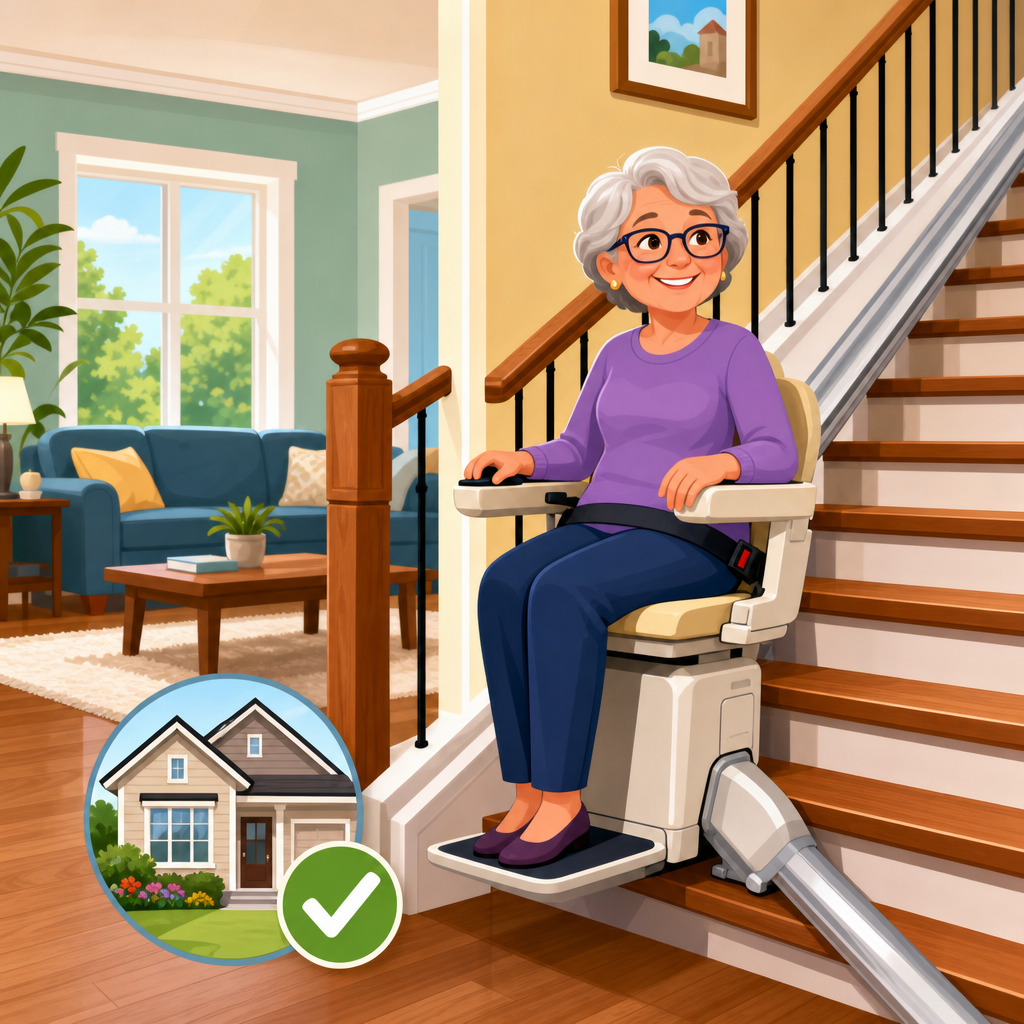
Stair lift rent-to-own programs give households a way to install mobility equipment immediately while spreading the cost over time, but the details matter far more than the sales pitch. A stair lift is a motorized chair that travels along a rail fixed to a staircase, helping people with limited strength, balance, or joint mobility move safely between floors. In a rent-to-own arrangement, the customer makes monthly payments that function partly like rent and partly like installment financing, with ownership transferring after a defined term or final payment. That sounds simple, yet contracts vary widely in installation fees, maintenance terms, buyout rules, removal costs, and what happens if the lift is no longer needed before the term ends.
This matters because stair lifts are rarely impulse purchases. Most families start shopping after a fall, a hospital discharge, a worsening arthritis diagnosis, or a decision to age in place rather than move. In those moments, people are comparing rental vs. purchase under pressure, often without knowing that straight staircases, curved staircases, indoor rails, outdoor systems, and heavy-duty models have very different pricing structures. I have walked clients through these decisions, and the most expensive mistake is not usually choosing the wrong brand. It is agreeing to the wrong financing structure for the expected length of use. A short-term recovery after knee surgery has one financial logic. Progressive conditions such as Parkinson’s disease, multiple sclerosis, or severe osteoarthritis have another.
As a hub for the rental vs. purchase decision, this guide explains how stair lift rent-to-own programs work, when they make sense, and which contract terms deserve close review before signing. It also connects the practical questions buyers ask first: How much does a stair lift cost upfront? Is a rental cheaper? Who handles service calls? Can Medicare help? What if the lift must be removed early? By the end, you should be able to compare offers with confidence, estimate the true total cost, and choose the option that fits both budget and likely duration of need.
How stair lift rent-to-own programs are structured
Most stair lift rent-to-own programs combine four cost components: an initial payment, installation, monthly charges, and a final ownership transfer condition. The initial payment may be called a deposit, activation fee, or first-month payment. Installation may be bundled into that amount or listed separately. Monthly charges then continue for a fixed number of months, commonly 12, 24, 36, or 48. In some contracts, every monthly payment applies toward ownership. In others, only a portion does, because the company classifies part of the fee as equipment use, service coverage, or administrative cost. That distinction affects the true buyout price.
Straight stair lifts are the most common fit for rent-to-own because the rail is standardized and easier to reinstall in another home if the customer returns it. Curved stair lifts are custom built to the exact turns, landings, and angles of one staircase, so rent-to-own terms are often less favorable or unavailable. In the field, I have seen straight units offered with moderate upfront fees and manageable monthly payments, while curved systems usually require a larger down payment or a direct purchase because the supplier has limited resale value if the customer exits early. Outdoor stair lifts add weatherproofing and corrosion-resistant components, which can also narrow financing flexibility.
Ask whether the agreement is a true lease-purchase contract or a financing plan labeled as rent-to-own. The difference matters. A lease-purchase contract may allow the provider to retain ownership until the final payment, which can affect removal rights, insurance responsibility, and whether the customer can move the unit to another property. A financing plan may transfer ownership earlier while securing the debt through the contract. Reputable dealers explain this clearly and provide an amortization-style schedule showing what you will pay in total. If they cannot tell you the full cost from day one, treat that as a warning sign.
Rental vs. purchase: when each option makes financial sense
The smartest choice depends on expected duration of use, staircase type, and how much cash a household can commit upfront. Rentals usually make sense for short-term needs, especially on a straight staircase. Typical examples include recovery from hip replacement, rehabilitation after stroke, or a temporary home setup while a person waits for first-floor renovations. If the need will likely last only a few months, renting can be significantly cheaper than purchasing because the household avoids the full equipment cost and may receive bundled maintenance. However, monthly rental pricing compounds quickly. Once the use period extends long enough, purchase or rent-to-own often becomes the lower-cost path.
Purchase usually makes more sense when the need is long term or permanent. People aging in place for years, or those with chronic mobility decline, often come out ahead by owning the unit. Ownership can also be more practical when a household wants a specific feature set such as a powered swivel seat, hinge rail, folding footrest, larger seat, or upgraded upholstery. Buyers should not assume ownership always means paying cash. Many providers offer installment financing through third-party lenders, and comparing that against a rent-to-own quote is essential because the same staircase can carry very different lifetime costs under each model.
| Option | Best fit | Typical cost pattern | Main watch-outs |
|---|---|---|---|
| Rental | Short-term use on straight stairs | Lower upfront, recurring monthly fee | Removal fees, minimum term, limited customization |
| Rent-to-own | Uncertain or medium-term need | Moderate upfront plus monthly payments leading to ownership | Total paid may exceed purchase price, unclear buyout terms |
| Direct purchase | Long-term use or custom curved staircases | Highest upfront or financed installments | Maintenance after warranty, resale is limited |
A practical break-even analysis helps. If a straight stair lift rental costs an installation fee plus monthly payments, compare six, twelve, and twenty-four months of total cost against a purchase quote and a rent-to-own quote. Include maintenance, service calls, and removal. On a long timeline, ownership often wins. On a short timeline, rental usually wins. Rent-to-own sits in the middle and can be attractive when the family is not yet sure whether the need will last six months or six years.
What stair lift pricing usually includes, and what it often excludes
Price confusion is common because advertisements often highlight the monthly figure while burying other charges. A complete stair lift quote should separate the equipment price, rail type, installation labor, electrical charging setup, warranty coverage, and future removal cost. Straight lifts generally cost less because the rail is modular. Curved lifts cost more because the rail is custom fabricated after a detailed measurement, often using photo measurement systems or digital surveying tools. A curved rail can account for much of the total price difference, which is why curved systems are rarely ideal rental candidates.
Maintenance coverage varies more than many shoppers expect. Some rent-to-own programs include routine service and repair for the full term. Others cover only manufacturer defects, not wear items such as seat belts, batteries, remote controls, or call/send stations. Battery-powered stair lifts, which dominate the market, still plug into household power to keep batteries charged. Batteries are consumable parts. If the contract runs several years, ask who pays when battery capacity declines. I have seen families assume batteries were included for the life of the agreement, only to learn otherwise when charging performance dropped.
Removal matters too. If the user transitions to assisted living, passes away, or no longer needs the lift after physical therapy, the contract should state exactly what off-ramp exists. Some providers waive removal if the equipment is returned in good condition within a defined structure. Others charge deinstallation, patching, stair repair, or transportation fees. Also ask whether holes from rail brackets will be filled and whether carpet or wood refinishing is included. Usually it is not. A low monthly offer can become expensive when these end-of-term costs appear.
Contract terms and red flags to watch for before signing
The most important clause is the early termination provision. Families often assume they can stop paying once the lift is no longer needed. In many agreements, that is false. A minimum term may still apply, or the customer may owe a fixed buyout amount. Read how disability progression, death, relocation, or sale of the home are handled. Good contracts state this plainly. Bad contracts hide it in dense language about default, accelerated balances, or noncancelable obligations. If a representative explains one thing verbally but the paperwork says another, rely on the paperwork.
Next, review service response commitments. A stair lift is not useful if it is out of service for a week. Ask whether service is available locally, what hours emergency support covers, and whether loaner equipment is possible if parts are delayed. Established manufacturers and dealers often stock common batteries, chargers, arm switches, and carriage components. Smaller operations may depend entirely on shipped parts, which can slow repairs. Ask specifically whether the model uses current parts or an aging platform with shrinking support.
Also check transferability and home sale implications. If ownership eventually transfers, can the unit remain with the property and add value for the next buyer? In most markets, a stair lift is a niche accessibility feature, not a general home value booster. More often, it is either removed before sale or marketed as a convenience for a specific buyer. If the contract still belongs to the original customer, the provider may need to approve any transfer. Clarify that before assuming the next homeowner can simply take over payments.
Comparing providers, funding sources, and practical alternatives
When comparing providers, focus on dealer capability as much as brand reputation. Bruno, Harmar, Handicare, and Stannah are recognized names in the North American and UK markets, but local dealer quality often determines installation precision and after-sale support. Ask whether the installer is factory trained, whether the dealer handles permits if required, and how stair measurements are verified. A mismeasured curved rail can delay installation significantly. For straight lifts, ask whether reconditioned inventory is available, since certified used equipment can improve the economics of both rental and purchase.
Funding is another area where families lose time chasing options that do not fit. Original Medicare generally does not cover stair lifts because they are usually classified as home modifications rather than durable medical equipment under standard rules. Some Medicare Advantage plans may offer broader supplemental benefits, but coverage is inconsistent and plan-specific. Medicaid waiver programs in some states can help with home accessibility, and Veterans Affairs programs may assist eligible veterans through home modification grants. Long-term care insurance, Area Agencies on Aging, state assistive technology programs, nonprofit loan closets, and home equity products may also play a role depending on the person’s age, assets, and diagnosis.
Do not overlook alternatives. If a person can safely relocate sleeping space to the main floor, that may be the cheapest short-term answer. If both spouses need access and the staircase is complex, a vertical platform lift or limited-use elevator may deserve evaluation, though costs are much higher. Occupational therapists can identify whether a stair lift is the best mobility intervention or whether railings, transfer equipment, walker training, or bathroom modifications should come first. The right solution is the one that reduces fall risk while matching the user’s physical ability, home layout, and budget.
How to decide with confidence
Stair lift rent-to-own programs can be useful, but only when the contract aligns with the real timeline of need. For short-term recovery, rental is often the cleanest and cheapest route. For long-term mobility loss, direct purchase usually provides the best total value, especially on curved stairs where custom rails make rental economics weak. Rent-to-own works best in the middle: when the household needs immediate access, wants predictable payments, and is not yet certain whether the lift will be needed for months or years.
The safest way to compare rental vs. purchase is to ask every provider for the same numbers: upfront cost, monthly cost, total paid at twelve and twenty-four months, service coverage, warranty limits, battery replacement terms, removal fee, and early termination obligation. Put those figures side by side. If a company will not provide them in writing, move on. Clarity is not a luxury in accessibility planning. It is part of the product.
As you build your cost and financing plan, treat this page as your hub for the rental vs. purchase decision. Use it to frame questions, narrow providers, and identify when another funding source may lower your out-of-pocket cost. A stair lift should make a home safer without creating a financial burden that was avoidable. Gather written quotes, read the contract carefully, and choose the structure that fits both mobility needs and the likely length of use.
Frequently Asked Questions
How does a stair lift rent-to-own program actually work?
A stair lift rent-to-own program is designed to let a household install a lift right away without paying the full purchase price upfront. In most cases, the provider installs the stair lift after an in-home assessment, and the customer agrees to make monthly payments over a set term. Those payments typically cover more than just the equipment itself. They may also include delivery, installation, warranty protection, service visits, and in some cases removal or transfer options if the lift is no longer needed.
The important detail is that rent-to-own is not always the same as a standard loan. Some programs apply a portion of each monthly payment toward eventual ownership, while another portion functions more like a rental fee for using the equipment during the term. That means the total amount paid over time can be significantly higher than the cash purchase price. Ownership may transfer automatically after the final payment, or it may require a separate buyout payment at the end of the agreement. The contract should clearly state when title transfers, what happens if payments stop, and whether the stair lift is new, refurbished, or previously rented equipment.
Because every provider structures these plans differently, buyers should ask for a full payment schedule in writing. That schedule should show the deposit, monthly cost, contract length, any final purchase amount, and the total cost to own compared with buying outright. A well-structured rent-to-own plan can be useful for families who need immediate mobility support but prefer to spread costs over time. Still, the value of the arrangement depends entirely on the contract details, not just the low advertised monthly payment.
What costs should I look at beyond the advertised monthly payment?
The monthly payment is only one piece of the total cost. Stair lift rent-to-own agreements can include several additional charges that change the real price substantially. Common examples include an upfront deposit, installation fees, home assessment charges, service call fees, maintenance costs after an introductory period, late payment penalties, stairway customization charges, and end-of-term purchase fees. If the staircase is curved rather than straight, the rail system is more specialized, and that can raise both the base price and the monthly payment considerably.
It is also smart to ask whether the plan includes routine maintenance and repairs for the full term. Some companies advertise a payment that sounds affordable, but the customer is responsible for labor, battery replacement, annual service, or emergency repair visits. Others include service only for a limited time and then bill separately. If the lift malfunctions and the user depends on it daily, repair response time matters just as much as the repair cost. A slightly higher monthly payment may be a better value if it includes reliable ongoing support.
Another major cost to review is the total amount paid over the life of the agreement. Even if a monthly plan seems manageable, multiplying that payment across 24, 36, or 48 months often reveals a much higher all-in price than expected. Ask for the exact total cost under three scenarios: paying cash upfront, using the rent-to-own plan through completion, and ending the agreement early. Comparing those numbers side by side is one of the fastest ways to judge whether the offer is fair and whether the convenience of installment payments is worth the premium.
What contract terms or warning signs should families watch for before signing?
The biggest warning sign is vague language. A stair lift agreement should be specific about ownership, payment obligations, maintenance, cancellation, and what happens if the customer’s needs change. If the contract does not clearly state whether the lift becomes yours at the end of the term, whether there is a balloon payment, or whether missed payments can result in repossession, that is a sign to slow down and ask for clarification. Families should also be cautious if a salesperson focuses heavily on urgency, “today only” pricing, or verbal promises that do not appear in writing.
Early termination terms deserve especially close attention. Stair lift needs can change quickly due to health improvements, moves, changes in caregiving arrangements, or transitioning to a single-level living setup. Some rent-to-own contracts make cancellation expensive, requiring the customer to pay a large percentage of the remaining balance or nonrefundable fees. Others may allow removal of the lift but keep most prior payments as rental charges rather than equity toward ownership. Understanding the exit terms upfront helps prevent frustration later.
It is also wise to review warranty coverage, equipment condition, and service standards. Ask whether the stair lift is new or refurbished, who performs installation, whether technicians are certified, and how long the provider typically takes to respond to service calls. If the agreement includes mandatory automatic payments, check whether there are processing fees or strict default rules. A trustworthy company should be willing to explain the contract line by line and provide a written copy before requesting a signature or deposit. If anything feels rushed or unclear, getting a second quote is usually worth the time.
Is rent-to-own a good option compared with renting or buying a stair lift outright?
Rent-to-own can be a practical middle ground, but whether it is the best choice depends on how long the lift will be needed and how much flexibility the household wants. If the need is likely to be short term, such as recovery after surgery or temporary rehabilitation, a standard rental may cost less overall because the goal is use, not ownership. On the other hand, if the user is expected to rely on the stair lift for years, buying outright can often be the most cost-effective path because it avoids the extra financing or rental-style charges built into many rent-to-own plans.
Where rent-to-own makes sense is when a household needs immediate access to a stair lift, does not want to commit to a large upfront purchase, but expects the equipment to be useful long enough that eventual ownership has value. It can also appeal to families balancing multiple care expenses at once, since spreading payments out may preserve cash flow. The tradeoff is that convenience usually comes with a higher total cost. That higher cost may still be acceptable if it allows someone to remain safely at home instead of facing a more disruptive or expensive alternative.
A careful comparison should include more than price alone. Consider installation timing, service coverage, upgrade options, transferability if moving homes, and whether the staircase is straight or curved. Also think about the user’s long-term mobility outlook. If future needs may require a wheelchair lift, home elevator, or single-floor living arrangement, locking into a long rent-to-own contract may not be ideal. The best option is the one that matches the expected length of need, financial comfort level, and ability to adapt if circumstances change.
What questions should I ask a stair lift company before agreeing to a rent-to-own plan?
Start with the core ownership and pricing questions. Ask: What is the total amount I will pay if I complete the full term? How much of each monthly payment goes toward ownership? Do I own the stair lift automatically after the last payment, or is there a final buyout amount? Is there a down payment? Are installation and removal included? These questions help reveal whether the plan is straightforward or whether the low monthly figure hides significant additional costs.
Next, ask operational questions that affect day-to-day use and reliability. Find out whether the stair lift is new or refurbished, who installs it, whether maintenance is included, and how repairs are handled. Ask how quickly technicians respond to service requests and whether there is an extra charge for emergency visits. If the home has a curved staircase or narrow stairway, confirm that the quoted price includes all necessary customization. It is also wise to ask whether batteries, seats, remotes, and safety sensors are covered under the agreement and for how long.
Finally, ask about flexibility and exit terms. What happens if the user passes away, moves, or no longer needs the stair lift? Can the contract be canceled early, and if so, what are the fees? Will the company remove the equipment, and at what cost? Can the agreement be transferred to another home or another family member? A reputable provider should answer these questions clearly and put the answers in writing. The more complete the answers are before signing, the easier it is to choose a plan that truly supports safety, affordability, and peace of mind.