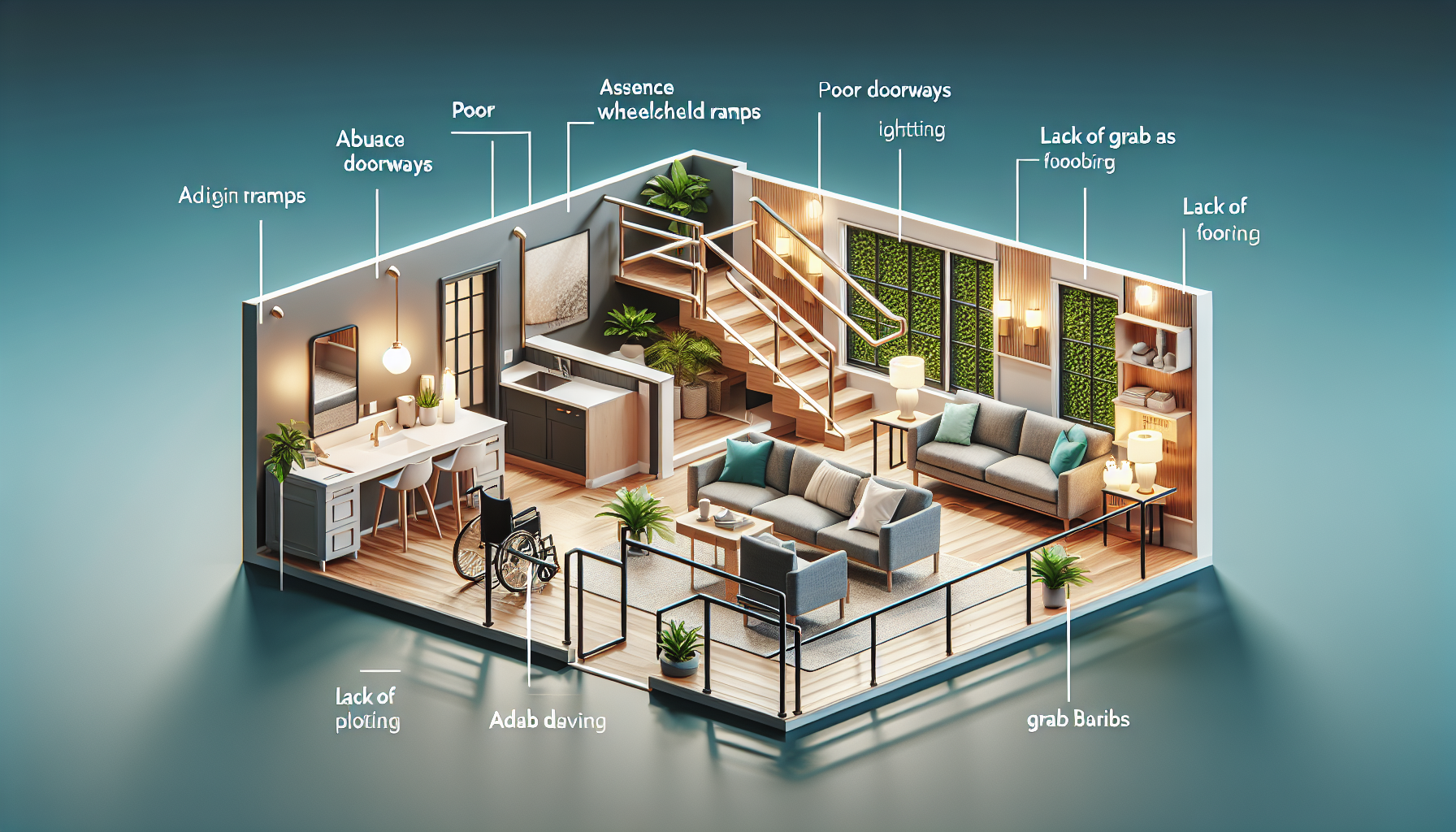
Aging in place means staying safely and comfortably in your own home as you grow older, rather than relocating because stairs, bathrooms, entries, or daily routines become difficult to manage. Within accessibility and mobility solutions, chair lifts play a central role because they remove one of the most common barriers to independent living: the staircase. I have worked with families comparing renovation bids, assessing fall risks, and coordinating lift installations, and the pattern is consistent. When stairs become unsafe, people often stop using part of their home long before they truly need to move. A properly selected chair lift can restore full use of the house, reduce strain on caregivers, and buy meaningful time for a broader aging in place plan.
Chair lifts, also called stair lifts, are motorized seats that travel along a rail mounted to the staircase. Most include a swivel seat, folding footrest, seat belt, call-send controls, obstruction sensors, and a battery backup that keeps the unit operating during a power outage. Straight stair lifts fit standard staircases with no turns, while custom curved models follow landings, bends, and intermediate levels. Platform lifts are different products intended for wheelchairs, and home elevators solve a different set of needs with higher construction demands. Understanding those distinctions matters because families often search for one device when they actually need another.
This topic matters because falls are not minor events for older adults. The Centers for Disease Control and Prevention reports that falls are a leading cause of injury among adults age sixty-five and older, and stairs are a frequent hazard in multi-level homes. Successful aging in place is not only about adding equipment. It is a strategy that combines home assessment, mobility planning, health changes, caregiver capacity, financing, and future flexibility. Chair lifts sit at the intersection of all those decisions. They can be the first major modification in a home, or part of a larger sequence that includes grab bars, zero-threshold showers, improved lighting, lever hardware, ramps, and room reconfiguration.
As the hub for aging in place strategies, this article explains where chair lifts fit, who benefits most, what types exist, how to evaluate readiness, and how to make a sound investment that supports independence rather than postponing larger safety issues. It also connects the stair lift decision to the broader goal: preserving routines, confidence, and access to the spaces that make a house feel like home.
Why Chair Lifts Matter in an Aging in Place Plan
A chair lift matters because a staircase can turn an otherwise suitable home into a daily obstacle course. In practice, the first sign is rarely a dramatic fall. It is often smaller behavior changes: laundry gets left downstairs, showering becomes less frequent because the full bath is upstairs, or someone begins sleeping in a recliner to avoid climbing steps at night. These workarounds create isolation, reduce hygiene, increase fatigue, and shift stress onto spouses or adult children. Installing a chair lift addresses the access problem directly and often restores normal use of bedrooms, bathrooms, and shared living areas within a day.
From a planning standpoint, chair lifts are one of the least disruptive major mobility upgrades. A straight unit can often be installed in a few hours because the rail attaches to stair treads rather than the wall. There is typically no structural change to the house, no shaft construction, and no long renovation timeline. For households that need an immediate risk reduction, speed matters. I have seen families wait too long while debating a future move, only to face an urgent decision after a hospitalization. A chair lift is often the fastest way to stabilize the home environment while longer-term decisions are made carefully.
Chair lifts also preserve choice. If a person can still transfer safely from standing to sitting and can maintain seated posture during travel, a lift may allow continued use of a beloved multi-story home without forcing a rushed sale. That does not mean it is the answer for everyone. Progressive neurological conditions, severe balance loss, or dependence on a wheelchair may point toward a platform lift, first-floor living conversion, or other design changes. The value of a chair lift is highest when it is matched to present ability and realistic future needs, not purchased in isolation.
Who Benefits Most From a Stair Lift
The best candidates for a stair lift are older adults who have difficulty climbing stairs because of knee osteoarthritis, hip pain, spinal stenosis, COPD, heart failure, generalized weakness, or post-surgical recovery, but who can still sit down and stand up with manageable assistance. It is also useful for people with uneven endurance. Someone may walk well on level flooring yet become unsafe halfway up a staircase because fatigue, shortness of breath, or pain changes their gait. In those situations, the lift reduces exertion and lowers the chance of a misstep.
Caregivers benefit too. Assisting someone on stairs is one of the riskiest tasks in the home. Even trained aides treat stair support cautiously because one slip can injure both people at once. A chair lift reduces that handling burden. It can also make care schedules more efficient. If a caregiver does not need to escort every stair trip, time and energy can be redirected to bathing, medication management, meal preparation, and mobility exercises. For couples aging together, this matters because the healthier spouse is often managing more physical work than others realize.
There are limitations. A person with advanced dementia may not use the controls consistently or may become anxious during travel. Someone with severe trunk instability may need more lateral support than a standard seat provides. Narrow stairs can restrict model options, and body size matters because lifts have different seat widths and weight capacities. These are not reasons to dismiss the product, but they are reasons to insist on an in-home assessment rather than buying based on price alone.
Comparing Chair Lift Options for Different Homes
Not all stair lifts solve the same problem. The right model depends on staircase geometry, user size, transfer ability, and whether the equipment is meant as a short-term bridge or a long-term access solution. In real projects, confusion usually comes from assuming every staircase can take a basic straight unit. Once turns, pie-shaped steps, narrow landings, or door conflicts are involved, the design changes quickly.
| Type | Best Use | Advantages | Key Limitations |
|---|---|---|---|
| Straight stair lift | Single uninterrupted staircase | Fast installation, lower cost, easier servicing | Cannot navigate turns or intermediate landings |
| Curved stair lift | Stairs with bends, landings, or multiple levels | Custom fit, continuous travel path, strong home compatibility | Higher cost, longer lead time, limited resale value |
| Outdoor stair lift | Porch, deck, or exterior entry stairs | Weather-resistant components, extends access beyond the interior | Needs cover and maintenance in harsh climates |
| Standing or perch lift | Users with limited knee bend on narrow stairs | Smaller footprint, useful where seated models are tight | Requires good balance and tolerance for semi-standing travel |
Straight lifts are the most common because many homes have a simple main staircase. Curved lifts are custom-manufactured after detailed measurements and are often the only practical choice in split-level or traditional homes with turning stairs. Outdoor units matter in aging in place because access begins at the property line, not the living room. If someone cannot reach the front door safely, interior modifications do not fully solve the problem. Perch models can help in narrow staircases, but they are a niche product and must be evaluated carefully because they demand more balance than standard seated travel.
Safety, Installation, and Maintenance Essentials
Safety starts before the equipment arrives. A qualified dealer should measure stair width, check headroom, assess landing clearance, review power supply, and observe how the user transfers. Good installers also ask about medications, vision changes, cane or walker use, and whether the person carries oxygen. These details affect seat height, armrest preference, rail overruns, and parking positions. On several assessments I have seen the biggest issue not on the stairs themselves, but at the top landing, where a person had to pivot in a cramped space near a door swing. The solution was not a different lift brand; it was a top overrun that moved the chair away from the stair edge before the user stood up.
Core safety features should be nonnegotiable: a seat belt, swivel-and-lock seat at the landing, obstruction sensors on the carriage and footrest, overspeed governor, battery backup, and call-send controls at both ends. Models certified to recognized standards, including ASME A18.1 where applicable and testing through established labs such as UL or ETL, provide a stronger basis for comparison. Ask about weight capacity, folded width, ride speed, and whether diagnostic codes are displayed for service technicians. Those details affect usability over time.
Maintenance is straightforward but important. Batteries usually last several years and should be replaced proactively when performance declines. Rails need to stay clean, seat hinges should be checked, and annual service is wise for heavy-use units. Outdoor lifts need more attention because temperature swings, moisture, and debris shorten component life. Reliability comes less from brand slogans than from local dealer support. A premium lift without responsive service can become a stranded chair on the stairs, which is why warranty terms and technician availability deserve close review.
Financial Planning and Long-Term Strategy
Cost is one of the first questions families ask, and it should be discussed directly. Straight stair lifts often cost far less than a home elevator or full remodeling project, while curved lifts can be significantly more expensive because each rail is custom fabricated. Rental programs sometimes make sense after surgery or during rehabilitation, though availability varies by market and is more common for straight units than curved ones. Used equipment can reduce cost, but only when the dealer can verify fit, refurbish critical parts, and provide installation and warranty support.
Funding sources are uneven. Traditional Medicare generally does not cover stair lifts because they are usually treated as home modifications rather than durable medical equipment. Medicaid waiver programs, state assistive technology programs, veterans’ benefits, workers’ compensation claims, long-term care insurance, or nonprofit grants may help in some cases. Health savings accounts and flexible spending accounts may offer tax advantages when documentation supports medical necessity. Because rules vary widely, families should verify current eligibility before assuming coverage exists.
The bigger financial question is strategic value. A chair lift is often justified not only by injury prevention but by delaying or avoiding a move, protecting a caregiver from injury, and preserving access to a home with community ties. Still, it should be evaluated alongside alternatives. If the person will likely need wheelchair access soon, investing heavily in a curved stair lift may be less practical than creating a first-floor bedroom and bath plan. The best aging in place strategy looks ahead at least three to five years, balancing current relief with probable progression of mobility needs.
How Chair Lifts Fit Into a Complete Aging in Place Framework
A chair lift works best as part of a coordinated home safety plan, not as a standalone fix. The full framework usually starts with a home assessment from an occupational therapist, certified aging-in-place specialist, physical therapist, or experienced accessibility contractor. That review should examine entries, flooring transitions, bathroom setup, lighting levels, handrail quality, emergency egress, and daily task patterns. In many homes, the stair lift solves vertical movement, but other hazards remain more urgent, such as a slippery tub, poor night lighting, or a lack of grab bars near the toilet.
Think in layers. First, reduce immediate risk with fundamentals: lighting, contrast on stair edges, stable handrails, clutter removal, and secure flooring. Second, improve essential rooms so the person can toilet, bathe, dress, and sleep safely. Third, add mobility equipment like a chair lift when the layout still supports independent routines. Fourth, revisit the plan after health events such as a stroke, fall, joint replacement, or hospitalization. Aging in place is dynamic. The best homes are reviewed regularly because mobility rarely stays static.
For families building a broader accessibility roadmap, the chair lift conversation should connect to related decisions about ramps, bathroom modifications, transfer aids, smart-home alerts, and emergency response systems. That integrated approach creates real resilience. If stairs no longer limit movement, the resident can keep using the whole home, maintain familiar routines, and extend independence with dignity. Start with a professional home assessment, compare lift options based on actual function, and choose the solution that supports today’s safety without ignoring tomorrow’s needs.
Frequently Asked Questions
How do chair lifts support successful aging in place?
Chair lifts support successful aging in place by removing one of the most significant hazards in a multilevel home: the staircase. For many older adults, stairs become difficult long before the rest of the home feels unmanageable. Knee pain, reduced balance, fatigue, arthritis, limited hip mobility, and fear of falling can all turn a once-routine trip upstairs into a daily source of stress. A chair lift restores access to the entire home without requiring a major relocation or forcing someone to live only on one floor.
In practical terms, this means an older adult can continue using their bedroom, bathroom, laundry area, or favorite living spaces safely and with much less physical strain. That continuity matters. Aging in place is not just about remaining in a house; it is about preserving familiar routines, autonomy, dignity, and comfort. When a chair lift is installed before a crisis happens, it often prevents the cycle many families know well: a near-fall on the stairs, increasing avoidance of certain rooms, and then sudden pressure to make expensive or rushed housing decisions.
Chair lifts also reduce caregiver burden. Family members are often asked to “spot” a loved one on the stairs or help carry items up and down, which is risky for everyone involved. By providing a stable seated ride, a lift makes daily movement more predictable and less physically demanding. In my experience working with families evaluating mobility options, this is often the point where the home becomes workable again. Rather than viewing the staircase as the beginning of the end of independent living, a chair lift turns it back into a manageable part of the home.
When is the right time to install a chair lift?
The best time to install a chair lift is usually before the stairs become an emergency. Many families wait until after a fall, a hospitalization, or a sharp change in mobility, but planning ahead almost always leads to better outcomes. If someone is already using the handrail heavily, pausing on the steps to rest, avoiding trips upstairs, carrying items unsafely, or expressing anxiety about stairs, those are strong signs that it is time to consider a lift. The goal is to solve the problem while there is still time to make calm, informed decisions instead of reacting under pressure.
There are also less obvious indicators. A person may still technically be able to climb stairs but only with pain, exhaustion, or reduced confidence. That daily effort can limit how often they bathe, do laundry, access storage, or use parts of their home. Over time, these adaptations shrink the livable space of the house. Installing a chair lift earlier helps preserve full use of the home and can prevent the emotional and physical decline that often follows self-restriction.
Timing also matters from a project planning standpoint. Families comparing renovation bids often discover that moving a bedroom downstairs or reworking a bathroom can be far more disruptive and expensive than expected. A chair lift is frequently one of the fastest and least invasive accessibility improvements available. If a loved one has a progressive condition, is returning home from rehab, or wants to remain in a two-story home for the long term, it makes sense to evaluate stair access sooner rather than later. Early installation is often not a sign of giving up independence; it is a strategy for preserving it.
Are chair lifts safe for older adults with mobility or balance concerns?
Yes, chair lifts are designed specifically to improve safety for people who have mobility, strength, or balance limitations. A properly selected and professionally installed chair lift includes key safety features such as a seat belt, swivel seat for easier transfers at the top landing, footrest safety sensors, obstruction sensors, and simple controls that are easy to use. These features are intended to reduce the risks associated with stepping, turning, and climbing on a staircase, which are precisely the movements that become more hazardous with age.
That said, safety depends on matching the equipment to the individual user. A person who can sit and stand with minimal assistance may do very well with a standard seated lift. Someone with more significant weakness, joint limitations, or transfer challenges may need a model with additional features such as a powered swivel seat, powered footrest, or a higher seat height. In some cases, a different accessibility solution may be more appropriate. This is why an in-home assessment is so important. The staircase layout, landing space, user height and weight, range of motion, and cognitive ability all affect whether the lift will be both safe and convenient.
Families should also think beyond the ride itself. Safe use includes being able to approach the chair comfortably, sit down securely, fasten the belt, and step off onto a stable landing. Good installers evaluate those details carefully. They also explain operation, test the system, and review maintenance needs. In my experience, when the right model is chosen and the user receives proper instruction, a chair lift significantly lowers stair-related fall risk and increases confidence in moving through the home.
Can a chair lift work in most homes, including narrow or curved staircases?
In most cases, yes. Chair lifts can be installed on a wide range of stair configurations, including straight staircases, curved stairs, staircases with intermediate landings, and many narrower stairways. Straight lifts are typically the simplest and most cost-effective because they travel along a direct rail. Curved lifts are custom-made to follow turns, landings, or unusual layouts. The right fit depends on the exact dimensions of the staircase and the user’s mobility needs, which is why a detailed site evaluation is essential.
One common concern is whether the lift will make the stairs unusable for others in the household. Many models have folding seats, arms, and footrests to reduce their footprint when not in use. On some staircases, this creates enough clearance for others to continue walking the stairs normally. In tighter homes, installers may recommend parking the chair at one end of the rail when not in use. There are also call/send controls, so the chair can be moved up or down without someone sitting in it. These practical details often make a chair lift much more compatible with shared living arrangements than families initially expect.
Homes with older construction, limited landing space, or unusual railings can still often accommodate a lift, but they may require more careful planning. The good news is that chair lifts are generally installed on the stair treads rather than the wall, so wall structure is usually less of a limitation than people assume. An experienced accessibility professional can identify potential constraints early, explain what is feasible, and recommend whether a straight lift, curved lift, or another mobility solution makes the most sense. For many households, the staircase that once seemed like a deal-breaker turns out to be very adaptable.
What should families consider before choosing a chair lift for aging in place?
Families should look at more than just price. The best chair lift decision balances safety, usability, reliability, and long-term fit. Start with the person who will use the lift every day. Consider their current mobility, whether their condition is stable or progressive, how easily they transfer from standing to sitting, and whether they need features like a powered swivel seat or easier-to-use controls. A lift that looks affordable on paper may not be the right solution if it is difficult for the user to operate comfortably and consistently.
It is also important to evaluate the full home environment. Where are the bedroom and bathroom located? Is the staircase the only barrier, or are there also concerns with entry steps, bathroom access, or narrow doorways? Aging in place works best when the mobility plan is coordinated. A chair lift may solve the biggest obstacle immediately, but families should think through how it fits into broader accessibility needs over time. This kind of planning often avoids piecemeal spending and helps the home remain functional as needs change.
Quality of installation and service should be part of the conversation as well. Ask about warranty coverage, maintenance expectations, battery backup, response time for service calls, and the installer’s experience with the specific type of staircase in your home. A reputable provider should perform a thorough assessment, explain model options clearly, and discuss realistic timelines and costs. Families comparing renovation bids are often surprised to find that a chair lift delivers a strong safety benefit with less disruption than larger remodeling projects. When selected thoughtfully, it can be one of the most practical and effective investments in a long-term aging-in-place plan.