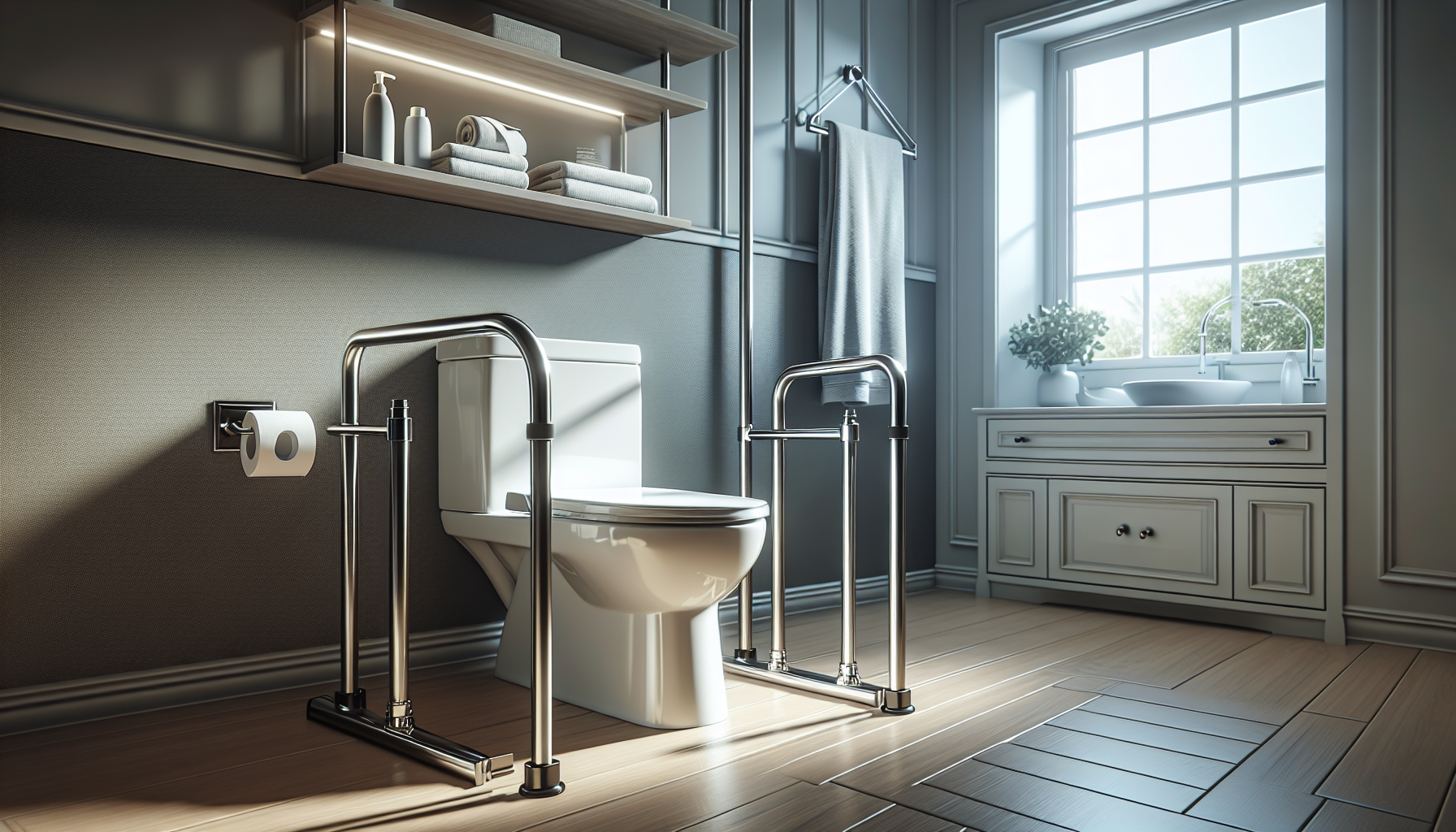
Toilet safety frames and rails are one of the simplest bathroom accessibility upgrades, yet they often deliver the biggest day-to-day improvement in independence, confidence, and fall prevention for people with limited mobility. In practical terms, a toilet safety frame is a freestanding or toilet-mounted support structure that surrounds the toilet and provides armrests for sitting down and standing up, while toilet rails may be fixed to the wall, attached to the floor, or mounted directly to the toilet. Families usually ask the same question I hear during home accessibility reviews: are these products actually worth the investment, or are they just temporary aids that clutter a bathroom? The answer depends on who is using the bathroom, what transfer challenges they have, and whether the device matches the room layout and the user’s body mechanics. For older adults, post-surgical patients, people with arthritis, stroke survivors, and wheelchair users who can perform partial standing transfers, the right frame or rail can reduce effort, improve leverage, and lower the risk of a dangerous bathroom fall. Because bathroom and bedroom accessibility often overlap, this topic also connects to bed rails, transfer poles, raised toilet seats, shower chairs, grab bars, non-slip flooring, bedside commodes, and lighting upgrades. As a hub page within bathroom and bedroom accessibility, this guide explains what toilet safety frames and rails do, who benefits, how they compare with other solutions, what standards and sizing details matter, and how to decide whether the investment is justified in a real home.
Why Toilet Safety Frames and Rails Matter in Bathroom Accessibility
The bathroom is one of the highest-risk rooms in any home because it combines hard surfaces, moisture, tight turning space, and frequent transfers. Data from the Centers for Disease Control and Prevention has consistently shown that falls are a leading cause of injury among older adults, and bathrooms are a common location for serious incidents. In my experience assessing homes after a fall, the problem is rarely the toilet alone. It is the sequence: walking in half-awake at night, pivoting in a narrow space, lowering onto a seat that is too low, then trying to stand without a stable handhold. A toilet safety frame directly addresses the last two parts of that sequence by giving the user a predictable support surface at elbow height.
These devices matter because they improve biomechanics. Most standard toilets are roughly 15 inches from floor to seat, although comfort-height models often reach 17 to 19 inches. For someone with knee osteoarthritis, hip precautions after replacement surgery, lower-body weakness, or poor balance, even a difference of two inches can be decisive. A frame or rail lets the user push through the arms rather than relying entirely on knees and hips. That transfer assistance can conserve energy, reduce pain, and preserve dignity because the user needs less hands-on help from a caregiver.
Bathroom accessibility also influences bedroom safety. If getting to and from the toilet is difficult at night, people may rush, use furniture for support, or avoid drinking fluids to reduce bathroom trips. I have seen all three behaviors create secondary health problems, from dehydration to constipation to nighttime falls. In that sense, toilet rails are not an isolated purchase. They are part of a broader accessibility strategy that should also consider bed height, bedside lighting, motion-activated night lights, clear walking paths, and whether a bedside commode is appropriate during recovery or advanced frailty.
Who Should Consider a Toilet Safety Frame or Rail
Toilet safety frames and rails are most valuable for people who can bear some weight and benefit from upper-extremity support during sit-to-stand and stand-to-sit transfers. This includes older adults with age-related weakness, people recovering from orthopedic surgery, those with Parkinson’s disease, multiple sclerosis, arthritis, neuropathy, or balance impairment, and caregivers supporting someone who tires easily. They are also helpful for bariatric users when the product is properly rated and installed. What they are not is a universal answer for every mobility challenge. Users who cannot stand safely, who require full mechanical lift support, or who have severe cognitive impairment may need a different toileting setup.
When I evaluate whether one is appropriate, I focus on five questions. Can the user reach both arm supports without twisting? Can they push through at least one or both arms reliably? Is there enough room around the toilet for the device and for caregiver access if needed? Does the user transfer straight on and off, or do they perform a lateral transfer from a wheelchair? And will the support remain stable under the user’s full effort when they are tired or unsteady? The answers determine whether a simple frame works, whether a fold-down grab rail is better, or whether the home needs a larger redesign.
Bedroom accessibility should be reviewed at the same time. A person struggling to rise from bed often struggles to rise from the toilet for the same reason: poor leverage. If bed rails, a transfer pole, an adjustable bed, or a mattress height correction are already needed, that is a strong indicator that toilet support may also be worthwhile. Conversely, if toileting difficulty appears only at night, the issue may include poor lighting, sedating medication, urgency, or a long walking distance from bed to bathroom.
Types of Toilet Safety Supports and How They Compare
Not all toilet supports function the same way. Freestanding toilet safety frames usually straddle the toilet and offer two armrests. They are common because they are relatively affordable, easy to install, and removable for renters. Toilet-mounted rails fasten under the existing toilet seat bolts and can work well in smaller bathrooms, though they rely on the toilet’s mounting points and may feel less substantial for heavier users. Wall-mounted grab bars and fold-down support rails are often the most secure long-term option when properly installed into framing or approved backing, but they require correct placement and professional installation. Floor-mounted rails can provide excellent strength where wall structure is inadequate, especially beside the toilet in a commercial-style layout.
Raised toilet seats with arms are another category worth mentioning because many buyers compare them directly with safety frames. A raised seat reduces the distance the user must lower and lift, which can be especially helpful after hip or knee surgery. However, some raised seats introduce wobble if poorly fitted, and not every clamp-on model is suitable for repeated heavy loading. In many homes, the best solution is a combination: a comfort-height toilet or raised seat plus correctly placed rails.
| Option | Best for | Main advantage | Main limitation |
|---|---|---|---|
| Freestanding toilet safety frame | General home use, renters, recovery periods | Easy installation and dual arm support | Can shift if not adjusted well or if floor space is tight |
| Toilet-mounted rail | Small bathrooms with limited side clearance | Compact footprint | Less adaptable and dependent on toilet mounting stability |
| Wall-mounted grab bars or fold-down rails | Long-term accessibility upgrades | High stability when installed correctly | Requires proper wall backing and accurate placement |
| Raised toilet seat with arms | Users needing reduced transfer height | Makes standing easier by increasing seat height | Fit and stability vary significantly by model |
For anyone building a complete bathroom and bedroom accessibility plan, these products should be compared alongside shower grab bars, bath transfer benches, handheld shower heads, anti-scald valves, low-threshold shower entries, bed assist rails, overbed tables, and commodes. The point is not to buy every device. The point is to solve the specific transfer problem with the least intrusive, safest option.
How to Judge Quality, Fit, and Safety Before Buying
A toilet safety frame is worth the investment only if it fits the user and the room. Start with weight capacity. Standard models may support around 250 to 300 pounds, while heavy-duty bariatric products often exceed 500 pounds. Exceeding the rated load is not a small issue; it changes stability, joint stress, and failure risk. Next, check width between arms. If the user is forced to squeeze in, lean outward, or place hands too wide apart, the transfer becomes awkward and less safe. Seat height, armrest height, and adjustability all matter, especially if more than one person uses the bathroom.
Materials and corrosion resistance are also important because bathrooms are humid environments. Powder-coated steel is common and durable, while aluminum reduces weight and resists rust. Look for textured or padded grips if hand pain or weak grip strength is a concern. Non-slip feet are essential on tile or vinyl, but they are not a substitute for structural installation when a wall-mounted product is needed. For fixed grab bars, professional installers and occupational therapists usually follow ADA-related principles for bar diameter, clearance from the wall, and mounting height, even in private homes, because those dimensions are proven to improve grasp and support. While residential bathrooms do not have to match every commercial requirement, the underlying ergonomics are sound.
Placement matters as much as product choice. A sidewall grab bar that is too far forward may help with lowering but not standing. A rear wall bar can assist balance but often does little for leverage. Fold-down rails are useful when there is open transfer space on one side, especially for wheelchair users, but they must not obstruct the transfer path. I strongly recommend measuring the room, the toilet centerline, side clearances, and the user’s elbow-to-elbow width before buying. Guesswork leads to returns and, worse, unsafe improvisation.
Cost, Value, and When the Investment Pays Off
Most toilet safety frames cost far less than a full bathroom remodel. Basic freestanding models often start around the price of a restaurant meal for two, while heavy-duty or premium options cost more but still remain modest compared with medical bills, emergency response, or caregiver strain after a fall. Wall-mounted rails add installation costs, especially if walls need reinforcement or tile drilling, yet they can become a durable part of the home rather than a temporary aid. In real terms, the investment usually pays off when it prevents even one near fall, reduces hands-on assistance, or allows someone to toilet independently for months or years longer.
The value is not only financial. Independence in toileting is closely tied to privacy and self-esteem. I have worked with clients who accepted walkers and shower chairs but resisted toilet assistance because it felt like crossing a line into dependency. Once a well-fitted frame was installed, many changed their view within days because the device gave support without requiring another person in the room. For caregivers, that can mean fewer awkward lifts, less back strain, and less urgency during nighttime routines.
Still, there are cases where the investment is limited. If the bathroom is too narrow, a frame may create more tripping risk than benefit. If the user’s condition is rapidly progressing toward non-weight-bearing transfers, funds may be better spent on a bedside commode, hospital bed setup, transfer equipment, or a broader home accessibility redesign. The best buying decision comes from matching the device to the user’s likely needs over the next twelve to twenty-four months, not just the next week.
Choosing the Right Solution for a Complete Bathroom and Bedroom Accessibility Plan
The best toilet safety frame or rail is the one that fits into a larger accessibility system. Start with the transfer itself: can the user approach the toilet with a cane, walker, or wheelchair without sharp turns? If not, rails alone will not solve the problem. Then assess seat height, flooring traction, lighting, and reach to toilet paper, wipes, and flush controls. In the bedroom, look at bed height, route to the bathroom, doorway width, and nighttime visibility. Small upgrades often work together. A motion-sensor light, a bed rail, and a toilet frame can reduce nighttime fall risk more effectively than any one item alone.
Professional input helps when the situation is complex. Occupational therapists evaluate transfers, joint range, fatigue, cognition, and home layout in a way that online product listings cannot. Certified Aging-in-Place Specialists and reputable accessibility contractors can identify where grab bars, widened doors, curbless showers, or bedroom modifications would create a safer whole-home plan. Product reviews are useful, but they rarely tell you whether a rail will interfere with a walker, a wheelchair footplate, or a caregiver’s stance.
For most households, toilet safety frames and rails are worth the investment when toileting requires effort, causes pain, or creates instability. They are affordable compared with many accessibility upgrades, quick to implement, and often immediately effective. The key is choosing the correct type, verifying dimensions and weight rating, and viewing the purchase as one part of a wider bathroom and bedroom accessibility strategy. If you are evaluating mobility solutions for yourself or a family member, measure the space, document the transfer challenge, and choose the support that makes daily life safer, easier, and more independent.
Frequently Asked Questions
1. Are toilet safety frames and rails really worth the investment?
In many cases, yes. Toilet safety frames and rails are often one of the most cost-effective bathroom accessibility upgrades because they directly support one of the most physically demanding daily movements: sitting down and standing up from the toilet. For people with limited mobility, reduced leg strength, balance concerns, joint pain, or recovery needs after surgery or illness, that extra support can make a significant difference in both safety and confidence. A relatively simple device can reduce the risk of slips, awkward twisting, and loss of balance in a room where falls are especially common.
They are also worth considering because the benefits go beyond fall prevention. Many users report feeling more independent when they can use the bathroom with less or no hands-on assistance. That can improve dignity, reduce caregiver strain, and make everyday routines less stressful. Compared with larger remodeling projects such as widening doorways, installing a walk-in tub, or redesigning the bathroom layout, frames and rails are usually much more affordable and faster to put in place. For households trying to improve accessibility without taking on a full renovation, they are often a practical first step with immediate day-to-day value.
2. What is the difference between a toilet safety frame and a toilet rail?
A toilet safety frame usually refers to a support structure that sits around the toilet and provides armrests on both sides. Some models are freestanding with legs that rest on the floor, while others attach to the toilet itself for added stability. These are especially useful for users who need symmetrical support on both sides when lowering themselves down or pushing back up to standing. Because they are often less permanent than wall-mounted products, safety frames can be a good option for temporary recovery, rental homes, or situations where drilling into the wall is not ideal.
Toilet rails, on the other hand, is a broader term that can include wall-mounted grab rails, fold-down support rails, floor-mounted rails, or rails attached directly to the toilet area. These can provide one-sided or two-sided support depending on the setup. Wall- and floor-mounted rails are often chosen when a more permanent solution is needed or when the bathroom layout requires a specific support angle. The right choice depends on the user’s strength, transfer style, bathroom space, and whether the support needs to be portable or fixed. In general, frames are simple and versatile, while rails offer more customization and long-term integration into the bathroom environment.
3. Who should consider using toilet safety frames or rails?
These supports can be helpful for a wide range of people, not just seniors. Anyone who has difficulty sitting down or rising from a standard-height toilet may benefit. That includes people with arthritis, balance issues, muscle weakness, neurological conditions, chronic pain, joint replacements, spinal problems, or temporary mobility limitations after surgery. They are also commonly used by people recovering from hip or knee procedures, when lowering onto a low seat can be uncomfortable or unsafe without arm support.
Caregivers and family members often overlook just how demanding toilet transfers can be until they become a daily challenge. If a person has started bracing against countertops, towel bars, sink edges, or walls to get on and off the toilet, that is usually a clear sign that dedicated support may be needed. Safety frames and rails can also be appropriate for individuals who are still fairly mobile but want preventive support before a fall happens. In many cases, early installation is smarter than waiting until a crisis or injury forces urgent changes. If there is uncertainty, an occupational therapist, physical therapist, or other mobility professional can help identify the safest option based on the person’s abilities and bathroom setup.
4. How do you choose the right toilet safety frame or rail for a bathroom?
The best choice starts with the user’s needs. Consider how much support the person requires, whether they need help on one side or both, and whether they push up primarily with their arms or rely on a broader transfer technique. Weight capacity is critical and should never be treated as a minor detail. The device should comfortably support the user’s body weight and movement without wobbling. Handle height, width, grip shape, and overall stability also matter because they affect how natural and secure the transfer feels. Some users do best with padded armrests, while others prefer firm, easy-to-clean surfaces and a more open design.
The bathroom itself is just as important. Measure the available space around the toilet, the distance to nearby walls, and any obstacles such as vanities, tubs, or swinging doors. A freestanding frame may work well in one bathroom but be too wide for another. Wall-mounted or fold-down rails can save space, but they must be installed into appropriate structural backing and positioned correctly. It is also important to think about whether the solution is temporary or long term. For short-term recovery, a removable frame may be ideal. For progressive mobility needs or aging in place, a more permanent rail system may make better sense. Whenever possible, choose products from reputable manufacturers and follow installation and maintenance instructions carefully to ensure consistent safety.
5. Can toilet safety frames and rails prevent falls on their own?
They can meaningfully reduce fall risk, but they are most effective as part of a broader bathroom safety plan. Frames and rails help by giving users a stable point of contact during one of the most common moments of bathroom instability: the transition between sitting and standing. That support can reduce sudden shifts in body weight, overreaching, and the temptation to grab unsafe fixtures for leverage. For many people, this alone makes toileting much safer and less exhausting.
That said, no single product eliminates all risk. Bathroom safety also depends on proper toilet height, non-slip flooring, good lighting, clear pathways, and equipment that is correctly installed and matched to the user’s abilities. If a toilet is extremely low, a raised toilet seat combined with a frame or rail may provide better support than rails alone. If the person uses a walker or wheelchair, the transfer path and turning space should be reviewed as well. Regularly checking for loose fittings, worn grips, or unstable placement is also important. In short, toilet safety frames and rails are a highly valuable tool for fall prevention, but they work best when combined with thoughtful bathroom design and a realistic understanding of the user’s mobility needs.