Choosing among the top chair lift manufacturers by global market share is one of the most important steps in buying a mobility solution, because the brand behind the product often determines reliability, safety, service coverage, parts availability, and long-term cost. In this market, “chair lift” usually refers to a stair lift: a motorized seat that travels along a rail mounted to a staircase, allowing people with limited mobility to move safely between floors without major remodeling. The phrase “top stair lift brands” matters to buyers because the difference between a smooth, dependable installation and years of frustration often comes down to engineering quality, dealer support, and how well a manufacturer handles curved stairs, outdoor use, heavy-duty needs, and maintenance over time.
I have worked with families comparing stair lift quotes, installers troubleshooting fit issues on narrow staircases, and care teams trying to balance budget with safety. The pattern is consistent: shoppers usually begin with price, then quickly realize that warranty terms, local dealer competence, and parts logistics are just as important. A stair lift is not a commodity. Models vary by drive system, rail design, seat ergonomics, weight capacity, fold-up dimensions, diagnostic controls, and compliance with standards such as ASME A18.1 in the United States and EN 81-40 in Europe. Market share also matters because larger manufacturers typically support broader dealer networks, maintain more replacement inventory, and invest more heavily in product development.
This hub article covers the leading stair lift brands globally, explains where each manufacturer is strongest, and gives a practical framework for comparing options. While exact global market share fluctuates by year and analyst methodology, the leading names consistently include Acorn, Handicare, Stannah, Bruno, TK Home Solutions, and Savaria, with regional specialists and private-label suppliers also shaping the market. If you are researching the best stair lift for a straight staircase, a curved stair lift for a complex layout, or an outdoor model for entry steps, this guide will help you narrow the field intelligently and prepare for deeper product-by-product reviews.
How the global stair lift market is structured
The global stair lift market is concentrated around a handful of established manufacturers that supply either directly to consumers, through exclusive dealers, or through independent accessibility providers. When buyers ask who has the largest market share, the answer usually depends on geography. Acorn has a huge direct-to-consumer presence in several English-speaking markets. Stannah has long-standing strength in Europe and a reputation built over many decades in lift engineering. Handicare has substantial international reach through acquisitions and dealer relationships. Bruno is especially influential in North America, where dealers value domestic manufacturing, dependable technical support, and robust straight and outdoor lifts. Savaria competes broadly across accessibility categories, and TK Home Solutions remains prominent in many regions due to its engineering heritage.
Market leadership is not only about unit volume. It also reflects installed base, dealer density, product breadth, and visibility among occupational therapists, discharge planners, and aging-in-place specialists. A manufacturer that sells fewer units globally can still be the best choice locally if it has a stronger dealer, faster service response, or a model better suited to your staircase. That is why a buying guide should never treat market share as a shortcut for quality. Instead, think of it as one indicator of stability. Larger manufacturers often have more mature supply chains and better financing options, but smaller or regional brands can outperform them in customization, turnaround time, or personalized support.
Top stair lift brands and where they lead
Acorn is one of the most recognized stair lift brands in the world, known for aggressive consumer marketing and a streamlined product lineup. Its straight and curved lifts are designed for relatively fast installation, and the company’s scale gives it brand recognition that many competitors struggle to match. In practice, Acorn often appeals to buyers who want a direct quote quickly and a standardized buying process. The tradeoff is that service experiences can vary by region, so evaluating local installation quality is essential.
Stannah is widely regarded as one of the benchmark manufacturers in the stair lift industry. The company has a long engineering history and a particularly strong reputation for build quality, ride comfort, and curved stair solutions. In homes with complex turns, landings, or unusual geometry, Stannah products are frequently shortlisted because the company has deep experience with bespoke rail fabrication. Buyers often pay a premium, but many consider that justified by fit, finish, and longevity.
Handicare is a major international player with broad model coverage and strong dealer distribution. Its portfolio typically includes straight, curved, and heavy-duty options, making it relevant for many residential scenarios. Handicare is also common in dealer showrooms because independent mobility companies often appreciate the range and support structure. For buyers, this can mean more opportunities to compare models in person.
Bruno holds a powerful position in the North American market and is one of the brands I have seen recommended most often by installers who prioritize dependable hardware and service access. Bruno’s straight lifts are known for sturdy construction, and its outdoor models are especially respected for weather resistance. The company’s curved offering has also improved its competitive reach. For U.S. buyers, Bruno’s domestic manufacturing and dealer network are significant advantages.
TK Home Solutions, formerly associated with Thyssenkrupp’s home mobility business, remains an important brand in stair lifts. It is known for engineering-focused designs and space-saving features on some models. In tight stairways where folded dimensions and seat rotation are critical, TK products often enter the conversation. Savaria, meanwhile, is influential not only because of stair lifts but because it operates across elevators, wheelchair lifts, and accessibility products. That broader platform can make Savaria attractive to buyers who may later need a larger home access solution.
| Manufacturer | Core strengths | Best known for | Typical buyer fit |
|---|---|---|---|
| Acorn | High visibility, standardized sales process, broad reach | Straight and curved residential lifts | Buyers seeking quick quotes and mainstream options |
| Stannah | Engineering heritage, premium curved rails, ride quality | Custom curved stair lifts | Homes with complex stair layouts |
| Handicare | Wide dealer network, varied portfolio, heavy-duty options | Flexible residential solutions | Shoppers comparing several local dealers |
| Bruno | North American support, durable builds, outdoor expertise | Straight and outdoor stair lifts | U.S. buyers valuing local service and reliability |
| TK Home Solutions | Compact design, engineering-led features | Space-sensitive installations | Narrow staircases and fold-space concerns |
| Savaria | Accessibility product breadth, dealer relationships | Integrated home access planning | Buyers considering future mobility upgrades |
How to compare chair lift manufacturers beyond market share
The best way to compare chair lift manufacturers is to look at six factors: staircase fit, safety systems, service network, warranty coverage, total installed cost, and parts continuity. Staircase fit comes first because a stair lift that technically fits on paper may still create clearance problems for other users in the home. Measure folded width, footrest projection, track overrun options, and whether the seat can park away from the main traffic path. On narrow stairs, even one inch can affect usability.
Safety systems should include obstruction sensors on the carriage and footrest, seatbelt design, swivel-seat locks, overspeed protection, battery backup, and call/send controls. Better manufacturers also provide clear diagnostic displays or service codes that help technicians identify faults quickly. This matters more than many buyers expect. When a lift stops working, troubleshooting speed depends heavily on accessible diagnostics and local parts stock.
Service network is where brand reputation becomes real. Ask who performs installation, whether technicians are factory trained, how after-hours service works, and how long common repairs usually take. I have seen premium brands disappoint because the local dealer was understaffed, and mid-market brands perform excellently because the installer was experienced and responsive. Warranty language deserves careful reading as well. Some companies offer strong coverage on major components but shorter terms on labor or batteries, which are wearable items.
Total installed cost should include rail fabrication, power supply work if needed, permit or inspection requirements where applicable, service call rates after warranty, and removal or buyback options. Straight stair lifts are usually far less expensive than curved models because the rail can be mass produced, while curved rails are custom manufactured from a survey of the staircase. Finally, ask how long the manufacturer supports discontinued models. Long-term parts continuity is one of the clearest signs of a mature, trustworthy supplier.
Straight, curved, outdoor, and heavy-duty models
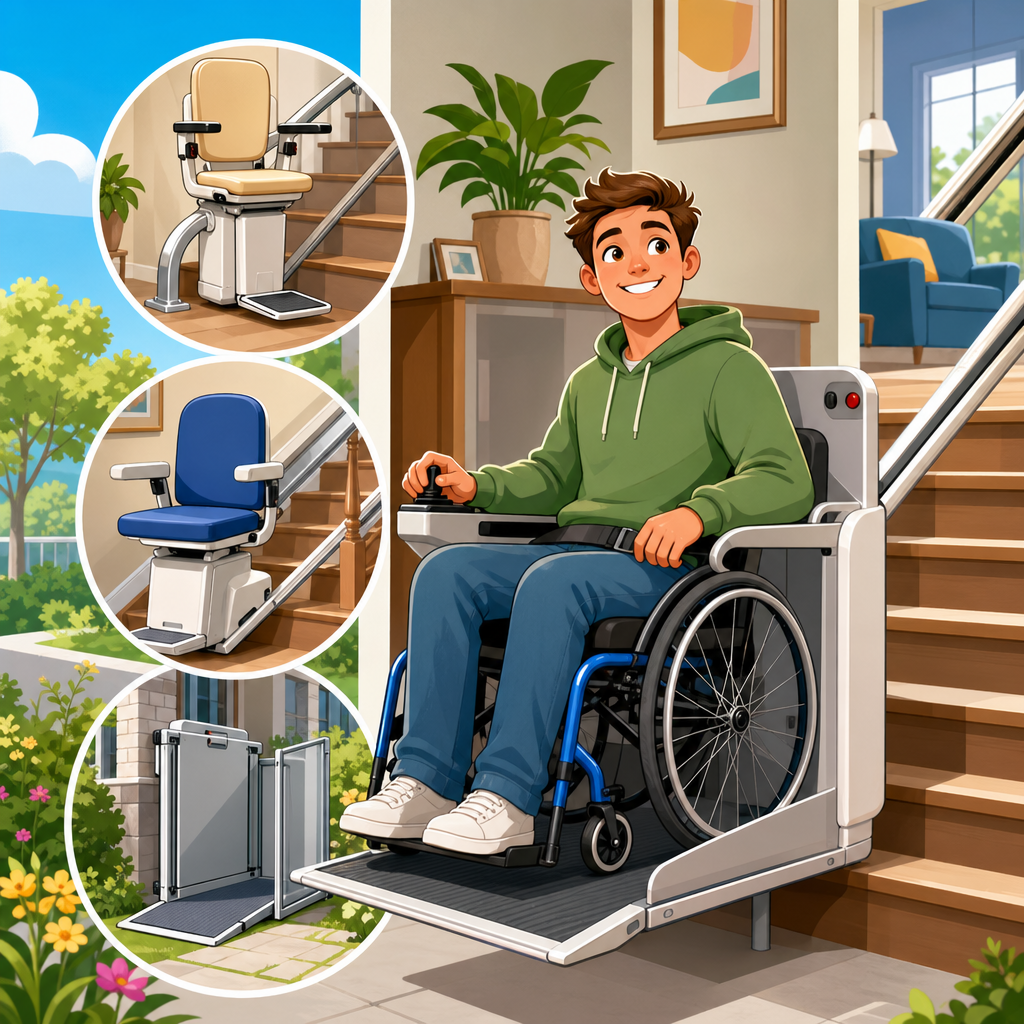
Every major stair lift manufacturer competes across a few core categories, and understanding them helps explain why market share does not automatically translate into best fit. Straight stair lifts run on a simple rail for staircases without turns or intermediate landings. They are the fastest to install and the easiest to compare on price. If your staircase is straight, brand differences often come down to seat comfort, fold-up dimensions, warranty, and dealer service.
Curved stair lifts are where engineering depth becomes decisive. The rail must be built to the exact staircase shape, accounting for bends, landings, parking positions, and user transfer safety. Stannah, Handicare, Acorn, and TK Home Solutions all compete here, but execution varies. A well-designed curved lift should maintain smooth speed transitions, minimize rail intrusion, and allow safe boarding at both ends. Because these systems are bespoke, precision surveying and manufacturing quality have a direct effect on ride performance.
Outdoor stair lifts require UV-resistant covers, corrosion-resistant materials, sealed components, and batteries that tolerate wider temperature swings. Bruno has a particularly strong reputation in this segment, though other major brands offer outdoor variants in selected markets. Heavy-duty or higher-capacity models are essential when user weight, body size, or seat stability make standard chairs less appropriate. Typical capacities range from about 250 to 400 pounds depending on model, while specialized options can go higher. The right manufacturer is the one whose product matches your actual staircase and user needs without compromise.
Buying guidance for this hub and related reviews
As the hub page for top stair lift brands, this guide should help you decide what to read next. If your main question is which company has the best reputation overall, start with Stannah, Bruno, Handicare, and Acorn, then compare local dealer quality. If you need the best stair lift for a narrow staircase, focus on folded width, armrest profile, and parking options, areas where TK Home Solutions and several premium curved systems often stand out. If budget matters most, compare straight lifts from major brands and ask about certified reconditioned units, which can reduce cost if the staircase is simple and the dealer provides warranty support.
If your staircase has turns, stop treating price as the primary filter until you confirm rail design quality and survey accuracy. If you need weather resistance, prioritize outdoor-specific models rather than adapting an indoor unit. If the user has progressive mobility loss, think beyond today’s need and ask whether a home elevator or vertical platform lift may eventually be more suitable. The strongest manufacturers and dealers will discuss those limits honestly instead of forcing every situation into a stair lift sale.
The practical takeaway is simple: start with leading brands because market leaders usually offer proven designs, mature support systems, and better long-term parts availability, but make your final decision based on local execution and staircase-specific fit. Request an in-home assessment, compare at least three quotes, read warranty terms line by line, and ask who services the lift after installation. Use this hub to narrow the field, then move into detailed brand reviews, model comparisons, and buying guides for straight, curved, outdoor, and heavy-duty stair lifts. A well-chosen stair lift can restore safe access to the full home, reduce fall risk, and delay the need for disruptive moves. Shortlist the best brands, schedule surveys, and choose the manufacturer and dealer combination that proves it can support you for years.
Frequently Asked Questions
What does “top chair lift manufacturers by global market share” actually mean?
In this context, “chair lift” usually means a stair lift: a powered seat that moves along a rail attached to a staircase so a person with limited mobility can travel safely between floors. When an article discusses the top chair lift manufacturers by global market share, it is generally referring to the companies that account for the largest share of worldwide stair lift sales, installations, or revenue over a given period. Market share matters because it often reflects the scale of a manufacturer’s distribution network, dealer relationships, product reach, and long-term presence in the mobility industry.
That said, global market share should not be treated as the only measure of quality. A large manufacturer may offer broader service coverage, more standardized parts availability, and stronger dealer support, which can be major advantages for buyers. However, a smaller or more specialized brand may still be an excellent choice for a specific home layout, budget, or mobility need. In other words, market share is best used as a starting point for evaluating brand strength, not as a shortcut to a final decision.
For most buyers, the real value of market-share data is that it helps identify which manufacturers are established enough to support their products over time. If a company has a meaningful global footprint, it is more likely to have mature safety testing, a wider installation network, and better access to replacement components years after purchase. That can translate into lower ownership risk and greater confidence in long-term support.
Why does the manufacturer matter so much when buying a stair lift?
The manufacturer matters because the brand behind the stair lift influences nearly every part of the ownership experience, from product engineering to installation support to future service. A stair lift is not just a one-time purchase; it is a mobility device that people may rely on every day for safety and independence. Because of that, build quality, reliability, and consistency matter a great deal. Established manufacturers often have more refined designs, stronger quality control processes, and more experience producing lifts for straight stairs, curved stairs, outdoor settings, and complex home configurations.
Brand strength also affects service coverage. Many leading manufacturers operate through authorized dealers, and the best ones provide training, technical documentation, and standardized parts pipelines to those dealers. That means if the lift needs adjustment, maintenance, battery replacement, or repair, the homeowner is less likely to face long delays or uncertainty about who can work on the unit. By contrast, buying from a weakly supported brand can create problems later if parts become difficult to source or local service providers are unfamiliar with the model.
Safety is another major reason manufacturer reputation matters. Stair lifts include motors, brakes, batteries, seat belts, sensors, and track systems that must work together smoothly. Trusted manufacturers typically invest more heavily in testing, compliance, and product evolution. They are also more likely to offer clear warranty terms and ongoing support infrastructure. For a product that directly affects a person’s daily mobility and risk of falling, those factors are not minor details; they are central to making a smart purchase.
Does a higher global market share mean a stair lift brand is automatically better?
Not automatically. A higher global market share often signals that a manufacturer is established, widely distributed, and trusted across many regions, which is a strong positive indicator. Larger brands may have better dealer networks, more available parts, stronger training programs, and greater financial stability. Those benefits can make ownership easier and reduce long-term headaches. In practical terms, a company with significant market share is often better positioned to support its products for years after installation.
However, market share alone does not guarantee the best fit for every buyer. The right stair lift depends on several factors, including the staircase type, the user’s physical needs, seat comfort, weight capacity, home layout, controls, folding dimensions, and budget. Some brands excel in straight stair lifts, while others stand out in custom curved applications or outdoor models. A manufacturer with a smaller overall global share may still provide a better solution for a narrow staircase, a more comfortable seat design, or a more responsive local dealer in your area.
The smartest approach is to treat market share as one decision factor among several. Use it to identify credible, established manufacturers, then compare the specific product model, local installer reputation, warranty coverage, service response times, and total ownership cost. In many cases, the installer and support network can affect satisfaction almost as much as the manufacturer itself. A globally dominant brand paired with weak local service may be less appealing than a strong regional provider backed by an excellent dealer.
What should buyers compare when evaluating leading stair lift manufacturers?
Buyers should look beyond brand recognition and compare the factors that will affect everyday use and long-term ownership. Start with product fit: is the lift designed for a straight staircase, a curved staircase, or outdoor use? Not every manufacturer has equal strength in every category. Straight stair lifts are often more standardized and cost-effective, while curved models usually require custom rail design and more specialized installation. If your staircase includes turns, landings, or unusual dimensions, the manufacturer’s experience with custom solutions becomes especially important.
Next, compare safety and usability features. These may include obstruction sensors, seat belts, swivel seats, folding arms and footrests, battery backup, soft start and stop, call/send controls, lock features, and weight capacity. Comfort also matters more than many buyers initially expect, particularly for users who will rely on the lift daily. Seat size, armrest shape, ease of transfer, and control simplicity can vary noticeably between manufacturers and models.
Service support is equally important. Ask whether the brand has authorized local dealers, how quickly service calls are handled, how available replacement parts are, and whether technicians are trained specifically on that manufacturer’s products. Review warranty terms carefully, including what is covered for the motor, transmission, rail, batteries, and labor. Finally, compare the total cost of ownership, not just the quoted purchase price. A slightly higher upfront price from a leading manufacturer may be justified if it comes with better reliability, stronger support, and lower risk of expensive downtime later.
Which is more important: the manufacturer’s reputation or the local dealer and installer?
In most cases, both matter, and the best outcome comes from choosing a strong manufacturer supported by a reputable local dealer. The manufacturer determines the core product quality, engineering standards, replacement parts ecosystem, and overall brand support structure. But the local dealer or installer plays a major role in how that product performs in the real world. A stair lift must be measured correctly, installed properly, tested thoroughly, and explained clearly to the user. Even an excellent brand can lead to frustration if the installation is poor or local service is unreliable.
The dealer is usually the company that handles in-home assessment, recommendation, quoting, installation, and future maintenance. That makes responsiveness, technical skill, and customer care extremely important. A knowledgeable dealer can help you choose the right model for your staircase and mobility needs, while an inexperienced one may oversell features, underestimate installation complexity, or provide weak after-sale support. For this reason, buyers should always research both the brand and the local company representing it.
A practical way to evaluate this is to ask specific questions: How many lifts has the dealer installed? Are technicians factory-trained? What is the average service response time? Are parts stocked locally or ordered as needed? What happens if the lift stops working? The strongest purchase decision usually combines a proven manufacturer with a dealer that has solid reviews, transparent warranty support, and dependable service infrastructure. That combination is often more valuable than brand size alone.