AmeriGlide stair lifts sit in a crowded market where buyers want two things that often conflict: a low upfront price and dependable long-term mobility support. A stair lift is a motorized chair that travels along a rail mounted to the staircase, helping people with limited mobility move safely between floors without relocating or installing a residential elevator. When people ask whether AmeriGlide is budget-friendly or a budget fail, they are really asking a broader question about value: how much reliability, comfort, warranty protection, and installation quality they receive for the money. That question matters because stair lifts are not impulse purchases. In most homes I have evaluated, the buyer is balancing medical needs, fall-risk reduction, home layout constraints, and a fixed retirement budget at the same time.
AmeriGlide has built its reputation around affordability, direct-to-consumer sales, and a lineup that includes both straight and curved stair lift options, plus outdoor models and reconditioned units. In the broader category of top stair lift brands, it typically appears alongside Bruno, Stannah, Handicare, Harmar, Acorn, Savaria, and Access BDD. Each brand approaches the same problem differently. Some emphasize dealer-installed premium systems, some specialize in fast-turn curved rails, and some compete aggressively on entry price. AmeriGlide usually enters the conversation because it promises lower purchase costs than many premium competitors, especially on straight stair lift models.
Price alone, however, does not tell you whether a stair lift is a smart buy. A lower quote can mask tradeoffs in service coverage, customization limits, lead times, return policies, or installation experience. I have seen budget stair lifts work very well in simple, straight-run homes where the owner wanted practical mobility without cosmetic upgrades. I have also seen buyers regret choosing only on price when they needed advanced seat ergonomics, complex rail geometry, or highly responsive local service. The right way to assess AmeriGlide is to place it inside the full landscape of top stair lift brands and compare the total ownership picture, not just the advertised starting number.
This hub article covers that landscape comprehensively. It explains where AmeriGlide fits, how the major brands differ, what features matter most, and which buyer profiles should prioritize budget over premium support. If you are researching the best stair lift brand, comparing AmeriGlide stair lifts with Bruno or Stannah, or trying to decide whether a reconditioned unit is worth the risk, this guide will give you a clear framework for making a confident decision.
Where AmeriGlide Fits Among the Top Stair Lift Brands
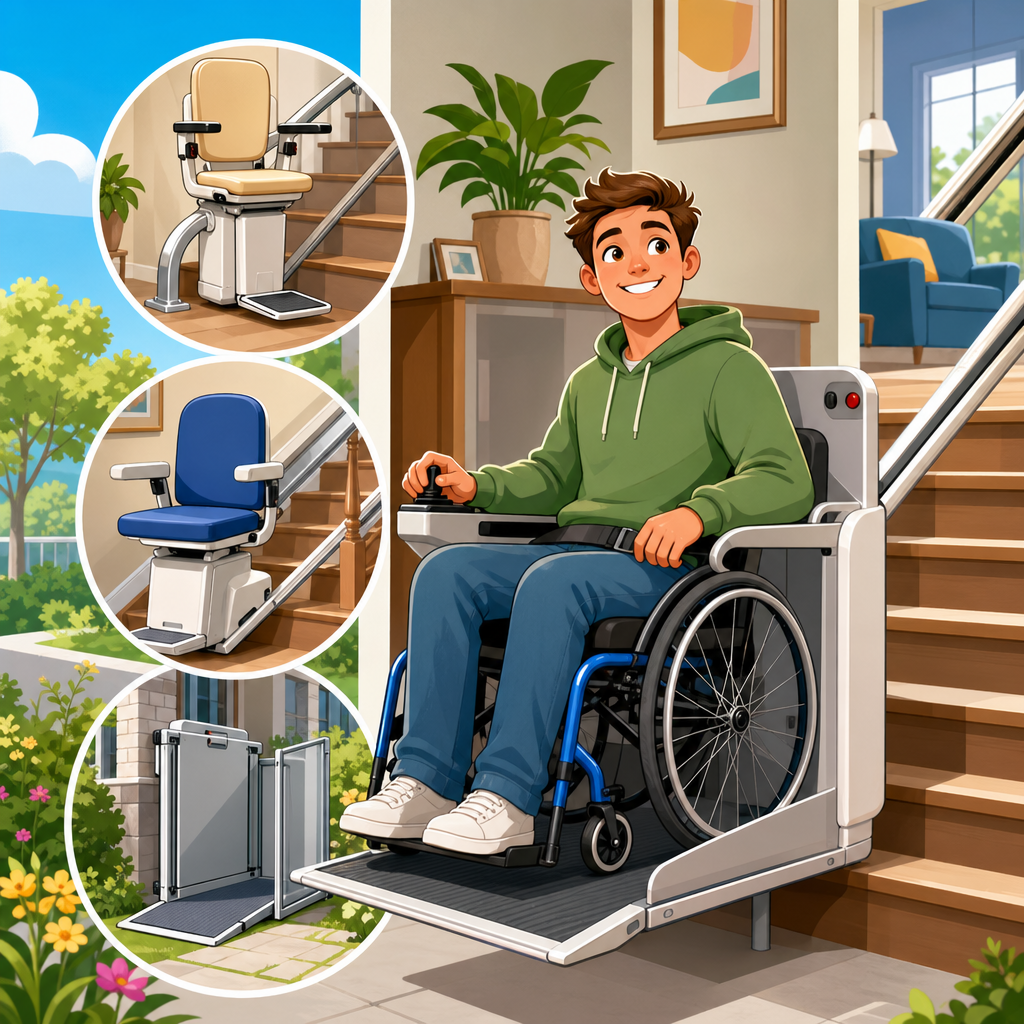
AmeriGlide is best understood as a value-oriented brand and retailer operating in a market dominated by service-heavy dealer networks. Its catalog commonly includes straight stair lifts, curved stair lifts, outdoor stair lifts, vertical platform lifts, and lift chairs, but its strongest appeal has historically been entry-level affordability on straight staircases. In practical terms, that means AmeriGlide often attracts buyers who want a lower-cost path to staying in a two-story home without sacrificing basic safety essentials such as seat belts, obstruction sensors, battery backup, and folding components.
Compared with top stair lift brands like Bruno and Stannah, AmeriGlide usually competes less on luxury fit-and-finish and more on accessible pricing. Bruno is widely respected for robust build quality, strong dealer support, and reliable indoor and outdoor models manufactured in the United States. Stannah is known for refined engineering, comfort, and custom curved installations supported by an established service network. Handicare brings broad configurability and twin-rail curved options. Harmar frequently appeals to buyers wanting practical features and domestic manufacturing. Acorn emphasizes broad recognition and national marketing reach. Savaria often enters premium accessibility discussions because of its wider lift portfolio and custom solutions.
The key point is that AmeriGlide is not necessarily trying to beat every premium brand on every measure. It is trying to win buyers who need the core function of a stair lift at a more attainable price point. For straightforward home layouts, that positioning can work. For highly customized staircases, users with complex transfer needs, or families who want white-glove local support, other top stair lift brands may justify their higher quotes.
What You Actually Get With AmeriGlide Stair Lifts
AmeriGlide stair lifts generally include the essential components buyers expect in a modern residential system. A powered chair moves along a rail fixed to stair treads rather than the wall. Most models use battery power with charging points, allowing operation during a power outage. Standard safety elements usually include a seat belt, swivel seat for safer dismounting, folding footrest and arms, call-send controls, and sensors that stop the lift if it contacts an obstruction on the stairs. Those are not luxury extras; they are baseline safety requirements.
Where AmeriGlide becomes more attractive is in offering multiple purchasing paths. New straight stair lifts are often the headline value buy, but many shoppers look at reconditioned stair lifts to reduce cost even further. Reconditioned units can make sense if the rail length and staircase conditions align, though buyers should check exactly what parts were refurbished, what warranty applies, and who handles service in their zip code. Curved models are available too, but curved stair lifts are custom products by nature, and that usually narrows the price advantage because engineering, rail fabrication, and installation complexity drive the final quote.
Buyers should also understand the distinction between product features and ownership support. A stair lift can look competitive on paper yet feel very different once you factor in measurement accuracy, scheduling, installer skill, parts availability, and warranty labor. In my experience, that support layer is where major differences between top stair lift brands become visible. A simple straight lift installed correctly can perform well for years. A custom system with poor planning can create recurring frustration regardless of brand name.
AmeriGlide vs Other Leading Brands
When comparing stair lift brands, buyers should evaluate five categories: price, customization, service network, comfort, and long-term reliability. AmeriGlide tends to score strongly on price, especially for straight stair lifts. Bruno and Stannah often score higher for dealer support and premium user experience. Handicare and Savaria are often strong choices for more complex configurations. Harmar lands in the middle for many buyers, combining recognizable domestic manufacturing with practical features. Acorn often appeals to shoppers who want a widely advertised national provider, though actual satisfaction can depend heavily on local installation quality.
| Brand | Best Known For | Typical Strength | Potential Drawback |
|---|---|---|---|
| AmeriGlide | Affordability | Lower entry cost on straight lifts | Support experience can vary by market |
| Bruno | Build quality | Strong dealer network and outdoor options | Higher upfront price |
| Stannah | Premium engineering | Comfort and custom curved expertise | Often expensive |
| Handicare | Configuration flexibility | Good fit for complex stair layouts | Dealer experience varies |
| Harmar | Practical value | Balanced features and U.S. manufacturing | Not always the lowest price |
| Acorn | Brand visibility | National presence and straightforward ordering | Mixed service reviews in some regions |
| Savaria | Accessibility portfolio | Strong custom and premium solutions | Can exceed budget quickly |
For a real-world example, consider a homeowner with a straight 14-step staircase, modest transfer ability, and a clear budget ceiling. AmeriGlide may be a smart fit because the installation is simple and the core requirement is safe movement between floors. Now consider a home with a narrow staircase, intermediate landing, and a user with arthritis who needs a highly supportive seat and very smooth starts and stops. In that case, paying more for a premium model from Bruno, Stannah, or Handicare may produce better day-to-day usability and fewer compromises.
Cost, Installation, and the Hidden Variables Behind the Quote
Stair lift pricing varies widely because the rail, not the chair, often drives the economics. Straight stair lifts are usually far less expensive because the rail can be cut to length from a standard design. Curved stair lifts require custom measurement and fabrication around turns, landings, and parking positions. Outdoor stair lifts add weather-resistant materials, covers, and durability requirements. Across the market, a straight lift may fall in the low-thousands range, while curved systems can easily reach several times that amount.
AmeriGlide’s value proposition is strongest where variables stay controlled. If you have a straight staircase, standard weight requirements, and no unusual mounting constraints, cost savings are usually easier to achieve. If your home needs a tight parking solution, powered folding rail, custom seat height, or heavy-duty capacity, the gap between AmeriGlide and more premium brands may narrow. Buyers should request itemized quotes showing rail type, seat options, power features, installation labor, warranty terms, and service call policies. Without that detail, the cheaper number can be misleading.
Installation quality matters as much as hardware quality. A well-installed stair lift should run smoothly, park cleanly, charge consistently, and leave enough staircase clearance for other users. Poor measurements can create overruns at landings or awkward transfer positions. Ask whether the installer is factory-trained, whether a site survey is performed in person, and how post-installation adjustments are handled. Those questions are especially important when comparing direct-sale models with dealer-installed brands.
Who Should Buy AmeriGlide and Who Should Look Elsewhere
AmeriGlide is a sensible choice for buyers who prioritize affordability, have a relatively simple staircase, and understand that they are purchasing a functional mobility device rather than a premium custom experience. It is also worth considering for households exploring reconditioned stair lifts, vacation homes, rental properties, or temporary recovery situations where spending top dollar makes less sense. In those scenarios, keeping someone safely at home may matter more than getting the quietest ride or the most polished upholstery.
Buyers should look harder at Bruno, Stannah, Handicare, Harmar, or Savaria when support responsiveness, advanced customization, or premium ergonomics are nonnegotiable. This is especially true for users with progressive mobility conditions, larger body types requiring specific seat geometry, very narrow stairs, or multi-landing curved layouts. Families coordinating care from a distance often place a premium on dependable local service because downtime can immediately disrupt daily living.
The best buying process is simple: shortlist three brands, schedule surveys, compare written quotes line by line, and test the seat if possible. Read warranty language carefully, including what is covered for batteries, drivetrain components, electronics, and labor. Ask about annual maintenance, emergency service, and parts turnaround. AmeriGlide stair lifts can absolutely be budget-friendly. They become a budget fail only when buyers use price as the sole filter and ignore fit, service, and long-term usability. Start with your staircase, your mobility needs, and your support expectations, then choose the brand that matches all three. If you are building your shortlist of top stair lift brands, use this hub as your starting point and continue into model-specific reviews before making a final purchase.
Frequently Asked Questions
1. Are AmeriGlide stair lifts actually budget-friendly, or do the low prices hide bigger long-term costs?
AmeriGlide stair lifts are often considered budget-friendly because their advertised starting prices tend to come in lower than many well-known competitors. For shoppers focused on immediate affordability, that can make AmeriGlide stand out quickly. However, the real answer depends on what you include in the total cost of ownership. A stair lift is not just a chair and rail. Buyers also need to think about installation, staircase layout, optional upgrades, warranty coverage, maintenance, replacement parts, and how long the unit is likely to remain dependable under regular use.
In many cases, AmeriGlide can be a good value for people with a straightforward staircase and basic mobility needs. If the staircase is standard, the user does not need advanced seating or power features, and the home does not require a custom rail, the lower purchase price may genuinely translate into meaningful savings. That is where AmeriGlide tends to appeal most: practical buyers who want a functional stair lift without paying premium-brand pricing.
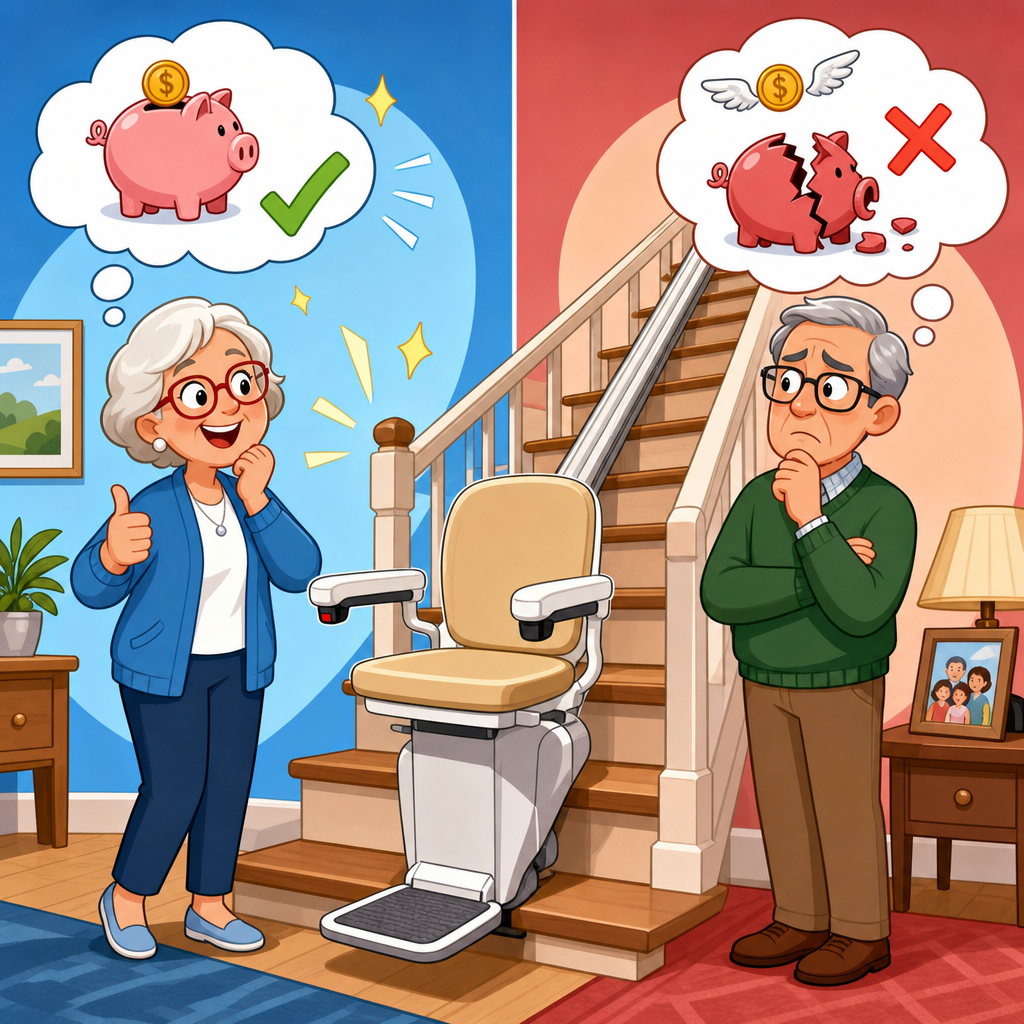
Where the “budget fail” concern comes in is when buyers assume the lowest sticker price always equals the best deal. If installation is more complicated, if service access is limited in the buyer’s area, or if a lower-end model lacks features that improve daily comfort and usability, the savings can narrow fast. Over time, even small frustrations matter. A stair lift that is less comfortable, less intuitive, or more difficult to service may feel expensive despite a lower upfront quote. The smartest way to judge AmeriGlide is not by advertised price alone, but by comparing the full package: purchase cost, included features, warranty terms, service availability, and expected reliability over several years.
2. How does AmeriGlide compare with other stair lift brands when it comes to value for money?
AmeriGlide usually competes on affordability first, and that shapes its position in the market. Compared with premium stair lift brands, AmeriGlide may offer fewer high-end refinements, but it can still deliver solid value for buyers who prioritize essential mobility support over luxury touches. In value terms, the key question is whether the lift safely and reliably meets the user’s needs at a reasonable long-term cost. For many households, especially those trying to avoid the major expense of moving, remodeling, or installing a home elevator, even a modestly priced stair lift can be a worthwhile investment.
Some competing brands build their reputation around dealer networks, white-glove installation, highly polished designs, and extensive service infrastructure. Those strengths can justify a higher price for buyers who want extra assurance and ongoing local support. AmeriGlide, by contrast, tends to appeal to shoppers who are comfortable comparing specifications closely and making a more price-conscious decision. That does not automatically make it inferior. It simply means buyers should be realistic about what they are paying for and what they are not.
Value also depends heavily on fit. If a user only needs a dependable straight stair lift for one person in a standard home, AmeriGlide may compare very favorably on cost-per-use. If the user needs a curved stair lift, advanced safety features, premium upholstery, or very responsive in-home support, another brand may offer better overall value despite a higher price. In short, AmeriGlide can represent strong value for budget-minded buyers, but the best value is not always the cheapest option. It is the model and brand that delivers safe, comfortable, long-lasting mobility support without unexpected compromises.
3. What features and reliability should buyers expect from an AmeriGlide stair lift at a lower price point?
At a lower price point, buyers should expect AmeriGlide stair lifts to focus on core functionality: safe transportation up and down the stairs, basic user controls, common safety sensors, seat belts, battery backup, and designs suited to standard residential use. These are the features that matter most in everyday mobility support, and they are often enough for users whose primary goal is regaining independent access to multiple floors.
Reliability expectations should be practical rather than exaggerated. A lower-cost stair lift does not necessarily mean poor performance, but it does mean buyers should pay careful attention to build quality, weight capacity, rail fit, seat comfort, ease of folding, and charging system performance. Since stair lifts are assistive devices used repeatedly and often daily, even small design differences become noticeable over time. A chair that feels stable, starts and stops smoothly, and parks reliably can make a major difference in confidence and ease of use.
Another important point is that reliability is influenced not just by manufacturing quality, but by proper installation and ongoing care. Even a good stair lift can underperform if it is poorly installed, used beyond its intended limits, or not maintained as recommended. Buyers considering AmeriGlide should review model-specific ratings, warranty details, and service arrangements instead of assuming all models perform the same. Lower pricing can be a perfectly reasonable tradeoff if the lift still delivers dependable operation, but buyers should verify that the features included match the user’s physical needs today and likely needs in the near future.
4. Are installation, maintenance, and warranty issues where AmeriGlide can become more expensive than expected?
Yes, these are exactly the areas where a seemingly affordable stair lift can become more expensive than expected, and they deserve close attention before purchase. Installation costs can vary based on staircase type, rail length, landings, obstructions, electrical access, and whether the unit is straight or curved. A simple setup may stay close to the advertised pricing, while a more complex home layout can raise the final bill substantially. Buyers should always ask for a complete quote that separates equipment, installation, delivery, and any optional add-ons.
Maintenance is another piece of the puzzle. Stair lifts are mechanical devices with motors, batteries, electronics, and moving parts, so some upkeep should be expected over time. Battery replacement, service calls, adjustments, and wear-related repairs can affect long-term affordability. This does not mean AmeriGlide is unusually costly to own, but it does mean the lowest upfront quote should never be treated as the full financial picture. A stair lift is only budget-friendly if it remains affordable to keep running safely.
Warranty coverage can either strengthen or weaken the overall value proposition. A solid warranty may reduce financial risk, while limited coverage may leave owners paying out of pocket for labor, parts, or service visits sooner than they expected. Buyers should check not only how long the warranty lasts, but what it actually covers. There is a big difference between coverage on major components and coverage that includes labor and service support. When evaluating AmeriGlide, the best approach is to look beyond the product brochure and ask practical questions: Who installs it? Who services it locally? How quickly can repairs be handled? What costs are likely after the first year or two? Those answers often reveal whether a “budget” stair lift is truly economical.
5. Who is a good candidate for an AmeriGlide stair lift, and who may be better off choosing a higher-end option?
An AmeriGlide stair lift is often a good fit for buyers who need a straightforward mobility solution, want to control upfront spending, and have a home that does not require highly customized installation. It can make particular sense for people with a standard staircase, moderate daily usage, and mobility needs that are stable rather than rapidly changing. It may also appeal to families seeking a practical alternative to relocating, avoiding stairs entirely, or taking on the cost and disruption of larger home modifications.
Budget-conscious households, older adults aging in place, and caregivers trying to improve safety quickly may find AmeriGlide attractive if the model selected includes the right essentials: comfortable seating, easy controls, appropriate weight support, dependable safety sensors, and service options they are comfortable with. In those situations, a lower-priced lift can still be a smart and effective investment because it restores access, reduces fall risk, and supports independence at home.
On the other hand, some buyers may be better served by a higher-end brand or a more premium model. That includes people with complex staircases, users who need a custom curved rail, households expecting heavy daily use, or anyone who places a high value on premium comfort, advanced features, or robust local service support. Buyers with progressive mobility conditions may also want to think ahead, since a stair lift that meets today’s needs may not be ideal a year or two from now. Ultimately, AmeriGlide is best viewed as a value-oriented option rather than a one-size-fits-all answer. It can be budget-friendly in the right scenario, but the right scenario matters just as much as the price.