Best premium stair lifts for multi-story mansions demand a different standard than ordinary home mobility equipment because they must combine flawless travel across long runs, advanced safety engineering, discreet design, and enough customization to match a high-value residence rather than visually downgrade it. In this segment, “premium” means more than a padded seat or a polished rail. It refers to bespoke curved track fabrication, higher weight capacities, faster yet controlled ride quality, power swivel seats, integrated call stations, upgraded upholstery, quiet-drive transmissions, and installation planning that respects architecture, traffic flow, and interior finishes. In large homes with multiple staircases, galleries, split landings, or service stairs, the best system is rarely an off-the-shelf model. It is usually a planned mobility solution.
I have worked with homeowners comparing lifts for estates, renovated brownstones, and three-story custom homes, and the pattern is consistent: buyers who focus only on sticker price often miss the true decision factors. In a mansion, the lift must fit complex geometry, serve daily use without hesitation, and preserve both safety and appearance over many years. That means evaluating rail design, battery backup, diagnostic systems, warranty terms, lead times, and dealer capability alongside aesthetics. It also means understanding whether one user needs a single primary lift, or whether the property requires several coordinated units for public and private zones. A premium stair lift can restore full access to a home, delay a disruptive move, and reduce fall risk dramatically, but only when the product matches the house and the user.
This guide covers the luxury and premium models category as a hub for buyers researching high-end stair lifts. You will learn which features matter most in multi-story mansions, how leading brands differ, what custom options justify the premium, and how to evaluate installation and long-term ownership. If you are comparing elegant curved systems, heavy-duty chairs, or designer finishes for a landmark property, this article gives you the framework to make a confident purchase.
What Makes a Stair Lift Truly Premium in a Mansion
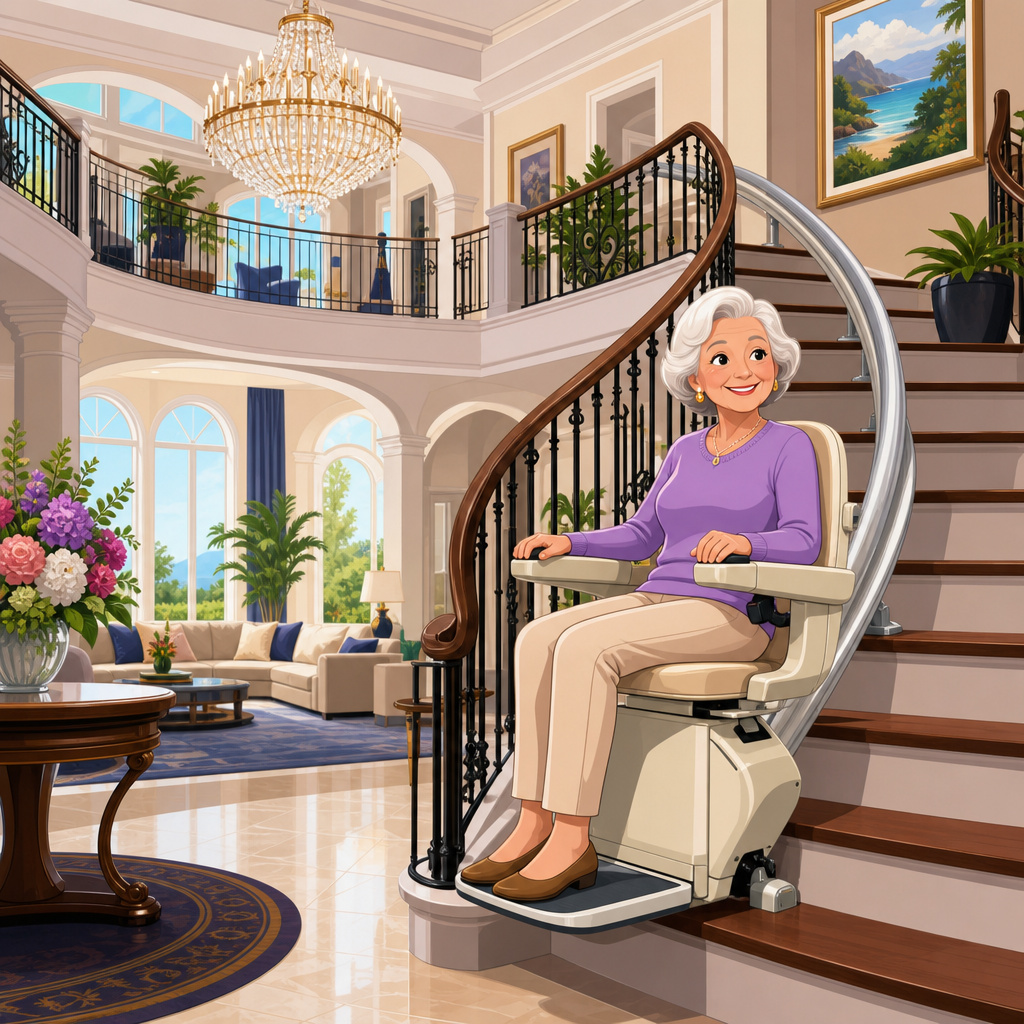
A premium stair lift for a mansion starts with custom engineering. Straight stair lifts can be excellent products, but luxury homes usually introduce complications: sweeping curved stairs, intermediate landings, alternating stair widths, or transitions between visible formal spaces and private family areas. Premium manufacturers address this by measuring the staircase precisely, then fabricating a rail to the home rather than forcing the home to accept a standard rail. Brands such as Stannah, Bruno, Handicare, and Access BDD are frequently considered in this tier because they support custom curved applications, upholstery choices, and advanced ride controls.
Ride quality is another differentiator. On a long staircase, gear noise, vibration, abrupt starts, and rail joints become impossible to ignore. Better systems use refined transmission assemblies, soft-start and soft-stop programming, and carefully matched motor output to maintain smooth acceleration. In practice, this matters just as much as top speed. Mansion owners do not want a chair that rattles through a formal foyer or jerks at every transition. They want quiet, predictable movement that feels engineered, not improvised.
Premium also includes finish integration. The best high-end stair lifts offer slim rails, parking options away from the main sightline, folding arms and footrests, and upholstery that can coordinate with woodwork, stone, or contemporary interiors. Some projects even use parking curves that move the chair away from the primary staircase view at the top or bottom landing. That feature alone can make the difference between a visible mobility device and a solution that almost disappears when not in use.
Top Premium Stair Lift Brands and Where Each Excels
Stannah is one of the strongest choices for custom curved staircases in luxury homes because its curved systems are known for reliable rail fabrication, smooth travel, and a polished finish. In projects I have reviewed, Stannah often appeals to buyers who want a balanced combination of engineering pedigree and residential aesthetics. Its seats tend to feel substantial rather than clinical, and the controls are straightforward for older users with reduced dexterity.
Bruno stands out in North America for build quality, dealer support, and strong straight and curved offerings. The Bruno Elite line is especially relevant in upscale homes because it combines a refined appearance with dependable battery operation and solid comfort. Bruno is often a practical premium choice when the owner wants proven reliability and responsive service infrastructure. For estates where downtime is unacceptable, dealer network quality matters almost as much as chair specifications.
Handicare is often considered where customization and ergonomic seating are priorities. Its curved systems can suit more intricate stair layouts, and the company’s model range gives buyers flexibility in footprint and features. Access BDD, depending on region, is another name associated with bespoke curved lifts and elegant installations. Savaria also deserves attention, particularly when a project may eventually involve broader accessibility planning such as elevators, vertical platform lifts, or barrier-free remodeling. In very large homes, buyers often compare stair lifts with residential elevators at the same time, and Savaria participates credibly in both conversations.
| Brand | Best Fit | Key Strength | Typical Mansion Use Case |
|---|---|---|---|
| Stannah | Custom curved stairs | Smooth ride and strong finish quality | Main formal staircase with visible architecture |
| Bruno | Reliability-focused buyers | Dealer support and robust construction | Primary daily-use lift across two or three levels |
| Handicare | Complex layouts | Customization and ergonomic options | Split landings or narrower secondary stairs |
| Access BDD | Bespoke luxury installs | Custom rail solutions | Architecturally sensitive retrofits |
| Savaria | Whole-home accessibility planning | Broader mobility product ecosystem | Homes weighing lift versus residential elevator |
Essential Features for Multi-Story Mansion Installations
For multi-story mansions, the first must-have feature is a custom curved rail or a planned combination of multiple lifts. A single elegant staircase from first floor to second may be simple compared with a home that also has a lower-level theater, mezzanine library, guest wing, or staff stair. Each run needs to be mapped for user ability, traffic patterns, transfer space, and emergency egress. I advise buyers to start with the user journey, not the staircase alone. Ask: where does the resident sleep, bathe, dine, and entertain, and which routes must remain accessible every day?
Battery power with automatic charging is nonnegotiable. Most modern stair lifts run on batteries that recharge at charge points on the rail, allowing operation during a power outage. In larger homes, outages may be rare, but the consequences of being stranded midway are serious. Look for clear specifications on how many trips the lift can complete without household power and whether charging points exist at both ends or in parked positions.
Safety systems should include obstruction sensors on the carriage and footrest, seat belts, overspeed controls, locking swivel seats, and secure call-send remotes. Powered footrests and powered swivel functions are often worth the extra cost in premium installations because they reduce bending and twisting. Heavy-duty capacities can also matter. Some premium chairs support higher user weights, but capacity must be reviewed alongside seat width, arm spacing, and staircase clearance so that the system remains comfortable and code-conscious.
Noise should be evaluated in person. Manufacturers may advertise quiet operation, but mansions with open foyers and hard surfaces amplify sound. Ask for a showroom demonstration or a home visit to a comparable installation. Also assess seat height, arm geometry, joystick placement, and ease of transferring at top and bottom landings. A chair can look beautiful in a brochure and still be awkward for the actual user.
Design Integration, Materials, and Architectural Sensitivity
Luxury buyers are often less concerned with whether a stair lift can be installed than with whether it can be installed gracefully. Premium systems should respect millwork, balustrades, stone treads, and sightlines. Most stair lifts attach to the treads rather than the wall, which helps preserve paneling and plaster, but bracket placement still requires care. On high-end jobs, installers should protect finishes meticulously, coordinate with interior designers when necessary, and plan parking locations so the chair does not dominate the room.
Seat upholstery, rail color, and trim options deserve more attention than many buyers realize. Cream, tan, graphite, and wood-adjacent tones often integrate better than stark medical beige. In traditional interiors, the chair should appear tailored and calm. In contemporary mansions, a slimmer profile and darker rail can reduce visual clutter. Some homeowners choose a secondary stair for daily travel to keep the main staircase visually untouched, but that only works if the alternative route is genuinely convenient and safe.
Architectural sensitivity also includes preserving usable stair width. Large homes may host guests, staff, children, or caregivers, so folded clearance matters. Local requirements vary, and a reputable dealer should discuss practical clearance, handrail interaction, and emergency use honestly. If the lift obstructs normal movement, resentment builds quickly, even when the device performs well. The best installations feel intentional from day one.
Installation Planning, Service, and Cost of Ownership
Premium stair lift buying is as much about the dealer and installer as the brand. In mansion projects, surveying errors become expensive because curved rails are manufactured to exact dimensions. A professional survey should document tread depth, riser height, landing space, overrun options, seat parking, power supply, and user transfer needs. Ask who performs the survey, who fabricates the rail, what the revision process is if site conditions change, and how long manufacturing will take. Curved premium models commonly require several weeks, sometimes longer for highly customized layouts.
Service response is critical. A lift in a primary residence is not decorative equipment; it is an access lifeline. Ask whether the dealer offers local technicians, preventive maintenance plans, emergency callouts, and stocked replacement parts. Premium buyers should request a written warranty breakdown covering motor, gearbox, electronics, batteries, and labor. Batteries are consumables and usually need replacement periodically, often every few years depending on use and environment.
Cost varies widely. A premium straight stair lift may start in the mid-thousands, while a custom curved system for a mansion can rise significantly depending on complexity, multiple landings, powered options, upholstery upgrades, and installation logistics. In very large homes with several staircases, total project cost can approach or compete with limited elevator solutions, especially when structural work is already planned. That does not make stair lifts poor value. In many cases, they remain faster to install, less invasive, and easier to service than a new residential elevator. The right comparison is lifetime usability per dollar spent, not purchase price alone.
How to Choose the Best Premium Model for Your Home
Start by ranking priorities: primary user comfort, architectural discretion, staircase complexity, service coverage, and future needs. Then request in-home assessments from at least two qualified dealers. During each visit, insist on specific answers. Can the lift park out of view? How much folded clearance remains? What is the exact weight capacity? How many powered trips are available during an outage? What maintenance is recommended annually? Which nearby installations resemble your project?
Use the assessments to compare not just products, but confidence. The best premium stair lift provider explains limitations plainly. For example, a beautiful seat may not suit a user with poor trunk control. A narrow rail profile may require tradeoffs in seat size. A single lift on the main staircase may still leave the basement wine cellar or upper guest suites inaccessible. Good advisors surface these issues early.
For most multi-story mansions, the best premium stair lift is the one that disappears into the home while performing flawlessly every day. That usually means a custom curved model from an established brand, installed by a dealer with strong survey discipline and long-term service capacity. Focus on fit, smoothness, safety, and support rather than brochure glamour. If you are building your shortlist, schedule in-home surveys, test ride premium models, and compare service terms before signing. That process will lead you to a lift that protects independence without compromising the character of the home.
Frequently Asked Questions
What makes a stair lift “premium” for a multi-story mansion?
A premium stair lift for a multi-story mansion is defined by engineering quality, customization, ride performance, and design integration rather than by simple comfort upgrades. In luxury residences, stair systems are often longer, wider, more architecturally complex, and more visually prominent than those in standard homes. That means the lift must do much more than carry a person from one level to another. It needs to travel extended distances smoothly, navigate custom curves and intermediate landings with precision, and maintain consistent performance over a much larger footprint.
Premium models typically feature bespoke rail fabrication tailored to the exact geometry of the staircase, including spirals, sweeping turns, split-level transitions, and multiple landings. They also tend to offer stronger drive systems, higher weight capacities, soft-start and soft-stop technology, and more advanced safety features such as obstruction sensors, overspeed controls, swivel seat interlocks, and battery backup systems. Just as important, premium stair lifts are designed to blend into a luxury interior. Upholstery, rail finishes, seat profiles, folding components, and parking positions can often be customized so the lift does not look like a medical afterthought in an otherwise high-end home.
In short, a premium stair lift is about total fit: fit for the user, fit for the architecture, fit for long-term reliability, and fit for the expectations that come with a high-value property.
Are curved stair lifts necessary for mansions with multiple floors and complex staircases?
In many multi-story mansions, yes. Curved stair lifts are often essential because luxury homes rarely use simple, uninterrupted straight stair runs from floor to floor. Instead, they may feature grand staircases with turns, wraparound sections, half-landings, split landings, or decorative architectural elements that require a rail system built to exact measurements. A straight stair lift only works on a single, linear section of stairs, so it is typically not sufficient for homes with complex layouts.
A curved premium stair lift uses a made-to-order rail designed specifically for the home. This allows the chair to move smoothly around corners, through landings, and over long vertical travel paths without requiring the user to transfer between multiple lifts. In a mansion, this is a major advantage because convenience, continuity, and safety matter more as the number of floors increases. A single integrated curved system can preserve independence and reduce the logistical complexity of moving between levels.
Another reason curved lifts are so important in upscale homes is aesthetics. A custom-fabricated rail can be planned to follow the inside or outside edge of the staircase in a way that minimizes visual intrusion and preserves walking space. Premium manufacturers and installers can also create parking positions away from the main focal points of the staircase, helping the equipment remain discreet when not in use. For homeowners who want accessibility without compromising the elegance of a signature staircase, curved systems are usually the best solution.
How important are safety features in a premium stair lift for a large residence?
Safety features are absolutely central, especially in a large residence where stair runs may be longer, usage may be more frequent, and the consequences of equipment failure are more serious. A premium stair lift should include a full suite of advanced safety systems, not just basic seat belts and stop controls. Long-travel installations demand stable engineering, precise speed control, and dependable braking throughout the route.
Key premium safety features often include obstruction sensors on the chair and footrest, which stop the lift if something is detected on the stairs or along the rail path. Swivel seat locks help ensure the user can board and exit safely at the landing without twisting awkwardly. Seat belt systems, folding footrests, and armrests add security and comfort during travel. Battery backup is also crucial, allowing the lift to continue operating during a power outage so the user is not stranded on a level of the home.
Higher-end systems may also include diagnostic monitoring, overspeed governors, pressure-sensitive edges, secure charging points, and remote call-send controls to move the chair between floors when needed. In mansions with multiple residents, guests, or staff, these features improve usability as well as safety. Professional installation and ongoing maintenance are just as important as the equipment itself. Even the best stair lift is only as safe as its setup, calibration, and service history. For that reason, buyers should prioritize manufacturers and installers with strong records in custom installations, code compliance, and long-term support.
Can a premium stair lift be customized to match the interior design of a luxury home?
Yes, and that is one of the biggest distinctions between standard models and true premium stair lifts. In a multi-story mansion, accessibility equipment must often coexist with custom millwork, designer finishes, stone staircases, wrought-iron balustrades, or statement architecture. A premium stair lift should therefore be customizable in both form and finish so it complements the home rather than detracts from it.
Customization may include rail color matching, upgraded upholstery materials, slimmer seat designs, folding mechanisms that reduce projection into the stairway, and tailored parking locations at top or bottom landings. Some models offer compact seats and hinged or retractable rail sections to maintain traffic flow and avoid blocking nearby corridors or doorways. Others can be specified with understated profiles intended to visually recede into the background when folded away.
Beyond cosmetics, customization also applies to usability. Seat height, armrest width, control style, weight capacity, and transfer orientation can often be adjusted to suit the primary user. In larger homes where more than one person may use the lift, controls and seating can sometimes be selected with broader accessibility needs in mind. The best premium installations involve collaboration among the homeowner, stair lift specialist, and sometimes the interior designer or architect to ensure the final system respects both mobility requirements and the overall design language of the residence.
What should homeowners consider before buying a premium stair lift for a multi-story mansion?
Homeowners should start by looking at the staircase itself, the needs of the user, and the long-term plan for the property. In a mansion, the stair lift is not a one-size-fits-all purchase. The number of floors, total travel distance, stair width, landing configuration, and architectural details all affect the type of system that will work best. A detailed site assessment is essential because premium curved systems are typically custom manufactured to exact measurements.
It is also important to evaluate ride quality and capacity. For long runs in a large home, smooth acceleration, controlled speed, and a stable seat feel are especially valuable. Higher weight capacities may be necessary depending on the user’s needs, and seat dimensions should be chosen for comfort without unnecessarily increasing the lift’s footprint. Homeowners should ask whether the system offers battery operation, what happens during power loss, how the lift is parked when not in use, and how much stair clearance remains for others walking on the stairs.
Service and support should be a major part of the buying decision. Premium stair lifts are sophisticated mechanical systems, and in luxury homes buyers usually expect dependable aftercare, responsive service, and strong warranty coverage. Ask about maintenance schedules, availability of replacement parts, emergency support, and the installer’s experience with large or architecturally sensitive homes. Finally, consider the visual impact. The right system should improve accessibility while preserving the elegance, value, and daily functionality of the residence. The best purchase is not simply the most expensive model, but the one that balances engineering, safety, aesthetics, and long-term reliability for that specific home.