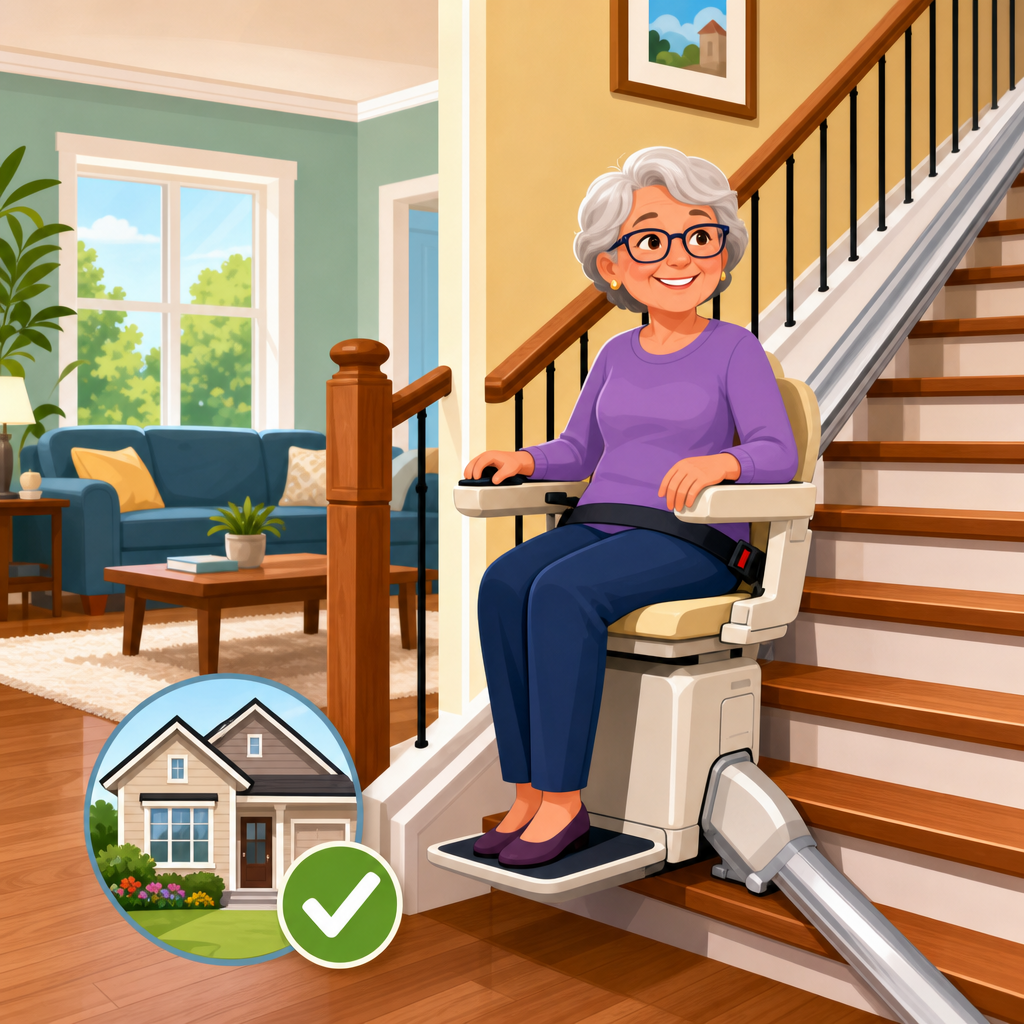
Chair lift pricing in 2026 is more transparent than it was a decade ago, but many homeowners still struggle to understand what they are actually paying for. A chair lift, also called a stair lift, is a motorized seat that travels along a rail attached to a staircase, helping people move safely between floors when stairs become difficult or dangerous. The core question sounds simple: how much does a chair lift really cost in 2026? In practice, the answer depends on the staircase layout, lift type, installation complexity, safety features, warranty terms, and whether the unit is new, rented, or reconditioned.
In my experience working with home accessibility projects, the biggest pricing mistake people make is focusing only on the advertised base model. A straight stair lift promoted at an attractive price may still require power upgrades, track overruns, folding rail options, service coverage, or removal of old carpeting around brackets. By the time the project is complete, the homeowner is comparing a real installed cost, not a headline number from an ad. That gap is why this topic matters so much for families budgeting around aging in place, post-surgery recovery, or long-term mobility limitations.
The 2026 market is also shaped by broader forces: inflation in manufacturing, higher labor rates, more sophisticated safety sensors, and growing demand from older adults choosing to stay in their homes. According to AARP and CDC aging-in-place trend data cited across the accessibility industry, falls remain one of the leading risks for older adults, and stairs are a common hazard point. A chair lift is not the right solution for every home, but when it is appropriate, understanding total cost helps households compare it against alternatives such as first-floor remodeling, home elevators, assisted living transitions, or relying on caregivers for stair support.
This guide explains the real cost of a chair lift in 2026, including average price ranges, major cost drivers, ongoing expenses, financial assistance possibilities, and practical buying advice. If you want the short answer for search purposes, here it is: most straight stair lifts in 2026 cost about $2,800 to $5,500 installed, while curved stair lifts usually range from $10,000 to $18,000 or more installed. Outdoor models, heavy-duty versions, rental agreements, and custom rail systems can push those numbers higher. The smartest way to evaluate value is to look at the full installed and supported cost over the period you expect to use the lift.
Average chair lift prices in 2026
For most buyers, the first useful distinction is straight versus curved. A straight stair lift fits a staircase with no turns, landings, or intermediate curves. Because the rail can be manufactured in standardized sections, production and installation are faster and cheaper. In 2026, a new straight chair lift from established brands such as Bruno, Harmar, Acorn, Handicare, or Stannah generally lands between $2,800 and $5,500 installed. Entry-level units may start near $2,500 in some markets, but those quotes often exclude premium seat options, powered swivel functions, or longer rails.
Curved stair lifts cost much more because the rail is custom fabricated to the exact staircase geometry. If the staircase has a 90-degree turn, multiple landings, a spiral segment, or irregular dimensions, the manufacturer typically uses digital measurements and custom engineering. In 2026, most curved chair lifts cost roughly $10,000 to $18,000 installed, and complex layouts can exceed $20,000. That number surprises many buyers, but the rail itself is the largest cost component, not simply the seat or motor.
Outdoor chair lifts usually fall between standard straight and premium custom pricing. A straight outdoor model commonly runs $4,000 to $7,500 installed because weatherproofing, corrosion-resistant materials, UV-stable covers, and sealed electronics increase cost. Heavy-duty lifts designed for higher weight capacities, wider seats, or larger footrests may add $500 to $2,000 depending on brand and rail type. Refurbished straight units can reduce purchase cost significantly, often into the $2,000 to $3,500 installed range, but availability depends on local dealers and staircase fit.
| Chair lift type | Typical 2026 installed cost | Best fit |
|---|---|---|
| Straight indoor | $2,800 to $5,500 | Single uninterrupted staircase |
| Curved indoor | $10,000 to $18,000+ | Stairs with turns or landings |
| Outdoor straight | $4,000 to $7,500 | Porch or exterior entry stairs |
| Heavy-duty | $3,500 to $7,000+ | Higher weight capacity users |
| Refurbished straight | $2,000 to $3,500 | Budget-conscious short or medium term use |
| Rental straight | $300 to $600 setup plus $100 to $250 monthly | Temporary recovery or hospice situations |
What drives the real installed cost
The staircase itself is the biggest pricing variable. Length matters because more rail means more material and labor. Width matters because narrower stairs may require specific folding components or careful placement to preserve walking clearance. Landings, bends, and obstructions matter because they can trigger a custom rail design. In homes I have evaluated, two straight staircases with the same floor-to-floor rise still produced different quotes because one needed a hinged rail at the bottom to keep a doorway clear.
Features also affect pricing more than many buyers expect. A manual swivel seat is cheaper than a powered swivel, but a powered swivel can be worth it for users with limited trunk strength. The same applies to folding footrests, powered hinges, and call-send controls. Safety sensors that stop the lift when the footrest meets an obstacle are standard on quality units, but premium packages may include upgraded seat belts, diagnostic displays, or smoother start-stop transmissions. Battery-powered systems remain the mainstream standard because they continue operating during power outages while charging from a household outlet.
Installation conditions can create hidden costs. Most stair lifts run on their own charging system and do not require major electrical work, but difficult access, unusual wall projections, trim interference, or the need to move furniture can add labor charges. Some dealers include permitting or haul-away, while others price them separately. If a buyer is comparing quotes, the right question is not “What is the price?” but “What exactly is included in the installed price, and what events trigger additional charges?”
Buying new, used, or rented
New chair lifts offer the strongest warranty protection, the latest safety features, and the broadest customization options. For a homeowner planning to age in place for years, that reliability often justifies the higher upfront cost. A new straight lift is also easier to service because dealers can source current parts quickly. Many premium brands provide multiyear coverage on major components, though labor warranties vary. Always separate the manufacturer warranty from the dealer’s service agreement; they are not the same thing.
Used or refurbished chair lifts make the most sense when the staircase is straight and the user needs a lower-cost solution. Curved lifts are rarely economical to buy used because the custom rail from another home usually will not fit. A reputable refurbished unit should be inspected, cleaned, fitted with tested batteries, and installed by a dealer who will still provide service. The savings can be meaningful, but buyers should ask how old the drivetrain is, whether the batteries are new, and how long replacement parts are expected to remain available.
Renting is ideal for temporary needs such as recovery from hip surgery, a short-term cancer treatment period, or end-of-life care. In 2026, rental arrangements commonly involve an upfront installation fee plus a monthly charge. For example, a family may pay $400 for setup and then $150 per month for use. Over a year, renting can become more expensive than buying a refurbished straight lift, so the break-even point matters. As a rule, if the need is likely to continue beyond 12 to 18 months, purchase options deserve serious comparison.
Ongoing expenses after installation
The purchase price is not the whole cost story. Batteries are a routine replacement item on most modern stair lifts. Depending on usage and charging conditions, batteries often last around two to five years, with replacement commonly costing a few hundred dollars including labor. Preventive service visits may be recommended annually, especially for outdoor units exposed to moisture, pollen, or temperature swings. Some dealers bundle maintenance plans, while others bill by visit. When comparing estimates, include expected maintenance over the lift’s useful life.
Repairs are usually modest on straight lifts from established brands, but they can still happen. Seat switches, charging contacts, remotes, and footrest sensors wear over time. If the lift sits unused for long periods and the batteries discharge deeply, performance can decline. Outdoor units require more vigilance because weather accelerates wear even on sealed systems. In practical budgeting terms, homeowners should reserve something for service rather than assume the purchase price is the final number.
Removal and resale also affect total ownership cost. If the lift is needed only for several years, ask in advance whether the dealer removes units and whether there is any buyback value. Straight lifts have better resale or reuse potential because rails are standard. Curved rails are so specific to one staircase that the seat carriage may have some reuse value, but the rail often does not. Knowing the exit options can improve long-range budgeting.
Will insurance, Medicare, or assistance programs help pay?
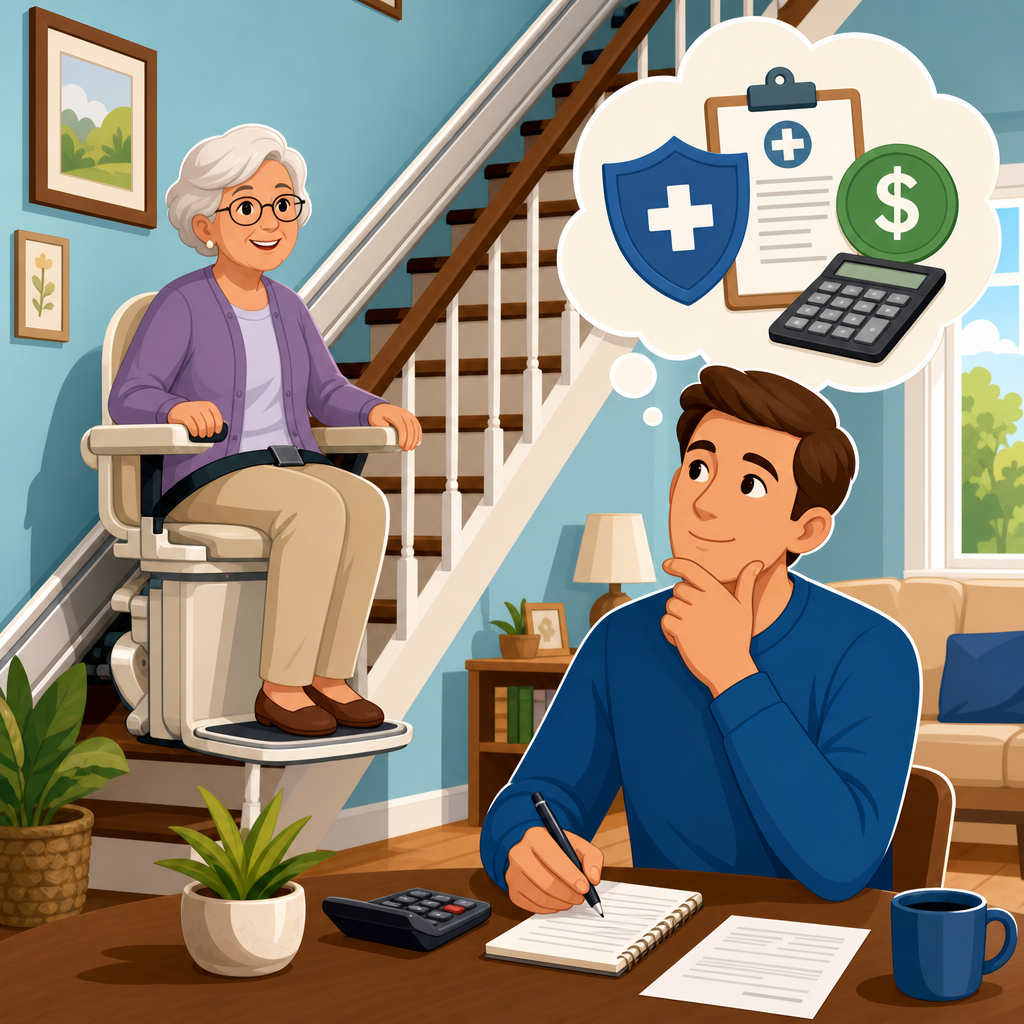
This is one of the most searched questions, and the direct answer is usually disappointing: Original Medicare typically does not cover chair lifts because they are generally classified as home modifications rather than durable medical equipment under standard Part B rules. Medicare Advantage plans may offer supplemental benefits in limited cases, but coverage is plan-specific and should never be assumed. Medicaid waiver programs in some states may help when a lift supports community-based living and avoids institutional placement, but eligibility, waiting lists, and documentation standards vary widely.
Veterans may have more options through the Department of Veterans Affairs, especially when a disability is service-connected or when home accessibility modifications are medically justified. State assistive technology programs, Area Agencies on Aging, nonprofit grants, and low-interest accessibility loans can also help. I have seen families combine a small local grant with a dealer financing plan to make a straight lift affordable without tapping emergency savings. Health savings accounts or flexible spending accounts may be useful in some circumstances if the purchase is supported by medical documentation, but buyers should verify tax treatment with a qualified advisor.
The most reliable process is to get a written assessment, request detailed quotes, and then ask each funding source exactly what documentation they require. A prescription alone is not always enough. Many programs want proof that the lift is necessary, cost-effective, and tied to safe home access. Speed matters too: custom curved lifts may take weeks to manufacture, so families managing an urgent discharge from rehab should ask about rental or temporary alternatives during the approval process.
How to choose the right chair lift without overpaying
The best buying strategy in 2026 is to get at least three in-home evaluations from established local dealers, not just phone quotes. A proper assessment should measure the staircase, review the user’s height, weight, transfer ability, and hand function, and identify obstacles at the top and bottom landings. If a salesperson does not ask how the user gets on and off the seat, that is a warning sign. Fit and safety matter more than a low starting number.
Ask specific questions. Is the quote for a straight or custom rail? Are installation, warranty, batteries, service calls, and removal included? What is the weight capacity? Is the seat height adjustable? Can the unit fold tightly enough to preserve stair access for others in the home? What is the lead time for parts? Which company actually performs service after the sale? Good dealers answer these questions clearly because they know the decision affects safety every day, not just purchase day.
Finally, compare the chair lift against alternatives, not in isolation. If a first-floor bedroom conversion costs $25,000, a $4,500 stair lift may be the obvious value. If a user cannot transfer safely into a lift seat, a ramp, vertical platform lift, or home elevator may be more appropriate despite higher cost. The real benefit of a well-chosen chair lift is not just convenience. It is reduced fall risk, preserved independence, and the ability to use the full home with confidence. If you are pricing a chair lift in 2026, schedule in-home assessments, request itemized quotes, and evaluate total ownership cost before you decide.
Frequently Asked Questions
How much does a chair lift really cost in 2026?
In 2026, most homeowners can expect a chair lift to cost anywhere from about $2,500 to $15,000 or more, depending on the type of staircase and the features selected. A basic straight stair lift is usually the most affordable option because it uses a standard rail and simpler installation process. Curved stair lifts, by contrast, are significantly more expensive because the rail must be custom built to fit turns, landings, or intermediate levels in the staircase. If your home has a narrow stairway, an outdoor staircase, or requires a heavy-duty model with a higher weight capacity, the total price can climb further.
What makes the 2026 market easier to navigate is that pricing is generally more itemized than it used to be. Instead of one vague quote, many providers now separate the rail, chair, power system, installation, warranty, and optional upgrades into clearer line items. Even so, the headline number can be misleading if you do not look closely at what is included. Some quotes include professional installation, service coverage, and a folding rail, while others add those costs later. That is why the real cost is not just the sticker price of the unit, but the full installed price for a lift that works safely and reliably in your specific home.
What factors have the biggest impact on chair lift pricing?
The staircase layout is usually the single biggest pricing factor. A straight staircase is the simplest and least expensive setup because the rail can be manufactured in a standard length and installed relatively quickly. A curved staircase, one with multiple turns, or a staircase with a landing in the middle almost always requires a custom rail, which raises both manufacturing and installation costs. The more complex the staircase, the more labor, engineering, and customization are involved.
Lift type also plays a major role. Standard indoor models cost less than outdoor lifts, which need weather-resistant materials and sealed components. Heavy-duty models, standing or perch lifts, and custom configurations for unusually narrow or steep staircases also increase the price. On top of that, features such as powered swivel seats, folding footrests, hinged rails, upgraded upholstery, remote call controls, and battery backup systems can all add to the final total. In many cases, homeowners are not just paying for mobility equipment, but for a tailored solution that fits both the physical staircase and the user’s long-term safety needs.
Does installation cost extra, and what should homeowners expect to pay for it?
Installation is sometimes included in the quote, but not always, so it is important to ask directly. For a straight chair lift, installation is often faster and less expensive because the rail mounts to the stairs rather than the wall, and the process can sometimes be completed in just a few hours. For curved or highly customized lifts, installation can be more labor-intensive and may require precise measurements, custom fabrication, and longer setup times. In those cases, installation costs are often built into a larger package price rather than listed as a separate charge.
Homeowners should also ask whether the quote includes a home assessment, delivery, electrical setup requirements, testing, user training, and post-installation adjustments. A low initial estimate may not include all of these essentials. In 2026, reputable providers are typically more transparent about labor charges, removal of old equipment, and any service visits needed after installation. The best approach is to request a written quote that clearly identifies what is covered, so there are no surprises once the project begins.
Are used, rental, or reconditioned chair lifts a good way to save money?
They can be, especially for homeowners with a straight staircase and a short-term need. Used or reconditioned straight stair lifts are often much less expensive than buying a brand-new unit, and rental programs can make sense for temporary recovery periods after surgery or injury. In many cases, the seat, motor, and carriage can be refurbished and paired with a rail that fits the home, making this a practical lower-cost option without sacrificing basic functionality.
However, savings depend heavily on the staircase type and the quality of the provider. Curved stair lifts are harder to buy used because the rail is custom made for a specific staircase, so reusing one is far less straightforward. Homeowners should also verify what kind of warranty, service coverage, and safety inspection comes with a used or rental unit. A lower price is only worthwhile if the lift is reliable, properly fitted, and supported by a company that can provide maintenance and repairs. In other words, used and rental lifts can reduce upfront cost, but they should still meet the same safety and service standards as a new installation.
What hidden or ongoing costs should homeowners consider before buying a chair lift?
The purchase price is only part of the financial picture. Homeowners should also think about maintenance, extended warranties, repair coverage, battery replacement, and potential service call fees after the initial warranty ends. Many modern chair lifts use battery-powered operation with charging points along the rail, which is excellent for safety during power outages, but those batteries do eventually need replacement. Depending on the model and usage, that can become a recurring ownership cost over time.
There may also be optional but worthwhile add-ons that affect the true total cost, such as a folding or hinged rail to prevent blocking a doorway, upgraded seating for comfort, or weatherproofing for outdoor use. Some homeowners may need more than one lift if the home has multiple staircases, which changes the budget considerably. The smartest way to evaluate cost in 2026 is to look beyond the base quote and calculate the full ownership cost over several years. That includes installation, support, expected maintenance, and whether the lift will continue to meet the user’s mobility needs as those needs change.